Spironolactone for Female Hair Loss: Benefits and Safety
Learn how spironolactone may help female pattern hair loss, how long it can take, and what to know about side effects, pregnancy and minoxidil.
Équipe éditoriale FOLIGAIN® · 5 min de lecture · Mis à jour le 2026-11-16
Les faits médicaux et les détails des traitements n'ont pas fait l'objet d'un examen médical indépendant.
What spironolactone can—and cannot—do for thinning hair
Spironolactone may help some women with female pattern hair loss, especially when androgen activity contributes to thinning. It is a prescription medicine, not a supplement or cosmetic serum. Treatment may reduce ongoing loss and sometimes improve density, but it cannot guarantee regrowth. Individual results vary.
Originally used for conditions such as high blood pressure and fluid retention, spironolactone is a potassium-sparing diuretic: it helps the body remove salt and water while retaining potassium. It also blocks some effects of androgens, hormones that can contribute to the gradual shrinking of susceptible hair follicles.
Using it for female pattern hair loss is off-label. Research supports potential benefit, but the evidence is less extensive than for topical minoxidil. The goal is often to preserve hair and improve coverage—not restore every lost strand.
Who might benefit from spironolactone?
Female pattern hair loss often looks like a widening part or gradual thinning over the top of the scalp. Spironolactone may be considered when this pattern is present, including when topical minoxidil alone has not provided enough benefit. It can sometimes help even when blood androgen levels are normal.
Acne, unwanted facial hair or irregular periods may prompt an evaluation for an androgen-related condition such as polycystic ovary syndrome. Those signs do not prove a diagnosis, and hormone testing is not necessary for everyone with thinning hair.
Not all shedding is hormone-driven. Iron deficiency, thyroid problems, recent illness, childbirth, tight hairstyles and scalp disease can require different approaches. See a dermatologist for sudden, patchy, painful or inflamed hair loss rather than starting treatment based on the appearance of thinning alone.
How long does it take, and how is it prescribed?
Hair changes slowly. It commonly takes several months to notice whether treatment is helping, and your prescriber may assess the fuller response over roughly six to twelve months. Reduced shedding or a more stable part line may appear before obvious thickening. These are assessment windows, not promises.
There is no FDA-approved spironolactone dose for hair loss. Your prescriber chooses and adjusts the dose based on your health, other medicines, response and side effects. Do not copy someone else's prescription or change your dose to speed things up.
Monthly photos with the same lighting, hairstyle and part can make gradual changes easier to judge. If treatment helps, ongoing use is usually needed to maintain its benefit. After stopping, the underlying thinning may resume; discuss changes with your prescriber.
Side effects, potassium and pregnancy precautions
Possible side effects include more frequent urination, dizziness, lower blood pressure, fatigue, breast tenderness and changes in menstrual bleeding. Standing up slowly may help with lightheadedness, but persistent or troublesome symptoms deserve a call to your prescriber.
Spironolactone can raise potassium levels, sometimes dangerously, especially with kidney problems or certain medicines. Your prescriber may check kidney function and potassium before treatment and during use; monitoring depends on your age, health and medication list. High potassium may cause no symptoms, so feeling well does not replace recommended tests.
Spironolactone should not be used during pregnancy because its anti-androgen effects may harm fetal development. If pregnancy is possible, discuss reliable contraception. Tell your prescriber if you are planning pregnancy or breastfeeding. If you become pregnant while taking it, contact your prescriber promptly.
- Review all medicines and supplements, including potassium, potassium-containing salt substitutes, certain blood-pressure medicines, trimethoprim-containing antibiotics and frequent NSAID pain-reliever use.
- Do not make major dietary potassium restrictions on your own; ask whether any food changes are needed.
- Seek urgent care for fainting, a new irregular heartbeat or severe muscle weakness.
Spironolactone versus minoxidil and other options
Spironolactone and minoxidil work differently. Spironolactone reduces androgen effects; minoxidil supports hair growth through a different pathway. They are sometimes prescribed together, although combining treatments does not guarantee a better result for everyone.
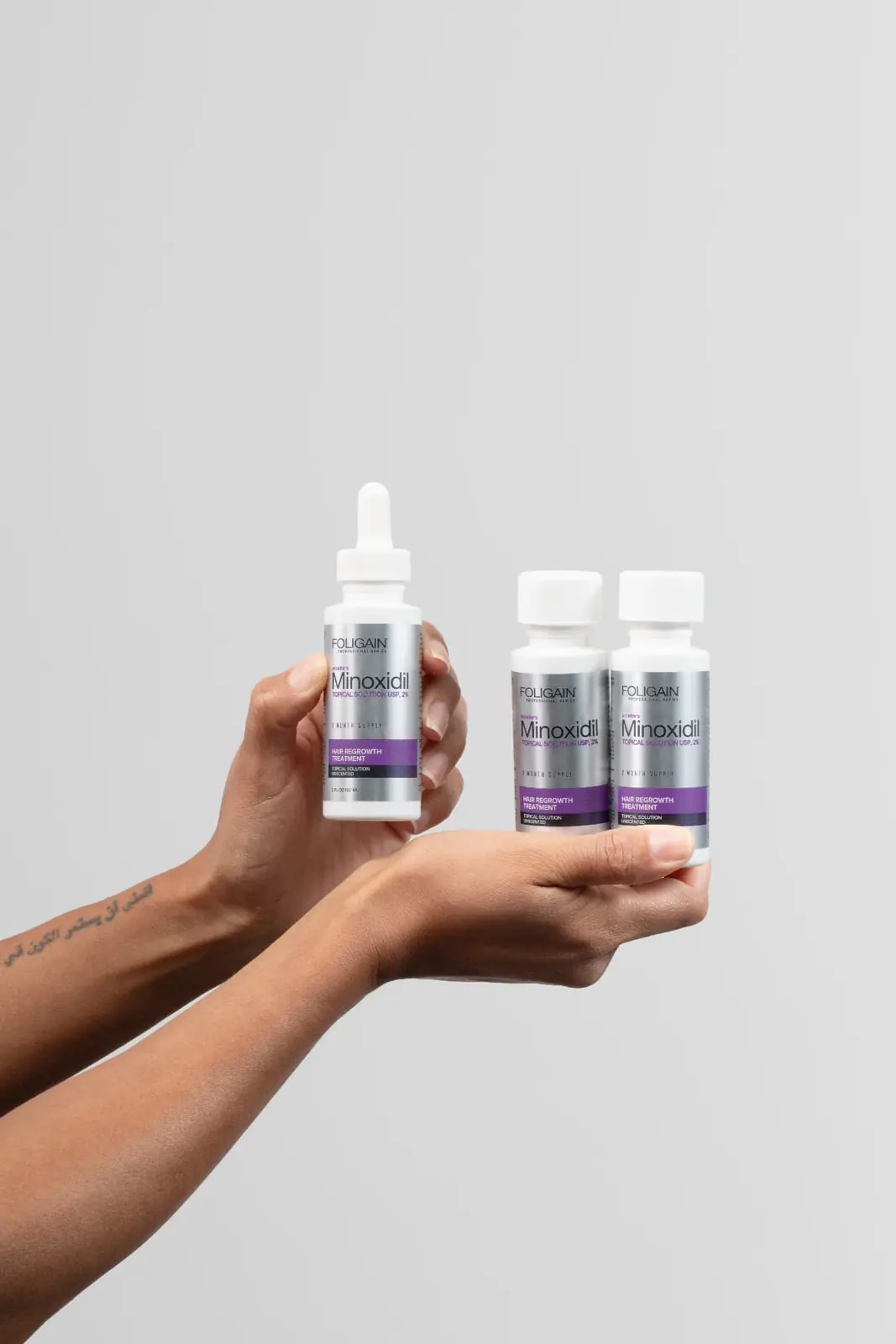
For women, U.S.-labeled topical minoxidil options are 2% liquid twice daily or 5% foam once daily. Minoxidil is a drug: always follow the Drug Facts label on your exact product. Brand-name and generic products should be compared by active ingredient, formulation and labeling—not marketing claims. Scalp irritation and unwanted facial hair can occur.
Low-dose oral minoxidil is another off-label prescription option, with risks including unwanted body hair, swelling and cardiovascular effects. Finasteride or dutasteride may be considered off-label for selected women, but evidence varies and pregnancy precautions are essential. Cosmetic products, including those containing TRIOXIDIL®, may support hair appearance or conditioning; TRIOXIDIL® is a cosmetic complex, not a proven regrowth drug.
Avant de commencer
Ask what type of hair loss you have, why spironolactone fits your situation, whether you need blood tests and when to review progress. Bring your medication and supplement list, and mention pregnancy plans. A sustainable plan should balance possible benefits with safety, cost and your daily routine.
Always follow the Drug Facts label on your exact product. This guide is general education, not medical advice. Ask a pharmacist, doctor or nurse practitioner about your own situation.
De la bibliothèque FOLIGAIN®
Produits et routines FOLIGAIN® associés

Les images sont adaptées au sujet à des fins éducatives ; confirmez toujours les instructions et les allégations sur l'étiquette exacte du produit.
Foire aux questions
Is spironolactone FDA-approved for female hair loss?
No. It is FDA-approved for certain other conditions, but prescribing it for hair loss is off-label. That does not automatically make it inappropriate; it means the benefits, risks and alternatives deserve a clear discussion with your prescriber.
Will spironolactone make facial hair worse?
It generally does not stimulate facial hair and is also used off-label to treat unwanted androgen-related hair growth. New or rapidly increasing facial hair alongside scalp thinning is worth discussing because it may point to a hormonal condition.
Does spironolactone cause an initial hair shed?
A predictable early shedding phase is less clearly established with spironolactone than with minoxidil. If shedding increases, ask your prescriber rather than assuming it means the treatment is working.
Can I use topical spironolactone instead of tablets?
Compounded topical spironolactone is sometimes offered, but its evidence and formulations are less established than those of oral treatment. It is not an FDA-approved hair-loss treatment, and applying it to the scalp does not automatically make it risk-free.
Ce contenu est fourni à titre éducatif uniquement et ne constitue pas un avis médical. Il n'est pas destiné à diagnostiquer, traiter, guérir ou prévenir une maladie. Consultez un professionnel de la santé qualifié pour votre situation individuelle.
Les résultats individuels varient. Les produits de croissance capillaire sont utilisés de manière constante pendant des mois, et les résultats dépendent de la cause et du stade de la perte de cheveux.
Produits FOLIGAIN® liés à ce guide
Si ce guide correspond à votre situation, nos pages d'information sur les produits expliquent quelles formules FOLIGAIN® conviennent à quelles routines.
Découvrez les produits FOLIGAIN®