Every Hair Loss Treatment Compared: The Complete Overview
OTC Minoxidil, prescription medicines, procedures, devices and cosmetics side by side: evidence, pros, cons and who each suits.
FOLIGAIN® Editorial Team · 20 min read · Updated 2026-09-28
Medical facts and treatment details have not been independently medically reviewed.
What it is
Hair loss has many causes, and treatments differ enormously in how they work, how strong the evidence is, how much they cost, and what they ask of you day to day. This overview maps the landscape so you can walk into a conversation with a doctor or dermatologist already understanding the vocabulary and the trade-offs.
Before comparing treatments, it helps to get the diagnosis right. 'Hair loss' is really an umbrella term for several distinct conditions: androgenetic (pattern) hair loss, telogen effluvium (a stress- or illness-related shedding phase), alopecia areata (an autoimmune condition causing patchy loss), traction alopecia (from tight hairstyles), and scarring alopecias, among others. A treatment that helps one of these may do nothing for another, so a clinician's exam, sometimes with bloodwork or a scalp biopsy, is usually the sensible starting point rather than guessing from an internet search.
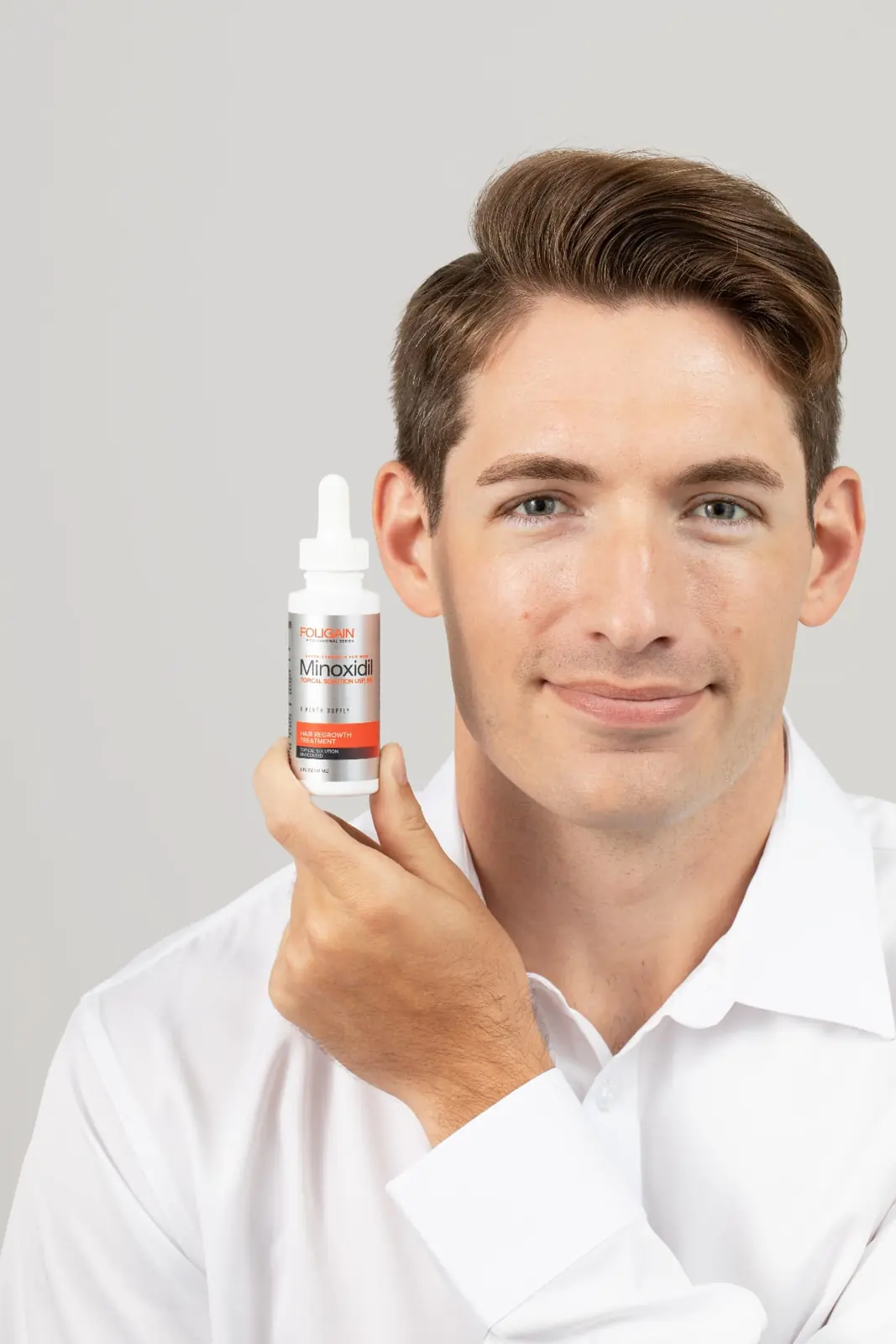
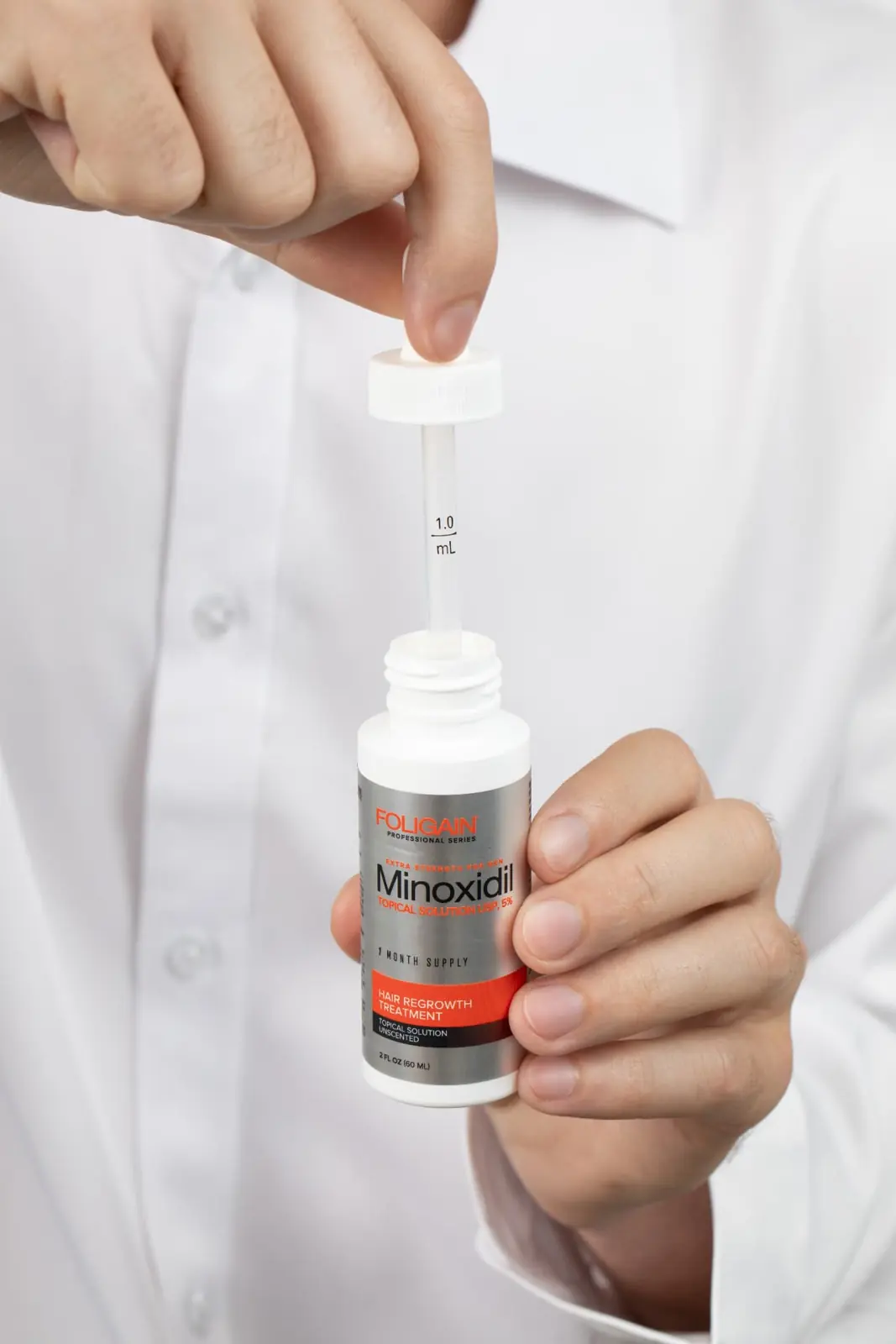
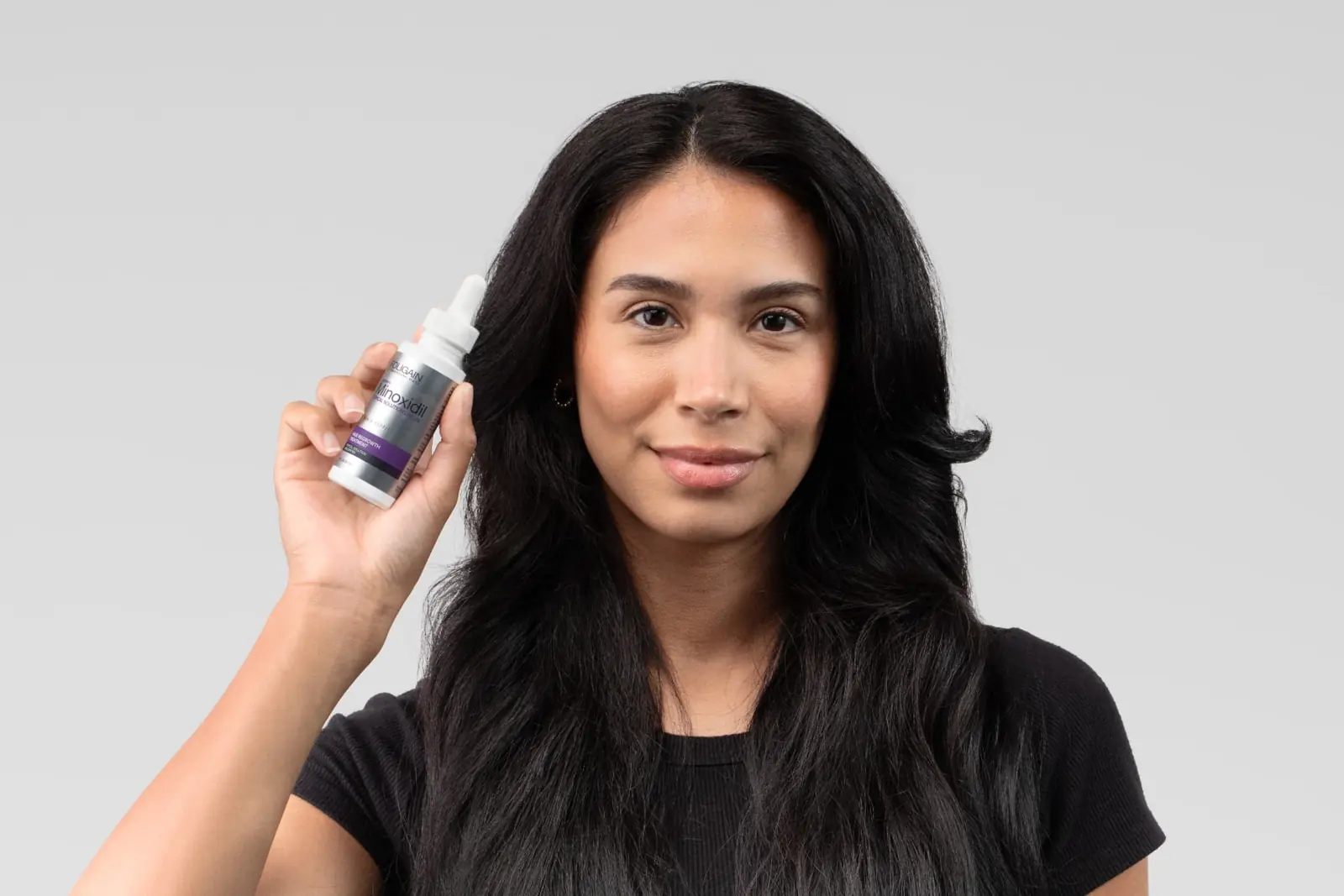
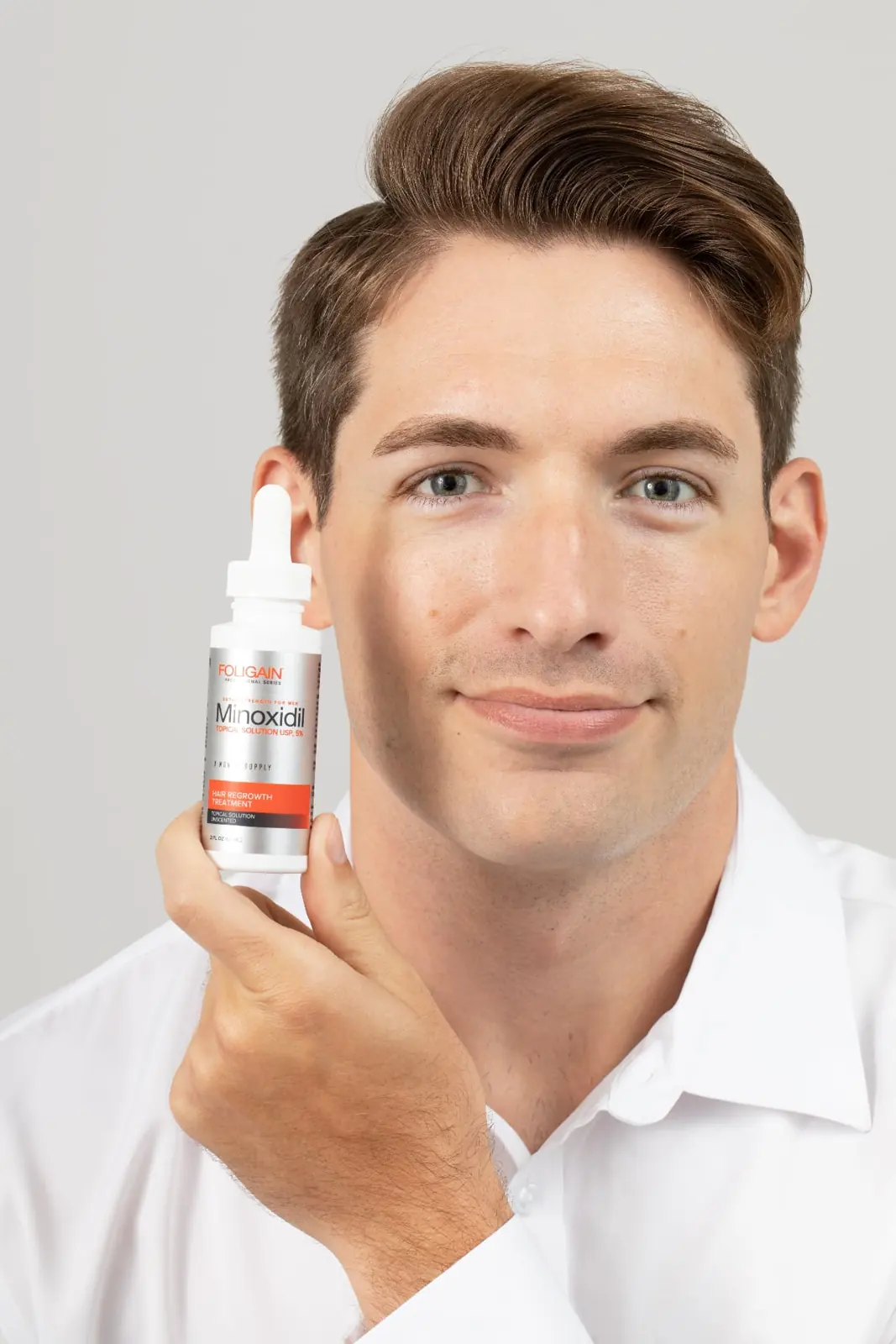
It's also worth separating three very different categories of product: over-the-counter drugs (like topical Minoxidil, which has to meet FDA standards for the specific claim of regrowing hair), prescription drugs (which require a doctor's supervision because of stronger effects and more meaningful side-effect profiles), and cosmetic products (which are regulated to support the appearance, feel and condition of hair and scalp but are not permitted to claim they treat a medical condition). FOLIGAIN® makes products in the first and third categories — OTC Minoxidil and cosmetic formulas featuring the TRIOXIDIL® ingredient complex — and is upfront that neither category replaces individualized medical care for people who want prescription-level intervention.
How it works
Broadly, treatments fall into a handful of families. Hair-cycle stimulants, like topical Minoxidil, are thought to encourage more follicles to stay in or re-enter the active growth (anagen) phase, and may improve blood flow to the follicle; they are used directly on the scalp. Hormone modulators — finasteride, dutasteride and, for women, sometimes spironolactone — work by reducing the influence of androgens (male hormones), particularly dihydrotestosterone (DHT), which is a major driver of pattern hair loss in genetically susceptible follicles.
A separate group targets the immune system rather than hormones. Alopecia areata is an autoimmune condition, so its main treatments — corticosteroid injections, topical steroids, and newer JAK inhibitor tablets — work by calming an immune attack on the follicle rather than blocking a hormone.
Regenerative and procedural options, such as platelet-rich plasma (PRP) injections, microneedling and hair transplant surgery, take a more mechanical or biological approach: stimulating the scalp's own healing and growth-factor response, or physically relocating follicles that are naturally resistant to DHT from the back of the head to thinning areas. Devices such as low-level laser or light-emitting diode caps, helmets and combs are thought to work through a process called photobiomodulation, which may support cellular energy production in the follicle. Finally, cosmetic products — shampoos, conditioners, serums, fibers and concealers — don't claim to regrow hair, but they can reduce breakage, improve scalp condition, and make existing hair look thicker and healthier, which matters for how people feel day to day even while they pursue other treatments.
Key facts at a glance
| Topic | Summary |
|---|---|
| Topical Minoxidil | OTC, FDA-approved for pattern hair loss, men and women |
| Finasteride 1 mg | Rx, FDA-approved for male pattern hair loss |
| Dutasteride | Rx, off-label for hair in the US; approved for hair in some countries |
| Oral Minoxidil (low dose) | Rx, off-label; growing clinical use |
| Spironolactone | Rx, off-label for female pattern hair loss |
| Ketoconazole shampoo | OTC 1% / Rx 2%; for dandruff, sometimes used as adjunct |
| PRP | In-office procedure; mixed but promising evidence |
| Microneedling | Procedure/home device; studied mainly with Minoxidil |
| Low-level laser/light | FDA-cleared devices; moderate evidence |
| Hair transplant (FUE/FUT) | Surgery; permanent relocation of follicles |
| JAK inhibitors | Rx, FDA-approved for severe alopecia areata |
| Cosmetic support (FOLIGAIN® TRIOXIDIL®) | Non-drug; supports hair look, feel and scalp condition |
Pros
- A wide range of options exists for most budgets and preferences
- Combination approaches can address multiple mechanisms at once
- Early treatment generally preserves more hair than waiting
- You can layer a cosmetic routine on top of medical treatment without conflict
Cons and risks
- No option works for everyone, and response is genuinely unpredictable
- Most need ongoing, indefinite use to keep results — stopping usually means losing gains over time
- Prescription options carry side-effect risks that need medical oversight
- It's easy to spend money on unproven add-ons before nailing the basics
Who it may suit
This overview is for anyone researching options before or after seeing a clinician. If you're just starting to notice shedding, thinning, or a receding hairline, the most useful first step is usually an accurate diagnosis, because treatment that suits pattern hair loss may do nothing for telogen effluvium or alopecia areata, and vice versa.
If you already know your diagnosis, use this guide to understand where each option sits: OTC, prescription, procedure, device or cosmetic. That framing makes it much easier to have a focused conversation with a dermatologist about which combination — if any — makes sense for your goals, budget and risk tolerance.
How to think about combining treatments
Because these treatment families work through different mechanisms, some people and their clinicians choose to combine them — for example, topical Minoxidil alongside oral finasteride, or a cosmetic TRIOXIDIL® routine layered on top of a prescription regimen for scalp comfort and hair feel. Combining does not guarantee better results, and it does mean juggling more products, more cost and, with prescriptions, more potential side effects to track. A reasonable approach is to start with the best-supported option for your specific diagnosis, give it a fair trial of several months, and only add another treatment once you and your clinician have a clear reason to expect it will help further.
It's also worth setting expectations honestly from day one. Hair treatments are generally about slowing loss and modestly regrowing thin areas, not restoring a teenage hairline. Photos taken from consistent angles and lighting every few months are more reliable than day-to-day mirror checks, which are heavily influenced by lighting, hair length and how recently you washed.
Medical note
This guide is educational and published by FOLIGAIN®, the maker of OTC Minoxidil and cosmetic hair-care products. Prescription treatments and procedures require assessment by a licensed clinician, who can weigh your history, other medicines and goals. Never start, stop or combine prescription medicines without medical advice.
From the FOLIGAIN® library
Related FOLIGAIN® products and routines
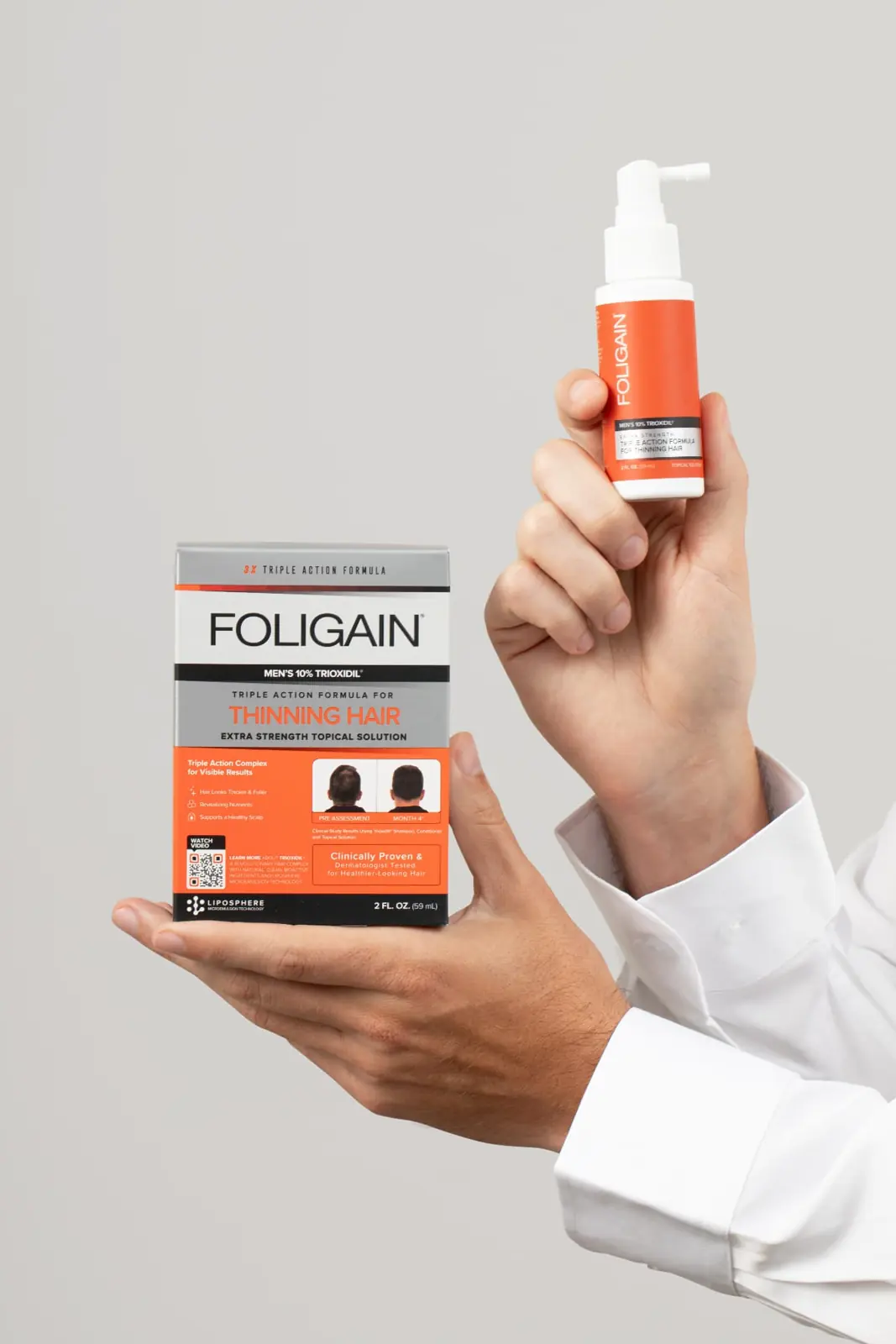
Images are matched to the topic for education; always confirm directions and claims on the exact product label.
Frequently asked questions
What's the most effective treatment?
It depends entirely on the cause. For male pattern hair loss, clinicians often discuss finasteride and Minoxidil, sometimes together; for alopecia areata, immune-focused options like steroids or JAK inhibitors are more relevant. A clinician can advise based on your specific pattern and history.
Do I need a prescription for Minoxidil?
Topical Minoxidil is available over the counter in the US in 2% and 5% strengths. Oral Minoxidil, used off-label at low doses for hair, requires a prescription.
Can I just use a cosmetic shampoo and serum instead of medicine?
Cosmetic products, including those with TRIOXIDIL®, are designed to support the look, feel and condition of hair and scalp. They are not a substitute for FDA-approved treatments if your goal is to medically treat progressive hair loss, though many people use both together.
How long before I know if something is working?
Most hair treatments need 3 to 6 months before any change is visible, because hair grows in cycles, and 12 months to fairly judge the full effect. Stopping early is one of the most common reasons people conclude a treatment 'didn't work.'
Is it ever too late to start treatment?
It's rarely 'too late' to explore options, but treatments generally work best on follicles that are miniaturized, not ones that have been dormant for many years. A dermatologist can assess how much viable follicle activity remains in thinning areas.
This content is for educational purposes only and is not medical advice. It is not intended to diagnose, treat, cure or prevent any disease. Speak with a qualified healthcare professional about your individual situation.
Individual results vary. Hair-growth products are used consistently over months, and outcomes depend on the cause and stage of hair loss.
FOLIGAIN® products related to this guide
If this guide matches your situation, our product education pages explain which FOLIGAIN® formats suit which routines.
Explore FOLIGAIN® products