Hidden Causes of Hair Loss: Thyroid, Iron, Medications and More
The medical and lifestyle factors that can cause or worsen thinning, and the questions worth asking your doctor.
FOLIGAIN® Editorial Team · 17 min read · Updated 2026-09-28
Medical facts and treatment details have not been independently medically reviewed.
Why look beyond genetics
Pattern hair loss is the most common cause of thinning, but it is not the only one. Other factors can cause hair loss on their own or make existing pattern hair loss worse. Some are simple to correct. Before investing months in a routine, it is worth ruling out the most common medical and lifestyle contributors, particularly if the thinning is diffuse, started suddenly or comes with other symptoms.
It's also worth remembering that more than one cause can be at work at the same time. Someone with genetic pattern hair loss can also develop a temporary telogen effluvium on top of it after an illness or a stressful year, which can make the overall picture look worse than either cause would on its own — and can also mean that once the temporary cause resolves, some of the shedding improves even though the underlying pattern hair loss remains.
Thyroid disorders
The thyroid gland regulates metabolism, and both hypothyroidism (under-active) and hyperthyroidism (over-active) can cause diffuse hair thinning. Hair may also become dry, brittle or change texture. Other signs of hypothyroidism include fatigue, weight gain, feeling cold and constipation. Hyperthyroidism can cause weight loss, palpitations, heat intolerance and anxiety.
Thyroid function is assessed with a simple blood test. When thyroid levels are brought back into range with treatment, hair often improves over several months, since correcting the thyroid issue allows follicles that were pushed into telogen to gradually return to a normal cycle.
Iron deficiency and ferritin
Iron deficiency, with or without anemia, is one of the most frequently discussed contributors to hair shedding, especially in women who menstruate, people with heavy periods, vegetarians and vegans, frequent blood donors and people with some digestive conditions. Ferritin, a measure of stored iron, is commonly checked.
Iron supplements should only be taken if a deficiency is confirmed, and under medical guidance, because excess iron can be harmful. Self-prescribing iron without a blood test is not recommended, since taking iron when you don't need it will not help hair growth and can cause its own health problems over time.
Other nutritional factors
The message from dermatology is consistent: correct genuine deficiencies, eat a balanced diet, and be careful with high-dose supplements marketed for hair unless a doctor recommends them. A varied diet with adequate protein and calories generally does more for hair than any single supplement.
| Nutrient | Why it matters | Notes |
|---|---|---|
| Protein | Hair is made mainly of keratin, a protein | Low intake and crash diets can trigger shedding |
| Vitamin D | Involved in follicle cycling | Low levels are common; test before high-dose supplementing |
| Zinc | Supports tissue growth and repair | Deficiency is uncommon; excess can cause problems |
| Biotin | B vitamin involved in keratin production | True deficiency is rare; high doses can interfere with lab tests |
| Vitamin A | Needed in small amounts | Too much vitamin A can itself cause hair loss |
| Overall calories | Hair growth is metabolically demanding | Rapid weight loss is a classic trigger |
Medications
Many medications list hair loss as a possible side effect, usually through telogen effluvium. Examples include some anticoagulants, retinoids, certain beta-blockers, some antidepressants and mood stabilisers, some anticonvulsants, some cholesterol-lowering drugs and hormonal treatments. Chemotherapy causes a different, rapid type of hair loss (anagen effluvium).
Never stop a prescribed medication on your own because of hair concerns. Talk to the prescriber: sometimes an alternative is available, and sometimes the shedding settles over time as the body adjusts to the medication.
Hormonal changes
Pregnancy, the postpartum period, perimenopause, menopause and stopping or switching hormonal contraception can all affect hair. Conditions such as PCOS are associated with increased androgen activity and can contribute to pattern thinning. In men, anabolic steroids and testosterone therapy can accelerate pattern hair loss in genetically susceptible individuals.
Postpartum shedding is one of the most common hormonal triggers: many women notice increased shedding around three to four months after giving birth, as hormone levels shift back and a larger share of follicles enter telogen together. This usually settles within about a year without treatment, though a cosmetic routine can be a comforting part of caring for hair through the transition.
Scalp conditions
Significant seborrheic dermatitis, psoriasis, fungal infections (tinea capitis) and contact dermatitis can cause flaking, redness, itching and sometimes hair loss. Treating the scalp condition often improves hair comfort and appearance, and a calm scalp makes any topical routine, whether a prescription treatment or a cosmetic formula such as FOLIGAIN®, easier to tolerate and apply consistently.
Styling and hair care
Tight styles cause traction alopecia. Bleaching, relaxing, perming and frequent high heat damage the hair shaft and cause breakage. None of these usually affect the follicle unless the damage is severe or chronic, but they can make hair look significantly thinner.
Traction alopecia deserves particular attention because, unlike most causes on this list, it can become permanent if tight styling continues for years without a break. Loosening ponytails, braids and extensions, and giving the hairline periodic rest, is a simple preventive step.
Treatments once a cause is identified
Once a medical cause is found, treatment usually targets that cause first: thyroid medication for thyroid disorders, iron supplementation for confirmed deficiency, a medication switch for a drug-related trigger, or scalp treatment for a dermatologic condition. Hair typically responds gradually over several months once the underlying issue is addressed, following the same cycle-based timeline described elsewhere in this guide.
For people whose hair loss turns out to be genetic pattern hair loss, either alone or alongside a resolved medical cause, options range from prescription drugs such as Finasteride, to the over-the-counter drug Minoxidil, to cosmetic routines such as FOLIGAIN®, which uses ingredients including TRIOXIDIL®, a FOLIGAIN® cosmetic complex, to support the look and condition of existing hair. These categories are not interchangeable — drugs have clinical claims and regulatory oversight that cosmetics do not — so it's worth being clear with yourself, and with any product you consider, about which category it falls into.
Autoimmune and inflammatory causes
Some hair loss has an autoimmune basis rather than a hormonal or nutritional one. Alopecia areata causes the immune system to attack hair follicles, typically producing round, well-defined patches of hair loss that can appear suddenly, sometimes with tingling or mild itching beforehand. It can affect any hair-bearing area, including eyebrows and eyelashes, and its course varies a great deal from person to person.
Other autoimmune and inflammatory conditions, including lupus and certain scarring alopecias, can also affect the scalp. These often need a dermatologist's evaluation, sometimes with a biopsy, because early treatment can matter more for preserving follicles than it does for pattern hair loss, where the process is slower.
Genetics and how it interacts with everything else
It's worth remembering that genetics sets the underlying susceptibility for pattern hair loss, but it doesn't act alone. Two people with a similar genetic background can have very different experiences depending on their age, hormone levels, health conditions and even the medications they take over the years. This is part of why the same routine can work differently for different people, and why hidden causes are worth investigating even in someone with a strong family history of hair loss.
In practice, this means genetics and hidden causes are best thought of as additive rather than exclusive. Correcting a hidden cause won't reverse a genetic predisposition, but it removes an extra source of shedding that was making the overall picture look worse than the genetic component alone would.
Environmental and lifestyle factors
Smoking has been associated with hair thinning in some studies, potentially through effects on blood flow to the scalp and oxidative stress. Excessive alcohol use can also affect nutrition and liver function in ways that indirectly touch hair health. Chronic poor sleep and unmanaged stress are harder to quantify but are frequently mentioned by dermatologists as contributing factors in diffuse shedding, generally through their broader effects on hormones and the body's stress response.
None of these factors alone usually explains significant hair loss, but they can compound with genetic pattern hair loss or a medical cause to make things feel worse, and addressing them is generally good for overall health regardless of any effect on hair.
Questions to ask your doctor
- Could this be pattern hair loss, telogen effluvium, or both?
- Should my thyroid, ferritin, vitamin D or hormones be checked?
- Could any of my medications be contributing?
- Are there signs of a scalp condition that needs treatment?
- Is topical Minoxidil appropriate for me, and which strength and format?
- When should we review progress?
Gut health, chronic inflammation and long-term illness
Chronic gastrointestinal conditions, such as celiac disease or inflammatory bowel disease, can affect nutrient absorption enough to contribute to shedding, even when overall diet looks reasonable on paper, because the gut isn't absorbing key nutrients like iron, protein and certain vitamins efficiently. This is one reason a doctor investigating unexplained shedding will sometimes ask about digestive symptoms alongside hair-specific questions.
Long-term or poorly controlled chronic illnesses more broadly, including diabetes and some kidney or liver conditions, are also associated with hair changes, generally through their wider effects on metabolism, circulation and nutrient status rather than a direct attack on the follicle. Getting a chronic condition well-managed with a doctor's help is generally good for many aspects of health, hair included, though it's rarely a fast fix.
None of this means every case of shedding has a deep underlying illness behind it — most doesn't — but it's part of why doctors sometimes order a broader panel of tests than a specific hair-loss product label would suggest, particularly when shedding is diffuse, unexplained and persistent.
How long it takes to see improvement after fixing a cause
Once an underlying cause such as a thyroid imbalance or iron deficiency is corrected, hair doesn't improve overnight, because the follicles affected still have to complete their current cycle. Most people are told to expect visible improvement over roughly three to six months, and sometimes up to a year for the fullest picture, which lines up with the general hair-cycle timelines described elsewhere in this guide series.
It's common for shedding to briefly continue, or even to seem to worsen slightly, for the first several weeks after a cause is corrected, since follicles that were already committed to shedding will still complete that process even as the underlying issue improves. This isn't a sign that the treatment isn't working; it's simply the existing backlog working its way through the cycle before newer, healthier growth becomes visible.
If genetic pattern hair loss is present alongside a corrected temporary cause, expect the temporary component to improve on that three-to-six-month timeline, while the pattern component continues to need its own ongoing approach, whether that's an OTC drug, a prescription option, or a cosmetic routine layered on top for everyday hair care.
FOLIGAIN® and other products, once a cause is addressed
Once a medical cause has been identified and treatment is underway, some people like to add a cosmetic hair-care routine such as FOLIGAIN®, often built around TRIOXIDIL®, a FOLIGAIN® cosmetic complex, as part of caring for their hair while waiting for the underlying issue to resolve. That's a reasonable choice for everyday hair and scalp care, but it's worth being clear-eyed that a cosmetic routine doesn't treat thyroid disease, correct an iron deficiency, or otherwise address the cause itself — that part depends on the medical treatment your doctor prescribes.
Comparing FOLIGAIN®'s cosmetic products to other cosmetic haircare brands on the market is best done on ordinary consumer terms: ingredients, formulation, feel and price, since none of them are positioned or evidenced to correct a medical deficiency. If your goal after a diagnosis includes regrowth for a separate, genetic component of your hair loss, that's where an OTC drug like Minoxidil or a prescription option come in, used alongside whatever treats the underlying cause your doctor identified.
Keeping a simple symptom diary before your appointment
If you suspect a hidden cause but haven't yet seen a doctor, a short symptom diary kept for a few weeks can make the eventual appointment far more productive. Note any new medications or supplements, changes in energy, appetite, sleep, weight, periods, or digestion, alongside your hair observations, since many of the hidden causes discussed above show up as a cluster of small changes rather than one obvious symptom.
It doesn't need to be elaborate — a few lines a week is enough to spot a pattern a doctor can use, especially since some of these causes, like thyroid shifts or early nutritional gaps, can be easy to dismiss individually but become more obviously connected once written down together.
How doctors weigh multiple causes together
When several possible causes are on the table at once, a doctor typically works through them in a rough order: ruling out urgent or autoimmune causes first, then checking common, easily tested contributors like thyroid function and ferritin, then reviewing medications and recent life events, and finally considering whether genetic pattern hair loss explains any residual, ongoing thinning once other factors are addressed or excluded.
This stepwise approach exists because treating the wrong cause first wastes time that matters, given how slowly hair responds to any intervention. It's also why bringing a clear timeline and full medication list to an appointment, as described in this guide, can meaningfully speed up getting to the right answer.
Once the picture is clear, whatever combination of prescription, over-the-counter or cosmetic options makes sense can be layered in with realistic expectations, rather than hoping that one product will address causes it was never designed to touch.
From the FOLIGAIN® library
Related FOLIGAIN® products and routines
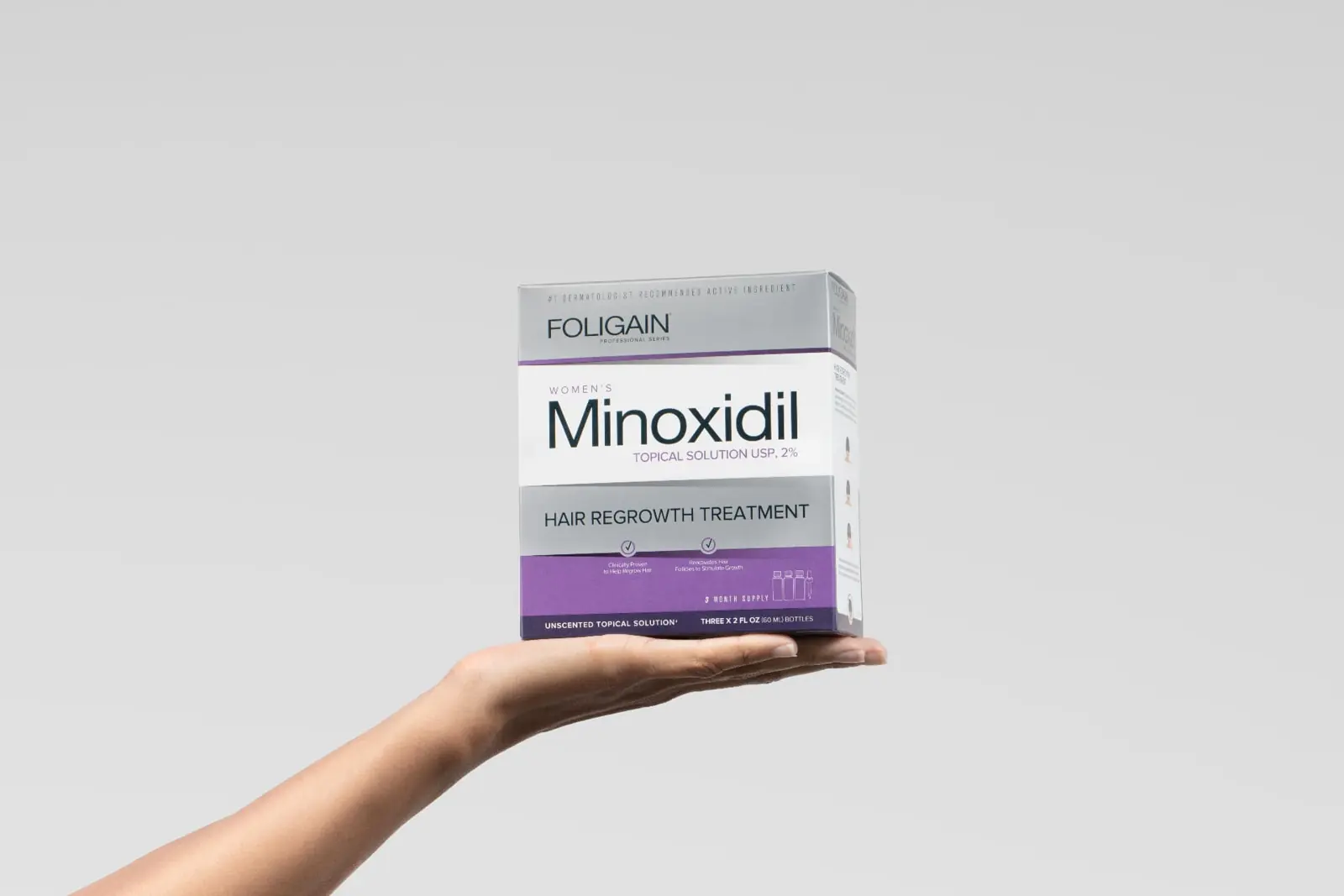
Images are matched to the topic for education; always confirm directions and claims on the exact product label.
Frequently asked questions
Can low iron cause hair loss?
Iron deficiency is associated with hair shedding, particularly in women. A doctor can check ferritin and advise on supplementation if needed.
Do biotin supplements help hair growth?
Biotin helps if there is a true deficiency, which is rare. High doses can interfere with some laboratory tests, so tell your doctor if you take it.
Can thyroid problems cause hair loss?
Yes. Both under- and over-active thyroid can cause diffuse thinning that often improves once thyroid levels are treated.
If I fix an underlying cause, will my hair fully recover?
Often yes, for temporary triggers like telogen effluvium once the cause resolves. If genetic pattern hair loss is also present, that part usually needs its own ongoing approach, whether cosmetic, over-the-counter or prescription.
Can I use a cosmetic routine like FOLIGAIN® while I sort out a medical cause?
Many people do use a cosmetic hair routine as part of general hair care while investigating other causes, but it isn't a substitute for treating an underlying medical condition, so keep following up with your doctor.
Can gut or digestive issues really affect hair?
Yes, conditions that reduce nutrient absorption, such as celiac disease, can contribute to shedding indirectly. A doctor can help determine whether this applies to you.
Can hormonal birth control changes cause shedding?
Starting, stopping or switching hormonal contraception can trigger a temporary shed in some people, similar to other hormonal shifts described in this guide. It usually settles within a few months, but mention it to your doctor if it persists or worries you.
How soon after fixing a deficiency should I expect my hair to improve?
Most people are told to expect gradual improvement over about three to six months, sometimes longer, because the hair cycle needs time to complete regardless of how quickly the underlying cause is corrected.
Can smoking or drinking alcohol contribute to hair loss?
Some studies have linked smoking to hair thinning, possibly through effects on scalp blood flow and oxidative stress, and heavy alcohol use can indirectly affect nutrition and liver function in ways that touch hair health. Neither is usually a sole cause, but both are worth addressing for overall health regardless.
Should I get tested for celiac disease or other gut conditions if I'm shedding hair?
Not automatically, but if you have digestive symptoms alongside unexplained shedding, it's worth mentioning to your doctor, since conditions that reduce nutrient absorption can contribute to hair loss even when your diet otherwise looks reasonable.
This content is for educational purposes only and is not medical advice. It is not intended to diagnose, treat, cure or prevent any disease. Speak with a qualified healthcare professional about your individual situation.
Individual results vary. Hair-growth products are used consistently over months, and outcomes depend on the cause and stage of hair loss.
FOLIGAIN® products related to this guide
If this guide matches your situation, our product education pages explain which FOLIGAIN® formats suit which routines.
Explore FOLIGAIN® products