Best Shampoo for Thinning Hair: What Actually Helps?
Find a shampoo that suits thinning hair, understand what it can and cannot do, and learn when hair loss needs more than a wash routine.
Team editoriale FOLIGAIN® · 5 min di lettura · Aggiornato il 2026-11-09
I fatti medici e i dettagli del trattamento non sono stati sottoposti a revisione medica indipendente.
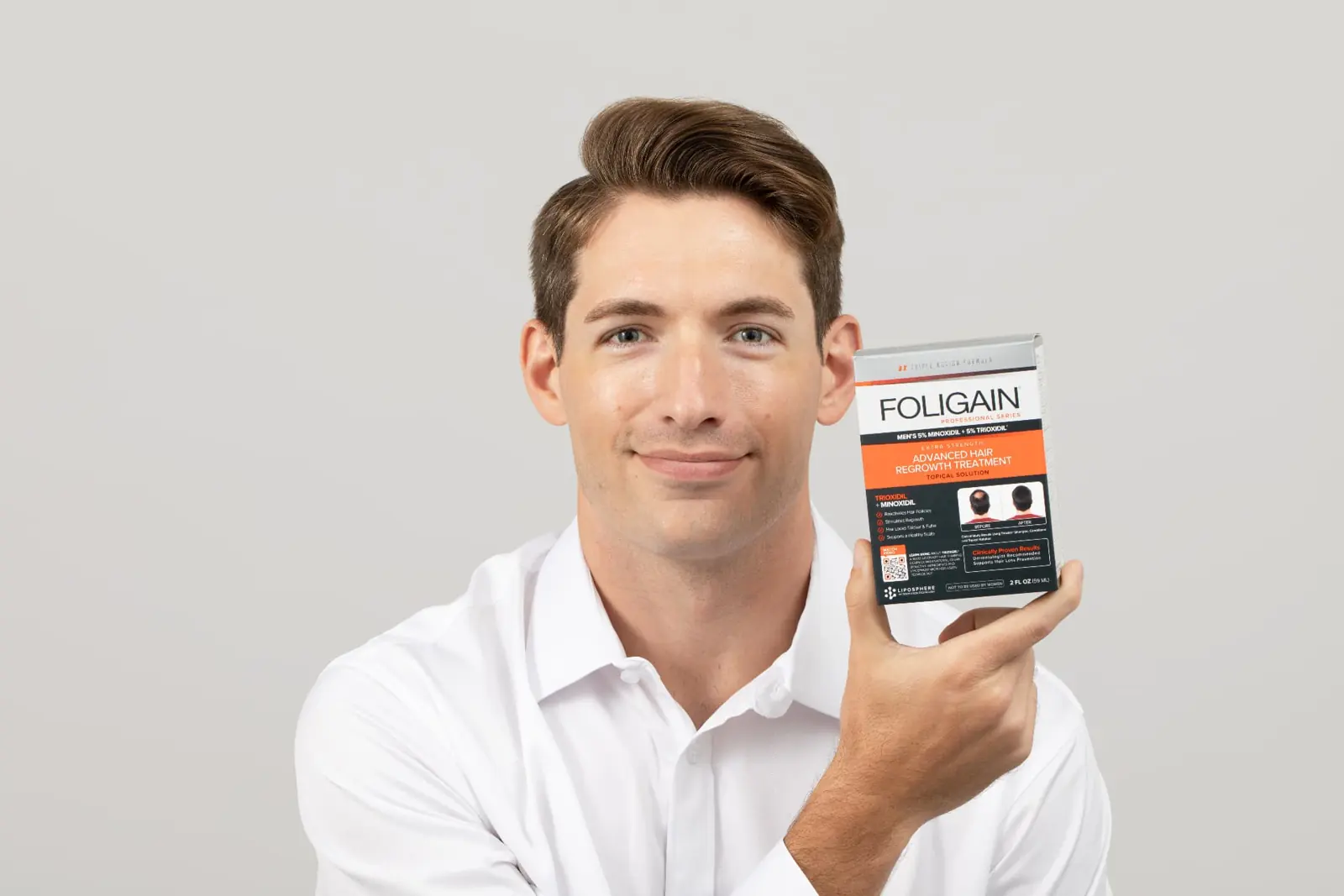
What is the best shampoo for thinning hair?
For most people, the best shampoo for thinning hair is a gentle cleanser that keeps the scalp comfortable without leaving hair heavy or tangled. A lightweight volumizing formula can make fine strands look fuller. If you also have dandruff, a shampoo labeled to treat dandruff may be a better starting point.
There is no single best brand for everyone—and no shampoo is proven to reverse common hereditary pattern hair loss. The useful question is: “Do I need more volume, less breakage, relief from flakes, or treatment for ongoing hair loss?” Those are different goals, and one bottle rarely addresses them all.
Choose by scalp condition and hair texture
Start with how your scalp feels and how your hair behaves between washes. Fine hair can become flat under rich formulas, while curly, coily, bleached or dry hair may need more conditioning to reduce tangling and breakage. Thinning hair does not automatically mean you need stronger cleansing.
- Choose a shampoo you can comfortably use as often as your scalp needs.
- Judge the whole formula, not one highlighted ingredient.
- An affordable product that works for you is a reasonable choice; a higher price does not prove better growth.
| Your main concern | What to look for | What to watch out for |
|---|---|---|
| Fine, flat hair | Lightweight or volumizing shampoo | Heavy residue that reduces lift |
| Dry hair or breakage | Gentle cleansing with conditioning support | A stripped, rough feeling after washing |
| Cuoio capelluto grasso | A cleanser that removes oil comfortably | Aggressive scrubbing or repeated harsh washing |
| Flakes and itching | An OTC dandruff shampoo with Drug Facts | Persistent redness, pain or worsening irritation |
| Cuoio capelluto sensibile | A simple, fragrance-free option | Assuming “natural” means nonirritating |
Which ingredients and claims deserve attention?
Volumizing shampoos may temporarily coat strands or reduce the residue that makes hair look flat. Conditioning ingredients can improve slip and reduce breakage during detangling. These are useful cosmetic effects, but they do not show that a shampoo is creating new hair growth or reversing follicle miniaturization.
Biotin, caffeine, rosemary and other botanical ingredients often appear in “thickening” marketing. Evidence that a rinse-off shampoo containing these ingredients produces meaningful regrowth is limited. Research on an ingredient, supplement or leave-on product cannot automatically establish that a shampoo works. “Sulfate-free” is not a guarantee of gentleness, either; the complete formula and your response matter.
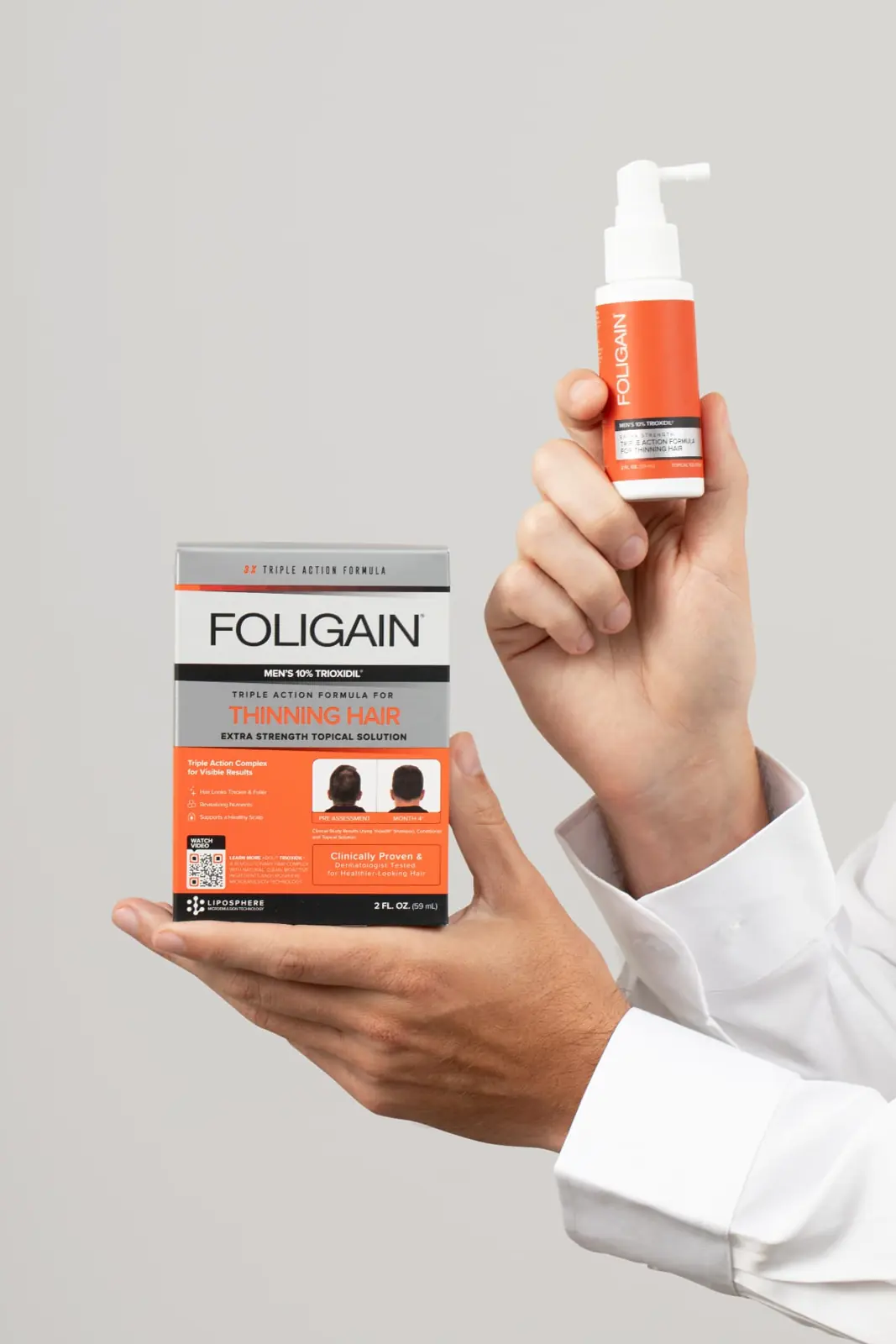
FOLIGAIN® products featuring TRIOXIDIL® may be relevant when comparing cosmetic hair-care options. TRIOXIDIL® is a cosmetic complex, not a proven regrowth drug. Apply the same standard to every brand: claims about fuller-looking hair are different from evidence of treating hair loss. Individual results vary.
When dandruff shampoo is the better choice
If thinning hair comes with flakes or itching, treating dandruff can improve scalp comfort and reduce scratching. Depending on the product, OTC dandruff shampoos may contain active ingredients such as ketoconazole, selenium sulfide or salicylic acid. Their labeled purposes differ, so choose by the stated use rather than assuming every medicated shampoo does the same thing.
These shampoos are not substitutes for established pattern-hair-loss treatments. Use them according to their Drug Facts label, including any directions about frequency and contact time. Do not leave a product on longer in the hope of boosting growth. See a dermatologist for an inflamed or painful scalp, or symptoms that persist despite appropriate care.
Build a routine that protects the hair you have
Washing usually releases hairs that have already shed; seeing them in the drain does not automatically mean shampoo caused the loss. Washing less often can make wash-day shedding look larger because loose hairs accumulate between washes. Choose your washing schedule around oil, sweat, styling buildup and comfort.
Massage shampoo onto the scalp with your fingertips rather than scratching with your nails. Rinse well, then condition the lengths and ends as needed. Conditioner can help reduce friction and breakage; you do not have to avoid it just because your hair is thin.
- Detangle gently with a method suited to your hair texture.
- Limit tight hairstyles, rough towel rubbing and excessive heat.
- Stop using a shampoo that causes burning, rash or worsening irritation.
- Assess softness and volume separately from changes in density.
When shampoo is not enough
A widening part, receding hairline or progressively thinner crown deserves more than repeated shampoo changes. Hair loss can relate to hereditary patterns, recent illness, hormonal changes, medications, traction or nutritional problems. A dermatologist can help identify the cause; correcting a deficiency is different from taking supplements without evidence that you need them.
For suitable adults with pattern hair loss, topical minoxidil is a drug option with evidence for helping hair growth. Under US labeling, men use 5% liquid or foam twice daily; women use 2% liquid twice daily or 5% foam once daily. Always follow the Drug Facts label on your exact product. Minoxidil is not appropriate for every situation, and ongoing use is generally needed to maintain benefits.
Prescription options can include finasteride for men and, in selected cases, off-label treatments such as spironolactone or oral minoxidil. These need individualized discussion of benefits, risks and pregnancy considerations. They are not interchangeable with shampoo. Seek a dermatologist promptly for sudden, patchy, painful or inflamed hair loss.
Prima di iniziare
Pick one shampoo matched to your scalp, keep the rest of your routine simple, and avoid expecting regrowth from a rinse-off cosmetic. If thinning continues, seek help rather than buying progressively stronger-sounding formulas.
Always follow the Drug Facts label on your exact product. This guide is general education, not medical advice. Ask a pharmacist, doctor or nurse practitioner about your own situation.
Dalla libreria FOLIGAIN®
Prodotti e routine FOLIGAIN® correlati
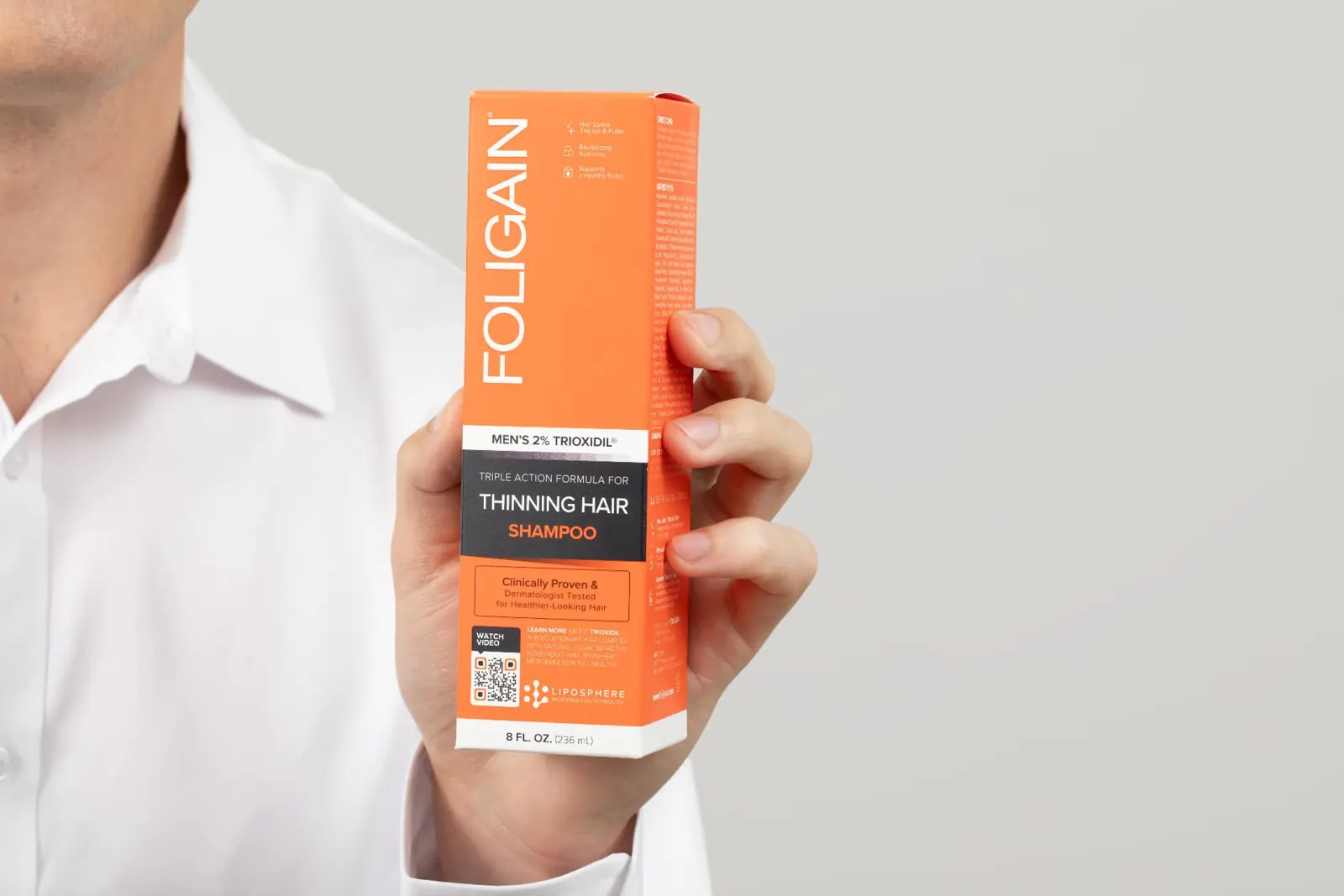
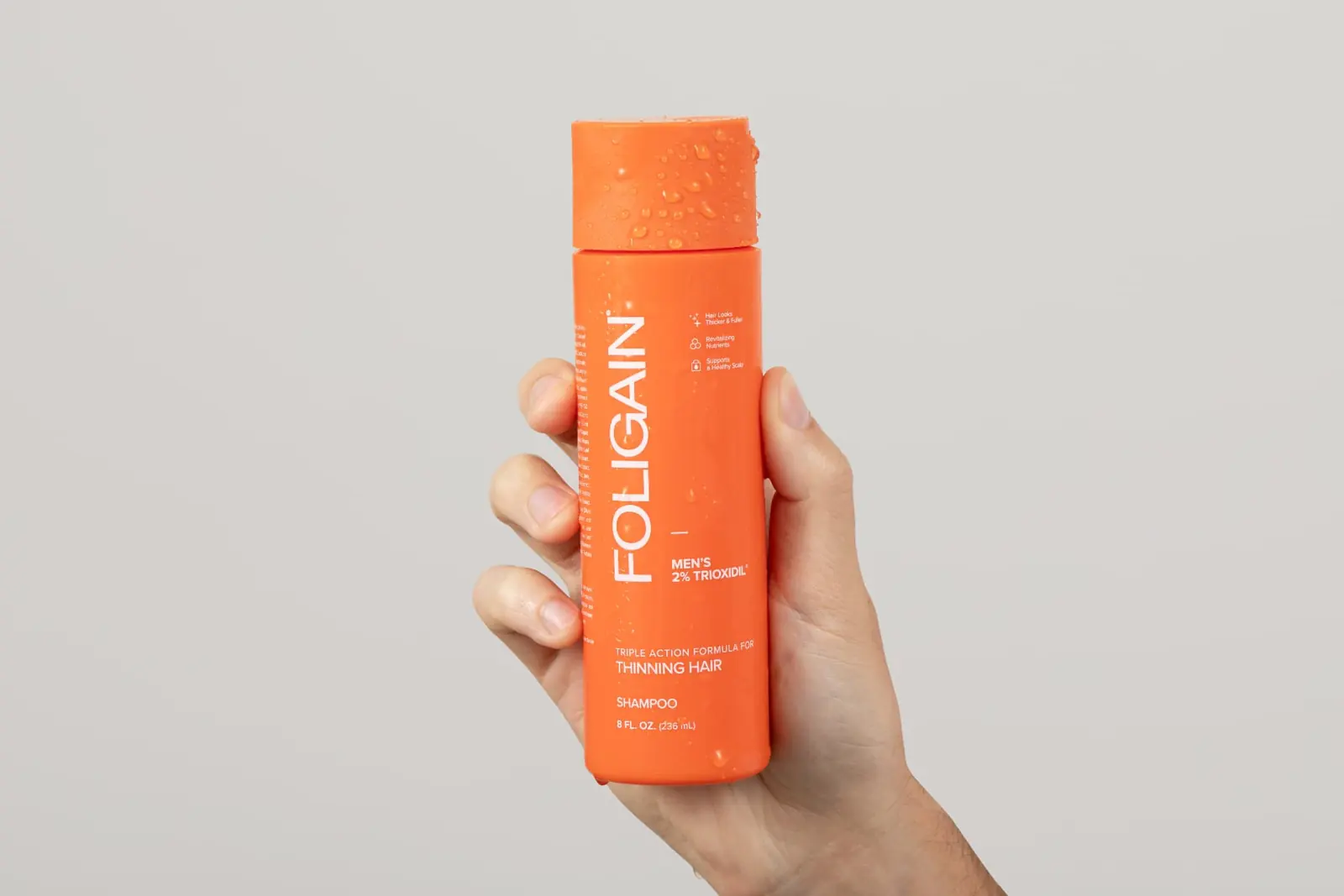
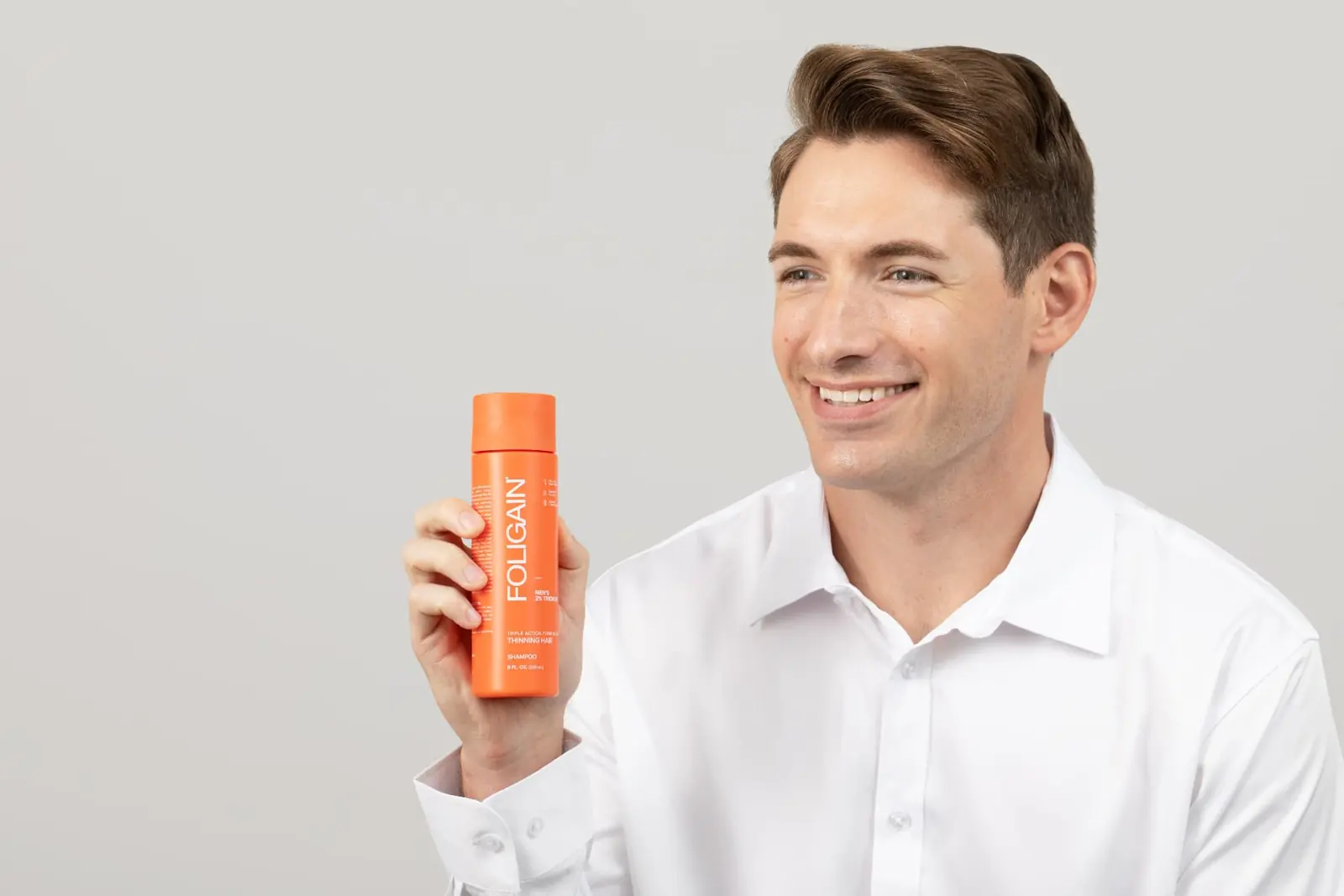
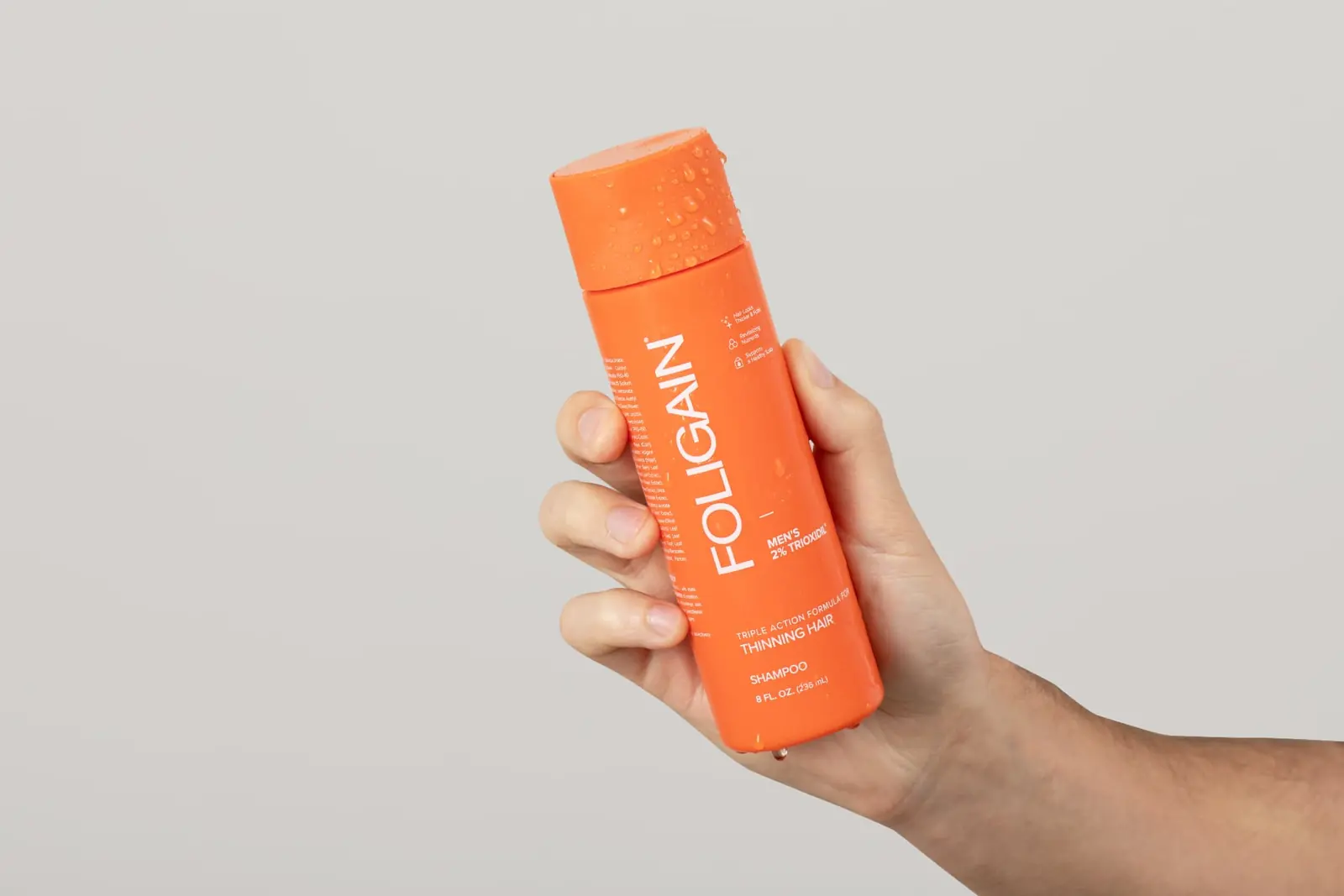
Le immagini sono abbinate all'argomento per scopi didattici; conferma sempre le istruzioni e le indicazioni sull'etichetta esatta del prodotto.
Domande frequenti
Can shampoo make thinning hair grow back?
No shampoo is proven to reverse common pattern hair loss. It may improve volume, reduce breakage or treat dandruff without changing the underlying cause of thinning.
Should I wash thinning hair every day?
Daily washing can suit an oily scalp if the shampoo is well tolerated. Dry or textured hair may need less frequent washing; there is no universal schedule.
Is biotin shampoo worth buying?
It may work well as a cleanser, but biotin on the label is not evidence of regrowth. Choose based on comfort, manageability and overall performance.
Do men and women need different thinning-hair shampoos?
Usually, scalp condition and hair texture matter more than gendered packaging. Drug treatments are different: minoxidil has sex-specific US labeling, so follow the Drug Facts label.
Questo contenuto è solo a scopo educativo e non costituisce consiglio medico. Non è inteso per diagnosticare, trattare, curare o prevenire alcuna malattia. Parla con un professionista sanitario qualificato riguardo alla tua situazione individuale.
I risultati individuali variano. I prodotti per la crescita dei capelli vengono usati costantemente per mesi e i risultati dipendono dalla causa e dallo stadio della caduta dei capelli.
Prodotti FOLIGAIN® correlati a questa guida
Se questa guida corrisponde alla tua situazione, le nostre pagine di educazione sui prodotti spiegano quali formati FOLIGAIN® sono adatti a quali routine.
Esplora i prodotti FOLIGAIN®