Hair Loss After COVID: Causes, Timeline and What Helps
Learn why shedding can follow COVID, how recovery often unfolds, what gentle care can do, and when to ask a dermatologist for help.
FOLIGAIN® Toimitustiimi · 6 minuutin luku · Päivitetty 2026-10-26
Lääketieteellisiä faktoja ja hoitotietoja ei ole riippumattomasti lääketieteellisesti tarkistettu.
Why can hair loss happen after COVID?
Finding extra hair in the shower after recovering from COVID can feel like one more setback. A common explanation is telogen effluvium: increased shedding after a physical or emotional stress pushes more hairs than usual from their growing phase into a resting phase. Those hairs fall out later, which explains why shedding may begin well after you feel better.
Fever, illness, emotional strain, reduced food intake and weight loss can all contribute. You do not have to have been hospitalized to notice shedding afterward. This pattern does not usually mean your hair follicles have been permanently damaged.
Still, timing alone cannot confirm the cause. Pattern hair loss, thyroid problems, iron deficiency, medication changes and scalp conditions can overlap with recovery from COVID. The aim is to recognize a likely pattern without assuming every new hair concern comes from the infection.
When does shedding start, and how long does it last?
Telogen effluvium often becomes noticeable around two to three months after a trigger, although timing varies. Shedding commonly lasts several months and may settle within about three to six months once the trigger has passed. Hair growth is slow, so looking like your old self can take longer than stopping the shedding.
Short new hairs may appear while longer hairs are still falling out. Visible fullness can take six to twelve months or longer to return, especially with longer hairstyles. These are general patterns, not a recovery deadline or a promise; individual results vary.
Ongoing illness, repeated infections, continuing stress or nutritional problems may prolong the process. If shedding keeps increasing, lasts beyond about six months, or your density is not improving, arrange an evaluation rather than waiting indefinitely.
What does post-COVID shedding look like?
Typical telogen effluvium causes diffuse shedding, meaning hair falls from across the scalp rather than leaving one distinct bald spot. You may notice more hair during washing or brushing, a smaller ponytail, or less overall volume. The scalp generally looks normal rather than red, crusted or sore.
A widening part or increasingly visible crown can also reflect pattern hair loss, which a shedding episode sometimes makes more noticeable. Broken hairs of uneven lengths suggest breakage rather than shedding from the root. These clues are useful, but a dermatologist can help distinguish overlapping causes.
- See a dermatologist for sudden, patchy, painful or inflamed hair loss—even if you recently had COVID.
- Ask for an assessment if you have scalp sores, significant scaling, eyebrow loss or smooth bald patches.
- Mention fatigue, unexplained weight changes, heavy periods or a restrictive diet, since these may guide further checks.
What you can do while your hair recovers
Start with a routine that protects the hair you have. Wash as needed using a shampoo your scalp tolerates, condition the lengths, and detangle gently. Washing releases hairs that were already ready to shed; avoiding shampoo does not keep those hairs growing.
Limit tight ponytails, extensions, aggressive brushing, high heat and harsh chemical processing. These steps reduce added breakage or pulling, but they do not switch off telogen effluvium. Volumizing products, a different part or a shorter cut may make thinning less noticeable without treating its cause.
Try taking a photo of your part once a month in the same lighting rather than counting hairs every day. Daily shedding fluctuates with wash frequency and styling. Regular meals, manageable activity and sleep can support recovery, but you do not need a perfect routine—and shedding is not your fault.
Do foods, vitamins or blood tests help?
Eating enough overall, including regular protein sources, matters for normal hair growth. After illness, low appetite or rapid weight loss may leave you short of what your body needs. If eating remains difficult, ask a healthcare professional or registered dietitian for practical support.
Supplements are most useful when they address an identified deficiency or a specific dietary need. Hair gummies and high-dose biotin are not proven fixes for post-COVID shedding. Too much of certain nutrients can be harmful, and biotin can interfere with some laboratory tests.
Testing should fit your symptoms and history rather than a universal hair-loss panel. A clinician may consider checks for iron deficiency or thyroid problems, for example. Avoid starting iron without guidance, and share any supplements and medicines you use. Do not stop a prescribed medicine on your own.
Should you use minoxidil or a hair serum?
Many cases of temporary post-illness shedding improve without a hair-growth drug. Topical minoxidil is a drug used for pattern hair loss; it is not a proven cure specifically for post-COVID telogen effluvium. A dermatologist may discuss it if shedding persists or pattern hair loss is also present. Always follow the Drug Facts label on your exact product.
Under US labeling, men use 5% minoxidil liquid or foam twice daily. Women use 2% liquid twice daily or 5% foam once daily. Product directions and warnings matter, especially when the cause of hair loss is uncertain. Minoxidil can cause scalp irritation and initial increased shedding; it should not be used during pregnancy or breastfeeding.
Brand-name and generic minoxidil options exist; compare the active ingredient, formulation and label rather than assuming a higher price works better. Cosmetic serums, including those containing TRIOXIDIL®, may support cosmetic appearance but are not proven regrowth drugs. Prescription oral minoxidil is sometimes used off-label for hair loss and requires medical supervision because it can affect blood pressure and cause other side effects.
Ennen kuin aloitat
Write down when you had COVID, when shedding began, and any changes in medicines, diet or health. Bring that timeline and a few photos to an appointment if you need help finding the cause.
Always follow the Drug Facts label on your exact product. This guide is general education, not medical advice. Ask a pharmacist, doctor or nurse practitioner about your own situation.
FOLIGAIN®-kirjastosta
Aiheeseen liittyvät FOLIGAIN®-tuotteet ja rutiinit
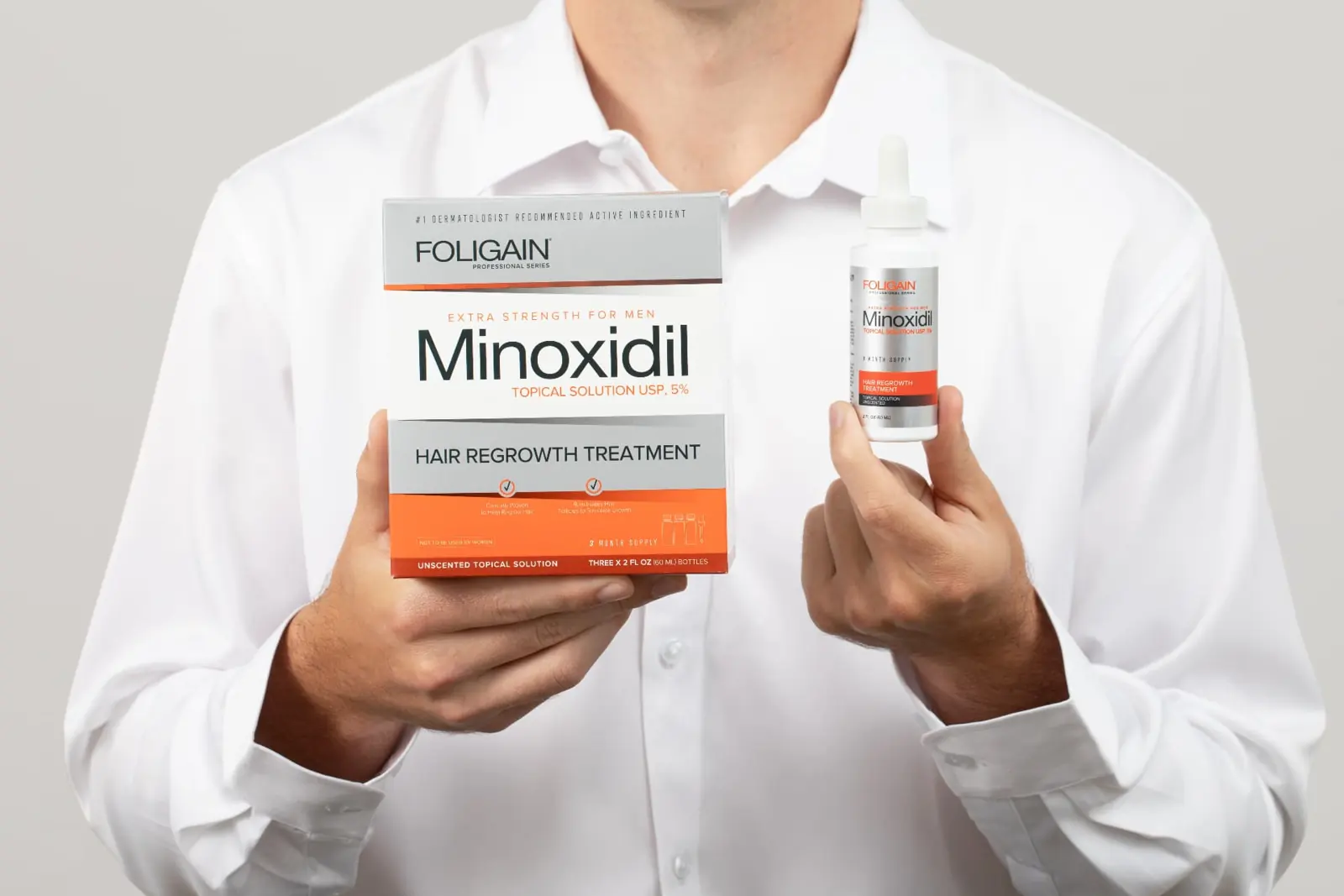
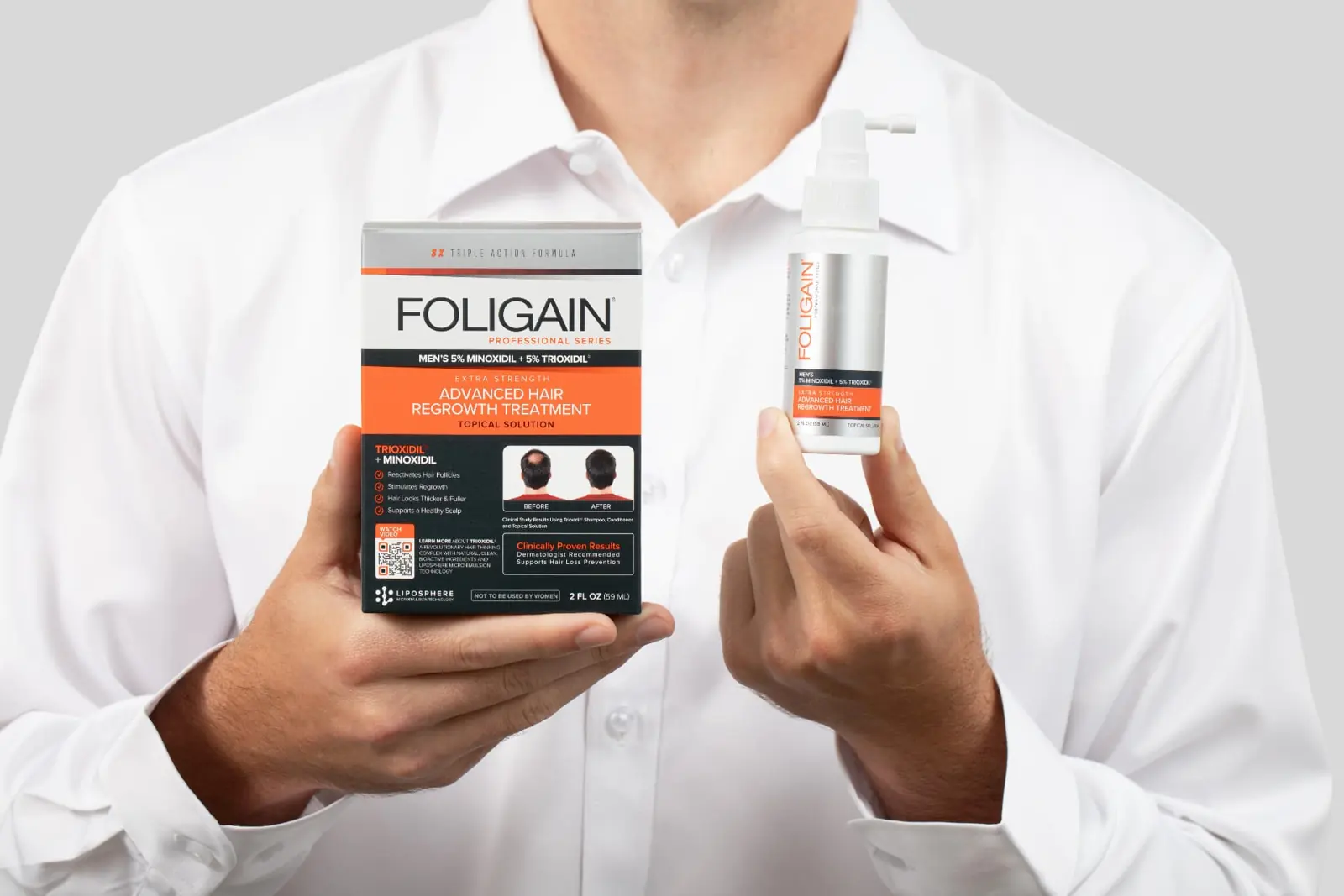
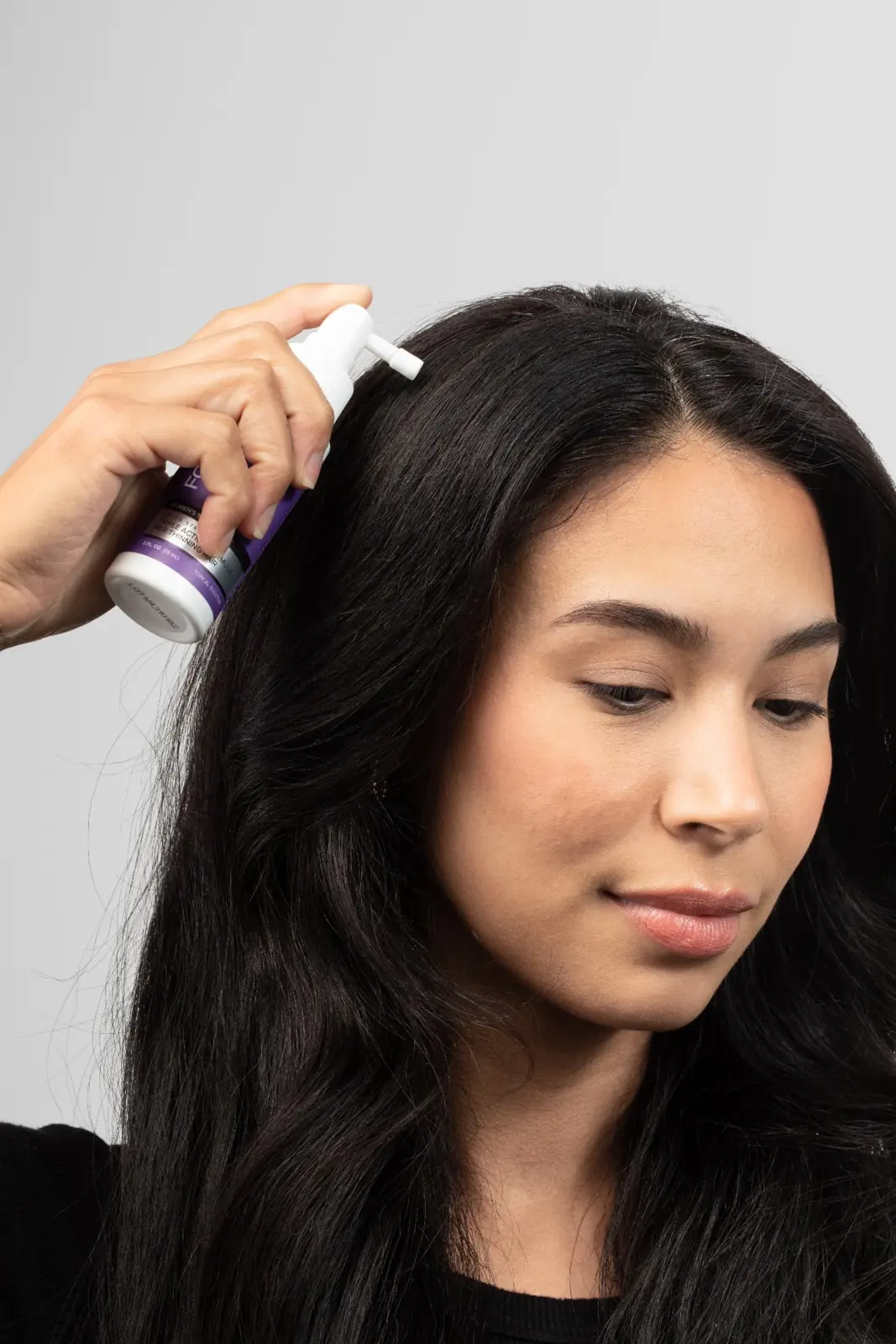
Kuvat on sovitettu aiheeseen opetustarkoituksessa; tarkista aina ohjeet ja väitteet tarkan tuotepakkauksen etiketistä.
Usein kysytyt kysymykset
Will my hair grow back after COVID?
Hair commonly regrows when temporary telogen effluvium settles. Recovery varies, and another condition such as pattern hair loss may affect how much fullness returns.
Can COVID cause permanent hair loss?
Typical post-illness telogen effluvium does not destroy hair follicles. Persistent thinning, bald patches or scalp inflammation should be assessed rather than assumed to be temporary.
Should I wash my hair less to stop shedding?
No. Washing less often can make wash-day shedding look larger because loose hairs have accumulated, but it does not prevent telogen effluvium.
Can I dye my hair while it is shedding?
Coloring does not treat or usually drive telogen effluvium, but bleaching and harsh processing can add breakage or irritation. Consider postponing these treatments if your hair feels fragile or your scalp is sensitive.
Tämä sisältö on tarkoitettu ainoastaan opetustarkoituksiin eikä ole lääketieteellistä neuvontaa. Sitä ei ole tarkoitettu minkään sairauden diagnosointiin, hoitoon, parantamiseen tai ennaltaehkäisyyn. Keskustele pätevän terveydenhuollon ammattilaisen kanssa yksilöllisestä tilanteestasi.
Yksilölliset tulokset vaihtelevat. Hiustenkasvutuotteita käytetään johdonmukaisesti kuukausien ajan, ja tulokset riippuvat hiustenlähdön syystä ja vaiheesta.
Tähän oppaaseen liittyvät FOLIGAIN®-tuotteet
Jos tämä opas vastaa tilannettasi, tuoteopastussivumme selittävät, mitkä FOLIGAIN®-muodot sopivat mihinkin rutiineihin.
Tutustu FOLIGAIN®-tuotteisiin