Finasteride for Hair Loss: Pros, Cons and Side Effects
How the prescription DHT blocker works, evidence, sexual and mood side effects, and who it is and isn't for.
FOLIGAIN Editorial Team · 14 min read · Updated 2026-09-28

What it is
Finasteride is a 5-alpha-reductase inhibitor. At 1 mg (Propecia® and generics) it's approved for male pattern hair loss; at 5 mg (Proscar®) for enlarged prostate.
How it works
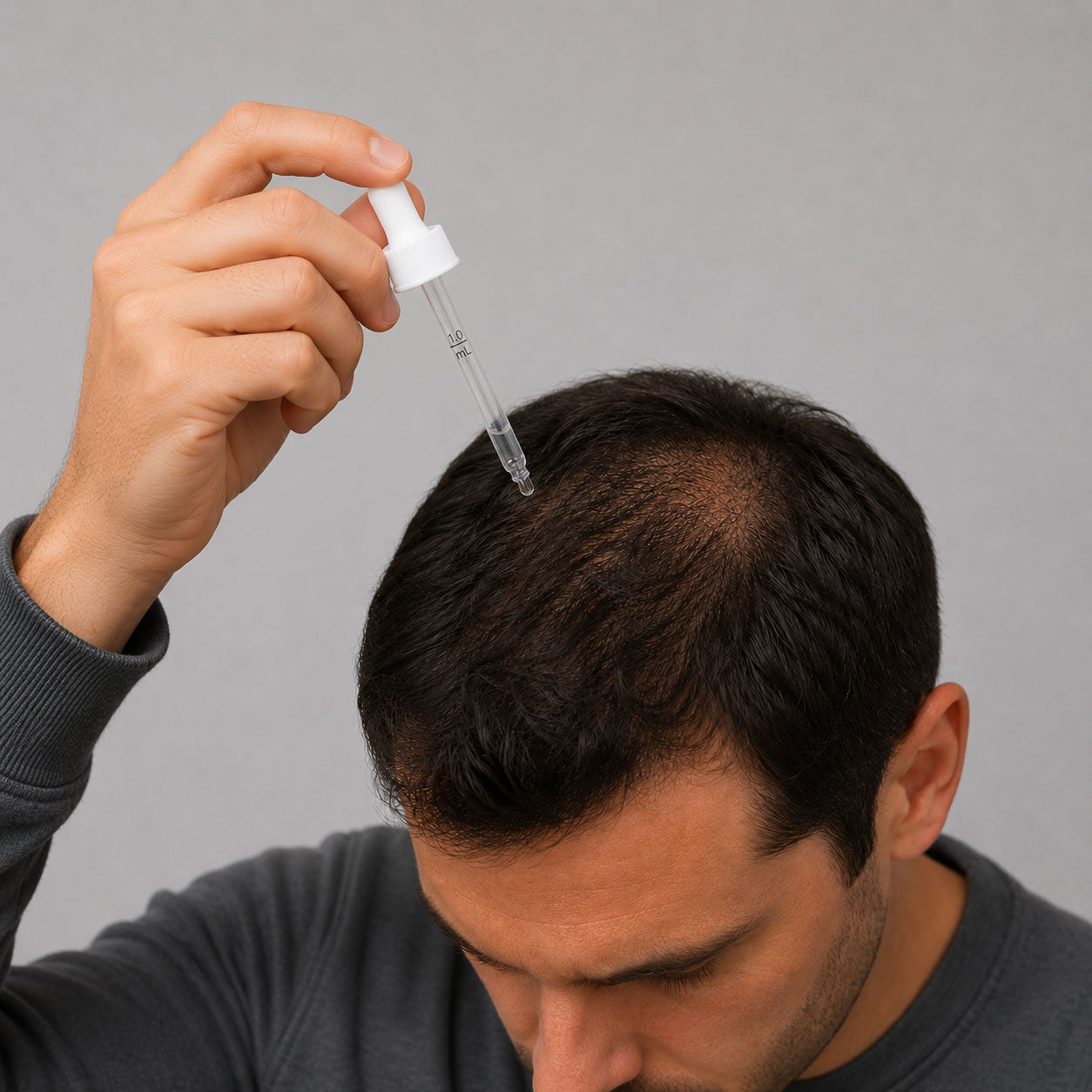
DHT drives miniaturization in genetically sensitive follicles. By reducing DHT, finasteride slows or halts miniaturization. Topical finasteride formulations exist through compounding and in some countries.
Key facts at a glance
| Topic | Summary |
|---|---|
| Status | Rx; FDA-approved (1 mg) for men |
| Mechanism | Type II 5-alpha-reductase inhibitor |
| Time to assess | 3–6 months to see effect; 12 months to judge |
| After stopping | Benefits lost within about 12 months |
| PSA | Lowers PSA readings; tell your doctor |
Pros
- Targets a root driver of male pattern loss
- Strong evidence base over decades
- Once-daily tablet; inexpensive generics
- Works well alongside topical Minoxidil
Cons and risks
- Possible decreased libido, erectile or ejaculation changes (small %)
- Mood changes, including depression, are in labeling
- Reports of persistent effects after stopping (post-finasteride syndrome) are debated
- Must be taken continuously
- Birth-defect risk to a male fetus: not for pregnant women
Who it may suit
Adult men with pattern hair loss after discussion with a clinician. Sometimes prescribed off-label to postmenopausal women.
Medical note
This guide is educational and published by FOLIGAIN, the maker of OTC Minoxidil and cosmetic hair-care products. Prescription treatments and procedures require assessment by a licensed clinician, who can weigh your history, other medicines and goals. Never start, stop or combine prescription medicines without medical advice.
Frequently asked questions
Can I use finasteride and Minoxidil together?
Clinicians commonly combine them because they act differently. Discuss it with your prescriber.
Is topical finasteride safer?
Topical forms aim to reduce systemic exposure, but some absorption still occurs. Evidence is growing; talk to a clinician.
This content is for educational purposes only and is not medical advice. It is not intended to diagnose, treat, cure or prevent any disease. Speak with a qualified healthcare professional about your individual situation.
Individual results vary. Hair-growth products are used consistently over months, and outcomes depend on the cause and stage of hair loss.
FOLIGAIN products related to this guide
If this guide matches your situation, our product education pages explain which FOLIGAIN formats suit which routines.
Explore FOLIGAIN products