Male Pattern Hair Loss: Causes, Stages and Options
Everything men need to know about androgenetic alopecia, from DHT and genetics to the Norwood scale, early signs and a realistic plan of action.
FOLIGAIN Editorial Team · 15 min read · Updated 2026-09-28
How common it is
Male pattern hair loss (androgenetic alopecia) is extremely common. Published estimates suggest that around a quarter to a third of men notice some degree of thinning by their thirties, and roughly half by age fifty. By later life, a majority of men have some visible change. It is a normal variation of how hair ages rather than a sign of poor health, but it can have a real impact on confidence, and wanting to address it is entirely reasonable.
Because it is so widespread, it is also surrounded by myths: that it comes only from your mother's side, that hats cause it, or that frequent washing speeds it up. None of these hold up. Understanding what actually drives it makes it much easier to separate useful approaches from marketing.
What causes it: genetics and DHT
Two factors interact: an inherited sensitivity in certain hair follicles, and androgens. Testosterone is converted in the skin and elsewhere into dihydrotestosterone (DHT) by the enzyme 5-alpha reductase. In genetically susceptible follicles, mostly at the temples, top and crown, DHT binds to androgen receptors and gradually shortens the anagen (growth) phase of the hair cycle.
With each cycle, the follicle produces a slightly shorter, finer hair. This process is called miniaturization. Hairs on the back and sides of the scalp are usually far less sensitive to DHT, which is why the classic horseshoe pattern of retained hair appears, and why hair transplants take follicles from that area.
Genetics come from both parents. Many genes contribute, including a well-known variant on the X chromosome (inherited from the mother), but paternal genes matter too. Looking at family members on both sides gives a rough indication of how your own pattern may develop, though it is not a guarantee.
Early signs to look for
Pattern hair loss starts quietly. The first signs are often noticed in photos, under strong overhead lighting or by a barber before you notice them yourself.
- Temples receding into an M-shape, beyond the normal maturation of the hairline
- More scalp visible at the crown, especially when hair is wet
- Hair on top feeling finer, softer or slower to grow than hair at the sides
- Styles that no longer hold volume the way they used to
- A mix of hair diameters in the same area: thick hairs next to fine, wispy ones
Mature hairline vs receding hairline
Most men's hairlines move back slightly between the late teens and mid-twenties. This "mature hairline" typically sits about a finger's width above the upper forehead crease and moves evenly, without deep recession at the temples. It usually stabilises.
A receding hairline caused by pattern hair loss tends to keep moving, deepening at the temples, often with accompanying thinning behind the hairline or at the crown. Comparing photos from a year or two apart is the most reliable way to tell the difference.
The Norwood scale explained
Clinicians commonly describe male pattern hair loss with the Hamilton-Norwood scale, which runs from stage 1 (no significant recession) to stage 7 (only a band of hair remaining at the sides and back). Variant "A" patterns describe men whose recession moves front to back without a separate crown area.
| Stage | Typical appearance | Practical notes |
|---|---|---|
| 1 | No significant recession | Baseline; a good time to take reference photos |
| 2 | Slight temple recession; mature hairline | Often stable; monitor over time |
| 3 | Deeper temple recession, clearly visible | Earliest stage usually considered pattern hair loss |
| 3 Vertex | Stage 3 hairline plus thinning at the crown | Crown often responds well to topical approaches |
| 4 | Further recession and a larger crown area, separated by a band of hair | Consistent treatment becomes more important |
| 5 | The band between front and crown thins | Expectations focus on maintenance and density |
| 6 | Front and crown areas join | Clinician consultation strongly recommended |
| 7 | Only a horseshoe band remains | Options are mostly surgical or cosmetic |
Why earlier is better
A follicle that is miniaturizing still produces hair, just finer hair. Treatments that act on the growth cycle work best when there are follicles still producing something. Once an area has been smooth and shiny for many years, the likelihood of a meaningful response drops considerably.
That doesn't mean it is ever "too late" to maintain what you have. It does mean that if you are noticing the early signs in your twenties or thirties and want to act, starting sooner generally gives a better chance of preserving density.
The main options
There are four broad categories of approach. Many men combine more than one, ideally with a clinician's input.
| Approach | How it works | Access in the US |
|---|---|---|
| Topical Minoxidil (2% / 5%) | Prolongs the growth phase and increases follicle size | Over the counter; 5% is the standard men's strength |
| Prescription DHT-blockers | Reduce DHT production | Prescription only; discuss benefits and side effects with a doctor |
| Procedures | Hair transplant, PRP, low-level light devices | Clinics; varied evidence and cost |
| Cosmetic support | Volumizing shampoos, thickening products, styling, concealers | Widely available; improve appearance, not follicle biology |
Using topical Minoxidil well
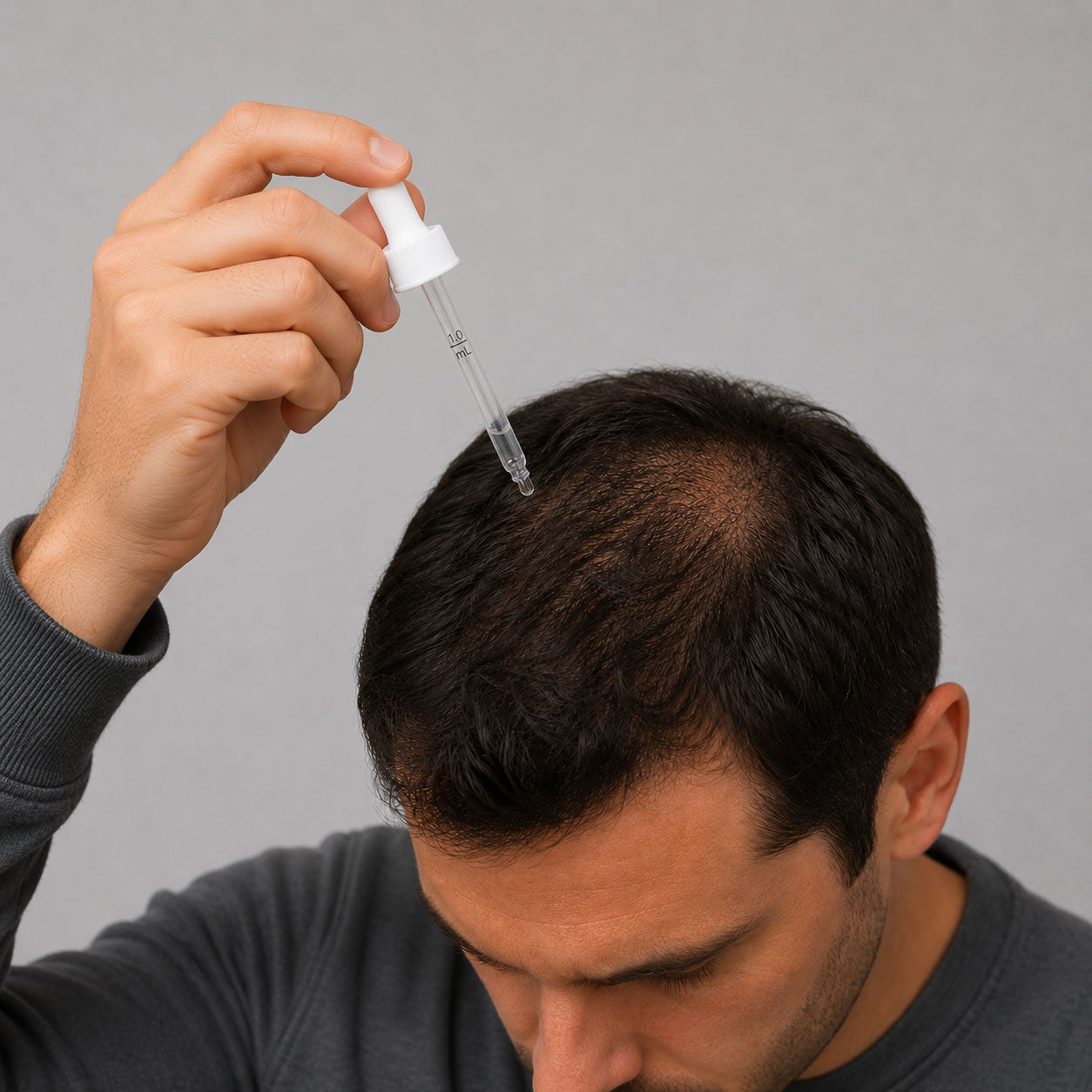
For men, the standard over-the-counter regimen is 5% Minoxidil applied to the affected area of a dry scalp twice a day (solution) or as directed for the foam. The most important factors are consistency and patience.
A temporary increase in shedding during the first two to eight weeks is common and generally reflects resting hairs being replaced. Visible results, if they appear, are usually assessed after four months, with the clearest picture at six to twelve months. Continued use is needed to maintain any benefit.
- Apply to the scalp, not the hair, and part the hair to reach the skin
- Let it dry fully before styling or sleeping
- Wash hands after applying
- Keep monthly photos in consistent lighting
- Stop and seek advice for chest pain, rapid heartbeat, dizziness or unexpected swelling
Lifestyle factors: what actually matters
Lifestyle does not cause or cure pattern hair loss, but it does influence general hair condition and can contribute to shedding. Adequate protein, iron and overall calories support normal hair growth. Crash diets and severe calorie restriction are well-known triggers for shedding. Smoking has been associated with more advanced hair loss in some studies. Sleep and stress management matter for health generally and reduce the risk of stress-related shedding layered on top.
Frequent washing, wearing hats and using normal styling products do not cause pattern hair loss. A clean, comfortable scalp actually makes a topical routine easier to stick with.
A simple starting plan
If you are noticing early signs and want a sensible, step-by-step plan, the following is a reasonable framework to discuss with a clinician.
- Week 0: take baseline photos; note family history and any recent triggers
- Week 0: choose a Minoxidil format you will actually use every day (foam or solution)
- Weeks 1-8: build the habit; expect possible early shedding
- Month 4: first photo comparison
- Month 6-12: fair assessment; review with a clinician whether to add or adjust
- Ongoing: supportive scalp care with a gentle shampoo and conditioner
How FOLIGAIN supports men's routines
FOLIGAIN offers 5% Minoxidil for men in foam and solution formats, along with cosmetic shampoos and conditioners formulated with the TRIOXIDIL® complex to help thinning hair look fuller and support scalp comfort. Kits combine a Minoxidil treatment with supporting products for an easy routine.
The goal is not to promise a particular result. It is to make a consistent, well-understood routine as easy as possible, because consistency is what gives any evidence-based approach its best chance.
Frequently asked questions
At what age does male pattern hair loss start?
It can begin any time after puberty. Many men notice early changes in their twenties or thirties, and the likelihood increases with age.
Is male pattern baldness inherited from the mother?
Genes from both parents contribute. A well-known variant sits on the X chromosome, inherited from the mother, but paternal genes also play a role.
Can a receding hairline grow back?
Topical Minoxidil is studied mainly at the crown, and the frontal hairline often responds less. Maintaining existing hair is a more realistic goal for the hairline.
Do hats cause hair loss?
Normal hats do not cause pattern hair loss. Very tight headwear worn constantly can contribute to traction at the hairline.
Should I use 2% or 5% Minoxidil?
In the US, 5% is the standard strength for men. Follow the product directions and speak to a clinician if you have heart conditions or other medical concerns.
This content is for educational purposes only and is not medical advice. It is not intended to diagnose, treat, cure or prevent any disease. Speak with a qualified healthcare professional about your individual situation.
Individual results vary. Hair-growth products are used consistently over months, and outcomes depend on the cause and stage of hair loss.
FOLIGAIN products related to this guide
If this guide matches your situation, our product education pages explain which FOLIGAIN formats suit which routines.
Explore FOLIGAIN products