The History of Minoxidil: From Blood-Pressure Pill to Hair Topical
How an oral blood-pressure medicine became the world's best-known over-the-counter hair-regrowth ingredient.
FOLIGAIN® Editorial Team · 18 min read · Updated 2026-09-28
Medical facts and treatment details have not been independently medically reviewed.
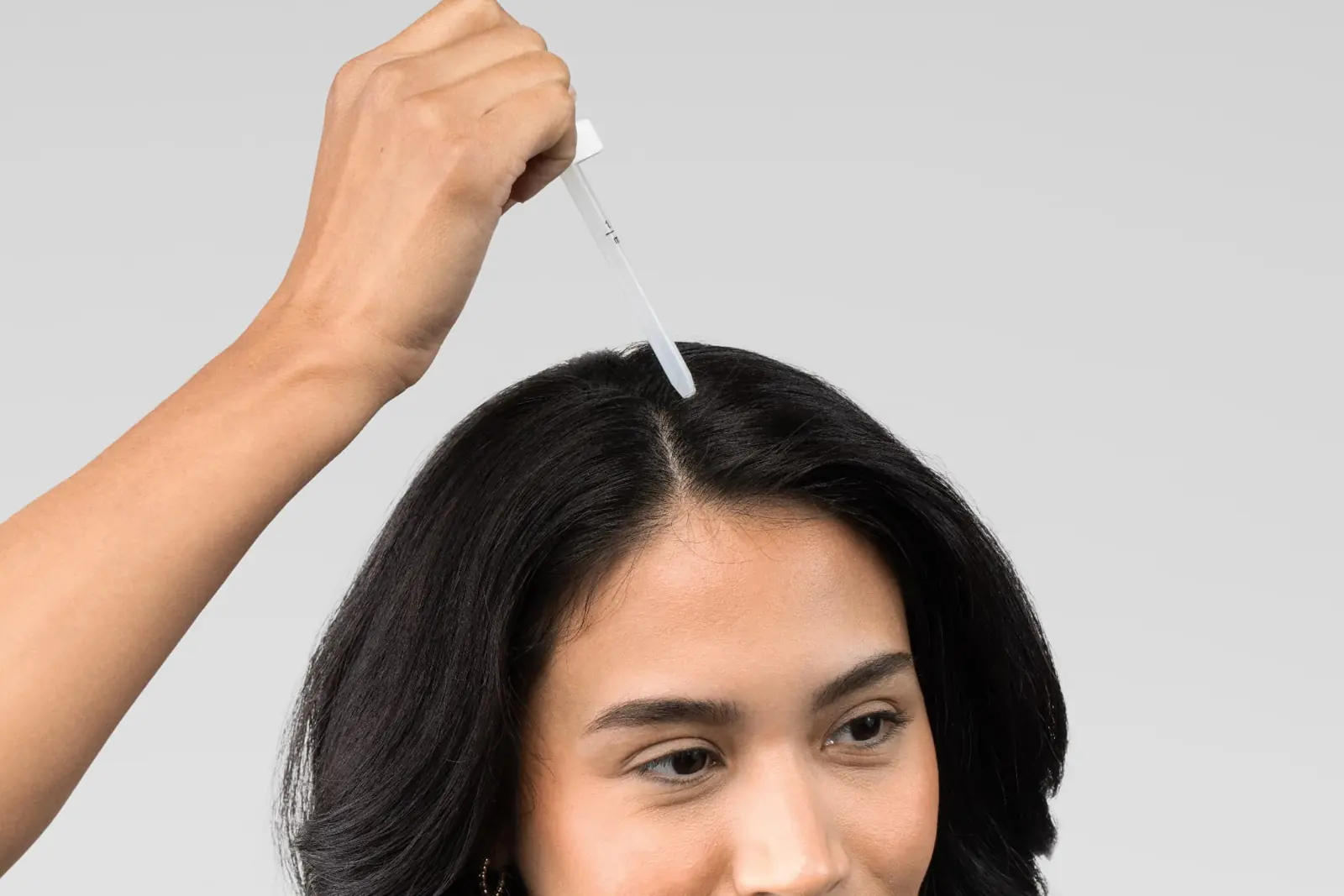
An accidental discovery
Minoxidil emerged in the 1960s–70s as a potent vasodilator for hard-to-treat hypertension. Physicians saw patients growing hair — hypertrichosis — and researchers began investigating a topical application for hair loss.
This kind of serendipitous discovery is more common in medicine than people often assume — several well-known drugs were first developed for one purpose and later repurposed once an unexpected effect was noticed in patients. What made Minoxidil's case notable was how visible and consistent the hair-growth side effect was, which made it a strong candidate for dedicated research into a topical, scalp-targeted use rather than remaining a footnote in blood-pressure literature.
Why an accidental side effect became a treatment
Once clinicians noticed hair growth in patients taking oral Minoxidil for blood pressure, researchers had to answer a harder question: could a topical version, applied directly to a thinning scalp, produce meaningful regrowth without the systemic blood-pressure-lowering effects that come with swallowing the pill? That required its own line of research separate from the hypertension drug, including dose-finding studies to figure out what concentration worked on the scalp with an acceptable side-effect profile.
This is part of why topical Minoxidil is treated as a drug rather than a cosmetic ingredient today: its regulatory path required clinical trials demonstrating it changed a biological process (the hair growth cycle), not just how hair looks on the surface. That distinction is also why FOLIGAIN®'s TRIOXIDIL® cosmetic ingredient complexes are marketed differently — as cosmetic support for hair and scalp appearance — rather than as a treatment carrying the same kind of clinical claims as an OTC drug.
Key milestones
| Year | Milestone (US) |
|---|---|
| 1979 | Oral Minoxidil approved for hypertension |
| 1988 | Topical 2% approved (prescription) for men |
| 1991 | Approval extended to women |
| 1996 | Over-the-counter status |
| 1997 | 5% solution for men OTC |
| 2006+ | 5% foam introduced; later labeled for women |
How the treatment landscape evolved alongside Minoxidil
As topical Minoxidil became widely available, it also became a baseline against which other hair-loss treatments were compared and often combined. Prescription finasteride, approved for male pattern hair loss in the mid-1990s, works through a different mechanism (reducing DHT) and is frequently used together with Minoxidil by people who want to address the condition from two angles under a clinician's guidance. Procedures such as hair transplantation and, more recently, low-level laser devices, developed along separate but overlapping timelines.
Cosmetic hair-care ingredients, including complexes like FOLIGAIN®'s TRIOXIDIL®, developed in parallel as a distinct category — supporting the health and appearance of hair and scalp rather than being studied and regulated as drugs. Understanding this layered history helps explain today's landscape: OTC drugs, prescription drugs, procedures and cosmetics are different categories with different evidence bars, and a given product's marketing claims should match which category it actually belongs to.
It's also worth noting how consumer access changed over this period. Early on, topical Minoxidil could only be obtained with a prescription, which limited how many people could try it and added cost and a doctor visit as barriers. Its move to over-the-counter status in 1996 was a significant shift, putting a clinically studied hair-loss treatment directly on pharmacy shelves for the first time and setting a template that other OTC hair-care products, including cosmetic lines like TRIOXIDIL®, would later be positioned around — though always in a different regulatory category from the drug itself.
A realistic view of what changed and what didn't
It's worth noting what this history does and doesn't tell us. The decades of use since 1988 give topical Minoxidil a long track record and a well-characterized side-effect profile, which is reassuring. But that history doesn't mean results are guaranteed for any individual — response still varies widely, and the fundamentals established in early trials (months of consistent use needed, a possible early shedding phase, discontinuation leading to gradual loss of gains) still apply exactly as they did when the drug was first approved for hair loss.
Where it stands today
Topical Minoxidil is sold worldwide by many brands, including FOLIGAIN®, Rogaine®/Regaine® and store brands. Research continues on formulations, adjuncts and delivery. FOLIGAIN® pairs Minoxidil products with cosmetic scalp and hair care such as TRIOXIDIL® formulas, which are cosmetics and not drug treatments.
Global availability has also broadened significantly since the 1990s. Many countries now regulate topical Minoxidil as either an over-the-counter or pharmacist-supervised product, though exact rules, approved strengths and labeled sexes vary by market. Anyone traveling or purchasing from an international retailer should check that a product's labeling matches their local regulatory guidance rather than assuming US rules apply everywhere.
FOLIGAIN® and alternatives in today's market
Decades after Minoxidil's original approval, buyers can choose among many labeled OTC products carrying the same active ingredient, including FOLIGAIN®'s range, Rogaine®/Regaine® and retailer store brands. Because the underlying drug and its approved strengths are well established, the meaningful differences between brands today tend to be format (solution vs foam), vehicle ingredients, packaging and price, rather than fundamentally different active ingredients or claims.
For people who want to pair Minoxidil with additional scalp or hair care, FOLIGAIN® also offers TRIOXIDIL®, a cosmetic ingredient complex. It sits in a separate regulatory category from the OTC drug — a distinction worth keeping in mind whenever a hair-care product's marketing sounds like it's making drug-level claims.
Looking back at how far the category has come — from a repurposed blood-pressure pill to a globally available, well-studied OTC hair-loss treatment with multiple formats and strengths — it's a reminder that today's options exist because of decades of incremental study. That history is also a useful gauge for evaluating any new hair-loss product marketed today: does it have anything close to this level of long-term data, or is it borrowing credibility from Minoxidil's track record while making different, unproven claims?
What researchers currently understand about why it works
Decades after Minoxidil's accidental discovery, researchers have built a clearer, though still incomplete, picture of how it affects hair follicles. Topical Minoxidil is thought to prolong the anagen (active growth) phase of the hair cycle and to act on potassium channels in cells, which is connected to its original blood-vessel-relaxing effect as a blood pressure medicine. It may also improve blood flow to the scalp and encourage miniaturized follicles to produce thicker, longer hairs for a longer stretch of their cycle.
It's worth being honest that the full mechanism isn't completely mapped out even now — researchers understand a good deal about what Minoxidil does to the hair cycle without a complete picture of every step of why. This is not unusual in medicine; plenty of long-approved treatments work reliably in practice before every mechanistic detail is understood. What matters for someone deciding whether to use it is the decades of clinical trial and real-world data on outcomes and safety, rather than a complete mechanistic explanation.
How generic competition and OTC status changed the market
The original branded topical Minoxidil product held a period of market exclusivity after its prescription approval, which kept prices relatively high while it remained the only option. Once patents expired and the product moved to over-the-counter status, generic and store-brand versions carrying the same active ingredient at the same labeled strengths became widely available, which brought prices down substantially over time.
This shift mirrors what happens with many drugs once patent protection ends: competition among manufacturers making the same active ingredient tends to lower cost while, in principle, keeping the underlying drug and its labeled directions consistent. It's part of why comparing today's Minoxidil products across brands, including FOLIGAIN®, Rogaine®/Regaine® and store labels, often comes down to format, vehicle ingredients and price rather than differences in the core drug itself.
What Minoxidil's history teaches about evaluating new products
Minoxidil's path — an accidental finding, followed by dedicated dose-finding research, randomized trials, prescription approval, and eventually OTC status — represents an unusually thorough evidence trail for a hair-loss product. Few ingredients marketed for hair growth today, cosmetic or otherwise, have anything close to this depth of long-term clinical data behind them.
That history is a useful lens for evaluating newer products, including cosmetic complexes: a product's marketing language should match the level of evidence actually behind it. A drug that has gone through this kind of clinical trial process is entitled to make drug-level claims within its approved label. A cosmetic ingredient complex, including FOLIGAIN®'s TRIOXIDIL®, is formulated to support the health and appearance of hair and scalp, and its marketing should reflect that cosmetic category rather than borrow language that implies the same clinical trial standard Minoxidil went through.
How the story of Minoxidil compares to other repurposed medicines
Minoxidil isn't the only drug whose most famous use today differs from its original purpose. This pattern — an unexpected side effect noticed during use for one condition, followed by dedicated research into a new application — has happened with several other medicines over the decades, though each followed its own separate approval path with its own trials. What made Minoxidil's story unusually durable is that its second life, as a topical hair treatment, went on to outlast its original use in oral form for blood pressure, which is now managed with other medications first in most cases.
That trajectory is a reminder that a drug's regulatory status and evidence base are tied to the specific use and formulation being studied — Minoxidil's decades of hair-loss data apply to the topical, scalp-applied form used as labeled, not to any and every way the ingredient might be used or marketed.
FOLIGAIN® and the broader Minoxidil market today
Today's Minoxidil market reflects the long regulatory history described above: a single well-studied active ingredient, available at established strengths and formats, sold under many brand names including FOLIGAIN®, Rogaine®/Regaine® and retailer store brands. FOLIGAIN® also sells TRIOXIDIL®, a cosmetic ingredient complex used in shampoos and serums, which sits in a distinct, separately regulated category from the OTC drug.
Understanding this history is useful context for consumers navigating today's crowded hair-care shelf: a product's claims should match the evidence behind it, and knowing that topical Minoxidil earned its current status through decades of prescription use, dose-finding trials and post-market monitoring helps explain why it's treated differently, under the law and in labeling, from cosmetic hair-care ingredients marketed alongside it.
Why this history still matters for a first-time buyer
For someone picking up a box of Minoxidil for the first time, this decades-long history translates into a few practical reassurances: the active ingredient's effects and common side effects are well documented, the labeled directions reflect years of dose-finding research rather than guesswork, and the four-to-six-month timeline described throughout these guides comes from that same body of study rather than marketing convenience.
That history doesn't remove the need for patience or consistency, and it doesn't guarantee an individual result, but it does mean you're starting with one of the most thoroughly studied ingredients in the entire hair-loss category — a track record that most newer products, cosmetic or otherwise, simply haven't had the decades needed to build.
How early dose-finding trials shaped today's labeled directions
Long before a bottle of topical Minoxidil ever reached a pharmacy shelf, researchers had to work out practical questions that seem obvious in hindsight: how much active ingredient per application, how often, and in what kind of vehicle would produce meaningful scalp effects without unnecessary irritation or unwanted absorption elsewhere on the body. That work took the form of dose-finding studies comparing different concentrations and application frequencies against each other and against a placebo, well before the larger trials that ultimately supported approval.
This is part of why the label on a Minoxidil product isn't an arbitrary suggestion — the twice-daily direction for the original 2% solution, and later the once-daily direction for 5% foam, reflect what those early studies found to be a reasonable balance between effect and tolerability for most users. It's also why deviating from the label, whether by applying more often or using a higher concentration than studied for your situation, moves outside the conditions that were actually tested, which is a central reason pharmacists and the label itself consistently advise sticking to the directions as written.
Understanding that the label is the end product of this research process, rather than a conservative marketing choice, can make it easier to trust the routine even when results feel slow to arrive — the four-to-six-month checkpoint discussed throughout these guides comes from the same body of trial data that established the dose and frequency in the first place.
Separating the real history from common myths
A few misconceptions tend to circulate about Minoxidil's backstory, and it's worth addressing them directly. Minoxidil was not designed or discovered as a hair-loss treatment; it was developed and approved first as an oral medicine for severe high blood pressure, and its effect on hair was a side effect noticed afterward, not the original goal of the research.
Another common misunderstanding is that a prescription-strength or 'doctor's version' of topical Minoxidil exists that works meaningfully better than the OTC product. In the US, topical Minoxidil at the labeled OTC strengths is the same active ingredient at the same concentrations studied in the original trials; oral Minoxidil for hair loss, sometimes prescribed off-label at low doses, is a different, prescription-only approach with its own separate risk profile and is not simply a stronger version of the topical product.
It's also worth clearing up the idea that because Minoxidil was 'discovered by accident,' its evidence base is somehow thinner than a purpose-built drug. The opposite is true: once the hair-growth effect was noticed, it still had to go through the same kind of dedicated dose-finding studies, randomized controlled trials and regulatory review as any other drug seeking approval for a new indication. The accidental origin explains how researchers got the idea to study it for hair loss, not how thoroughly that idea was subsequently tested.
From the FOLIGAIN® library
Related FOLIGAIN® products and routines
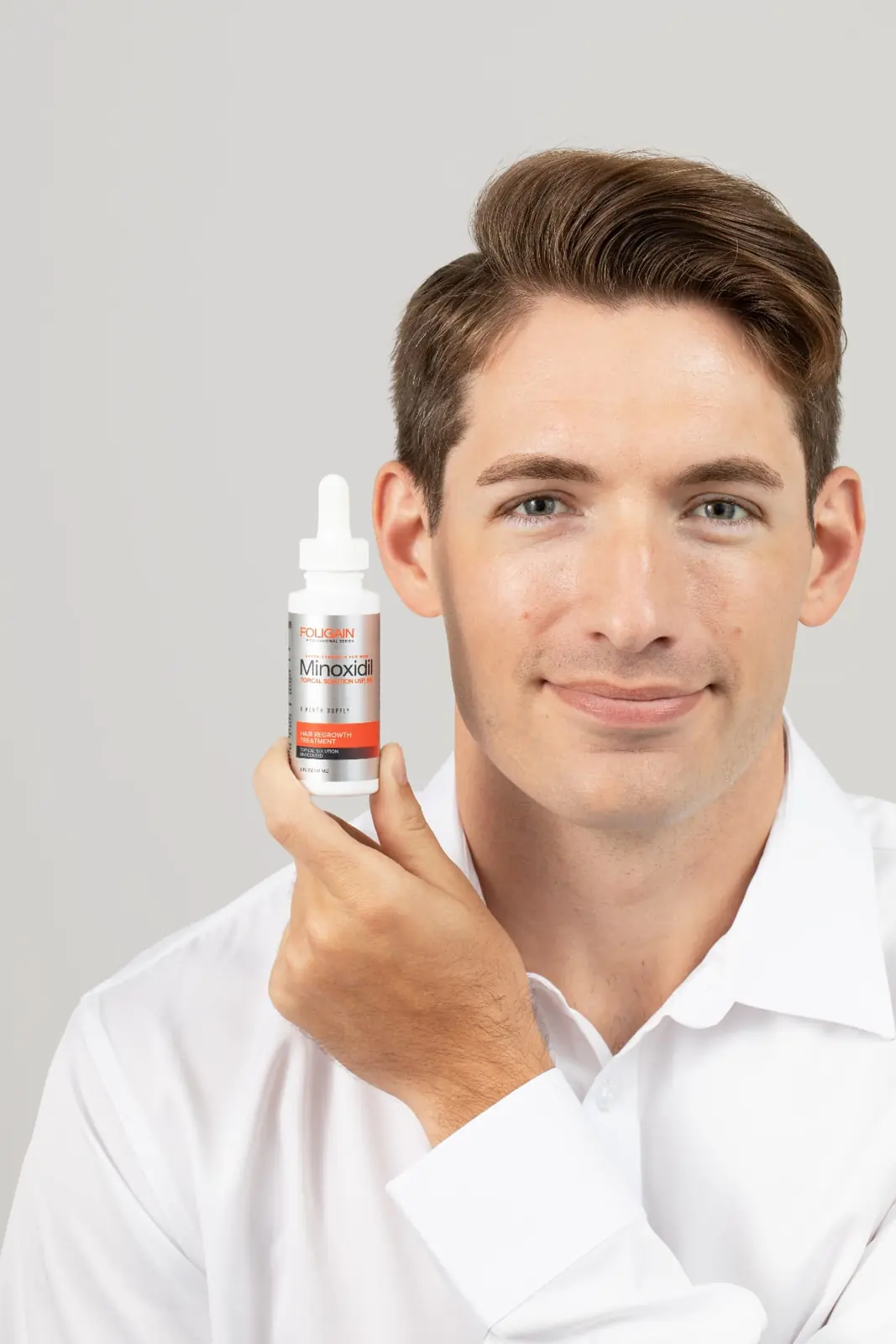
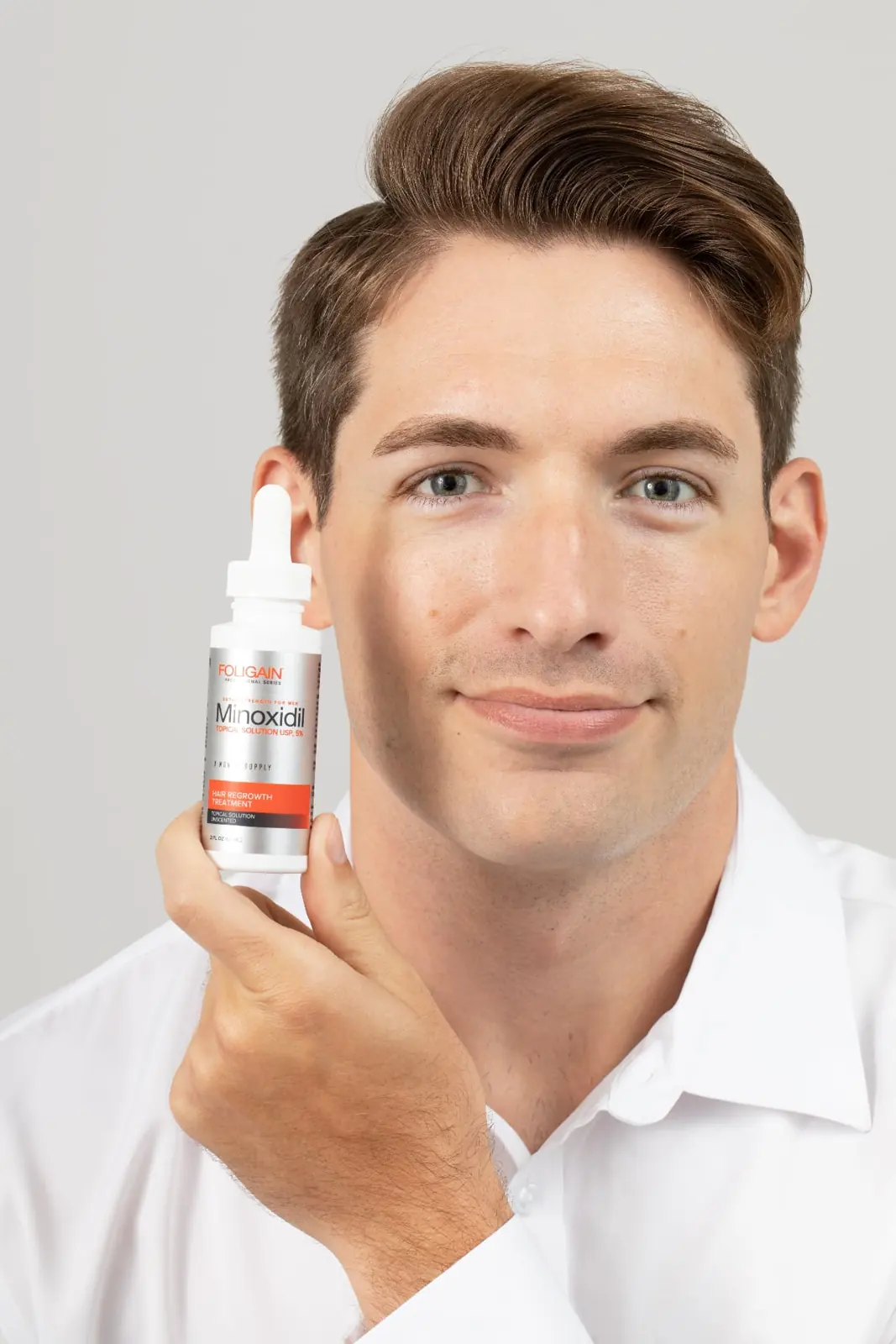
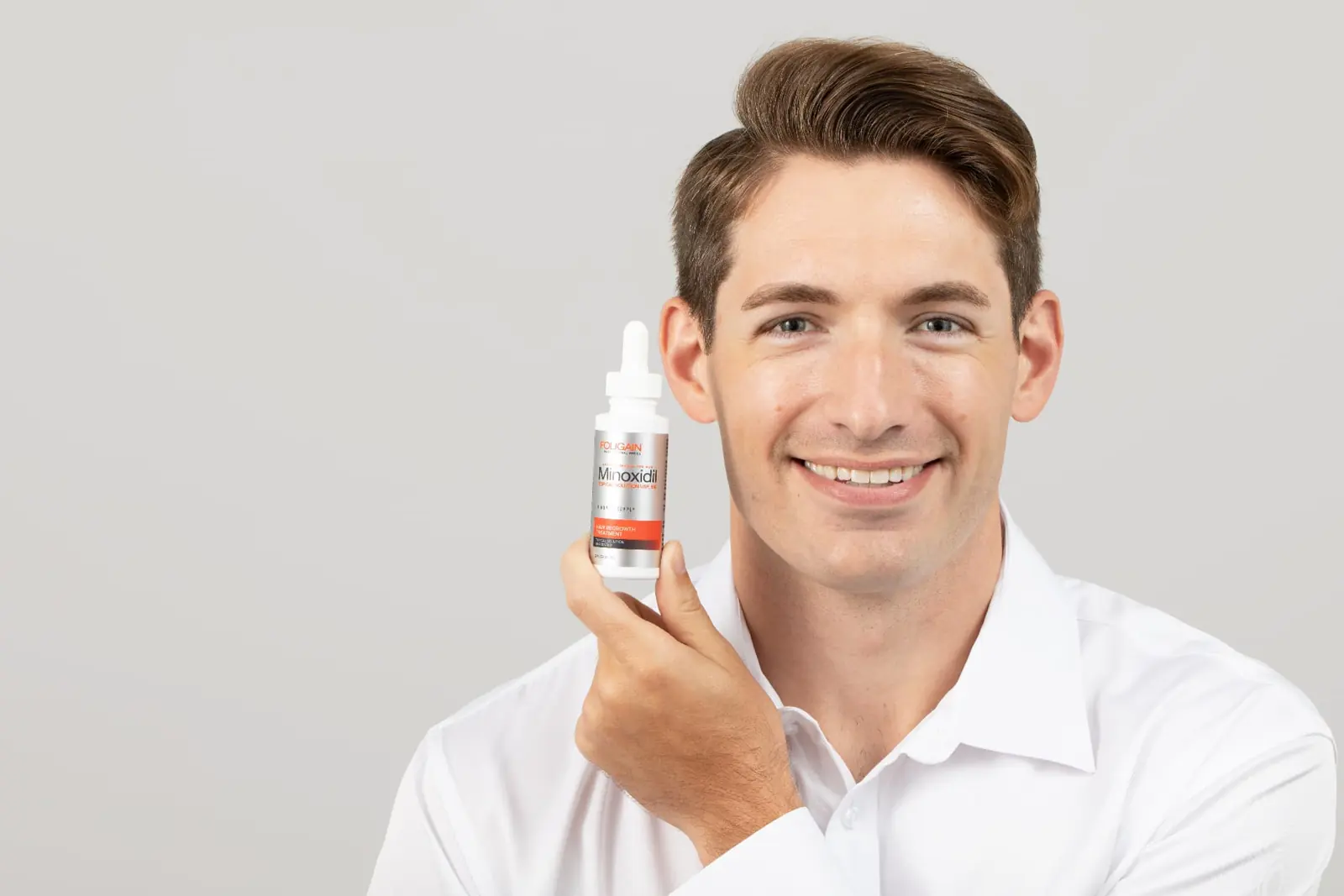
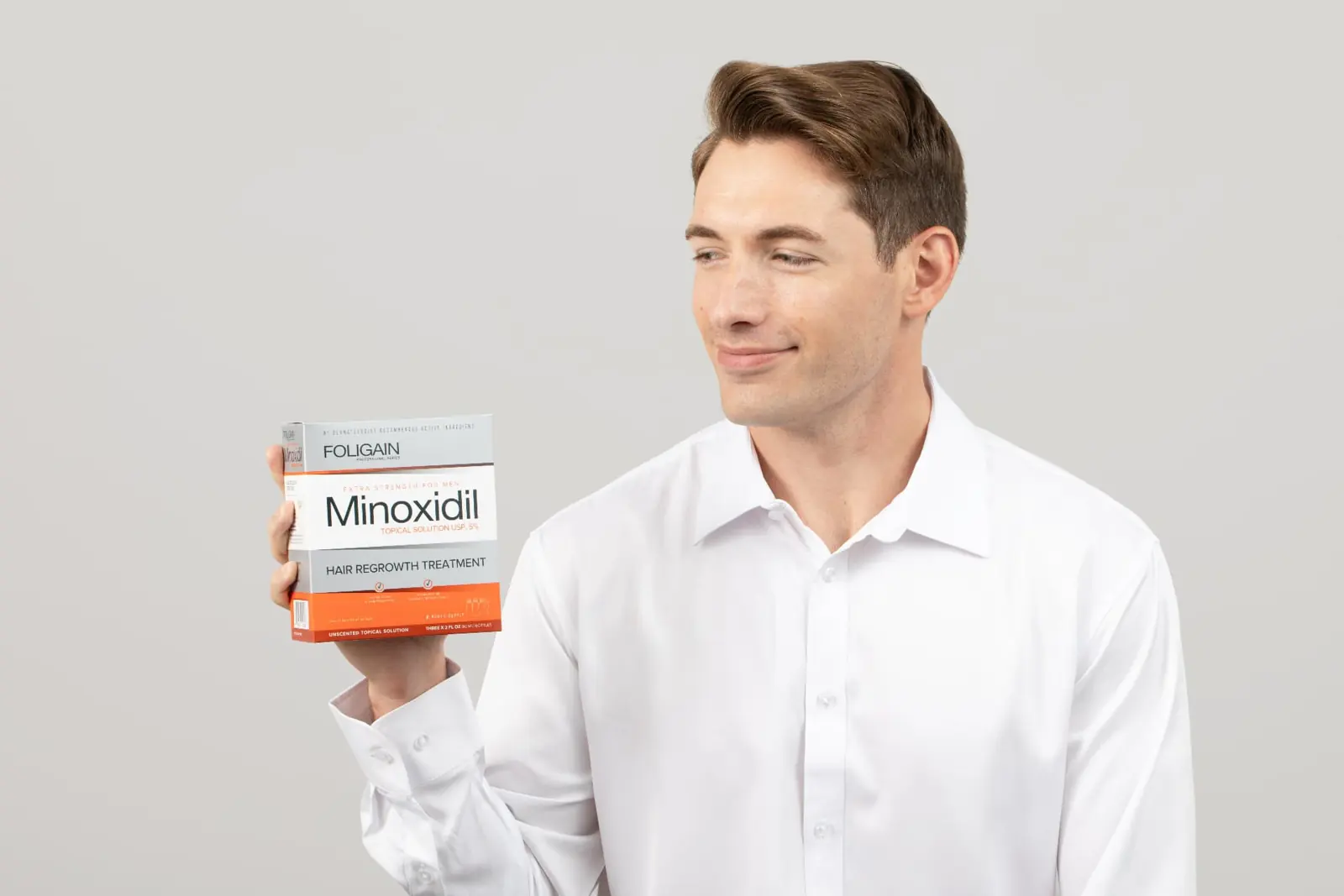
Images are matched to the topic for education; always confirm directions and claims on the exact product label.
Frequently asked questions
Is oral Minoxidil used for hair?
Some clinicians prescribe low-dose oral Minoxidil off-label. It's prescription-only and requires medical supervision.
Why did it take so long to become OTC?
Regulators typically require a period of prescription use and safety data before considering a switch to over-the-counter status, which is what happened with topical Minoxidil between 1988 and 1996.
Is 5% Minoxidil newer than 2%?
Yes. The original topical approval was at 2%; the 5% strength followed once studies supported its use, initially for men.
Did the foam replace the solution?
No, both remain available today. Foam was introduced later as an additional format, not a replacement, and some people prefer one over the other.
Is TRIOXIDIL® an older or newer type of ingredient than Minoxidil?
TRIOXIDIL® is a FOLIGAIN® cosmetic ingredient complex developed for hair and scalp care; it is a different category of product from the OTC drug Minoxidil and isn't studied or regulated the same way.
Do scientists fully understand how Minoxidil regrows hair?
Not completely. Researchers understand a good deal about its effects on the hair growth cycle and blood flow, but the full mechanism isn't entirely mapped out, even with decades of use.
Why did prices drop so much over time?
Once patents expired and topical Minoxidil moved to over-the-counter status, generic and store-brand competition brought down the cost of products containing the same active ingredient.
Does FOLIGAIN®'s history with Minoxidil differ from other brands?
No. All brands selling OTC topical Minoxidil, including FOLIGAIN®, rely on the same underlying active ingredient and its established approval history; differences between brands come down to format, vehicle and price.
Was Minoxidil originally designed to grow hair?
No. It was developed and first approved as an oral medicine for severe high blood pressure; hair growth was an unexpected side effect that researchers later studied on its own.
This content is for educational purposes only and is not medical advice. It is not intended to diagnose, treat, cure or prevent any disease. Speak with a qualified healthcare professional about your individual situation.
Individual results vary. Hair-growth products are used consistently over months, and outcomes depend on the cause and stage of hair loss.
FOLIGAIN® products related to this guide
If this guide matches your situation, our product education pages explain which FOLIGAIN® formats suit which routines.
Explore FOLIGAIN® products