Itchy or Sensitive Scalp: Common Causes and Gentle Fixes
From product allergies to psoriasis: what makes a scalp itch, how to find the trigger, and when itching signals something more.
FOLIGAIN® Editorial Team · 16 min read · Updated 2026-09-28
Medical facts and treatment details have not been independently medically reviewed.
The usual suspects
Most scalp itch comes from a fairly small number of well-recognized causes, and working through them systematically is usually more productive than guessing.
| Cause | Clues | First step |
|---|---|---|
| Dandruff | Greasy, yellowish flakes | Anti-dandruff shampoo |
| Dry scalp | Fine white flakes, tightness | Gentler shampoo, less heat, moisturizing |
| Contact dermatitis | Itch after a new product or hair dye | Stop the product; patch test before reuse |
| Propylene glycol (Minoxidil solutions) | Itch localized to where solution is applied | Ask about a foam or propylene-glycol-free formula |
| Psoriasis | Thick silvery plaques, sharp borders | See a dermatologist |
| Head lice | Intense itch, visible nits on hair shafts | Over-the-counter or prescription lice treatment |
| Folliculitis | Tender red bumps centered on follicles | See a clinician if persistent or spreading |
| Eczema | Itchy, sometimes weepy patches, history of eczema elsewhere | Gentle care; topical steroid if prescribed |
Finding your trigger
When the cause isn't obvious, the most reliable approach is to strip your routine down to basics. Go back to a minimal routine — one gentle, fragrance-free shampoo and nothing else applied to the scalp — for about two weeks. This gives irritated skin a chance to calm down and removes the noise of multiple products interacting.
If the itch settles during that period, reintroduce products one at a time, spaced about a week apart, watching for a return of symptoms after each addition. This slow, methodical process is far more informative than changing three products at once, which makes it almost impossible to know which one was actually responsible.
Hair dye containing paraphenylenediamine (PPD) deserves particular caution, since it is one of the most common causes of significant allergic contact dermatitis on the scalp, sometimes with noticeable swelling of the face or scalp in a true allergic reaction. Always perform the patch test described on the box at least 48 hours before a full application, even if you have used the same dye brand before without issue, since sensitization can develop over time with repeated exposure.
Gentle care habits
- Use lukewarm water rather than hot, since hot water increases irritation and strips protective oils.
- Massage the scalp with fingertips only, never with fingernails, which can create micro-abrasions that worsen itching.
- Avoid heavily fragranced shampoos, conditioners and styling products until you've confirmed fragrance isn't a trigger for you.
- Rinse thoroughly, especially conditioner and any leave-on styling product, since residue left on the scalp is a common hidden irritant.
- Keep nails short and trimmed to limit the skin damage that comes from scratching, which can create a cycle where scratching itself perpetuates the itch.
- Introduce new hair products one at a time and give each one at least a week before judging it, so you can trace any reaction back to its source.
Treatment options in perspective
Treatment really depends on the underlying cause, which is why identifying it matters so much before reaching for a solution. Contact dermatitis from a product or dye resolves once the trigger is removed, sometimes helped along by a short course of a mild topical steroid if a dermatologist recommends one for a bad flare. Dandruff-related itch responds to the antifungal shampoo ingredients discussed in our dry scalp versus dandruff guide. Dryness-related itch responds to gentler, more moisturizing routines rather than medicated treatments.
Psoriasis and eczema usually need dermatologist-guided treatment, which may include prescription-strength topical steroids, vitamin D analogues, or, for more extensive psoriasis, systemic medications. These are genuine medical conditions and are not something a cosmetic shampoo switch will resolve on its own, even a very good one.
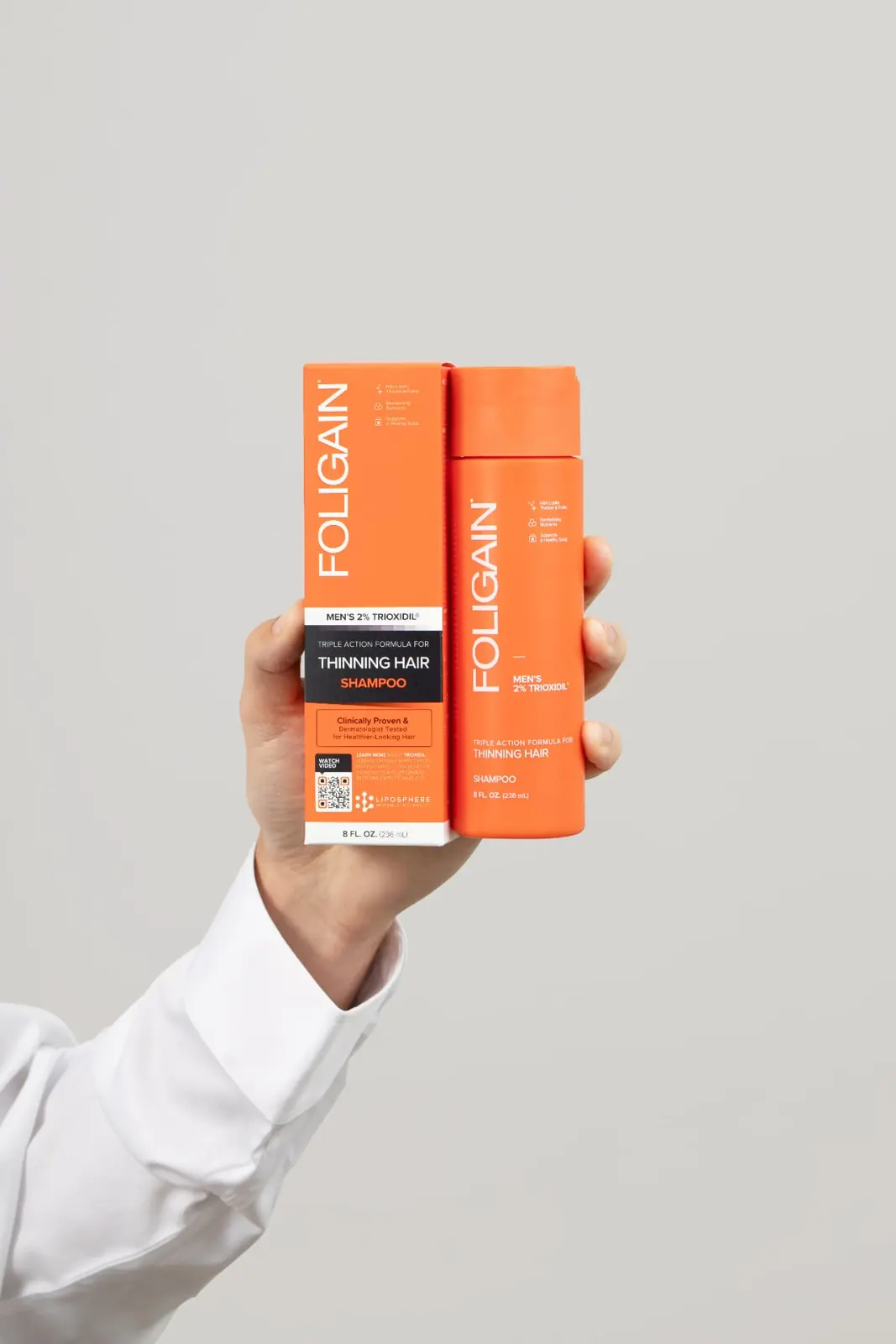
Where a scalp is simply reactive or sensitive without an obvious inflammatory skin condition, choosing consistently gentle, fragrance-conscious products day to day — including a FOLIGAIN® gentle shampoo and conditioner, if that fits your routine — can reduce the baseline irritation load on the scalp and make flare-ups less frequent. This is a supportive, cosmetic-level strategy rather than a treatment for an underlying medical skin condition, and it works best alongside, not instead of, addressing a specific diagnosed trigger.
Itch and hair-growth products
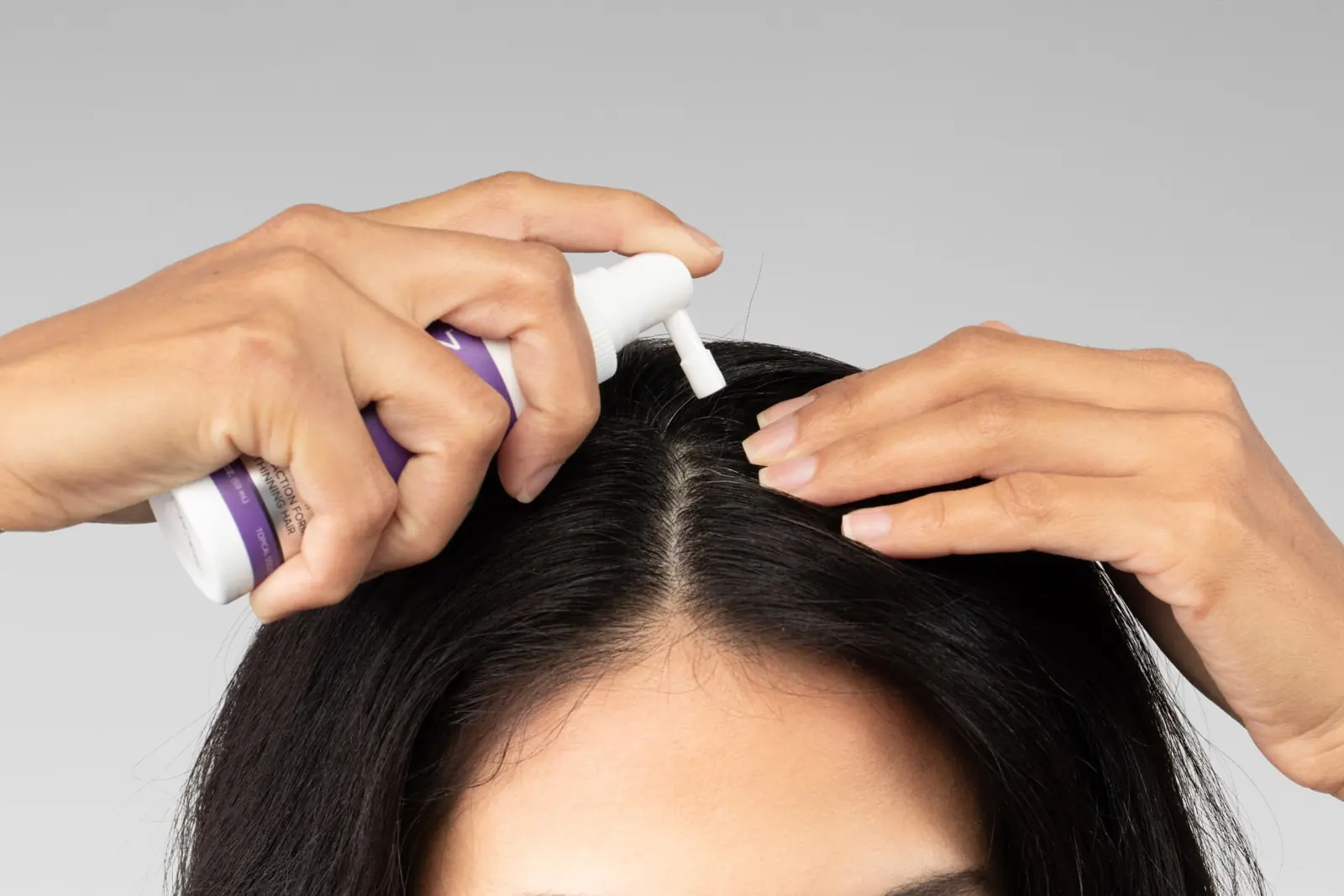
If you're using a Minoxidil solution and notice itching that seems to track with where you apply it, propylene glycol or alcohol in the formula is a very plausible cause rather than the Minoxidil itself. Switching to a foam formulation, which is typically propylene-glycol free, resolves this for a meaningful number of users. If you're combining a Minoxidil drug product with a FOLIGAIN® cosmetic leave-on, introducing them one at a time — rather than starting both on the same day — makes it much easier to identify which one, if either, is behind new itching.
Realistic timeline
Itch caused by an identifiable irritant — a new shampoo, a hair dye, a leave-on product — usually improves within a few days to a week of stopping the product, and fully resolves within two to three weeks as the skin barrier recovers. Itch from dandruff or dryness follows the timelines described in their respective guides, generally one to four weeks with consistent, matched treatment. Itch from psoriasis or eczema can take longer and typically needs ongoing management rather than a single fix, since these are chronic, flaring conditions. If itching persists beyond three to four weeks despite eliminating likely triggers and adjusting your routine, it's a reasonable point to bring in a dermatologist rather than continuing to experiment on your own.
When to see a professional
This guide is educational. Persistent pain, bleeding, spreading redness, pus, scarring or patchy hair loss should be assessed by a dermatologist.
From the FOLIGAIN® library
Related FOLIGAIN® products and routines
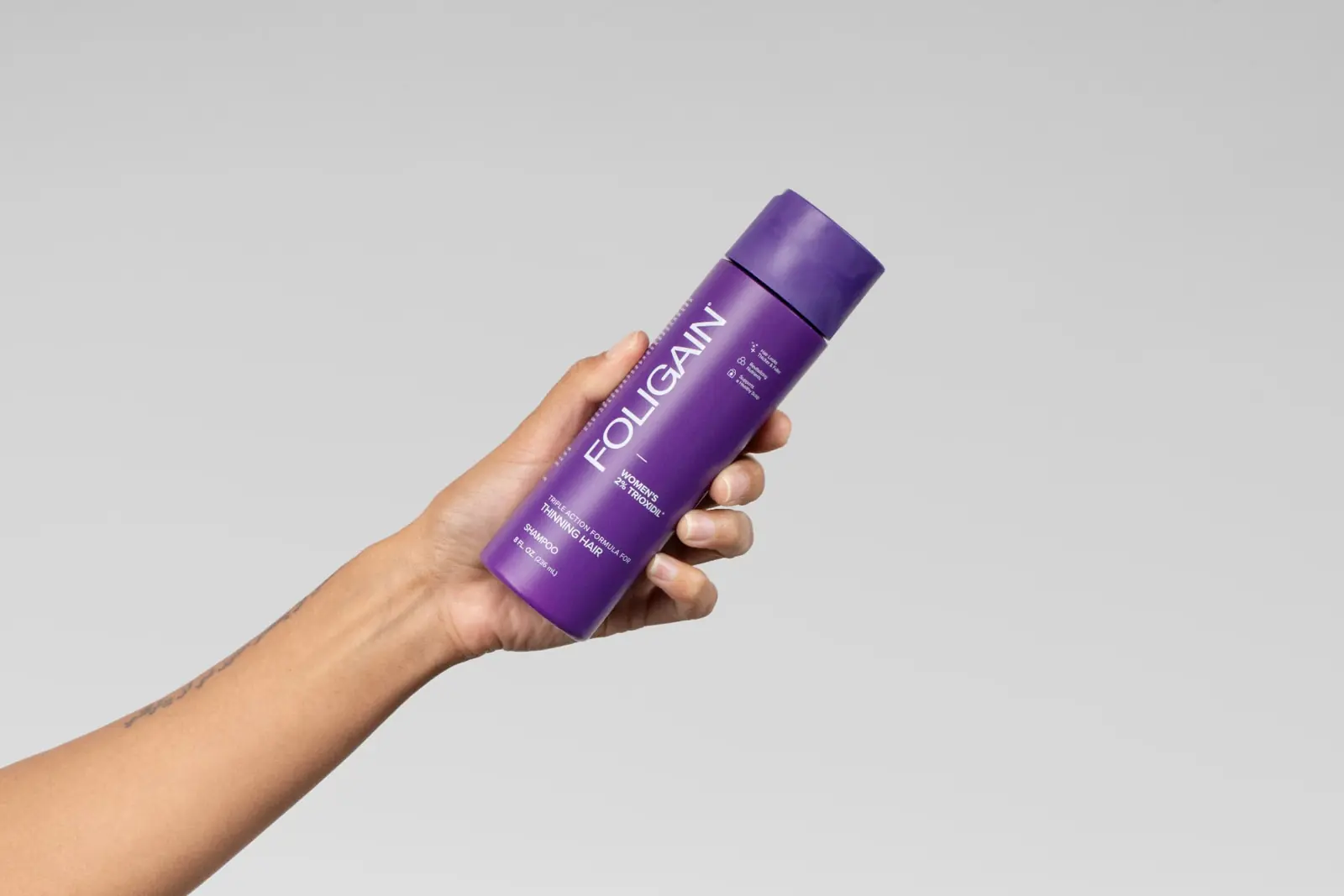
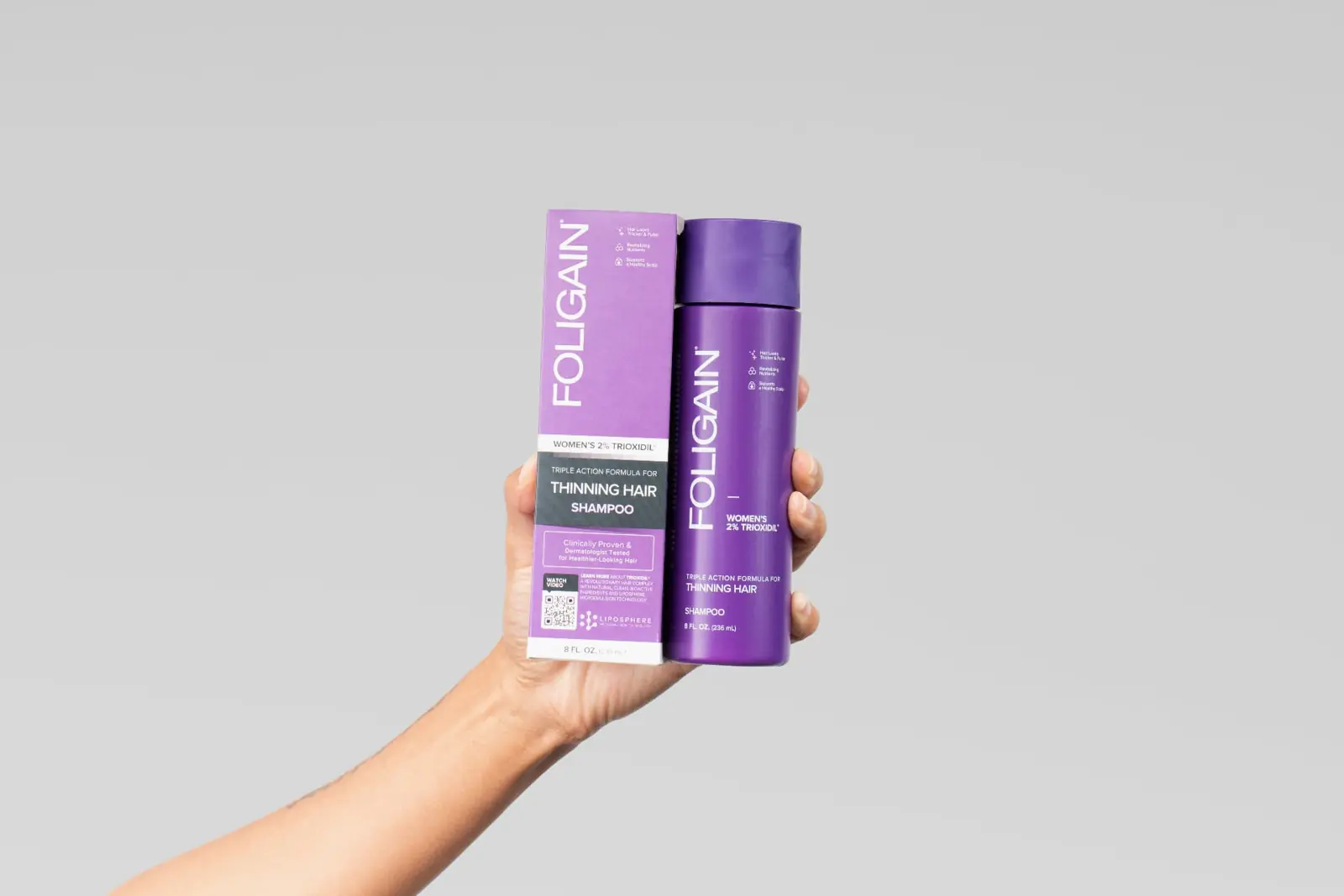
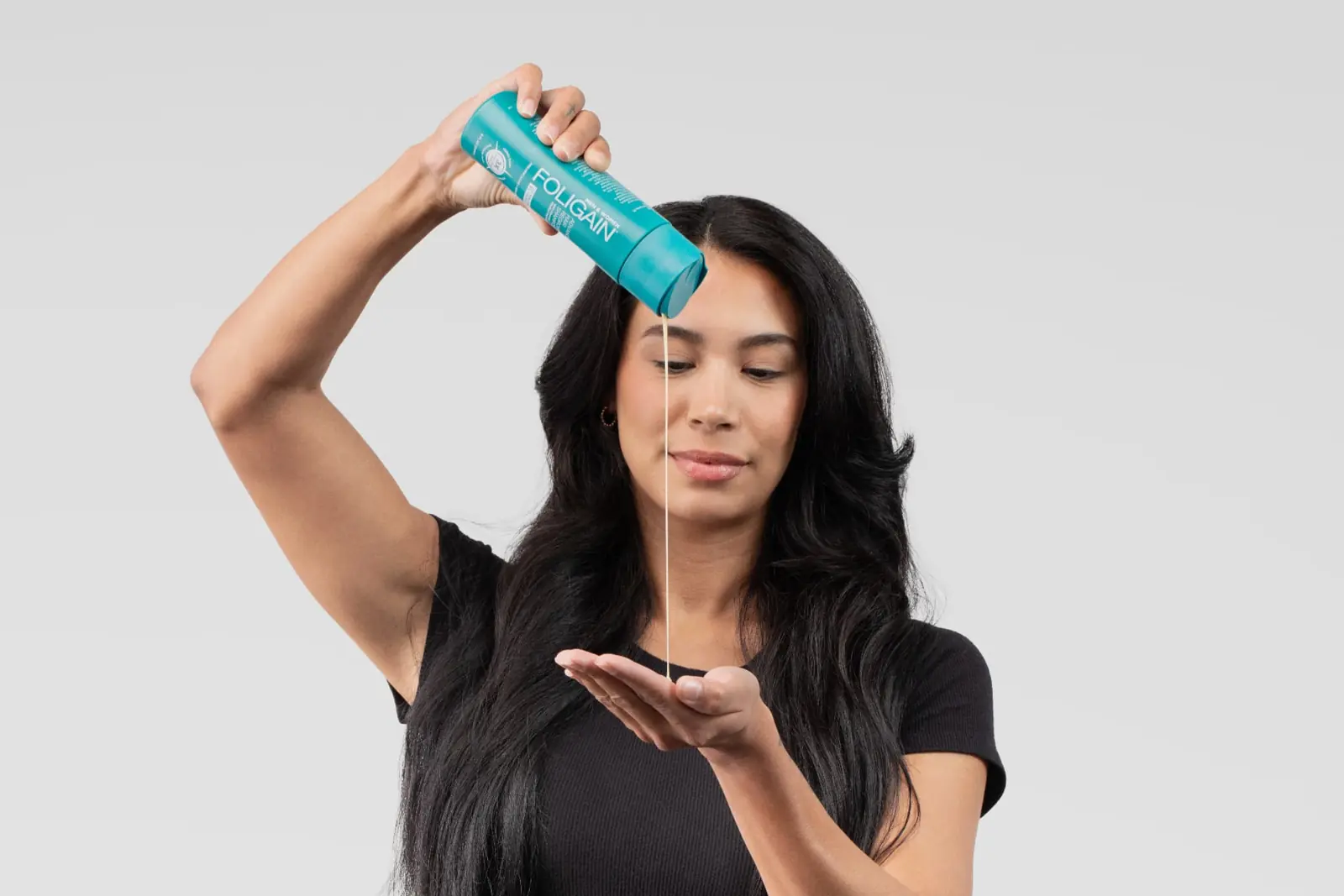
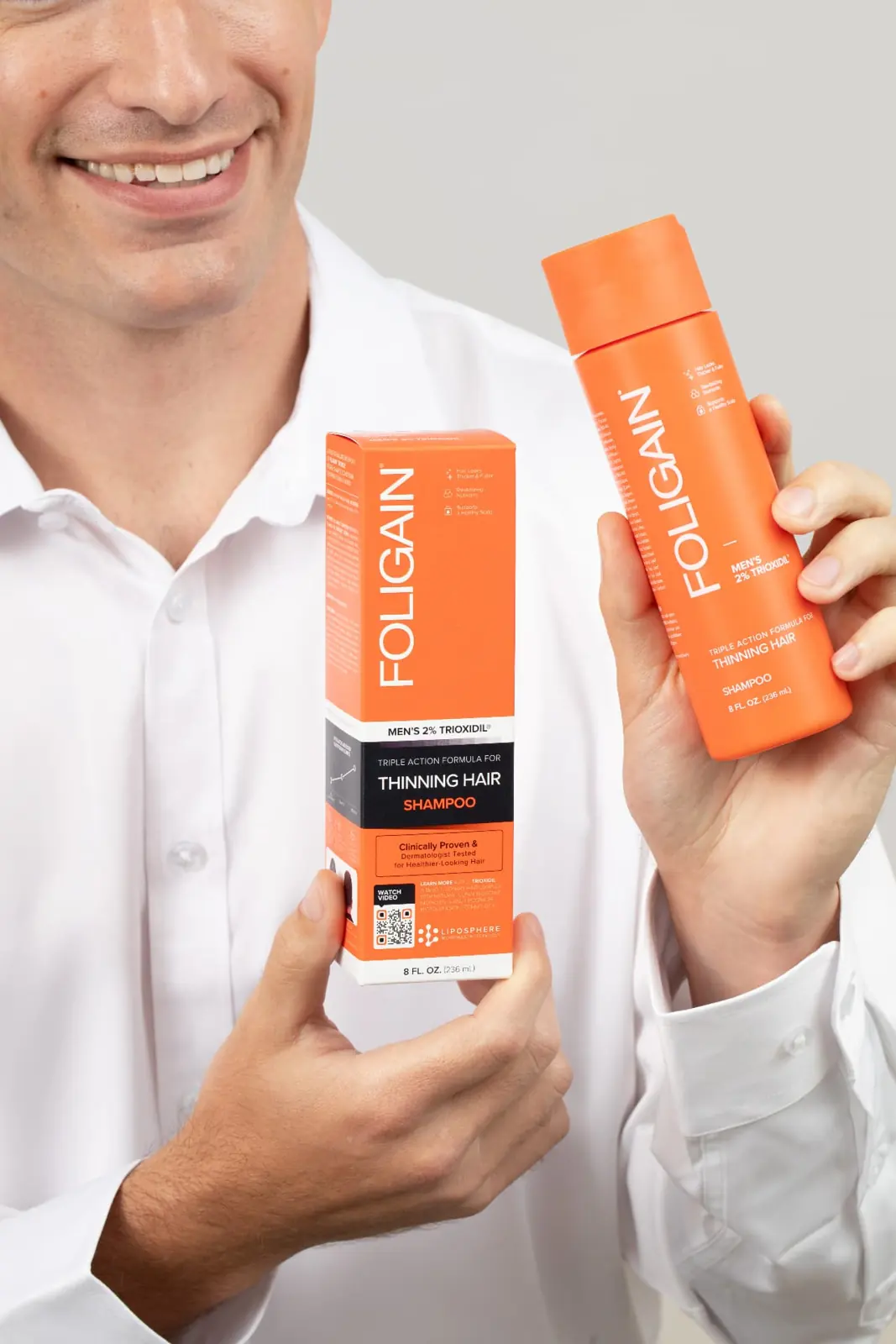
Images are matched to the topic for education; always confirm directions and claims on the exact product label.
Frequently asked questions
Can stress make my scalp itch?
Yes. Stress can worsen dandruff, psoriasis and eczema flares through its effects on inflammation and the immune system, which can increase itch even without a new external trigger.
Is itching a sign of hair growth?
No. Itching is not a reliable sign of regrowth or of a treatment 'working'; it usually indicates some form of scalp irritation that's worth investigating on its own terms.
How do I know if it's an allergic reaction versus simple irritation?
True allergic reactions often involve more pronounced redness, swelling, or a rash that spreads beyond the area a product touched, and can worsen with repeated exposure over time; simple irritation tends to stay localized and settle once the product is stopped.
Can a cosmetic shampoo cause itching?
Any shampoo, including gentle cosmetic ones, can cause itching in someone sensitive to a specific ingredient or fragrance, which is why the patch-test-and-introduce-slowly approach applies to cosmetic products as well as medicated ones.
Is scalp itch ever caused by something outside the scalp itself?
Occasionally. Certain nerve-related conditions, thyroid issues, and even anxiety can contribute to a persistent itch sensation without an obvious visible scalp problem, which is worth mentioning to a doctor if standard scalp-focused approaches aren't helping.
This content is for educational purposes only and is not medical advice. It is not intended to diagnose, treat, cure or prevent any disease. Speak with a qualified healthcare professional about your individual situation.
Individual results vary. Hair-growth products are used consistently over months, and outcomes depend on the cause and stage of hair loss.
FOLIGAIN® products related to this guide
If this guide matches your situation, our product education pages explain which FOLIGAIN® formats suit which routines.
Explore FOLIGAIN® products