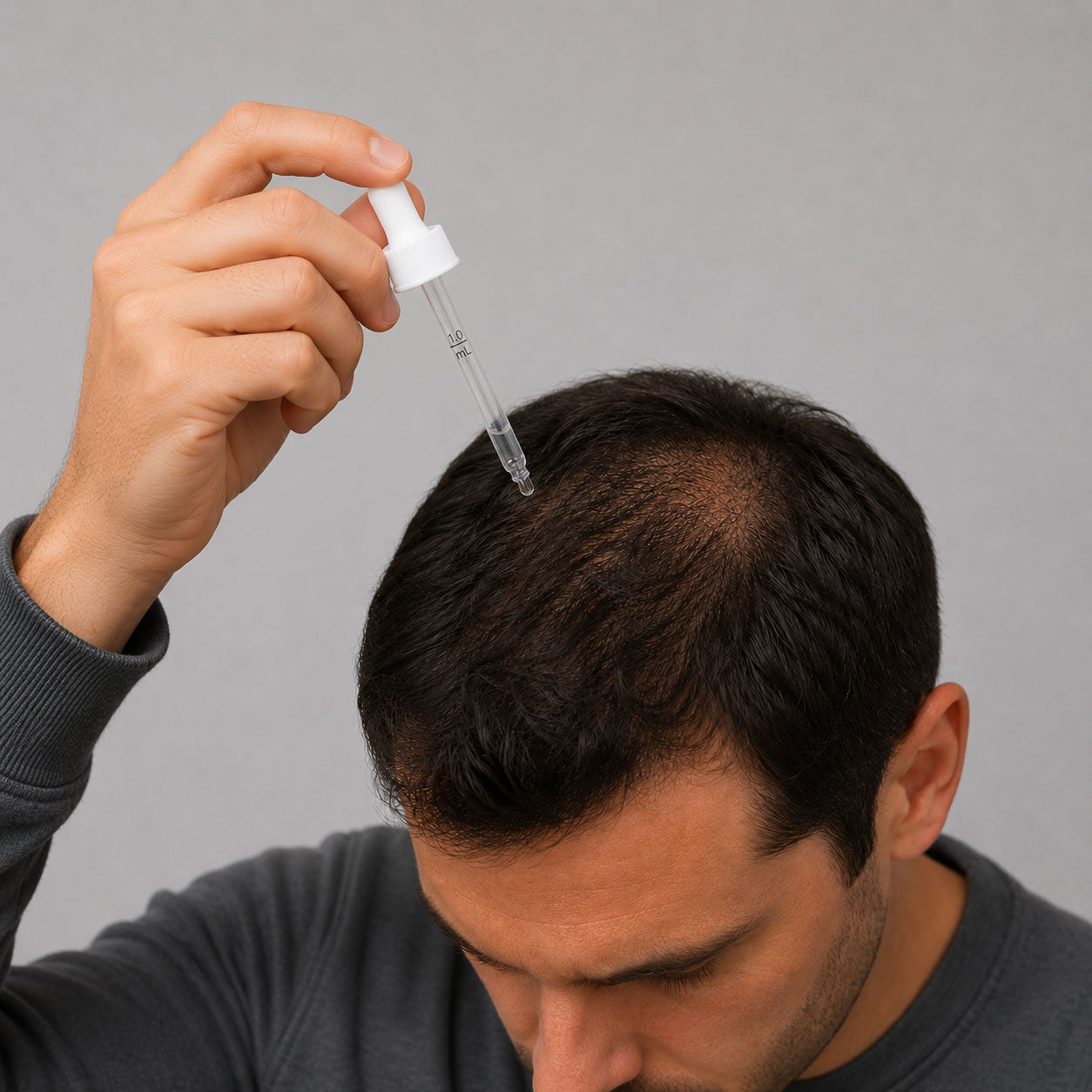
The History of Minoxidil: From Blood-Pressure Pill to Hair Topical
How an oral blood-pressure medicine became the world's best-known over-the-counter hair-regrowth ingredient.
FOLIGAIN Editorial Team · 9 min read · Updated 2026-09-28

An accidental discovery
Minoxidil emerged in the 1960s–70s as a potent vasodilator for hard-to-treat hypertension. Physicians saw patients growing hair — hypertrichosis — and researchers began investigating a topical application for hair loss.
Key milestones
| Year | Milestone (US) |
|---|---|
| 1979 | Oral Minoxidil approved for hypertension |
| 1988 | Topical 2% approved (prescription) for men |
| 1991 | Approval extended to women |
| 1996 | Over-the-counter status |
| 1997 | 5% solution for men OTC |
| 2006+ | 5% foam introduced; later labeled for women |
Where it stands today
Topical Minoxidil is sold worldwide by many brands, including FOLIGAIN, Rogaine®/Regaine® and store brands. Research continues on formulations, adjuncts and delivery. FOLIGAIN pairs Minoxidil products with cosmetic scalp and hair care such as TRIOXIDIL® formulas, which are cosmetics and not drug treatments.
Frequently asked questions
Is oral Minoxidil used for hair?
Some clinicians prescribe low-dose oral Minoxidil off-label. It's prescription-only and requires medical supervision.
This content is for educational purposes only and is not medical advice. It is not intended to diagnose, treat, cure or prevent any disease. Speak with a qualified healthcare professional about your individual situation.
Individual results vary. Hair-growth products are used consistently over months, and outcomes depend on the cause and stage of hair loss.
FOLIGAIN products related to this guide
If this guide matches your situation, our product education pages explain which FOLIGAIN formats suit which routines.
Explore FOLIGAIN products