Low-Dose Oral Minoxidil: Pros, Cons and How It Compares to Topical
Why clinicians increasingly prescribe low-dose oral Minoxidil, the benefits, the risks, and how it differs from topical.
FOLIGAIN® Editorial Team · 16 min read · Updated 2026-09-28
Medical facts and treatment details have not been independently medically reviewed.
What it is
Oral Minoxidil was originally developed and approved decades ago as a treatment for severe high blood pressure, at doses typically in the range of 10 to 40 mg per day. Its hair-growth effect was discovered as a side effect of that original use, which eventually led to the development of topical Minoxidil for hair loss.
More recently, dermatologists have circled back to the oral form, but at low doses — often somewhere between about 0.25 mg and 5 mg per day, a small fraction of the blood-pressure dose — prescribed off-label specifically for pattern hair loss in both men and women. This low-dose oral approach has grown quickly in popularity in dermatology clinics over the past several years, particularly for people who find topical Minoxidil's twice-daily application, drying effect on styling, or scalp irritation hard to stick with long term.
Because it's used off-label for hair loss, there isn't a single FDA-approved 'hair loss dose' the way there is for topical Minoxidil; instead, prescribers typically start low and adjust based on response and tolerability, often after checking blood pressure and sometimes ordering baseline heart-related tests, especially in people with existing cardiovascular risk factors.
How it works
Minoxidil itself is a prodrug, meaning it needs to be converted in the body into its active form, minoxidil sulfate, by an enzyme found in hair follicles (and elsewhere). When taken orally, this conversion and the resulting effect on hair follicles happens systemically, throughout the body, rather than being concentrated at the site of application the way topical Minoxidil is.
The exact way minoxidil sulfate supports hair growth isn't fully settled, but it's thought to shorten the resting (telogen) phase of the hair cycle, prolong the growth (anagen) phase, and improve blood flow to the follicle. Because oral dosing delivers the active compound throughout the bloodstream rather than just to the scalp, it also affects hair follicles elsewhere on the body, which is the source of one of its most common side effects: unwanted hair growth on the face, arms or back (hypertrichosis).
Key facts at a glance
| Topic | Summary |
|---|---|
| Status | Rx, off-label for hair loss |
| Typical hair-loss dose | Often 0.25–5 mg daily, well below blood-pressure doses |
| Main advantage | Simple pill routine; no scalp residue or styling interference |
| Main concern | Systemic effects: unwanted hair growth, fluid retention, faster heart rate |
| Topical alternative | OTC, more localized action, longer track record for hair specifically |
| Monitoring | Blood pressure and sometimes cardiac evaluation, depending on history |
Pros
- Simple, once-daily routine that fits easily into a normal schedule
- No scalp irritation, flaking or the greasy or stiff feel some people notice with topical formulas
- Useful option for people who can't tolerate topical vehicles or have widespread thinning that's hard to treat by application alone
Cons and risks
- Unwanted hair growth on the face and body is a common and sometimes bothersome side effect
- Fluid retention, dizziness or heart palpitations are possible and need medical attention if they occur
- Not considered suitable for people with certain existing heart conditions without cardiology input
- Requires an ongoing prescriber relationship rather than an OTC purchase
Who it may suit
Low-dose oral Minoxidil tends to be discussed with adults whose clinician judges that the potential benefits outweigh cardiovascular and other systemic considerations after reviewing their personal and family health history.
It's often considered for people who have struggled to stay consistent with topical Minoxidil, whose scalp reacts poorly to the topical vehicle, or who have widespread hair thinning that's cumbersome to treat by localized application. Topical Minoxidil remains the OTC, locally acting option and is usually the first thing people try given its accessibility and long safety track record specifically for hair.
What monitoring typically looks like
Because oral Minoxidil affects the cardiovascular system, prescribers commonly check blood pressure at baseline and periodically during treatment, and may ask about symptoms like swelling in the ankles, unusual fatigue, rapid heartbeat or lightheadedness at follow-up visits. People with a personal or strong family history of heart disease, or who are already taking other blood-pressure-lowering medicines, usually need a more careful evaluation before starting, since the combined effects can be harder to predict.
Unwanted hair growth is usually dose-dependent and tends to be more noticeable at higher doses; some people manage it with regular hair removal, while others find it reason enough to lower the dose or switch approaches. It's a good idea to discuss this trade-off honestly with your prescriber before starting, rather than being surprised by it later.
Medical note
This guide is educational and published by FOLIGAIN®, the maker of OTC Minoxidil and cosmetic hair-care products. Prescription treatments and procedures require assessment by a licensed clinician, who can weigh your history, other medicines and goals. Never start, stop or combine prescription medicines without medical advice.
From the FOLIGAIN® library
Related FOLIGAIN® products and routines
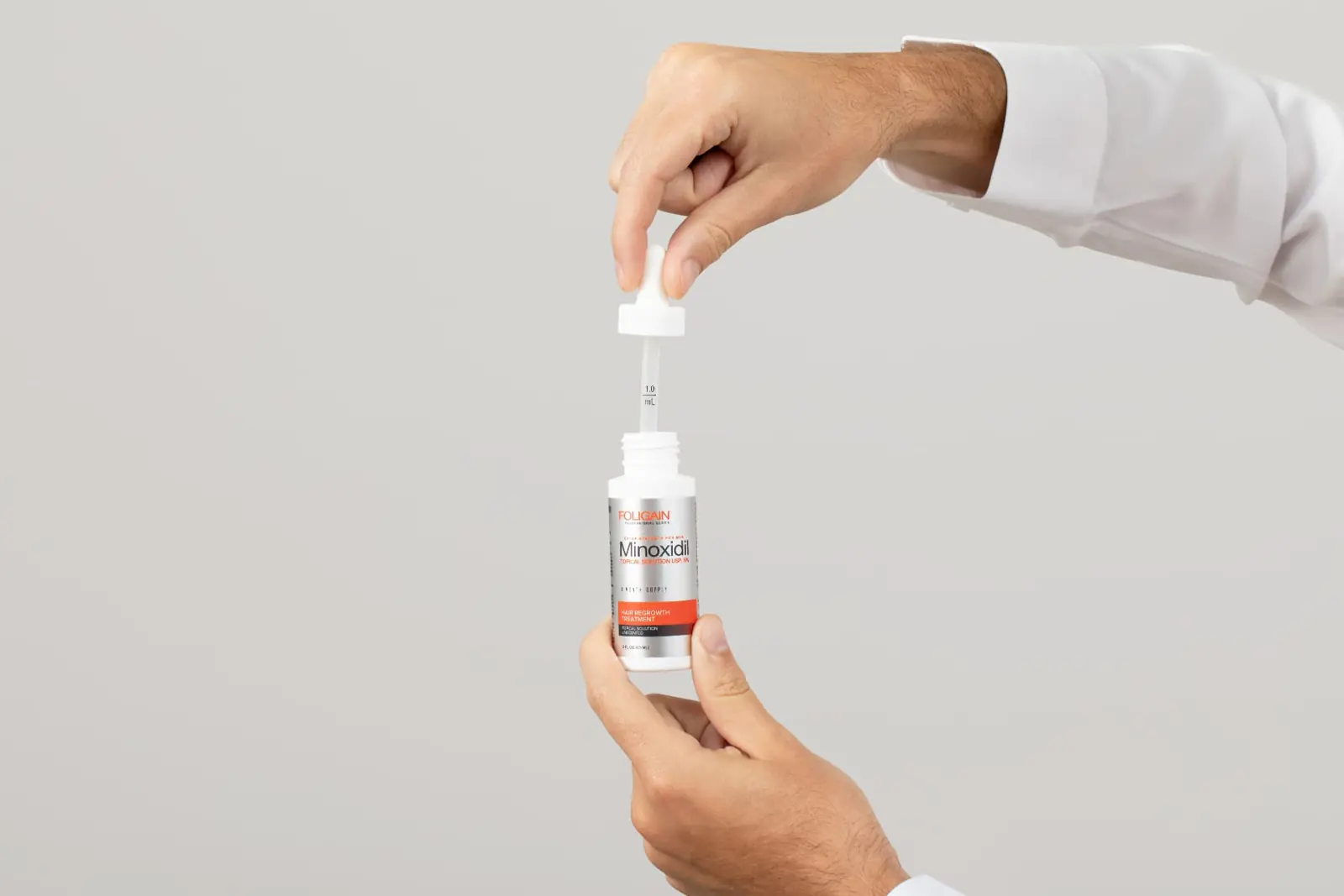
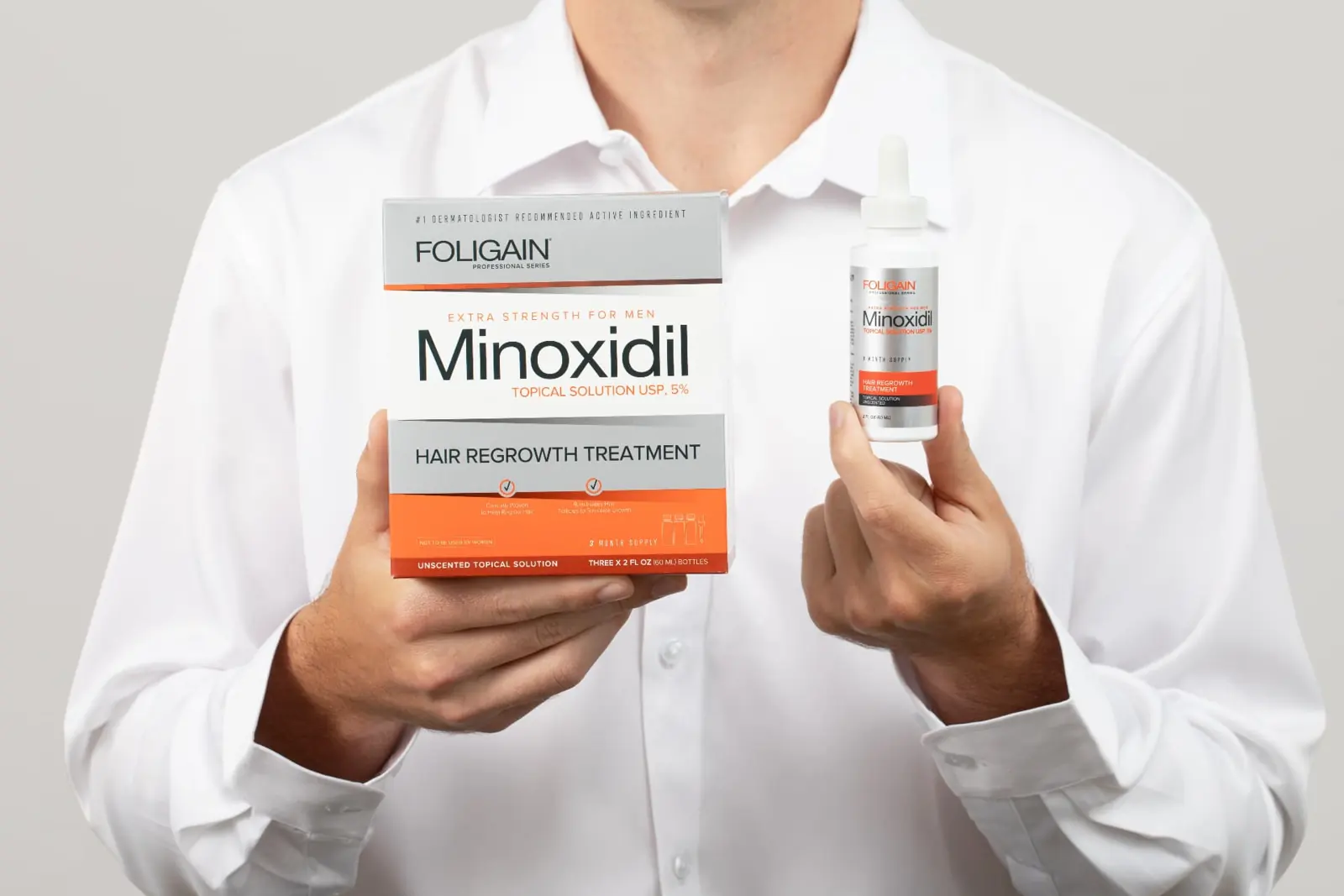
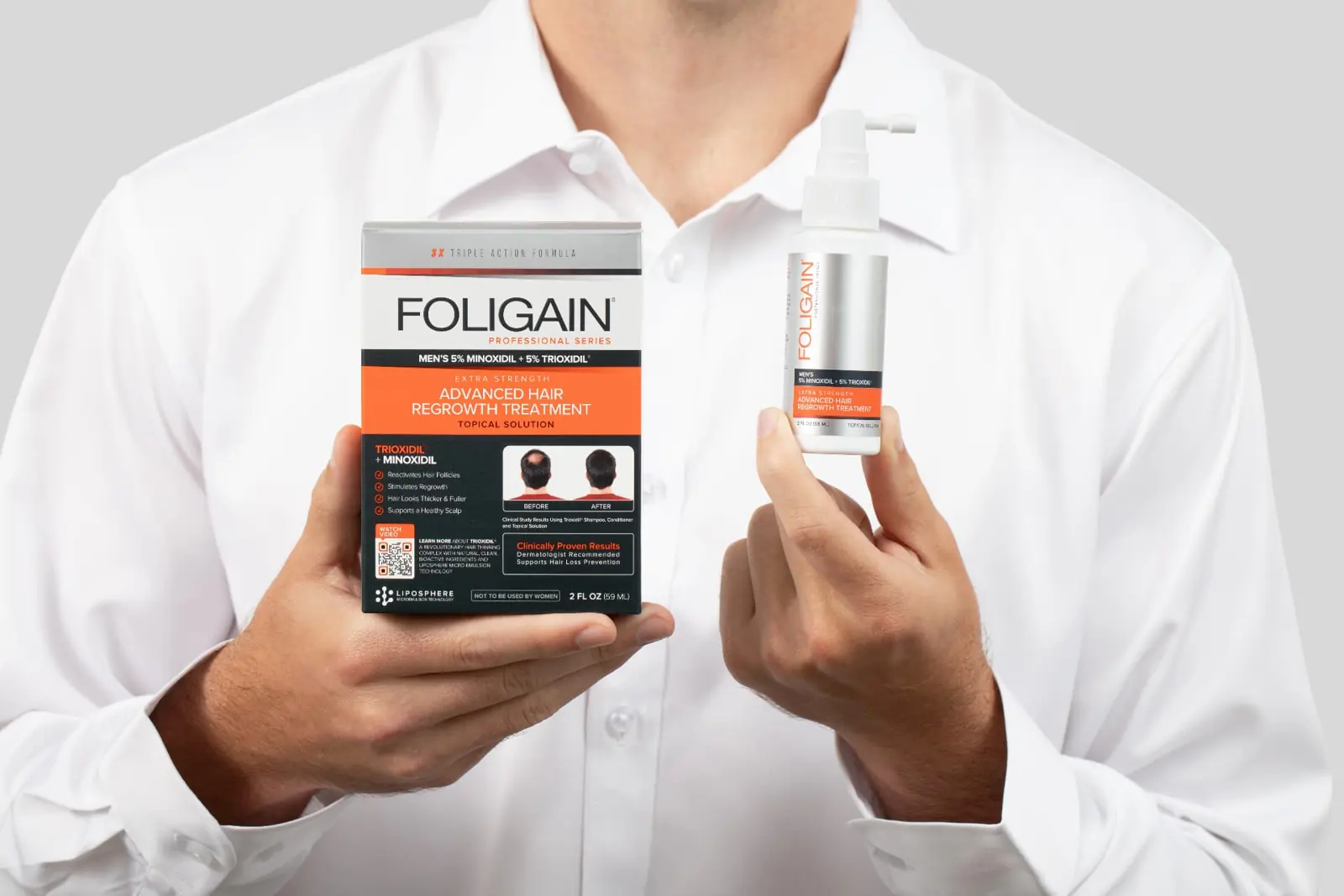
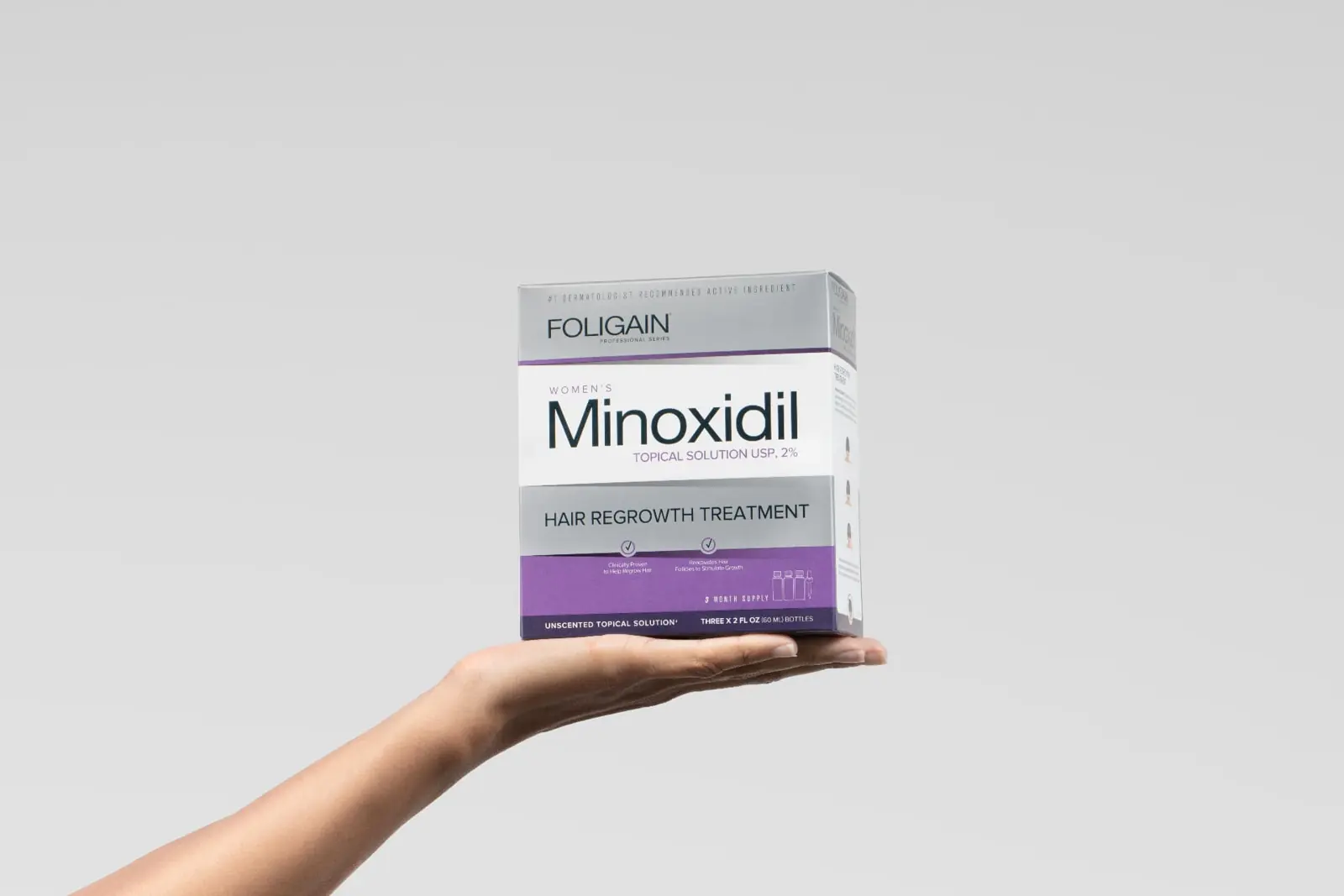
Images are matched to the topic for education; always confirm directions and claims on the exact product label.
Frequently asked questions
Is oral better than topical Minoxidil?
Some smaller studies suggest broadly comparable results between the two for hair regrowth, though direct comparisons are limited. Topical Minoxidil has lower systemic exposure and decades of OTC use specifically for hair; oral is more convenient but requires prescription oversight. Your clinician can help you decide based on your history and preferences.
Will the unwanted body hair go away if I stop?
Hypertrichosis caused by oral Minoxidil generally resolves gradually after stopping the medicine, though the exact timeline varies by individual.
Can I take oral Minoxidil if I have low blood pressure normally?
This is exactly the kind of detail to discuss with your prescriber, since Minoxidil is a vasodilator and can lower blood pressure further; your baseline readings and symptoms matter for that decision.
Do I still need to apply anything to my scalp if I take the oral form?
Some people use oral Minoxidil on its own, while others combine it with topical treatments or cosmetic scalp care under their clinician's guidance. There's no single right combination for everyone.
This content is for educational purposes only and is not medical advice. It is not intended to diagnose, treat, cure or prevent any disease. Speak with a qualified healthcare professional about your individual situation.
Individual results vary. Hair-growth products are used consistently over months, and outcomes depend on the cause and stage of hair loss.
FOLIGAIN® products related to this guide
If this guide matches your situation, our product education pages explain which FOLIGAIN® formats suit which routines.
Explore FOLIGAIN® products