Oral Minoxidil vs Topical: Benefits, Risks and Differences
Compare oral and topical minoxidil for hair loss, including results, safety, daily routines and why oral treatment needs a prescription.
Zespół redakcyjny FOLIGAIN® · 6 min. czytania · Zaktualizowano 2026-10-26
Fakty medyczne i szczegóły leczenia nie zostały niezależnie zweryfikowane medycznie.
Oral vs topical minoxidil: the short answer
Both forms of minoxidil can help some people with pattern hair loss, but they are not interchangeable. Topical minoxidil goes directly onto the scalp and is available without a prescription. Oral minoxidil is a prescription tablet that affects the whole body.
For many adults with gradual, inherited thinning, topical minoxidil is a reasonable first option because it has established hair-loss labeling and less whole-body exposure. Oral minoxidil may be worth discussing when scalp treatment is irritating, impractical or unsuccessful. Neither is a guaranteed fix, and individual results vary.
What each form is approved to do
Minoxidil is a drug, not simply a hair-thickening cosmetic. It can help support the growing phase of hair follicles, although its full effect on hair growth is not completely understood.
In the United States, topical minoxidil products are FDA-approved for certain patterns of hair loss. Oral minoxidil is approved for severe high blood pressure under specific circumstances—not hair loss. Prescribing it for hair loss is called off-label use. That is a legitimate prescribing practice, but it requires an individualized discussion of benefits and risks.
| Pytanie | Topical minoxidil | Doustny Minoxidil |
|---|---|---|
| How is it used? | Liquid or foam applied to the scalp | Tablet taken according to a prescription |
| Is a prescription needed? | Generally no | Tak |
| FDA-approved for hair loss? | Yes, for labeled patterns and populations | No; hair-loss use is off-label |
| Main practical trade-off | Scalp application and possible irritation | Convenience, but greater whole-body risks |
Which works better for hair growth?
Research supports topical minoxidil for pattern hair loss, and growing evidence supports low-dose oral minoxidil as another option. However, direct comparisons remain limited and do not show that oral treatment is universally superior. Studies use different treatment plans and include different groups of people, making sweeping claims unreliable.
A tablet may work better in practice for someone who repeatedly misses scalp applications. Conversely, someone who tolerates topical treatment and uses it consistently may have no reason to switch. An unsuccessful topical trial also does not guarantee success with oral treatment: the diagnosis, duration of use and application technique all matter.
Both approaches take months rather than days to assess. Follow your topical product’s Drug Facts label for expected timelines and when to seek advice, or your prescriber’s review plan for oral treatment. Temporary increased shedding can happen after starting. Significant, persistent or worrying shedding deserves a check-in rather than an assumption that treatment is working.
How the side effects differ
Topical minoxidil can cause itching, dryness, flaking or scalp irritation. Some people tolerate foam better than liquid, depending on the formulation. Unwanted facial hair can occur. Whole-body effects are less common but possible, especially with incorrect use; using extra product does not improve results.
Oral minoxidil can cause unwanted facial or body hair, ankle swelling, fluid retention, dizziness, low blood pressure or a fast heartbeat. The oral drug carries a boxed warning that includes serious heart-related risks, such as fluid around the heart. Lower doses used for hair loss do not make those risks disappear.
Before prescribing oral treatment, a clinician should review your blood pressure, heart and kidney history, other medicines and pregnancy plans. Monitoring depends on your situation. Seek urgent care for chest pain, fainting or trouble breathing. New swelling, rapid weight gain or a racing heartbeat needs prompt medical advice.
What the daily routine looks like
For US topical labeling, men use minoxidil 5% liquid or foam twice daily. Women use 2% liquid twice daily or 5% foam once daily. Always follow the Drug Facts label on your exact product, including the amount, application area and warnings. More frequent application is not a shortcut.
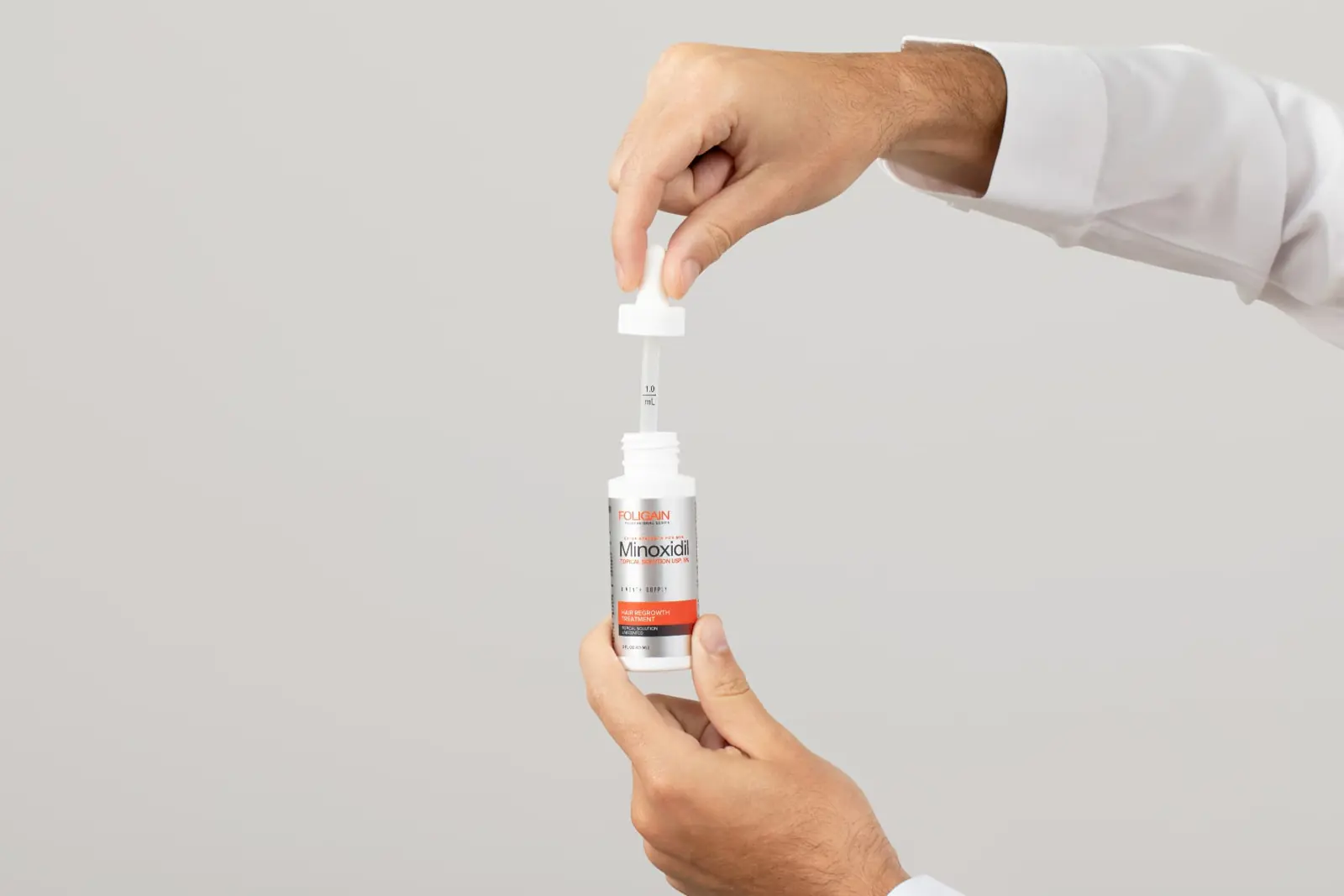
Apply topical treatment to the scalp, not just the hair, and wash your hands afterward. Follow the label’s drying and washing instructions. The extra application step, drying time and effect on styling can make consistency challenging.
Oral treatment avoids scalp residue and application time, but there is no FDA-approved oral minoxidil dosing schedule for hair loss. Your prescriber chooses the plan; do not copy someone else’s prescription or use blood-pressure tablets on your own. Compare ongoing product costs, appointments and any monitoring—not just the price of a bottle or tablet.
Choosing the option that fits your situation
Topical minoxidil may fit if your thinning matches the product’s labeled use, your scalp tolerates it and you can maintain the routine. Oral treatment may be considered if topical use is too difficult or irritating, but convenience alone does not outweigh a concerning health history.
It is also worth confirming that minoxidil addresses your type of hair loss. Shedding linked to illness, nutritional deficiency or another condition may need a different approach. Depending on the diagnosis, prescription alternatives such as finasteride for appropriate men or off-label spironolactone for selected women may be discussed; each has its own precautions.
Zanim zaczniesz
See a dermatologist for sudden, patchy, painful or inflamed hair loss rather than treating it yourself. If you are pregnant, planning pregnancy or breastfeeding, discuss treatment before using either form; minoxidil is generally avoided during pregnancy, and breastfeeding needs individualized guidance.
Take baseline photos in consistent lighting and agree on a realistic review point. Avoid switching treatments or increasing use just because early changes are hard to see.
Always follow the Drug Facts label on your exact product. This guide is general education, not medical advice. Ask a pharmacist, doctor or nurse practitioner about your own situation.
Z biblioteki FOLIGAIN®
Powiązane produkty i procedury FOLIGAIN®
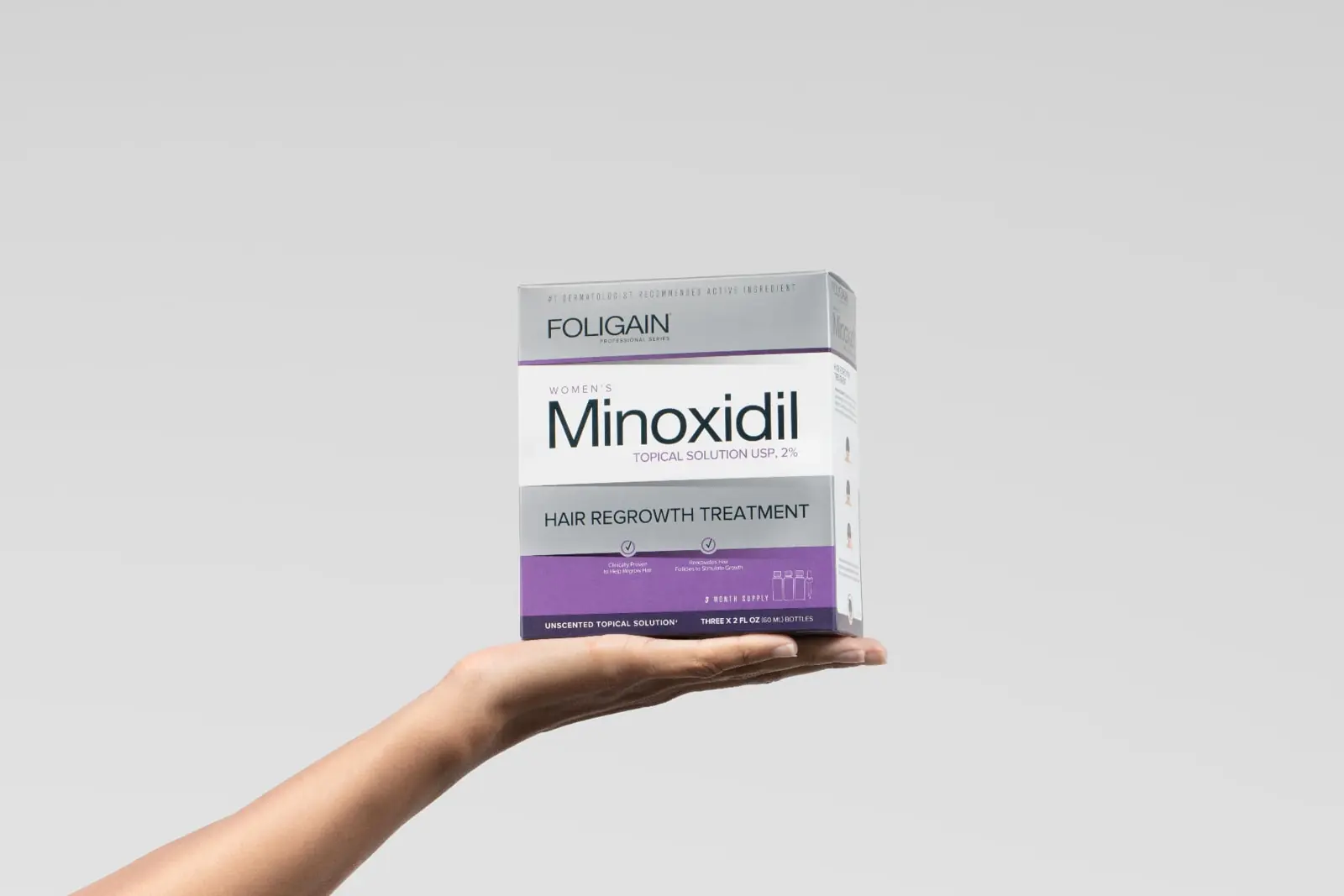
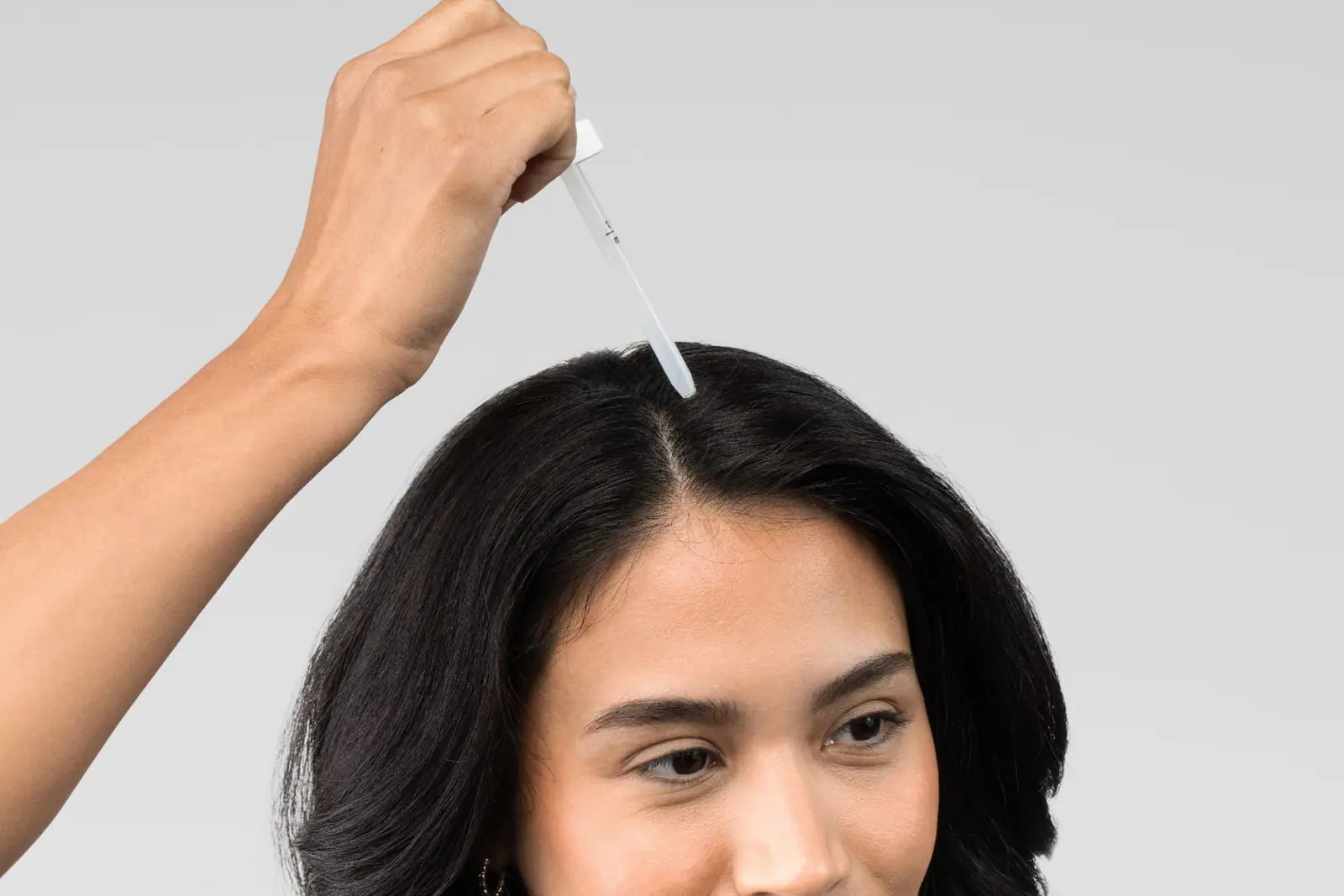
Obrazy są dopasowane do tematu w celach edukacyjnych; zawsze potwierdź instrukcje i twierdzenia na etykiecie produktu.
Najczęściej zadawane pytania
Is oral minoxidil better than topical minoxidil?
Not consistently. Oral treatment may suit someone who cannot tolerate or regularly apply a topical product, but research does not establish it as better for everyone, and it carries different risks.
Can I use oral and topical minoxidil together?
Only if your prescriber recommends it. Combining them is not automatically more effective and may increase side effects; do not add an over-the-counter product without discussing it.
Does oral minoxidil cause more unwanted hair growth?
Unwanted facial or body hair is more common with oral minoxidil because it circulates throughout the body. Topical minoxidil can also cause unwanted hair growth, including through transfer to the face.
What happens when you stop minoxidil?
Hair maintained by treatment is usually lost over time after stopping. If you take oral minoxidil, discuss stopping or switching with your prescriber rather than changing treatment yourself.
Treść ma wyłącznie charakter edukacyjny i nie stanowi porady medycznej. Nie jest przeznaczona do diagnozowania, leczenia, wyleczenia ani zapobiegania jakiejkolwiek chorobie. Skonsultuj się z wykwalifikowanym pracownikiem służby zdrowia w swojej indywidualnej sytuacji.
Indywidualne wyniki różnią się. Produkty na porost włosów stosuje się konsekwentnie przez miesiące, a rezultaty zależą od przyczyny i etapu wypadania włosów.
Produkty FOLIGAIN® związane z tym przewodnikiem
Jeśli ten przewodnik pasuje do Twojej sytuacji, nasze strony edukacyjne dotyczące produktów wyjaśniają, które formaty FOLIGAIN® pasują do jakich procedur.
Poznaj produkty FOLIGAIN®