Telogen Effluvium: Why Sudden Shedding Happens and How It Recovers
A calm, detailed guide to trigger-related shedding: the timeline, common causes, how it differs from pattern hair loss and what helps recovery.
FOLIGAIN® Editorial Team · 16 min read · Updated 2026-09-28
Medical facts and treatment details have not been independently medically reviewed.

What telogen effluvium is
Each scalp hair cycles independently through a long growth phase (anagen), a short transition (catagen) and a resting phase (telogen), after which it is shed and replaced. Normally most hairs are growing and only a small fraction are resting.
In telogen effluvium, a shock to the system pushes a much larger proportion of growing hairs into the resting phase at once. The resting phase lasts about two to four months, so the shedding appears well after the event that caused it. By the time hair starts falling out in larger amounts, the trigger may already be over and forgotten.
Common triggers
Almost any significant physiological stress can trigger telogen effluvium. Reviewing the three to four months before the shedding started often reveals the cause.
| Trigger | Examples |
|---|---|
| Illness | High fever, flu, COVID-19, serious infections, hospitalisation |
| Surgery and anesthesia | Major operations, significant blood loss |
| Childbirth | Postpartum shedding, typically 2-4 months after delivery |
| Diet | Rapid weight loss, crash diets, low protein, restrictive eating |
| Nutrient deficiency | Iron deficiency, very low vitamin D or zinc in some cases |
| Medication | Starting or stopping hormonal contraception, some blood pressure, mood or thyroid medications |
| Emotional stress | Bereavement, major life changes, sustained severe stress |
| Thyroid changes | Under- or over-active thyroid |
How it looks and feels
Telogen effluvium affects the whole scalp rather than a specific pattern. You may notice clumps of hair in the shower, on your brush or on your pillow, and the ponytail may feel thinner. Many shed hairs have a small white club at the root, which is normal for a resting hair and doesn't mean the follicle has died.
The hairline usually stays intact and there are no bald patches. The scalp itself normally looks healthy. Some people describe a mild tenderness of the scalp (trichodynia), but significant pain, redness or scaling point toward another cause.
How much shedding is too much?
Losing 50-100 hairs a day is often quoted as normal, though the true number varies with hair length, washing frequency and season. In telogen effluvium, daily shedding can be several times higher. A clinician may perform a gentle hair-pull test: if more than a few hairs come away easily from several areas, it suggests active shedding.
Telogen effluvium vs pattern hair loss
The two frequently coexist. Telogen effluvium can make an underlying pattern suddenly visible. Once the shedding settles, if the part remains wide or the crown thin, pattern hair loss may be present too.
| Feature | Telogen effluvium | Pattern hair loss |
|---|---|---|
| Onset | Sudden, noticeable shedding | Gradual over months to years |
| Distribution | Diffuse across the scalp | Temples/crown (men), part/top (women) |
| Hair thickness | Remaining hairs usually normal thickness | Mix of thick and miniaturized hairs |
| Trigger | Often identifiable 2-4 months earlier | No trigger needed; genetic |
| Course | Usually self-limiting | Progressive without intervention |
The recovery timeline
For acute telogen effluvium the typical course looks something like this, although every case is individual.
- Trigger event (month 0)
- Shedding begins (around months 2-4)
- Peak shedding and gradual slowing (months 3-6)
- Shedding returns to normal once the trigger has resolved
- Regrowth: short new hairs visible along the part and hairline
- Visible density recovery (months 6-12 onward, depending on hair length)
What helps recovery
The most important step is identifying and, where possible, addressing the trigger. That may mean recovering from an illness, reviewing a medication with your doctor, correcting a deficiency or moving away from a restrictive diet. Everything else is supportive.
- Eat enough overall, with adequate protein; avoid crash dieting
- Ask your doctor about checking iron (ferritin), thyroid and vitamin D if shedding is significant
- Treat hair gently: minimise heat, harsh chemicals and tight styles while it recovers
- Use a mild shampoo and conditioner; washing does not make shedding worse, it only collects hairs that were already coming out
- Manage stress where possible; the shedding itself is stressful, which can feel circular
Postpartum shedding in more detail
Postpartum telogen effluvium deserves its own mention because it is so common and so often alarming when it happens. During pregnancy, rising estrogen keeps a higher-than-usual proportion of scalp hairs in the growth phase, which is why many women notice fuller-feeling hair while pregnant. After delivery, estrogen drops sharply, and the hairs that were held in growth phase shift into the resting phase together. Around two to four months after birth, they are shed in a wave that can feel dramatic, sometimes with visibly more hair in the shower or on the brush every day.
This is a normal, expected process, not a sign that something has gone wrong with the pregnancy or the baby. It typically peaks around three to four months postpartum and gradually settles by the time the baby is close to a year old, though it can take a little longer for a new mother to feel her hair is back to its usual thickness, since regrowing hairs need time to lengthen. Sleep disruption, stress and dietary changes during the postpartum period can make the shedding feel worse than it looks in photos, which is part of why reassurance and a fair timeline matter.
If shedding is unusually heavy, continues well past a year, or comes with other symptoms such as fatigue, cold intolerance or mood changes, it is worth mentioning to a doctor, since thyroid changes and iron deficiency are both common after childbirth and can add to postpartum shedding.
How a clinician approaches diagnosis
There is no single blood test that confirms telogen effluvium; it is largely a clinical diagnosis based on history and examination, alongside tests that rule out other contributing causes. A clinician will typically ask when the shedding started, what happened roughly two to four months earlier, whether the shedding is diffuse or patterned, and whether there is a family history of thinning.
A gentle pull test, in which a small group of hairs is tugged lightly, helps gauge how active the shedding currently is. Blood tests are often used selectively, commonly checking ferritin (iron stores), thyroid function and sometimes vitamin D, especially in women or in cases where the shedding is prolonged or particularly heavy. A scalp examination also helps rule out other explanations, such as early pattern hair loss, alopecia areata or a scalp condition. In some prolonged or unclear cases, a scalp biopsy or additional specialist tests may be considered.
Bringing a rough timeline of the previous six months, including illnesses, medication changes, dietary changes and major stressors, makes this conversation much more efficient, since the connection between a trigger and the shedding is often the single most useful clue.
Living with the waiting period
One of the hardest parts of telogen effluvium is that recovery is slow and largely invisible for months at a time. Because the trigger has often already resolved by the time shedding is noticed, there can be a frustrating sense that nothing you do seems to change how much hair is falling out day to day. This is expected: the hairs that are going to shed were already committed to doing so months earlier, and no amount of extra care will pull them back into growth. What does help is patience, gentle hair care, and giving new hairs the months they need to grow long enough to be visible again.
It is common to feel anxious about every hair on the pillow or in the drain during this period, which can create a cycle where the stress of shedding adds a small amount of additional shedding on top. Limiting how often you check or count hairs, focusing on monthly photos instead of daily inspection, and reminding yourself that acute telogen effluvium is, in the great majority of cases, a temporary and fully reversible process can make the waiting period considerably easier.
Chronic telogen effluvium
When diffuse shedding continues for more than six months, it is called chronic telogen effluvium. It is more common in middle-aged women and can wax and wane for years without causing progressive balding. Because it can be difficult to separate from early pattern hair loss, and because ongoing triggers are sometimes found, a dermatologist's assessment is worthwhile.
How telogen effluvium can unmask pattern hair loss
One of the more confusing aspects of telogen effluvium is that it can make an underlying, previously unnoticed pattern hair loss suddenly obvious. If a person already had mild, gradual androgenetic thinning that had gone unrecognised, an episode of telogen effluvium sheds hair broadly across the scalp, and once the acute shedding settles, the areas that were already thinner from pattern loss (the crown or part line, for example) may look noticeably worse than areas that were not genetically affected, because those follicles do not recover their prior density as fully.
This is why a dermatologist will often reassess several months after an episode of telogen effluvium has resolved: if overall shedding has normalized but a widened part or thinning crown remains, that residual thinning may represent separate, ongoing pattern hair loss that needs its own approach, such as a Minoxidil routine, rather than more time waiting for the telogen effluvium itself to improve further.
A note on shampoo bar and product myths
During an episode of telogen effluvium, it is tempting to blame a recently switched shampoo, a change in water, or a new styling product for the shedding, since the timing can feel suspicious. In reality, shedding from telogen effluvium is set in motion two to four months before it becomes visible, so a product used only in the last few weeks is very unlikely to be the true cause, even if the shedding happened to start soon after switching. Reviewing what changed three to four months earlier, rather than what changed most recently, is a more productive way to hunt for the actual trigger.
It is also worth remembering that seeing more hair than usual in the shower does not mean washing is causing extra shedding; those hairs were already loose in their follicle and were always going to come out, whether from washing, brushing or simply moving through the day. Switching to a very gentle, infrequent washing routine out of fear of "causing more shedding" does not slow the underlying process, and can leave the scalp less comfortable in the meantime.
FOLIGAIN® vs. other approaches during recovery
It is worth being direct about what any product, FOLIGAIN® or otherwise, can and cannot do for telogen effluvium. No topical or cosmetic product removes a past trigger, and Minoxidil's approval is specifically for pattern hair loss rather than telogen effluvium, so it is not the automatic first recommendation here the way it would be for gradual patterned thinning. The genuinely useful steps for telogen effluvium are identifying and addressing the trigger, correcting any deficiency found on testing, and giving the hair cycle time.
Where FOLIGAIN®'s cosmetic range, including shampoos and conditioners formulated with the TRIOXIDIL® complex, can reasonably help is in the waiting period: making thinning hair look fuller, keeping the scalp comfortable, and supporting a gentle hair-care routine while density recovers on its own. A competing gentle, sulfate-free volumizing shampoo could serve much the same supportive purpose. If, after recovery, a separate pattern of thinning remains at the crown or part line, that is the point at which an OTC Minoxidil routine becomes a genuinely relevant option, ideally after confirming with a clinician that pattern hair loss, not ongoing telogen effluvium, is the explanation.
Does Minoxidil help telogen effluvium?
Topical Minoxidil is approved in the US for pattern hair loss, not for telogen effluvium. Some clinicians consider it in selected chronic cases, but that is a medical decision. For acute telogen effluvium, time and addressing the trigger are usually the main tools. If pattern hair loss is also present, a Minoxidil routine for that condition may be appropriate. Starting it can cause its own early shedding, so timing is worth discussing with a clinician.
Supporting hair while you wait
While density recovers, cosmetic care can help hair look fuller and feel better. Volumizing shampoos and conditioners, such as FOLIGAIN®'s cosmetic range with the TRIOXIDIL® complex, are designed to improve the look and feel of thinning hair. They don't change the shedding process, but a comfortable scalp and better-looking hair make the waiting period easier.
From the FOLIGAIN® library
Related FOLIGAIN® products and routines
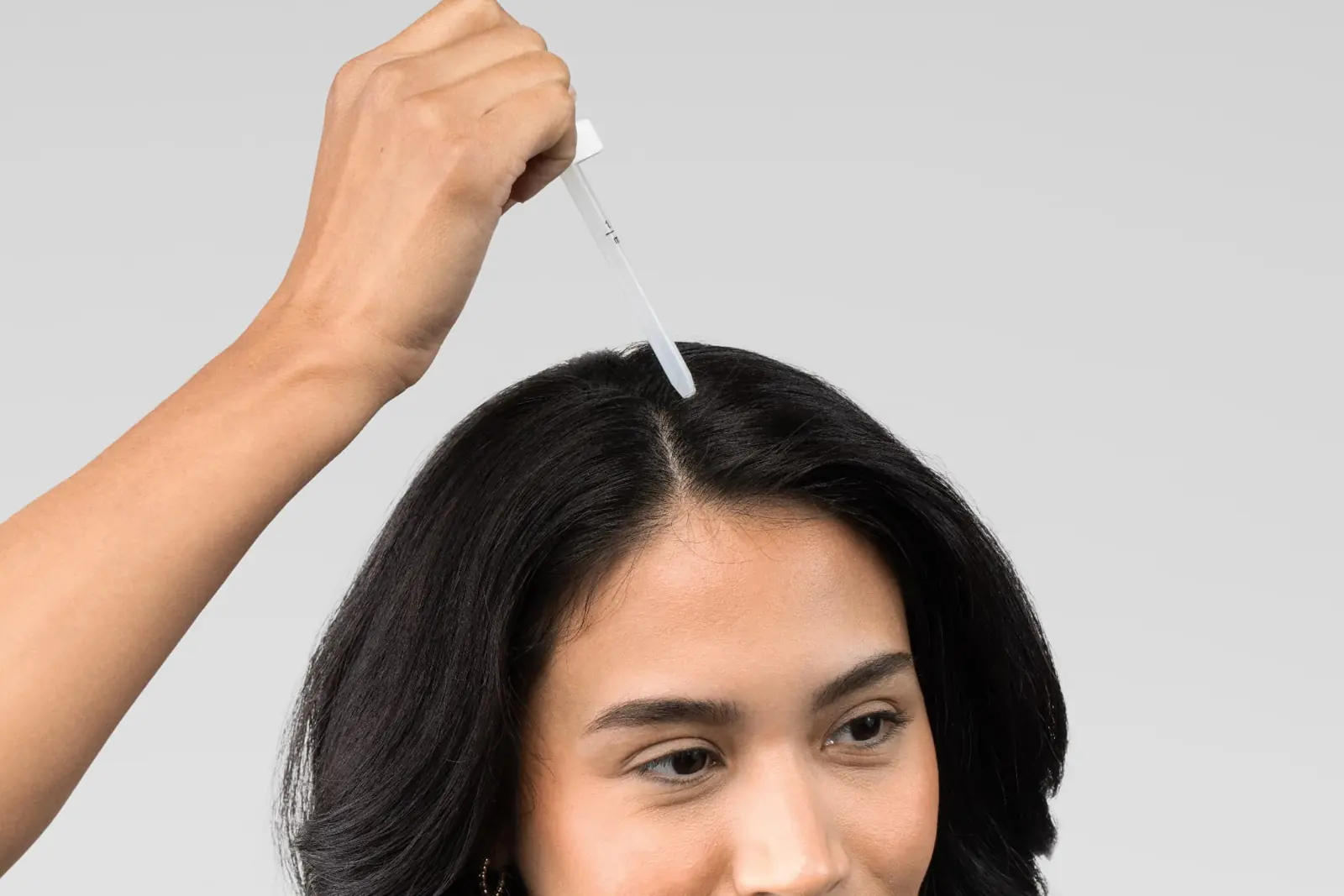

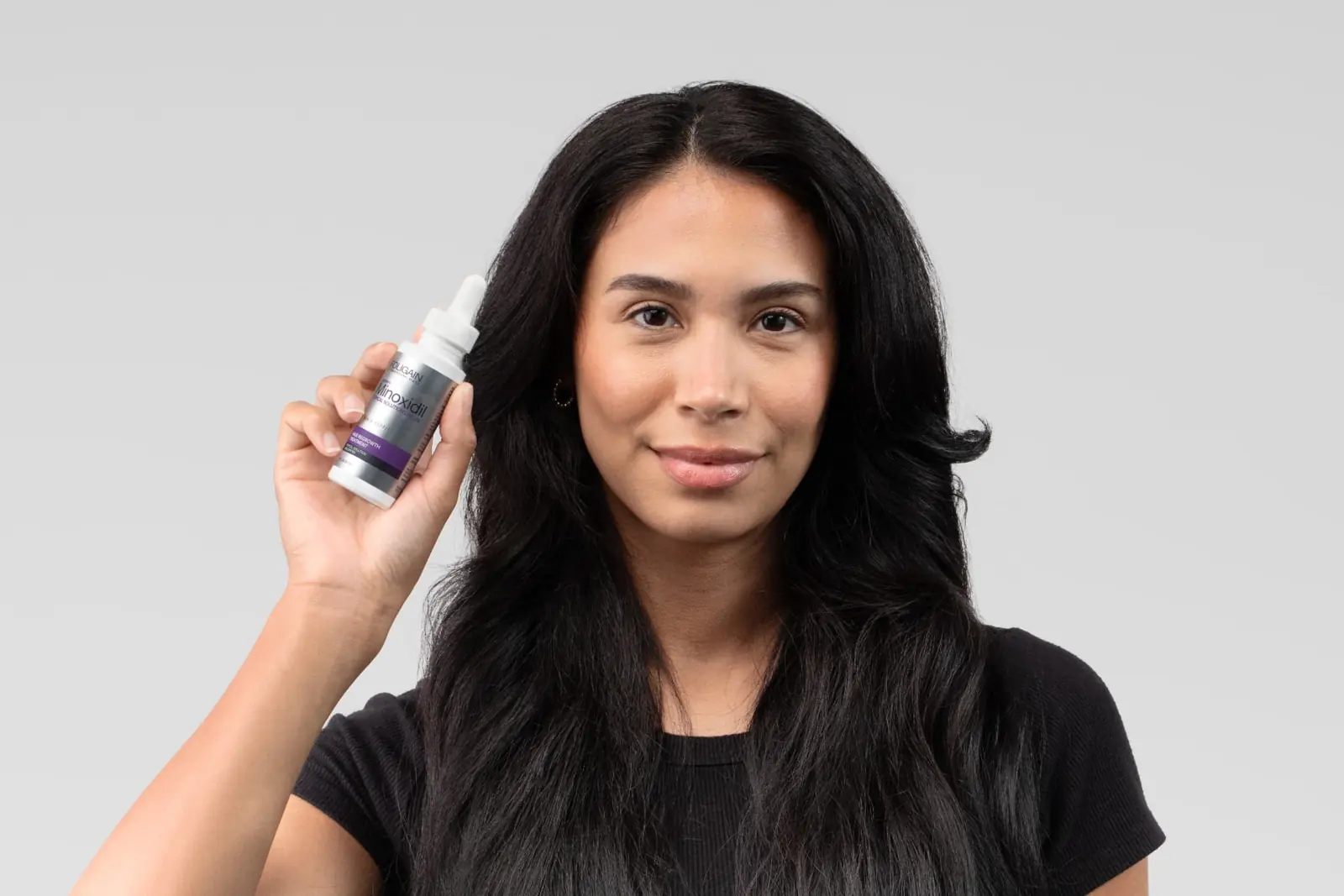
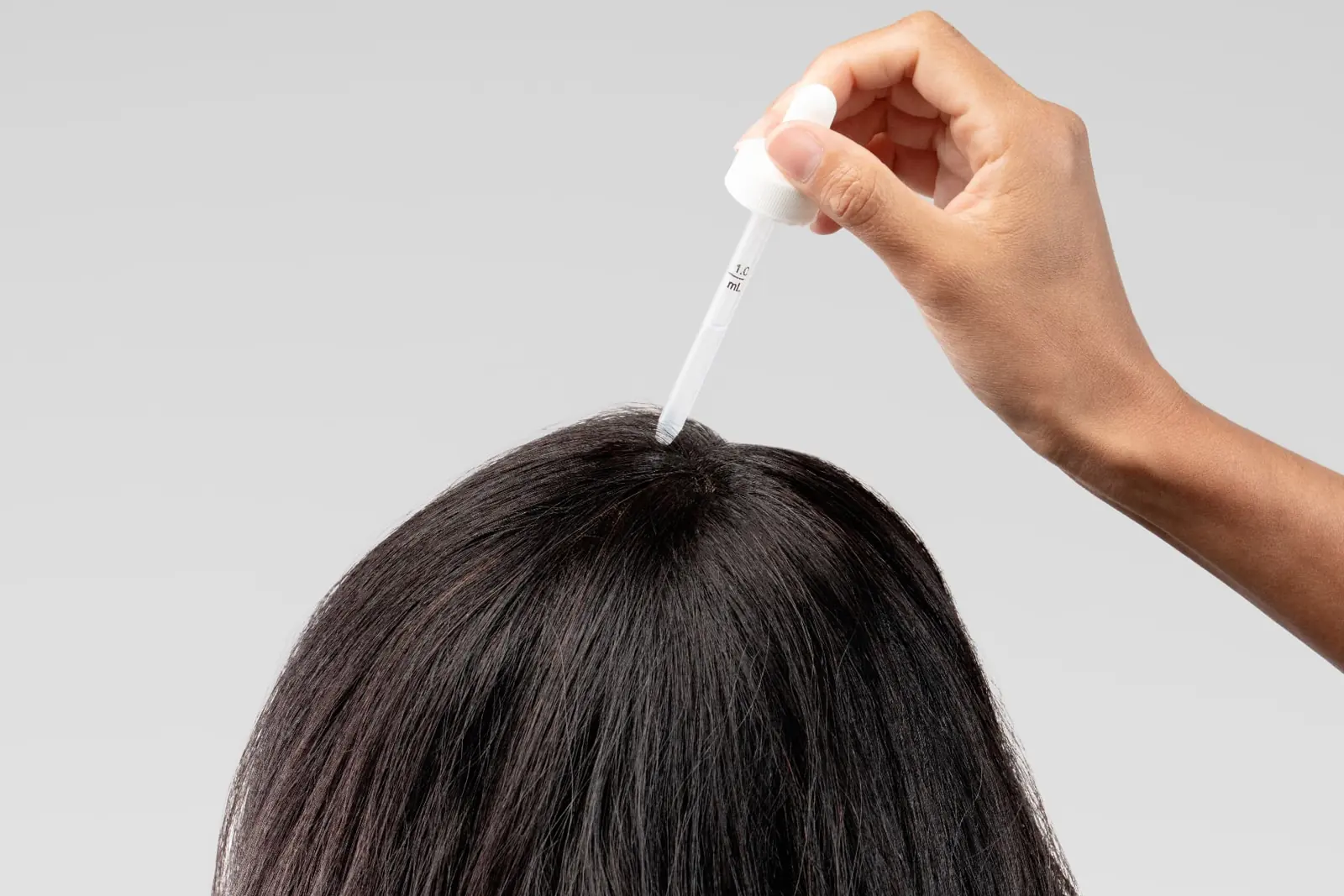
Images are matched to the topic for education; always confirm directions and claims on the exact product label.
Frequently asked questions
How long does telogen effluvium last?
Acute telogen effluvium usually settles within about six months of the trigger resolving, with density recovering gradually over the following months.
Does telogen effluvium cause baldness?
It causes diffuse thinning, not bald patches, and the follicles remain alive. It does not by itself cause permanent baldness.
Should I stop washing my hair?
No. Washing only removes hairs that were already shed. Gentle, regular washing keeps the scalp comfortable.
Can stress alone cause telogen effluvium?
Severe emotional stress is a recognised trigger, though physical triggers such as illness, childbirth and diet changes are more commonly identified.
Why does postpartum hair shedding happen?
Pregnancy hormones keep more hairs than usual in the growth phase. After delivery, those hormone levels fall and the extra hairs shift into the resting phase together, leading to a wave of shedding a few months later.
Can telogen effluvium happen more than once?
Yes. Each new significant trigger, such as another illness, surgery or major stressor, can cause a fresh episode, even in people who have fully recovered from a previous one.
This content is for educational purposes only and is not medical advice. It is not intended to diagnose, treat, cure or prevent any disease. Speak with a qualified healthcare professional about your individual situation.
Individual results vary. Hair-growth products are used consistently over months, and outcomes depend on the cause and stage of hair loss.
FOLIGAIN® products related to this guide
If this guide matches your situation, our product education pages explain which FOLIGAIN® formats suit which routines.
Explore FOLIGAIN® products