How Much Hair Shedding Is Normal? A Practical Guide
Daily hair counts, wash-day shedding, seasonal changes and the signs that shedding deserves a closer look.
FOLIGAIN® Editorial Team · 17 min read · Updated 2026-09-28
Medical facts and treatment details have not been independently medically reviewed.

The 50-100 hairs rule
The figure most often quoted is 50-100 hairs a day. With around 100,000 follicles and 10-15% of them resting at any time, this is roughly what you would expect as resting hairs are released. It is a guideline, not a strict rule. Some healthy people shed more, some less, and the number changes with the seasons.
Counting hairs is rarely useful on its own. Shedding is only half the picture; the other half is whether shed hairs are being replaced by equally thick new ones. In pattern hair loss, daily shedding can look completely normal while the scalp gradually thins, because replacement hairs are finer.
It also helps to remember that the 50-100 figure is an average across a whole head over a whole day, not a number you can realistically count by picking hairs off a pillow. Most people are better served by tracking overall density and photos over weeks than by trying to tally individual strands.
Why wash days look worse
If you wash every three or four days, hairs that detached over that period stay caught in the rest of your hair until you shampoo and condition. They then come out all at once, making wash day look alarming. People who wash less often therefore tend to see bigger clumps, even though the total shedding is similar.
Detangling, brushing and conditioning also release loose hairs. Washing doesn't cause hairs to fall out that weren't already shed. If wash-day shedding feels like it is genuinely increasing week over week, rather than simply looking large because of your washing frequency, that trend is more informative than any single wash day on its own.
Length, texture and perception
Ten long hairs look like far more than ten short ones. Curly and coily hair often holds on to shed hairs until they are detangled, releasing them in larger amounts during styling. Dark hair on a light floor or towel is more noticeable. All of these influence how much shedding feels like "a lot".
Lighting also plays tricks: overhead bathroom lighting can make a normal amount of shedding look dramatic, while dim lighting can hide a real increase. If you want an accurate read, try to check under consistent, bright light rather than relying on impressions from different rooms and times of day.
A simple self-check
If you are worried, a structured check over a couple of weeks is more useful than a single day's impression.
- Take photos of your part, hairline and crown in the same light every week
- Note shedding on wash days vs non-wash days
- Look at shed hairs: are they full length with a white bulb (typical of resting hairs), or broken fragments (suggesting breakage)?
- Check whether your ponytail circumference has changed
- Write down any illness, diet change, medication change or stress in the last four months
- Track whether new, thinner hairs are visible growing in near the hairline or part, which can be an early sign of pattern thinning rather than just shedding
Shedding vs breakage
Not every hair on the floor is a shed hair. Breakage happens when the hair shaft snaps partway along its length, often from heat, bleaching, chemical straightening, rough brushing or tight elastics. Broken hairs are shorter and lack a bulb at the end. Breakage can make hair look thinner and uneven, but the follicles are unaffected. Gentler styling and good conditioning usually help.
| Sign | Shedding | Breakage |
|---|---|---|
| Hair length | Full length | Short fragments |
| Root end | Small white bulb | Blunt or split end |
| Cause | Hair cycle, triggers, hair loss | Mechanical, heat or chemical damage |
| Where it shows | Across the scalp or in a pattern | Ends, mid-lengths, areas under stress |
When shedding is a warning sign
Any of these is a good reason to book an appointment with a doctor or dermatologist, since some causes of shedding, such as thyroid imbalance or iron deficiency, are straightforward to check for and treat.
- Shedding that suddenly doubles or triples and persists for weeks
- Round bald patches or areas of broken hairs
- Scalp pain, burning, itching, redness or scaling
- Loss of eyebrows, eyelashes or body hair
- Shedding alongside fatigue, weight change, feeling cold or other new symptoms
- Shedding that continues for more than six months
Causes worth ruling out
Beyond pattern hair loss, diffuse shedding is commonly linked to telogen effluvium following illness, surgery, childbirth, crash dieting, significant weight loss or acute stress; nutritional gaps such as iron or vitamin D deficiency; thyroid disorders; and certain medications. A doctor can order simple blood tests, such as ferritin and thyroid panels, to help narrow down the cause when shedding is more than the everyday amount.
Shedding when you start a hair-growth routine
A temporary increase in shedding during the first two to eight weeks is widely reported with Minoxidil, an over-the-counter drug, and some people also notice a short adjustment period when starting a new cosmetic routine such as FOLIGAIN®, since any product that encourages the scalp environment to shift can coincide with resting hairs being released. It usually settles within a few weeks either way.
Stopping at this stage means you never find out whether the routine would have helped. Shedding that worsens beyond a couple of months, or that feels disproportionate to what you started with, should be discussed with a clinician rather than assumed to be a normal adjustment phase.
FOLIGAIN® and Minoxidil: different categories, different expectations
It's worth being clear about categories when weighing options. Minoxidil is an FDA-recognised over-the-counter drug for hair regrowth with a defined evidence base and known side effects such as scalp irritation or initial shedding. FOLIGAIN® products are cosmetic formulations, often built around TRIOXIDIL®, a FOLIGAIN® cosmetic complex, and are intended to support the look and condition of hair as part of a grooming routine rather than to make drug-level regrowth claims.
Some people choose a cosmetic-only routine, some choose a drug-based routine under medical guidance, and some combine a dermatologist-recommended drug with a cosmetic routine for hair care. Whichever path you take, the same shedding principles apply: give it time, watch for the early-weeks adjustment, and track density and photos rather than isolated bad hair days.
Diet, hydration and everyday habits
Everyday habits can nudge shedding up or down without indicating a serious problem. Crash dieting, very low calorie intake, and sudden large weight loss are well-recognised triggers of temporary increased shedding, generally appearing a couple of months later. Adequate protein, iron-rich foods and overall balanced nutrition support the hair cycle, though they won't reverse genetic pattern hair loss on their own.
Hydration and general health also play a supporting role: hair grown during a period of illness, poor sleep or significant stress often looks and sheds differently than hair grown during a calmer, healthier stretch, simply because the follicle is responding to the body's overall state at the time that hair was being built.
A postpartum example
Postpartum shedding is a useful real-world illustration of how delayed and dramatic normal shedding can look. During pregnancy, elevated hormones keep more hairs than usual in the anagen phase, so hair often looks fuller. After birth, hormone levels drop and a large group of those hairs shift into telogen together. A few months later, they are released at the same time, producing shedding that can feel alarming even though it is a normal, self-limited process for most people.
This pattern typically resolves within six to twelve months as the cycle re-synchronises to its usual spread. It's a good example of why a single dramatic shedding episode with a clear preceding trigger is often less concerning than gradual, unexplained thinning with no obvious cause.
Tracking tools that actually help
Simple tools tend to work better than complicated ones. A folder of dated photos taken in the same spot and lighting, a note on your phone logging wash days and anything unusual, and an occasional side-by-side comparison every few weeks are usually more informative than daily hair counts, which are hard to do accurately and easy to over-interpret.
If you want more structure, some people use a fixed area of the scalp, photographed at the same zoom and angle each time, to watch density over months. This kind of consistent record is also exactly what a dermatologist will want to see if you do end up seeking a professional opinion.
Shedding across life stages
Shedding patterns can shift over the decades even without a specific diagnosis. Teenagers and people in their twenties typically have the most robust hair cycle, with shedding usually sitting comfortably in the commonly quoted range. Through the thirties and forties, many people notice a gradual change in texture and density even before any obvious bald spot appears, partly reflecting the slow age-related changes in the hair cycle discussed elsewhere in this guide series, and partly reflecting the early stages of pattern hair loss for those genetically predisposed to it.
Around perimenopause and menopause, many women notice an uptick in shedding and a change in hair texture, tied to shifting hormone levels. This is common enough to be considered a normal part of the transition for many people, though it's still worth mentioning to a doctor if it feels excessive or is accompanied by other new symptoms, since hormonal shifts and thyroid changes can occur around the same life stage and are easy to conflate.
Older adults often see a general thinning and lightening of hair diameter across the whole scalp, separate from any localized pattern. None of this means every stage of life requires a different product or approach, but understanding that some baseline shift is expected with age can help prevent unnecessary alarm over gradual changes that are simply part of getting older.
Does gender change what counts as normal?
The commonly quoted 50-100 hairs a day range is generally discussed as applying to men and women alike, since it reflects the underlying biology of a roughly similar number of scalp follicles cycling asynchronously. What differs more is how shedding is experienced and interpreted: women, on average, tend to have longer hair, which makes a given number of shed hairs look and feel more noticeable, and hairstyles like ponytails and buns make it easier to notice a thinner circumference over time.
Certain causes of shedding are also more specific to one sex. Postpartum shedding, perimenopausal and menopausal changes, and shedding tied to hormonal contraception changes or PCOS are specific to women. Male pattern hair loss tends to follow a more predictable receding-hairline-and-crown pattern, and is often noticed earlier as a defined pattern rather than diffuse thinning. Neither sex is inherently more or less prone to shedding overall; the causes and how they show up simply differ somewhat.
FOLIGAIN® and other options, fairly compared
If you've concluded your shedding is within a normal range but still want to support the everyday look and feel of your hair, a cosmetic routine such as FOLIGAIN®, often built around TRIOXIDIL®, a FOLIGAIN® cosmetic complex, is one reasonable option among many haircare lines marketed for thinning-looking hair. None of these cosmetic products, FOLIGAIN®'s included, are evidenced to reduce the biological rate of shedding — they're designed to support cleanliness, texture and the visual fullness of the hair you have.
If your shedding turns out to be more than the everyday range and a cause is identified, such as a thyroid issue or iron deficiency, treating that cause is what's likely to meaningfully change the shedding itself. If pattern hair loss is the driver, an OTC drug like Minoxidil or a prescription option are the categories with an approved claim tied to that specific outcome. Choosing between a cosmetic routine, an OTC drug, and addressing an underlying cause isn't an either/or decision for most people — it's a matter of matching the right category of product to the actual problem you're trying to solve.
A fair way to compare any two cosmetic haircare brands, including FOLIGAIN®, is by ingredient list, feel, scent and price, since none of them carry a medical claim about changing the shedding rate itself. Save comparisons involving a regrowth claim for products with a Drug Facts label, since that's the only category regulated to make that specific promise.
A note on pets, allergies and household clues
Occasionally what looks like unusually heavy shedding on floors or furniture turns out to be shed pet hair rather than human hair, especially in households with long-haired cats or dogs going through their own seasonal shed. If you're unsure, comparing the texture, color and thickness of what you're finding against your own hair, and checking whether the amount tracks with your pet's grooming schedule, can rule this out before you spend time worrying unnecessarily.
Less commonly, a new laundry detergent, shampoo, or hair product that irritates the scalp can cause temporary itching and increased shedding that resolves once the product is dropped, which is another reason it's worth thinking through any recent changes to your routine, not just your health, when trying to explain a shift in shedding.
Putting the numbers in context
It's worth stepping back and asking what the shedding numbers are actually for. They exist to help you notice a meaningful change, not to give you a daily pass-fail test. A single high or low day tells you almost nothing on its own; a sustained shift over several weeks, especially alongside a widening part or thinner ponytail, tells you much more.
If you are using a hair-growth routine, whether a cosmetic option like FOLIGAIN® or an over-the-counter drug like Minoxidil, expect the numbers to be noisy for the first couple of months before any pattern becomes clear. Combining shedding notes with monthly photos, rather than relying on either alone, gives the most balanced view of what is actually happening.
And if, after tracking carefully for a few weeks, the picture still feels confusing or concerning, that uncertainty is itself a reasonable reason to book a professional opinion rather than trying to interpret it alone indefinitely.
From the FOLIGAIN® library
Related FOLIGAIN® products and routines
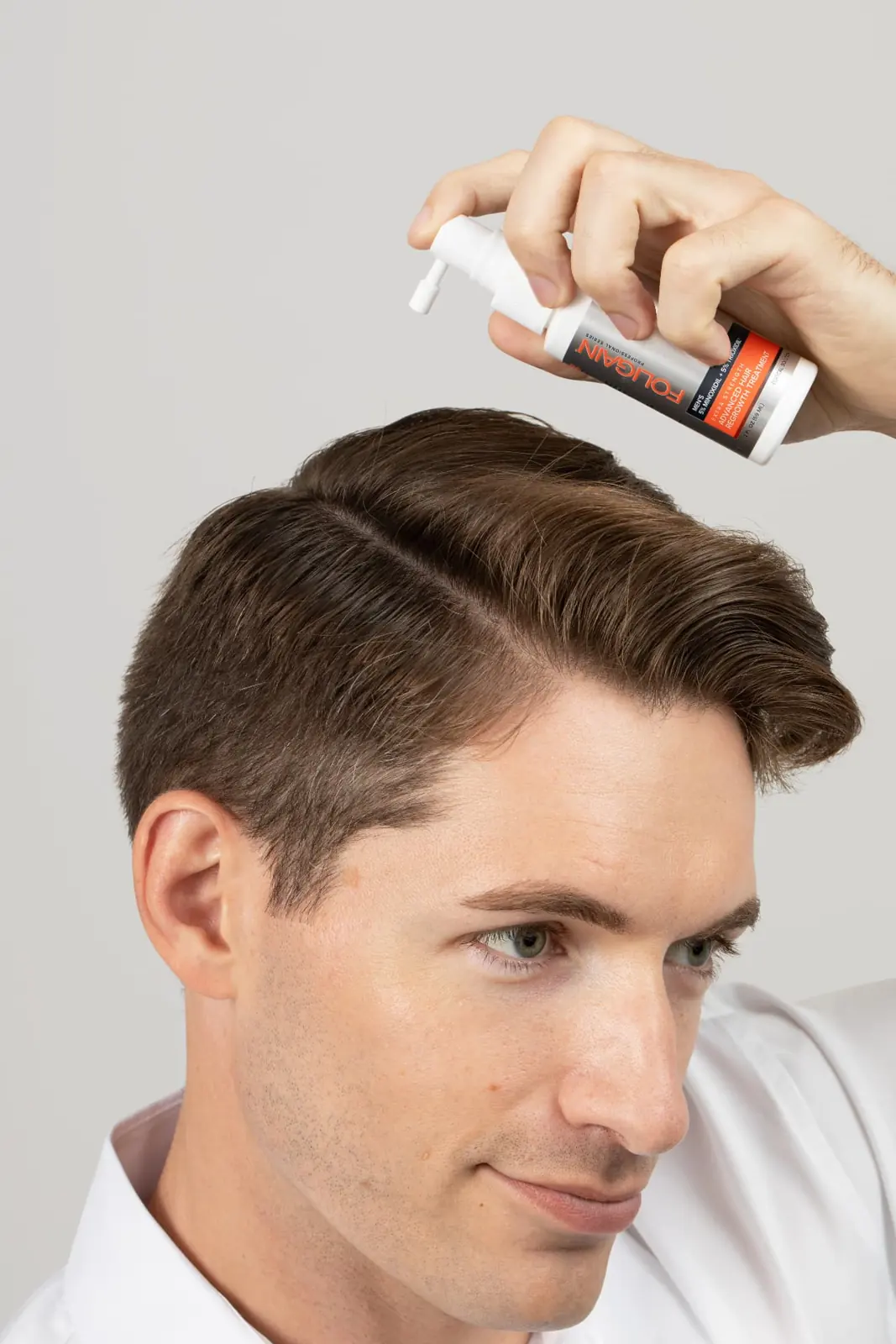


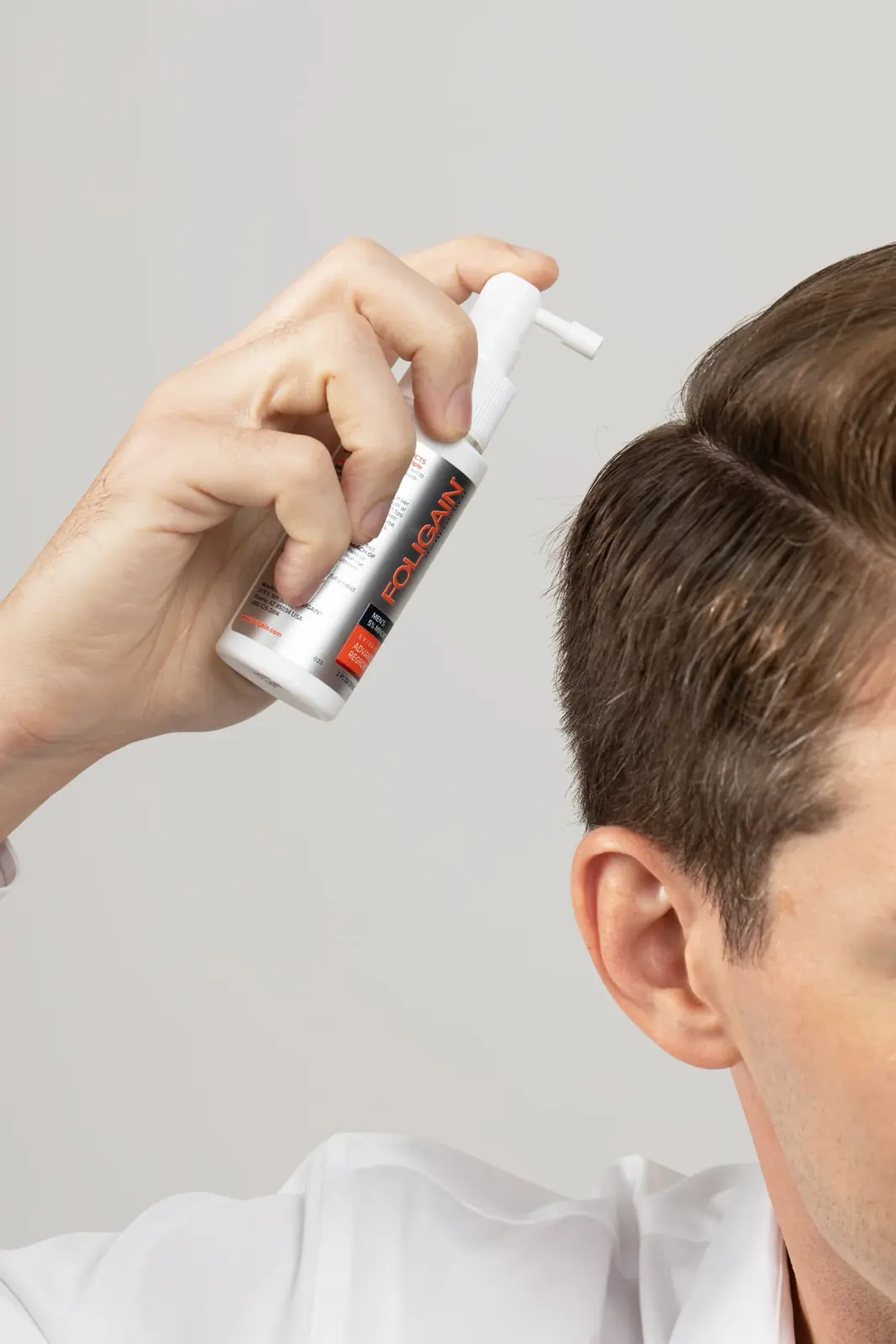
Images are matched to the topic for education; always confirm directions and claims on the exact product label.
Frequently asked questions
Is losing 150 hairs a day normal?
It can be on a wash day, especially with long hair. Persistently high shedding over several weeks is worth discussing with a clinician.
Does brushing cause hair loss?
Gentle brushing releases hairs that were already shed. Rough brushing can cause breakage but does not cause follicles to stop producing hair.
Do people shed more in autumn?
Some studies have observed a mild seasonal peak in shedding in late summer and autumn.
Will starting FOLIGAIN® make me shed more at first?
Some people notice a short adjustment period when starting any new hair routine. If shedding continues to worsen for more than a couple of months, check in with a doctor.
How can I tell if my shedding is just normal or a sign of pattern hair loss?
Normal shedding doesn't usually come with visible thinning over time. If your part is widening, your hairline is receding or your ponytail feels thinner, that points toward pattern hair loss rather than ordinary daily shedding.
Does shedding amount differ much between men and women?
The everyday range is broadly similar, though women often notice shedding more because of longer hair and different styling habits, and some causes, such as postpartum shedding, are specific to women.
Can a cosmetic routine reduce how much I shed?
Cosmetic routines like FOLIGAIN® are not marketed or evidenced to reduce shedding directly; they're designed to support the look and feel of hair and scalp. If reducing shedding tied to an underlying cause is your goal, that starts with identifying the cause, ideally with a doctor.
Does shedding look different depending on hair color?
Yes, in a purely visual sense. Dark hair shows up more clearly against a light bathroom floor, sink or towel, and pale or gray hair can be easy to miss on a light surface, so two people shedding a similar amount can have very different impressions of how much hair they're actually losing.
This content is for educational purposes only and is not medical advice. It is not intended to diagnose, treat, cure or prevent any disease. Speak with a qualified healthcare professional about your individual situation.
Individual results vary. Hair-growth products are used consistently over months, and outcomes depend on the cause and stage of hair loss.
FOLIGAIN® products related to this guide
If this guide matches your situation, our product education pages explain which FOLIGAIN® formats suit which routines.
Explore FOLIGAIN® products