Minoxidil Side Effects: What's Common, What's Rare and What to Do
Scalp irritation, shedding, facial hair, and the rare warning signs that mean you should stop — explained calmly and practically.
FOLIGAIN® Editorial Team · 18 min read · Updated 2026-09-28
Medical facts and treatment details have not been independently medically reviewed.
Why side effects happen at all
Topical Minoxidil is applied directly to the scalp, so most of what people experience is a local skin reaction rather than a whole-body effect. The active ingredient itself can cause irritation in some people, but so can the vehicle — the alcohol, water and propylene glycol that carry the Minoxidil and help it spread and penetrate. Understanding this distinction matters because switching to a different formulation (for example, a foam instead of a solution) can sometimes resolve irritation without needing to abandon treatment altogether.
Systemic effects, meaning effects felt elsewhere in the body, are far less common with topical use because only a small fraction of the applied dose is absorbed through the skin into the bloodstream. They are, however, the reason the Drug Facts label lists specific warning signs to watch for. Being familiar with both categories — common local reactions and rare systemic ones — helps you respond appropriately rather than panicking over a dry scalp or dismissing a genuine warning sign.
Local scalp reactions
Itching and flaking are the complaints people report most. Sometimes this is irritant dermatitis from the alcohol or propylene glycol in the vehicle; less often it's a true allergy to Minoxidil. Dryness from alcohol can also look like dandruff.
These reactions often appear in the first few weeks of use, while your scalp adjusts to a new product in its daily routine, and may lessen over time even without changing anything. If they don't improve, or if they worsen, that's a signal to look at the product itself — the specific formulation, how much you're using, and whether you're giving it enough time to dry before covering your head or touching your scalp again.
- Try a foam or propylene-glycol-free formula
- Use a gentle shampoo and avoid harsh scrubs
- Don't apply to broken skin
- See a clinician if redness spreads or blisters
Temporary shedding
Increased shedding in the first weeks is a known, usually temporary effect as resting hairs are pushed out by new growth. It's covered in depth in our shedding phase guide.
This shedding typically appears within the first two to eight weeks of starting treatment and settles down within a similar window. It reflects Minoxidil's effect on the hair growth cycle: as follicles are prompted into a new active growth phase, some older hairs that were already due to fall out are shed a little earlier than they otherwise would have been. It can be alarming to see more hair in the shower drain or on a pillow, but it is not, by itself, a sign that the product isn't working or that something is wrong. Shedding that continues well beyond two to three months, or that seems to be accelerating rather than settling, is worth discussing with a clinician, since it could reflect an unrelated cause rather than the expected early-use pattern.
Unwanted hair growth elsewhere
Facial hypertrichosis — fine hair on the forehead, temples or cheeks — can result from product migrating on hands or pillows, or from absorption. Washing hands after applying, letting it dry before bed and using the labeled amount reduce the risk.
This side effect is reported more often in women than men and more often with higher-strength products. It is generally reversible: the excess fine hair typically fades gradually over the months after stopping Minoxidil or after switching to a lower-strength or once-daily labeled product. If it's bothersome, a clinician or pharmacist can discuss format and strength options that may reduce the risk while still addressing your hair loss.
Rare but important warning signs
These systemic warning signs are rare with topical use precisely because absorption through the skin is limited, but the label lists them because Minoxidil was originally developed as an oral blood pressure medication and can, in principle, affect the heart and circulation if enough is absorbed. Applying more than the labeled amount, applying to broken or irritated skin, or using it in ways not described on the label can increase the amount absorbed and, with it, the chance of these effects.
| Symptom | Action |
|---|---|
| Chest pain, rapid heartbeat | Stop and seek medical care |
| Fainting or dizziness | Stop and seek medical care |
| Sudden unexplained weight gain | Stop and contact a doctor |
| Swollen hands or feet | Stop and contact a doctor |
| Persistent scalp redness or irritation | Stop and ask a clinician |
Who should check with a clinician first
People with heart disease, low blood pressure, scalp conditions, those under 18, and anyone pregnant or breastfeeding should get medical advice before use. Minoxidil is also dangerous for cats even in small amounts.
It's also worth checking in with a clinician first if you're not confident your hair loss is the pattern type Minoxidil is labeled for. Sudden, patchy, painful or rapidly progressing hair loss can have other causes, and starting Minoxidil in that situation means you might experience side effects from a product that was never likely to address your specific issue in the first place. A dermatologist can examine your scalp and history and help you decide whether Minoxidil, a different treatment, or further testing makes the most sense.
What to do if a side effect appears
For mild, local reactions like itching or dryness, many people find relief by switching to a foam or a propylene-glycol-free formulation, reducing frequency temporarily while checking with a pharmacist, or improving drying time and hand-washing technique. Don't stop and restart repeatedly without a plan, since inconsistent use makes it hard to judge whether treatment is working and can prolong the adjustment period each time you restart.
For more significant reactions — spreading redness, blistering, persistent pain, or any of the systemic warning signs listed above — stop use and contact a healthcare provider rather than waiting to see if it resolves on its own. Bring the product packaging with you so a clinician can review the exact strength, formulation and directions you were following.
FOLIGAIN® and choosing between products if side effects occur
FOLIGAIN® sells OTC topical Minoxidil products in various formats, and switching between labeled options — for instance from a solution to a foam, or between different strengths appropriate to your label — is a reasonable step if you're experiencing irritation, as long as you follow the new product's own Drug Facts label rather than mixing directions from two products. FOLIGAIN® also offers TRIOXIDIL®, a cosmetic hair-care ingredient complex used in some shampoos and serums; because it's a cosmetic product rather than an OTC drug, it is not expected to carry the same drug-related warning signs as Minoxidil, but it also isn't a substitute for Minoxidil if that's the treatment your clinician has recommended.
If side effects persist across multiple formats and strengths, that's a signal to step back and discuss alternatives with a clinician — including prescription options, different formulations, or investigating whether an unrelated scalp condition is contributing to the irritation you're experiencing.
How side effects can differ between men and women
Some side effects are reported at different rates between men and women, which is part of why labeling differs by sex and strength. Unwanted facial hair growth is reported more often in women, which is one reason women are generally directed toward 2% solution or once-daily 5% foam rather than twice-daily 5% solution. Scalp irritation from the vehicle can affect anyone, but women with longer hair may find solutions harder to apply directly to the scalp, increasing incidental contact with hair and skin elsewhere.
Pregnancy and breastfeeding are reasons to avoid topical Minoxidil unless a clinician has specifically advised otherwise, since safety data in pregnancy is limited. Anyone in this situation should raise it with a healthcare provider before starting or continuing use.
Keeping a simple side-effect log
If you're trying a new strength or format, a short written log can help you and a clinician spot patterns: note the date you started, any scalp symptoms and their rough severity, and anything else that changed around the same time, like a new shampoo or a lot of sun exposure. This makes it much easier to tell whether a symptom is tied to Minoxidil, to something else in your routine, or to simple coincidence.
This is especially useful if you end up trying more than one product or strength over time, since it's easy to lose track of which formulation caused which reaction without a record to refer back to.
How long side effects typically last
Most local reactions — itching, dryness, mild redness — either settle within the first few weeks as the scalp adjusts to a new daily product, or resolve within a couple of weeks of switching to a gentler formulation or easing off frequency under a pharmacist's guidance. Temporary shedding in the first two to eight weeks generally follows its own short course and then settles on its own, regardless of whether you change anything about your routine.
Unwanted facial hair growth tends to build gradually over months of use rather than appearing overnight, and it fades gradually too — often over a similar span of months — once you stop the product or switch to a lower-strength or once-daily labeled option. This gradual pattern, in both directions, is worth knowing so you don't expect an overnight change in either the side effect or its resolution.
Rare systemic warning signs, by contrast, don't follow a predictable 'settling' timeline the way local irritation does — they're a signal to stop and get medical advice promptly rather than to wait and see whether they fade with continued use.
Comparing side-effect patterns across solution, foam and low-alcohol formulas
Because much of the irritation associated with Minoxidil traces back to the vehicle rather than the active ingredient itself, the format you choose can meaningfully change your side-effect experience even at the same labeled strength. Classic alcohol- and propylene-glycol-based solutions tend to produce the most reports of dryness and itching, largely because both ingredients are drying to skin with repeated daily contact.
Foams were partly developed to sidestep propylene glycol, and many people who react to a solution tolerate a foam of the same strength comfortably. Low-alcohol solutions aim for a middle ground: gentler on the skin than a classic high-alcohol formula, though sometimes slower to dry and occasionally described as feeling heavier in the hair. None of these formulation differences change the underlying dose of Minoxidil delivered at a given strength — they change how the skin experiences getting that dose.
If you've had irritation on one format, it's reasonable to try another labeled format at the same strength before concluding Minoxidil itself isn't for you. Our low-alcohol and sensitive-scalp guide goes into more detail on making that comparison and troubleshooting persistent reactions.
Comparing side effects with prescription alternatives
It can help to put Minoxidil's side-effect profile in context alongside other treatments sometimes considered for pattern hair loss. Prescription finasteride, taken orally by men, carries a different set of possible side effects, including reports of reduced libido or other sexual side effects in a minority of users — an entirely different category of risk from the scalp irritation typically seen with topical Minoxidil, since finasteride works internally on hormone pathways rather than locally on the scalp.
Clinician-supervised low-dose oral Minoxidil, sometimes prescribed off-label when topical use isn't tolerated or hasn't been effective, carries more systemic risk than the topical form, since a measured oral dose is absorbed far more completely than what reaches the bloodstream from a scalp application. This is exactly why oral use requires medical supervision and monitoring rather than being available over the counter.
None of this means one option is simply 'safer' than another in every case — it means the type of risk differs by treatment, and a clinician can help weigh which risk profile fits your health history, especially if topical Minoxidil's side effects have made a prescription route worth discussing.
When a side effect means it's time to reconsider the diagnosis
Occasionally, what looks like a Minoxidil side effect is actually a clue that the underlying diagnosis needs a second look. Scalp pain, burning without much visible irritation, or hair loss that keeps progressing in a pattern that doesn't match typical androgenetic alopecia (patchy areas, complete bald spots with smooth skin, or hair breaking rather than falling from the root) can point toward a different condition entirely, such as alopecia areata or a scarring alopecia, where Minoxidil isn't the right primary treatment.
If your experience with the product doesn't match the common patterns described here — irritation that doesn't track with the vehicle, shedding that never settles, or unusual symptoms beyond the scalp — it's worth bringing that mismatch to a dermatologist rather than assuming it's simply an unusually strong version of a known side effect.
Safety reminder
Always follow the Drug Facts label of the exact product you use. This guide is educational and does not replace advice from a pharmacist or clinician.
From the FOLIGAIN® library
Related FOLIGAIN® products and routines
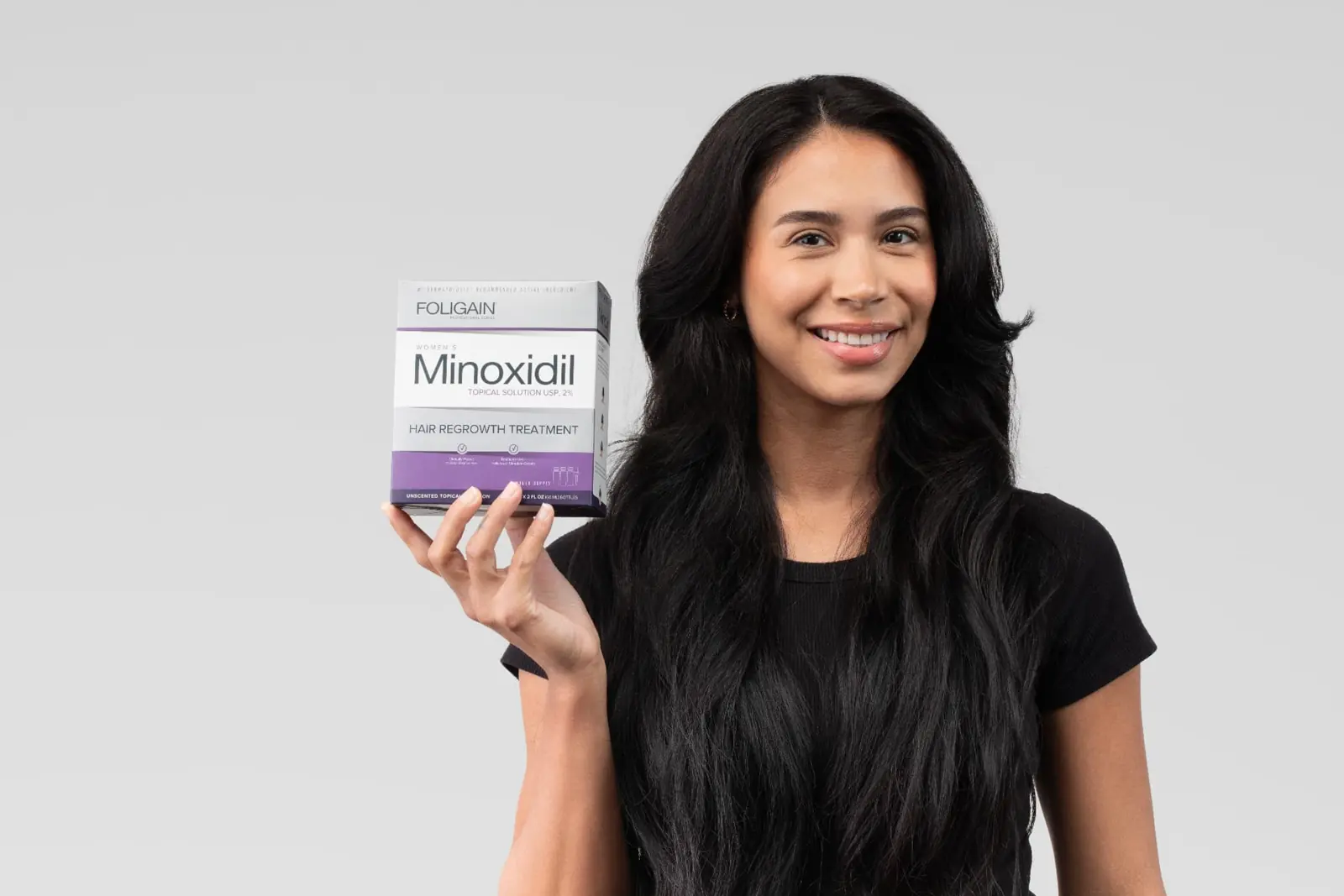

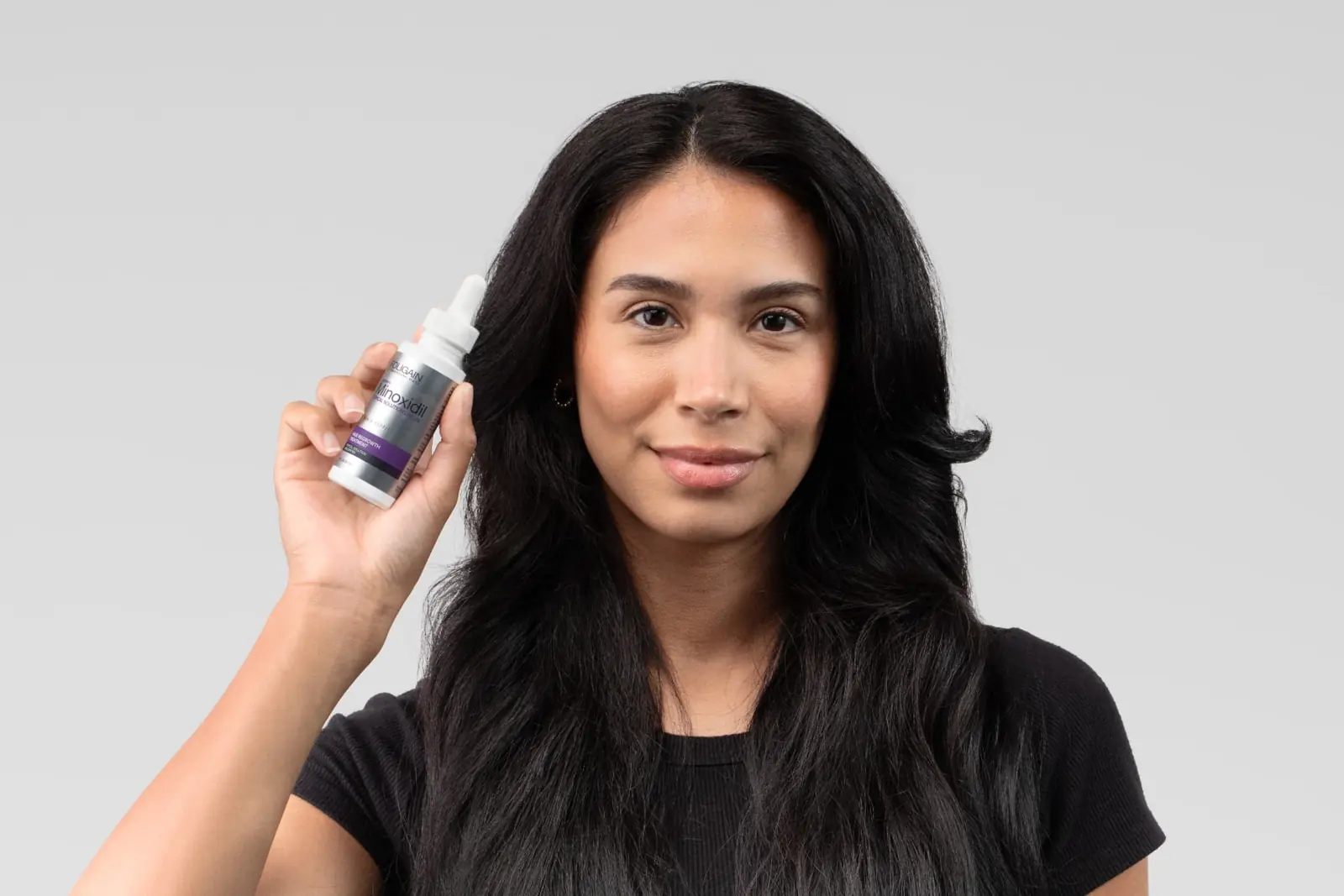
Images are matched to the topic for education; always confirm directions and claims on the exact product label.
Frequently asked questions
Does topical Minoxidil lower blood pressure?
Systemic absorption from topical use is low, and meaningful blood-pressure effects are uncommon, but the label lists warning signs to watch for.
Is the itching an allergy?
Often it's irritation from the vehicle rather than a true allergy. A clinician can patch-test if needed.
Does facial hair go away?
Unwanted facial hair from Minoxidil usually fades within months of stopping.
Can I switch formats if I get irritated?
Yes — many people find a foam or a propylene-glycol-free formula easier to tolerate than a standard solution, but always follow the new product's own label rather than mixing directions.
Is it normal to see more shedding than usual after starting?
A temporary increase in shedding within the first two to eight weeks is common and usually settles. Shedding that worsens or continues much longer deserves a clinician's opinion.
Are FOLIGAIN® cosmetic products like TRIOXIDIL® likely to cause the same side effects as Minoxidil?
TRIOXIDIL® is a FOLIGAIN® cosmetic ingredient complex, not an OTC Minoxidil drug, so it isn't expected to carry the same drug warning signs — but always check the product's own ingredient list and instructions.
How soon after switching formats should irritation improve?
Many people notice improvement within one to two weeks of switching to a gentler format, though timing varies. If it doesn't improve, a clinician can help figure out whether something else is going on.
Are prescription options riskier than topical Minoxidil?
They carry different types of risk rather than simply more or less risk — oral finasteride and oral Minoxidil act more systemically and need medical supervision, while topical Minoxidil's risks are mostly local to the scalp. A clinician can help you weigh which fits your situation.
What if my symptoms don't match any of the common side effects listed here?
Unusual symptoms, patchy hair loss, or scalp pain without much visible irritation are worth discussing with a dermatologist, since they may point to a different condition rather than a typical Minoxidil side effect.
This content is for educational purposes only and is not medical advice. It is not intended to diagnose, treat, cure or prevent any disease. Speak with a qualified healthcare professional about your individual situation.
Individual results vary. Hair-growth products are used consistently over months, and outcomes depend on the cause and stage of hair loss.
FOLIGAIN® products related to this guide
If this guide matches your situation, our product education pages explain which FOLIGAIN® formats suit which routines.
Explore FOLIGAIN® products