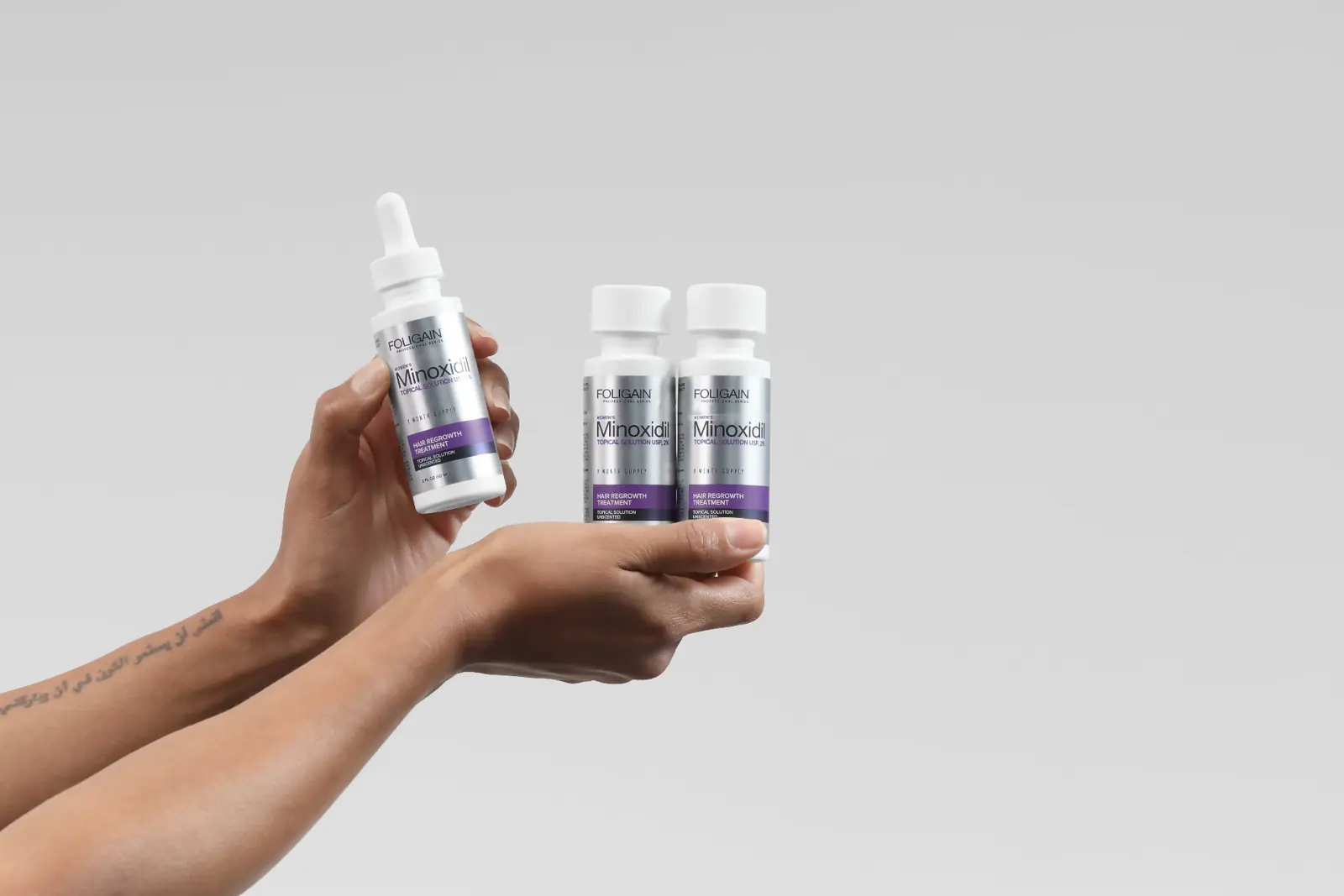
Minoxidil for Women: A Complete Guide
How Minoxidil is used for female pattern thinning, 2% vs once-daily 5% foam, facial hair, pregnancy, and realistic expectations.
FOLIGAIN® Editorial Team · 18 min read · Updated 2026-09-28
Medical facts and treatment details have not been independently medically reviewed.
Female pattern hair loss in brief
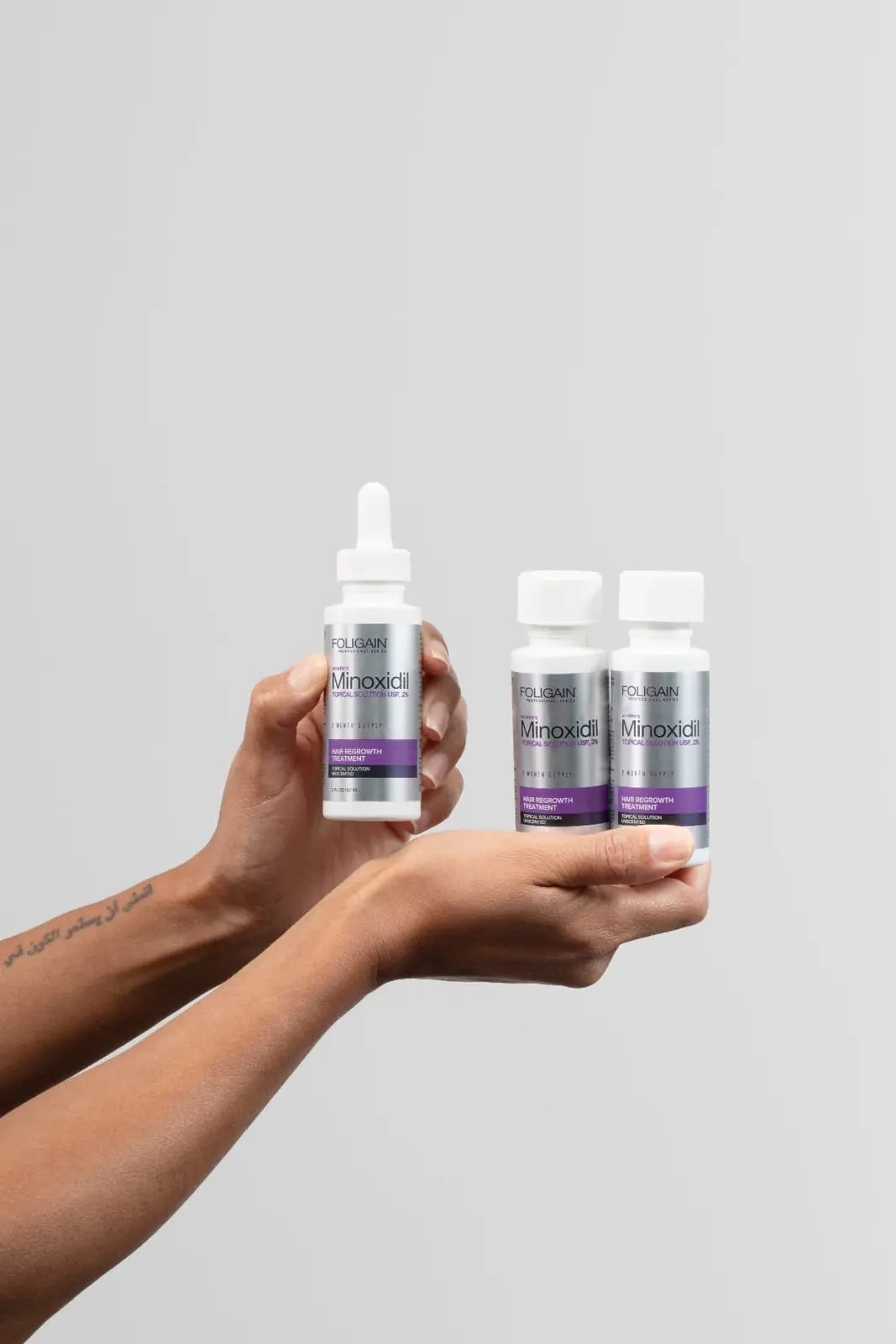
Female pattern hair loss usually shows as a widening part and less density on top, with the frontal hairline preserved. It progresses slowly, often accelerating around menopause. Because shedding in women has many possible causes, a medical check is worthwhile before starting any product.
Unlike the receding hairline and crown balding often seen in men, women more commonly notice diffuse thinning across the crown and top of the scalp, sometimes described using the Ludwig scale (grades I to III) rather than the Norwood scale used for men. The distinction matters because it shapes which treatments make sense and how a clinician frames your expectations.
It can be tempting to compare your part width or ponytail thickness to a sibling's or friend's, but pattern hair loss varies enormously in speed and severity even within families. Photographing your scalp every few months, rather than checking daily, gives a far more honest picture of whether thinning is progressing, stable, or improving.
What causes thinning in women
Genetics and hormones play a large role, much as they do in men, though the pattern and timing differ. Sensitivity of scalp follicles to normal hormone levels, combined with age-related changes, can gradually shorten the growth phase of each hair and shrink the follicle over years — a process called miniaturization.
But women are also more likely than men to have thinning driven by something other than heredity alone: iron deficiency, thyroid imbalance, polycystic ovary syndrome, crash dieting, certain medications, and telogen effluvium (a temporary, body-wide shedding triggered by illness, surgery, childbirth or major stress) are all common contributors. These causes can overlap with pattern thinning, which is why a new or sudden change in shedding deserves a clinician's look rather than an assumption that it's the same slow process as hereditary thinning.
Because so many causes can produce a similar end result — visibly less hair — a basic panel of bloodwork (iron studies, thyroid function, and sometimes hormone levels) is a reasonable starting point before committing to a long-term topical routine.
Age itself is also a factor independent of any single diagnosis: hair density naturally declines somewhat for most people over decades, and the rate at which individual hairs are replaced slows. Layer hereditary sensitivity, hormonal shifts around perimenopause and menopause, and ordinary life stressors on top of that baseline decline, and it becomes clear why pinpointing a single cause is often difficult without a clinician's input.
Treatment options for women
Topical Minoxidil remains the best-studied OTC option and the only one with FDA approval specifically for female pattern hair loss. Beyond Minoxidil, options fall into a few categories, each with different evidence, cost and commitment.
It's worth being clear-eyed about the evidence behind each option. Topical Minoxidil has the largest body of controlled trial data specifically in women. Anti-androgen medications have supportive evidence but are used off-label for this purpose in many regions, meaning a prescriber weighs benefits and risks individually. Laser devices have a smaller and more mixed evidence base. Cosmetic products, including TRIOXIDIL® complexes, are formulated to support hair and scalp appearance and are not held to the same clinical trial standard as a drug, so they should be understood as a complement to, not a replacement for, evidence-based treatment.
| Option | Category | What to know |
|---|---|---|
| Topical Minoxidil (2% or 5%) | OTC drug | Best-studied OTC option for women; needs months of consistent use |
| Prescription spironolactone or similar anti-androgens | Prescription drug | Used off-label by some clinicians for hormonally sensitive thinning; requires monitoring |
| Low-level laser devices | Device | Some evidence of modest benefit; results vary and devices differ |
| TRIOXIDIL® cosmetic complexes (FOLIGAIN®) | Cosmetic | Supports scalp and hair care routine; not a drug treatment and not a substitute for Minoxidil |
| Nutritional correction (iron, thyroid treatment) | Medical care | Addresses an underlying cause if bloodwork shows a deficiency; won't help pattern loss unless a deficiency exists |
Choosing a format
Neither format is clearly superior for everyone. The right choice usually comes down to which routine you can actually stick with for a year, and how your scalp tolerates the vehicle ingredients.
| Option | Frequency | Pros | Considerations |
|---|---|---|---|
| 2% solution | Twice daily | Long track record | Two applications; may contain propylene glycol |
| 5% foam | Once daily | Simpler routine; no propylene glycol | Slightly higher facial-hair risk |
A realistic timeline
As with men, topical Minoxidil for women follows a slow, month-by-month arc rather than a quick fix. Understanding the shape of that curve in advance helps prevent both premature disappointment and premature quitting.
It also helps to plan for plateaus. Even in people who respond well, month-to-month change can feel invisible up close; the difference usually only becomes obvious when comparing photos taken months apart under the same lighting and styling. Expecting a smooth, steadily increasing line rather than a series of small, hard-to-notice steps is one of the most common reasons people misjudge their own progress.
| Timeframe | What commonly happens |
|---|---|
| Weeks 1–2 | No visible change; routine-building phase |
| Weeks 2–8 | Possible temporary increase in shedding as follicles cycle |
| Months 2–4 | Fine new hairs may begin appearing in responders |
| Months 4–6 | First fair checkpoint to judge whether it's working |
| Months 6–12 | Hairs that regrew tend to thicken; density stabilizes with continued use |
Styling, color and daily life
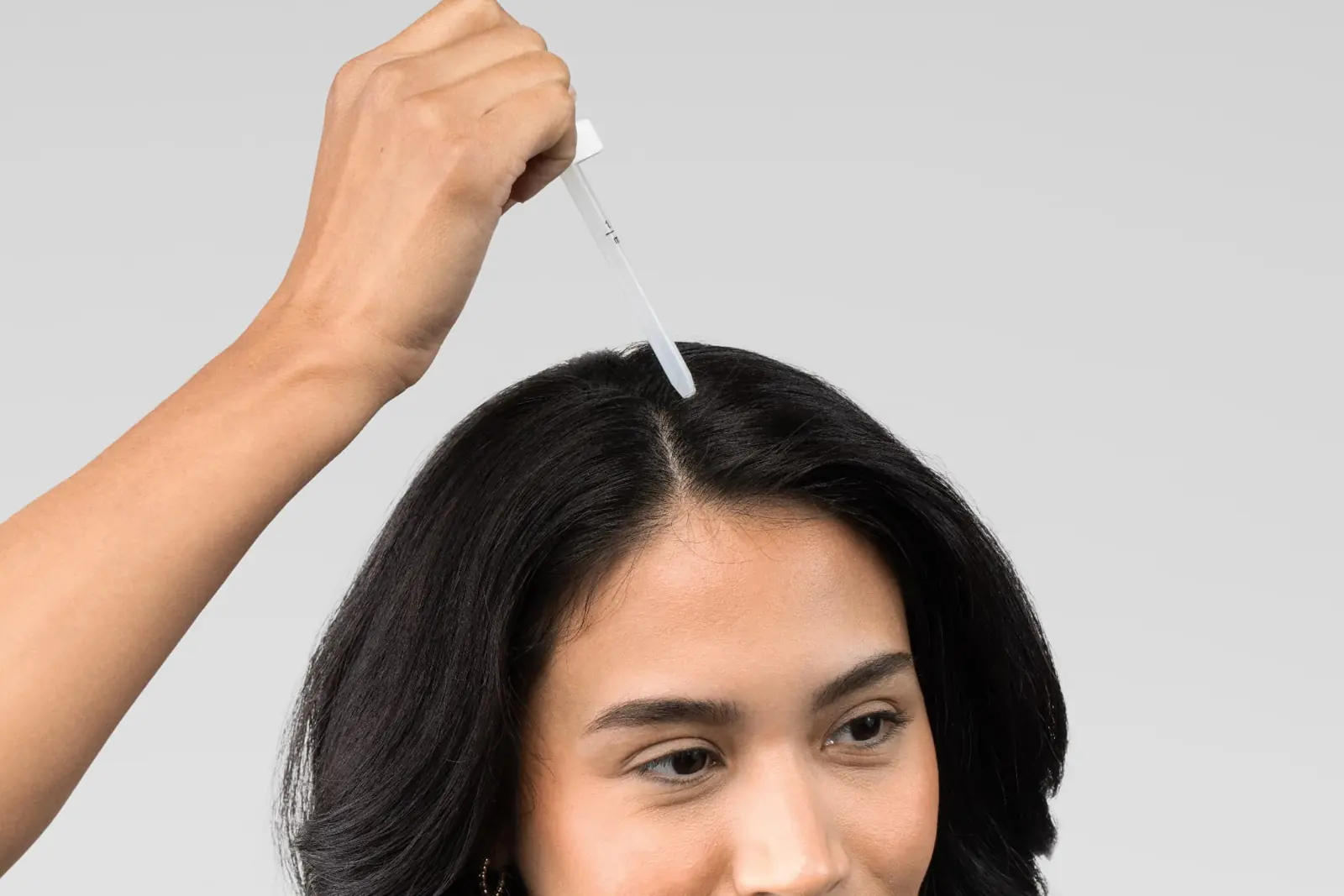
Minoxidil can be used alongside hair color and styling products. Many women apply it at night after removing styling products, or in the morning before styling once it's dry. Avoid applying right after coloring or chemical treatments when the scalp may be sensitive — wait a day or two.
If you regularly use heat styling tools, apply Minoxidil after styling is finished for the day rather than before, since heat and vigorous brushing on a freshly treated scalp can increase transfer and irritation. Hair extensions, wigs and hairpieces don't need to be removed for application, but make sure the applicator tip or foam reaches the scalp itself rather than sitting on top of the hair or hairpiece, since it's the scalp that needs to absorb the product.
Reducing facial hair risk
- Use exactly the labeled amount
- Apply only to the scalp
- Wash hands right after
- Let it dry before lying on a pillow
- Change pillowcases often
Pregnancy, postpartum and menopause
Minoxidil isn't for use during pregnancy or breastfeeding. Postpartum shedding is usually telogen effluvium and often recovers on its own within months. Around menopause, pattern thinning may become more noticeable, and Minoxidil is often part of the discussion with a clinician.
If you're trying to conceive, already pregnant, or nursing, it's worth discussing your hair-care routine with your obstetric provider generally, even beyond Minoxidil, since pregnancy itself changes hair growth cycles and many people notice thicker hair during pregnancy followed by a shedding phase afterward as hormones normalize.
FOLIGAIN® and alternatives for women
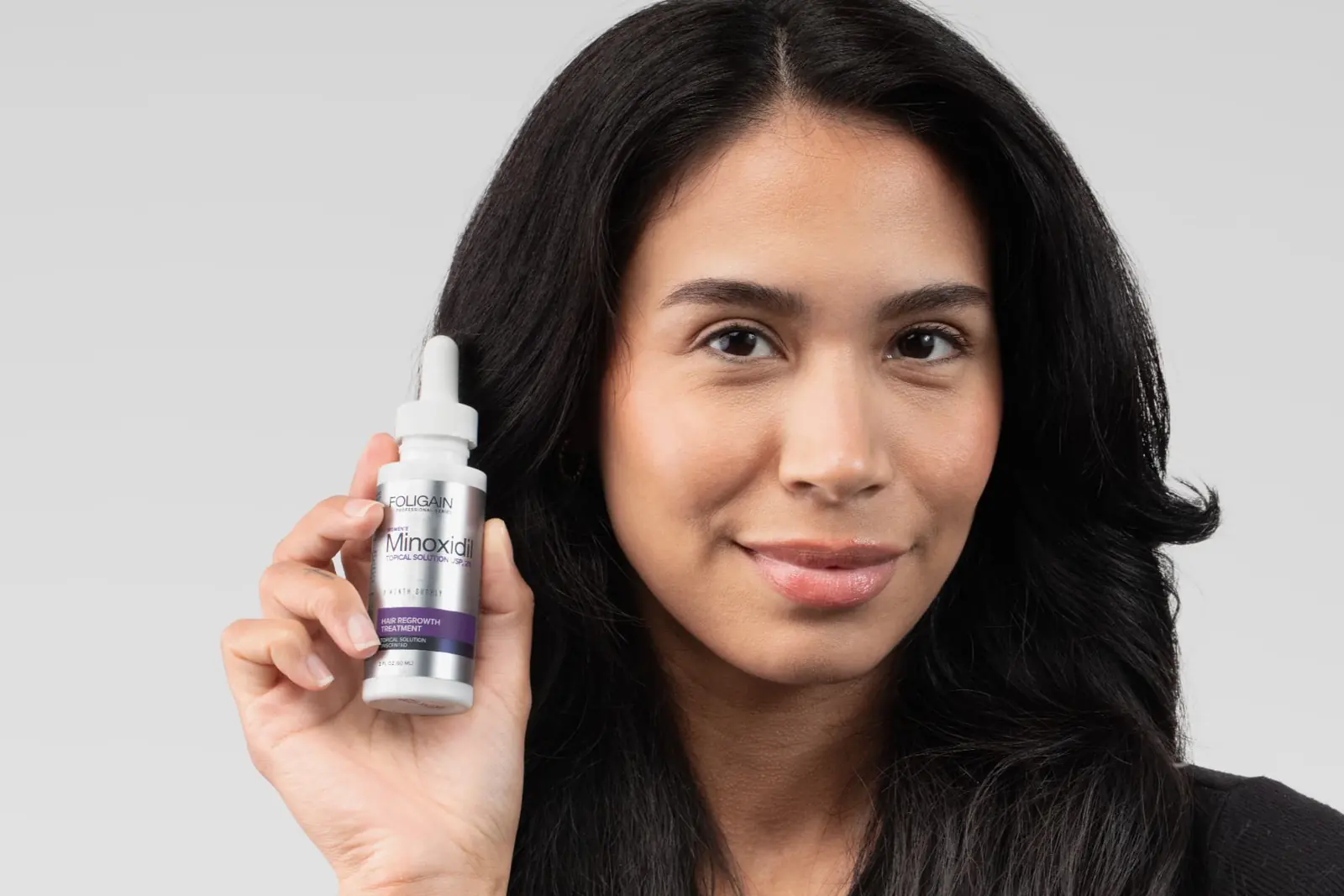
FOLIGAIN® offers OTC topical Minoxidil products alongside TRIOXIDIL®, a FOLIGAIN® cosmetic ingredient complex used in shampoos and serums. TRIOXIDIL® is a cosmetic, not a drug treatment, and it is not a substitute for the evidence behind topical Minoxidil. Many women pair a labeled Minoxidil routine with cosmetic hair care for scalp comfort and hair appearance, while keeping expectations about each product's role clear.
Other brands, including Rogaine®/Regaine® and store-label equivalents, sell the same active ingredient at the same labeled strengths. When comparing products, look at the same concentration, format and labeled directions first, then compare vehicle ingredients and cost per month. No single brand outperforms another simply by name; the labeled active ingredient and your consistency matter most.
Ultimately, the most effective plan for most women blends an accurate diagnosis, a labeled Minoxidil routine used consistently for at least four to six months, sensible scalp care, and realistic expectations about the pace and extent of change. Rushing to add multiple new products at once makes it harder to know what is actually helping, so introducing one change at a time and giving it a fair trial period is generally the more informative approach.
Hormonal life stages that can affect thinning and treatment choices
Hair follicles respond to hormone shifts throughout a woman's life, which is part of why thinning can appear or worsen at particular stages. Polycystic ovary syndrome (PCOS) is associated with androgen-related thinning in some women, alongside other symptoms, and is worth ruling in or out with a clinician since managing the underlying condition can be part of an effective plan. Starting or stopping hormonal birth control, and some thyroid medications, can also shift hair growth cycles temporarily, which is one reason a sudden change in shedding around a medication change deserves a conversation with a prescriber rather than an assumption that it's simply pattern thinning.
Perimenopause and menopause are common times for pattern thinning to become more noticeable, as shifting hormone levels can unmask or accelerate a genetic tendency that was previously mild. This doesn't mean menopause causes pattern hair loss on its own, but it can be the point where an existing predisposition becomes visible enough to prompt someone to seek treatment for the first time.
None of these hormonal contexts change how topical Minoxidil itself works, but they do affect how a clinician interprets your overall picture and whether additional treatment for an underlying hormonal condition should run alongside a Minoxidil routine rather than instead of it.
Building a realistic first year
Because results take months to appear and longer to mature, it helps to think of the first year as a structured trial rather than a single decision made once at the start. A practical approach is to confirm the diagnosis and rule out other causes, choose a labeled format you can realistically use every day, take a baseline photo, and then commit to a fixed re-check schedule — for example, at four, six and twelve months — rather than judging progress from the mirror day to day.
It's reasonable to expect some weeks or months where nothing seems to change and to treat that as normal rather than as evidence the product has failed, provided you're within the timeframe the label and general research describe. If, after a genuinely consistent four-to-six-month trial, there's no meaningful change, that's the point to bring your history and photos to a clinician and discuss whether a different approach makes more sense, rather than continuing indefinitely without reassessment.
Comparing Minoxidil to other daily habits marketed for women's hair
Store shelves and social media are full of gummies, serums, scalp massagers and supplements marketed for women's hair thinning. Most haven't been studied with the same rigor as topical Minoxidil, and many are reasonable as general hair-care support rather than as a treatment for hereditary thinning on their own. Biotin supplements, for instance, mainly help people who have an actual biotin deficiency, which is uncommon in otherwise well-nourished adults; taking extra biotin without a deficiency is unlikely to meaningfully affect pattern hair loss.
Cosmetic scalp serums and shampoos, including FOLIGAIN®'s TRIOXIDIL® line, are formulated to support the look and feel of hair and scalp and can be a reasonable complement to a Minoxidil routine, but they are marketed and regulated differently from a Drug Facts product and shouldn't be expected to replace it. When comparing any new product to Minoxidil, it's worth asking what kind of evidence backs it and whether its claims match its actual regulatory category.
FOLIGAIN® vs Rogaine® vs store brands for women
Women comparing brands should start from the same checkpoint as anyone shopping for topical Minoxidil: the labeled concentration, format and directions. FOLIGAIN® sells women's-labeled products, as do Rogaine®/Regaine® and various retailer store brands, and at a given strength and format, the active ingredient dose is the same across brands. What differs is the vehicle, scent, packaging, price and, for some people, how the applicator feels in daily use.
There's no evidence that any single brand's version of a given strength outperforms another brand's version of the same strength and format — the clinical data behind Minoxidil applies to the active ingredient and the studied concentrations and formats, not to a specific manufacturer. For women who also want cosmetic scalp support, FOLIGAIN®'s TRIOXIDIL® line is a cosmetic ingredient complex, not a substitute for the labeled Minoxidil decision, but it can be layered in afterward as a separate part of a routine.
Practical shopping advice: buy the smallest size first if you're new to a brand or format, confirm the strength matches what you and your clinician discussed, and only move to a larger, more cost-effective multi-month pack once you know you tolerate the specific formula well.
Setting expectations across different ages and life stages
A woman starting topical Minoxidil in her twenties for early diffuse thinning is often working with more intact follicles than someone starting in her fifties after years of gradual thinning, simply because miniaturization tends to progress over time. This doesn't mean older women won't respond — many do — but it's part of why earlier treatment, once a diagnosis is confirmed, is often discussed as advantageous: there may be more follicles still capable of responding to treatment.
It also means expectations reasonably differ by starting point. Someone with mild, early thinning might aim for maintaining density and slowing further loss, while someone with more advanced thinning might realistically expect stabilization rather than a dramatic reversal. A clinician who has examined your scalp can help calibrate what a good outcome looks like for your specific starting point, rather than comparing yourself to a general average.
Safety reminder
Always follow the Drug Facts label of the exact product you use. This guide is educational and does not replace advice from a pharmacist or clinician.
From the FOLIGAIN® library
Related FOLIGAIN® products and routines
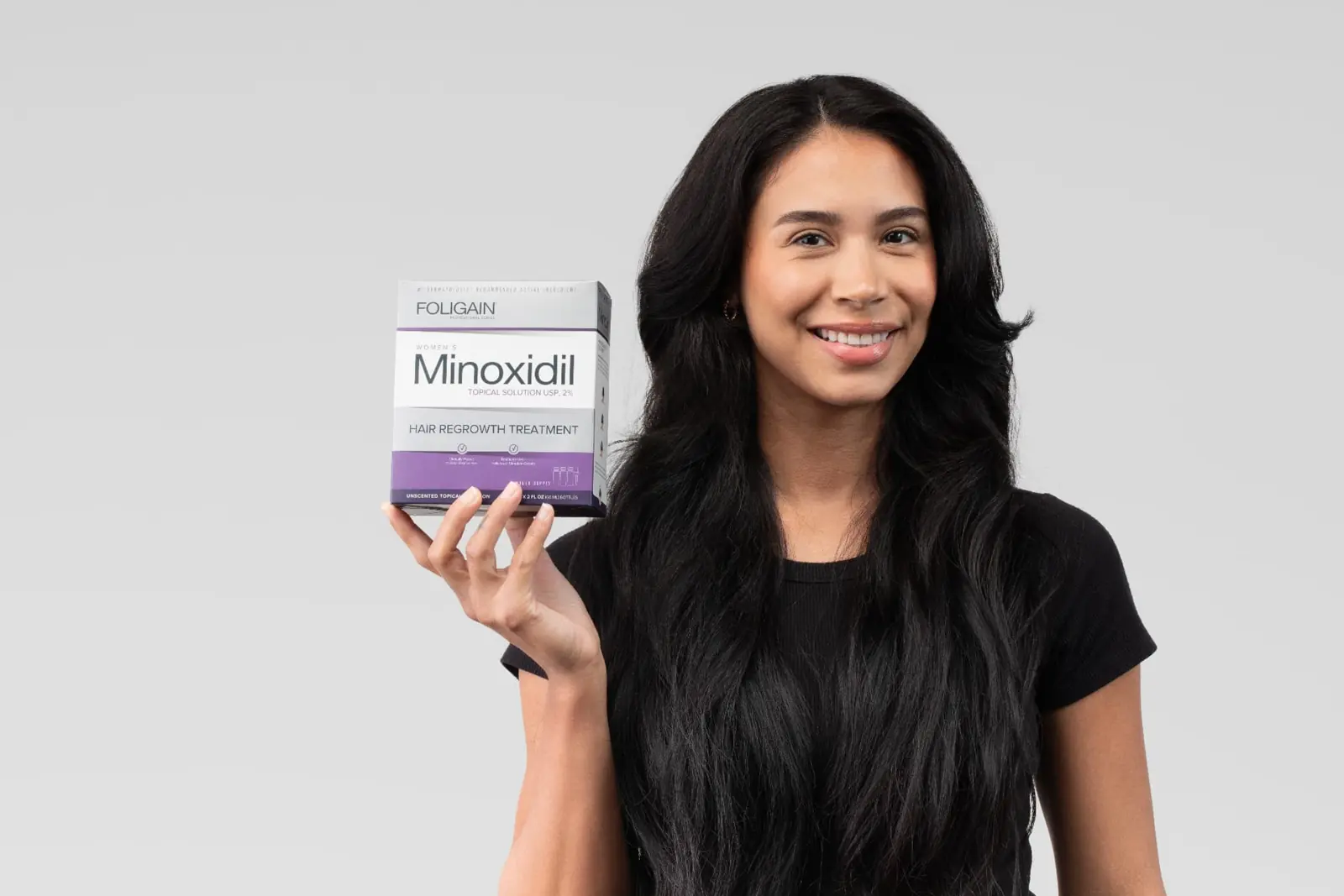
Images are matched to the topic for education; always confirm directions and claims on the exact product label.
Frequently asked questions
Can women use men's Minoxidil?
5% solution is labeled for men only in the US. Women should use products labeled for women.
How long until results?
Expect 4 to 6 months for a fair assessment, as with men.
Can I use it with supplements?
Yes, supplements and topicals can coexist, but supplements only help if a deficiency exists. Ask a clinician.
Will my hair loss get worse if I stop?
Any gains from Minoxidil tend to fade gradually over months after stopping, and the underlying pattern thinning continues on its own course.
Is thinning at my temples the same as pattern hair loss?
Not always. Traction from tight styles, telogen effluvium and other causes can also affect the temples, so a clinician's assessment is useful if the pattern seems unusual.
Can TRIOXIDIL® regrow my hair on its own?
TRIOXIDIL® is a FOLIGAIN® cosmetic ingredient complex intended to support hair and scalp appearance. It is not a drug treatment and isn't a substitute for Minoxidil if you're looking for regrowth backed by clinical study.
Could PCOS be behind my thinning?
It's possible, especially alongside other symptoms like irregular periods or acne. A clinician can check for PCOS and discuss whether managing it alongside any hair treatment makes sense.
Does starting or stopping birth control affect my hair?
For some women, hormonal changes from starting or stopping birth control can trigger temporary shedding. If timing lines up, mention it to your prescriber.
Does it matter which brand of 2% or 5% foam I choose?
Not for the active ingredient dose, which is the same across brands at a given labeled strength and format. Differences come down to vehicle, scent, price and packaging.
Will starting earlier give me better results?
Earlier treatment is often discussed as advantageous because more follicles may still be capable of responding, but response still varies by person, and starting later can still help — a clinician can help set realistic expectations either way.
This content is for educational purposes only and is not medical advice. It is not intended to diagnose, treat, cure or prevent any disease. Speak with a qualified healthcare professional about your individual situation.
Individual results vary. Hair-growth products are used consistently over months, and outcomes depend on the cause and stage of hair loss.
FOLIGAIN® products related to this guide
If this guide matches your situation, our product education pages explain which FOLIGAIN® formats suit which routines.
Explore FOLIGAIN® products