Dry Scalp vs Dandruff: How to Tell the Difference and What Helps
Small white flakes or large oily ones? How to identify dry scalp, dandruff and seborrheic dermatitis, and which ingredients match each.
FOLIGAIN® Editorial Team · 17 min read · Updated 2026-09-28
Medical facts and treatment details have not been independently medically reviewed.
Why the difference matters
Dry scalp and dandruff both show up as flakes on your shoulders and in your hair, and at a glance they can look like the same problem. They are not. Dry scalp is, at its core, a hydration and skin-barrier issue — the scalp skin is losing moisture faster than it can replace it, and it responds the same way dry skin anywhere else on the body does: by flaking. Dandruff, on the other hand, usually has very little to do with a lack of moisture. It is far more closely tied to oil production and to a yeast called Malassezia that lives on everyone's scalp and, in some people, triggers irritation and much faster skin cell turnover.
Because the underlying causes are different, the fixes are different too. Treating dandruff the way you would treat dry skin — with rich oils, thick creams and infrequent washing — can feed the very yeast that is driving the flaking and make things worse within a week or two. Treating true dry scalp with a strong medicated anti-dandruff shampoo every single day can strip away natural oils the scalp actually needs, leaving it tighter, itchier and flakier than before. Getting the diagnosis right, even informally at home, saves a lot of trial and error and a lot of frustration.
There is also a middle ground worth knowing about: seborrheic dermatitis, which is essentially a more inflamed, more visible cousin of ordinary dandruff. It can appear not just on the scalp but around the eyebrows, the sides of the nose, and behind the ears, and it tends to be more stubborn than garden-variety flaking. Recognizing which of these three patterns you are dealing with — dryness, dandruff, or seborrheic dermatitis — is the first real step toward calming things down.
Quick identification
Use this table as a starting point. None of these signs is diagnostic on its own, but taken together they usually point clearly in one direction.
| Sign | Dry scalp | Dandruff / seborrheic dermatitis |
|---|---|---|
| Flakes | Small, white, powdery | Larger, yellowish, greasy |
| Scalp feel | Tight, dry | Oily, sometimes red |
| Other skin | Often dry skin elsewhere | May affect eyebrows, sides of nose, ears |
| Season | Worse in winter, dry air | Can flare with stress, cold weather |
| Itch | Mild | Often moderate to noticeable |
| Response to oil | Often improves with light moisturizing | Often gets worse with heavy oils |
What causes dandruff
Malassezia is a normal part of the scalp's ecosystem — it lives on virtually everyone, feeding on the oils (sebum) that scalp skin naturally produces. In most people it causes no trouble at all. In others, for reasons that are not fully understood but likely involve individual skin sensitivity and immune response, the yeast's byproducts irritate the skin and speed up the normal cycle of skin cell shedding. Instead of shedding invisibly, as healthy scalp skin does, the skin comes off in visible clumps: dandruff.
Seborrheic dermatitis is essentially the same process turned up a notch, with more redness, more inflammation, and greasier, thicker scale. It tends to run a chronic course, flaring and settling over months or years, and it is more common in people with oilier skin, in colder months, and during periods of stress or fatigue. Hormonal shifts and some neurological conditions can also make seborrheic dermatitis more likely, though for most people it is simply a persistent nuisance rather than a sign of anything deeper.
It is worth saying clearly: dandruff is not caused by poor hygiene, and it is not contagious. It also is not caused by dryness, even though the flaking can look similar to dry skin at first glance. Understanding that oil and yeast — not dryness — are driving the process is what should guide the choice of shampoo.
Ingredients for dandruff
Over-the-counter anti-dandruff shampoos rely on a handful of well-established, drug-store ingredients, each backed by decades of use. Rotating between two different actives every few months can help if one seems to lose effectiveness over time, which some people notice with long-term use of a single product.
| Ingredient | How it helps | Notes |
|---|---|---|
| Ketoconazole 1% | Antifungal against Malassezia | Often used 2x/week; 2% strength is prescription-only |
| Zinc pyrithione | Antifungal, antibacterial | Common in daily shampoos; gentle enough for frequent use |
| Selenium sulfide | Slows skin turnover, antifungal | Can discolor light or chemically treated hair if left on too long |
| Salicylic acid | Loosens and lifts scale | Helpful for thick, adherent flakes; can be drying if overused |
| Coal tar | Slows skin cell growth | Effective but has a strong odor and can stain light hair or fabrics |
What helps a dry scalp
Dry scalp responds far better to gentler, more moisturizing care than it does to medicated shampoos, which can sometimes make dryness worse rather than better. The goal is to slow down moisture loss and reduce anything that is stripping the scalp's natural protective oils.
- Use a mild, sulfate-free shampoo and lukewarm rather than hot water, since hot water strips oils quickly.
- Wash less often if you currently wash daily and your scalp feels tight or itchy afterward.
- Run a humidifier in the bedroom during dry winter months, when indoor heating drops humidity substantially.
- Limit hot blow-drying held close to the scalp, and use the cool-shot setting to finish.
- Try a light, fragrance-free scalp moisturizer or a few drops of a lightweight oil massaged in, then rinsed if it feels heavy.
- Check your diet and hydration — chronic dehydration and very low-fat diets can occasionally contribute to overall skin dryness, including on the scalp.
Flaking while using Minoxidil
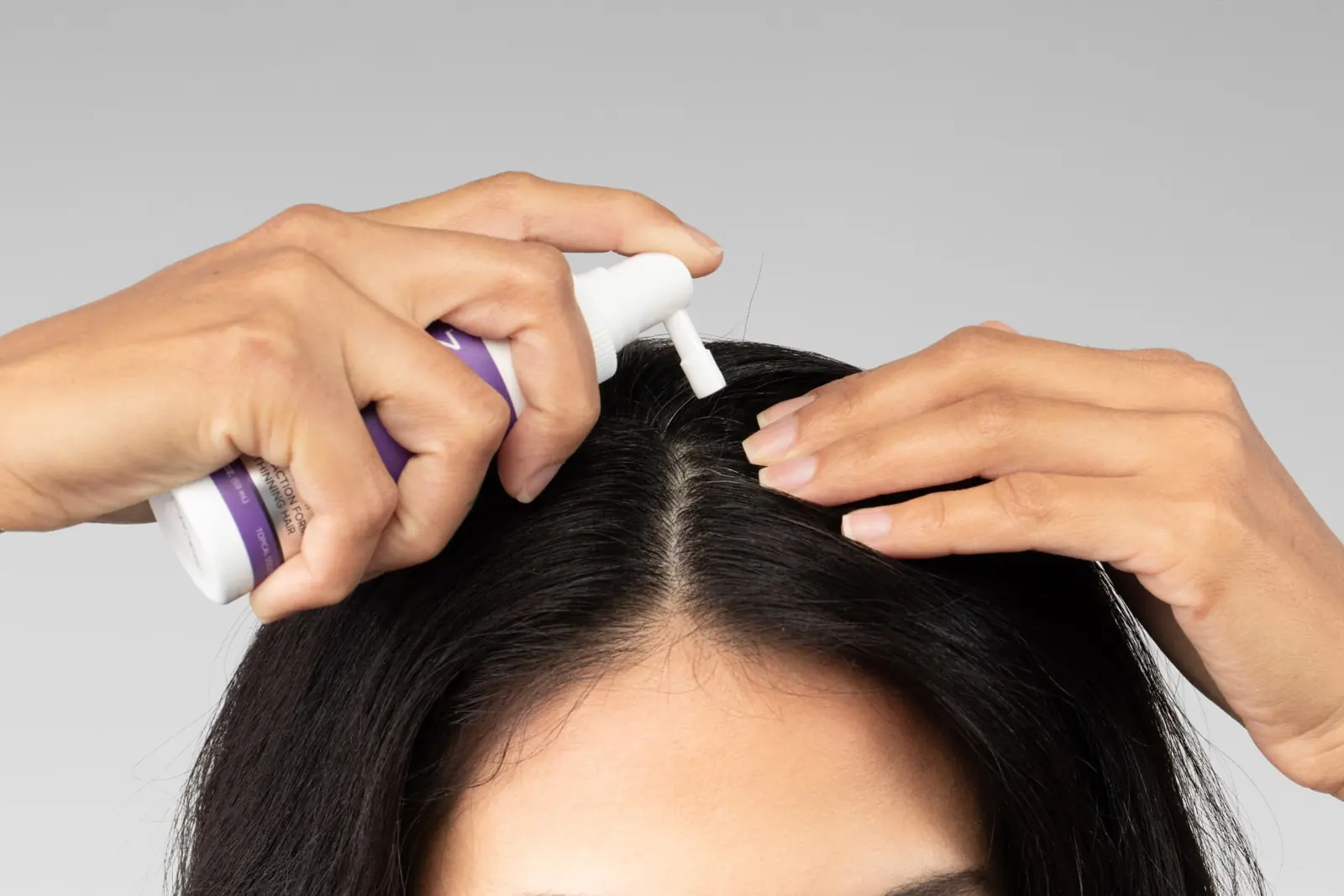
Minoxidil solutions typically contain alcohol and often propylene glycol as carriers to help the active ingredient penetrate the scalp. Both of those carriers can cause dryness, stinging, itching or flaking in some users, and it is easy to mistake this for dandruff or worsening dry scalp when it is really a reaction to the vehicle rather than the active drug itself.
If you notice new flaking after starting a Minoxidil solution, a few practical options exist. Switching to a foam formulation, which is usually propylene-glycol free, resolves the irritation for many people. Making absolutely sure the scalp is fully dry before applying, rather than layering the product onto damp skin, also reduces irritation for some users. Alternating application sites slightly and not over-applying (using more than the labeled amount does not speed results and increases the chance of irritation) both help too. If irritation persists, a pharmacist or dermatologist can advise on formulation switches. For a deeper look at lower-irritation options, see our guide to low-alcohol Minoxidil for sensitive scalps.
It is also worth separating out FOLIGAIN® leave-on cosmetic formulas, which are designed as a scalp-care layer rather than a drug treatment; if you are combining a Minoxidil drug product with cosmetic leave-ons, introduce one new product at a time so that if irritation appears, you know which one to adjust.
FOLIGAIN® vs other approaches for flaking
It helps to be clear about categories here. Anti-dandruff actives like ketoconazole, zinc pyrithione and selenium sulfide are over-the-counter drugs regulated specifically for treating dandruff and seborrheic dermatitis; their job is to reduce yeast activity and calm the inflammatory response. Minoxidil is a separate, unrelated over-the-counter drug approved for regrowing hair in pattern hair loss, and it is not intended to treat flaking — any flaking it causes is a side effect of its carrier, not a dandruff treatment mechanism.
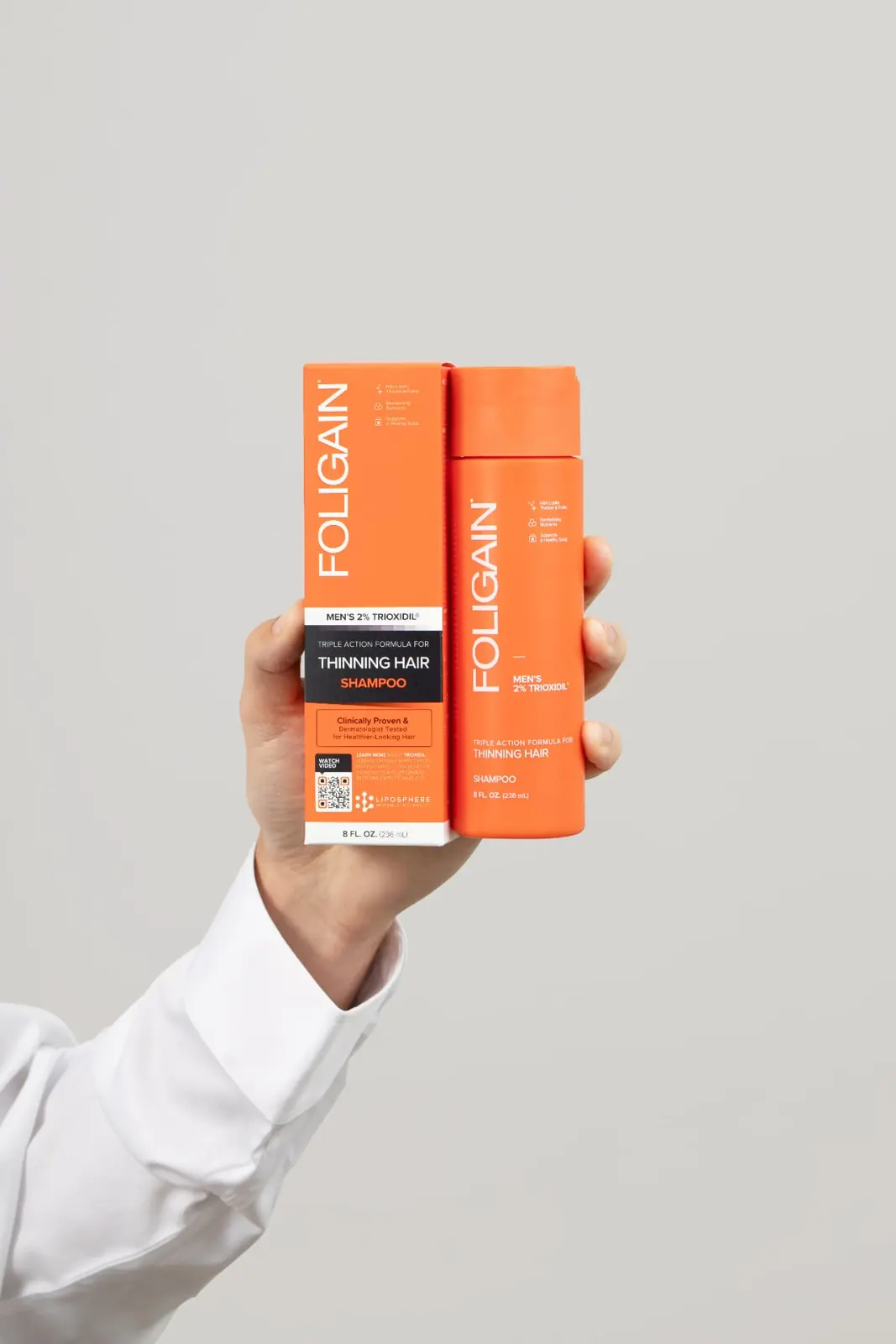
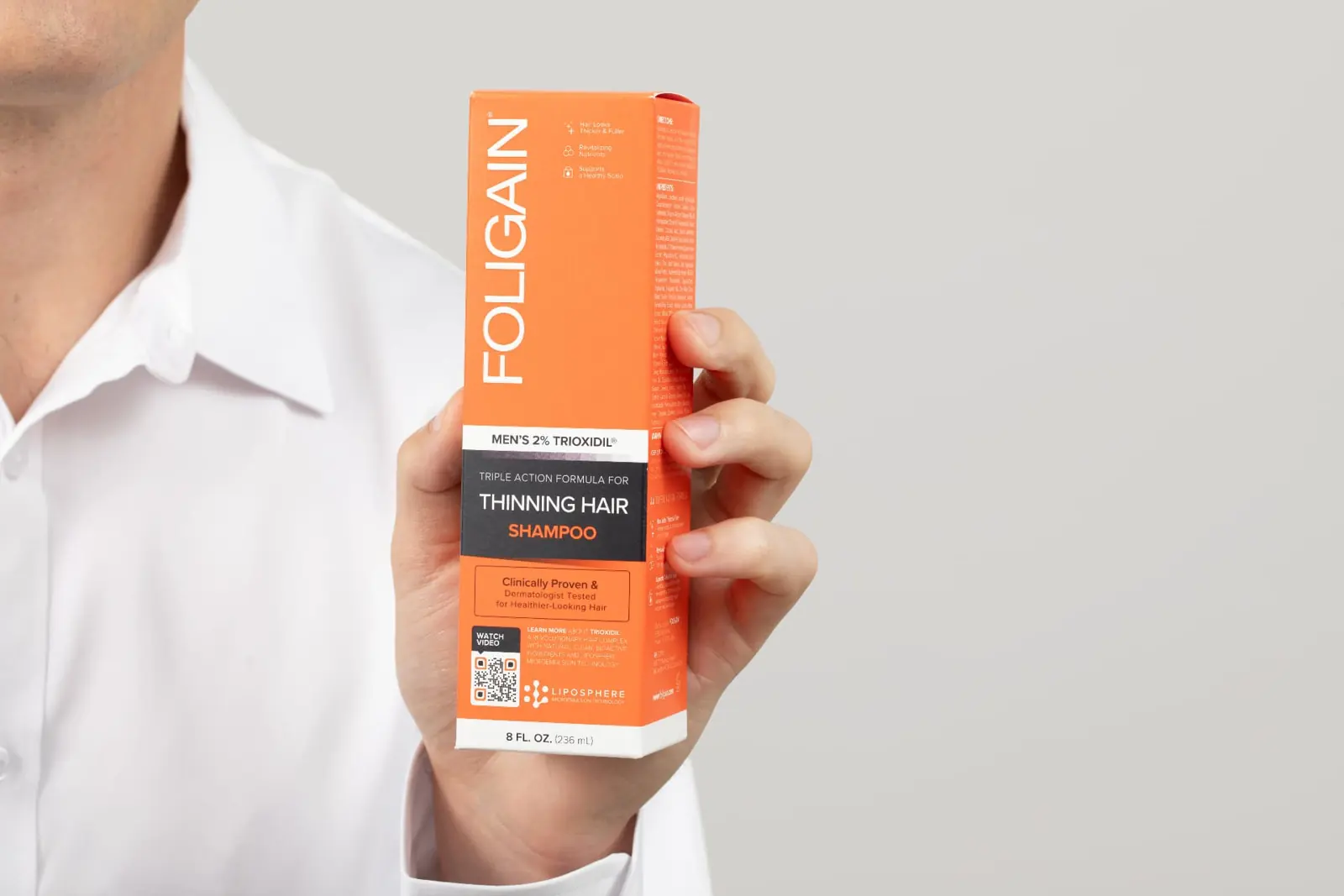
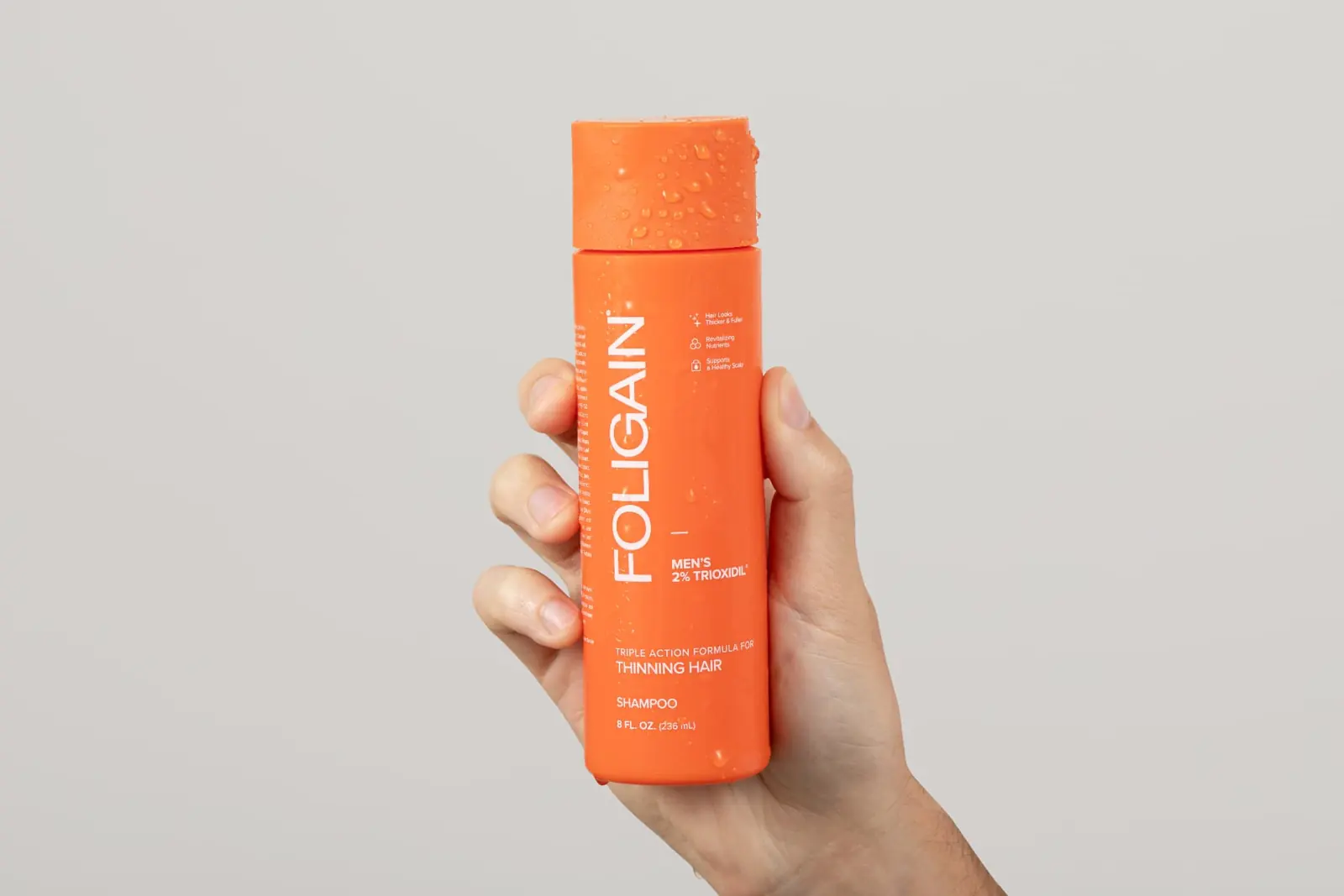
FOLIGAIN® products sit in a third category: they are cosmetic scalp-care and hair-care formulas, including TRIOXIDIL®, FOLIGAIN®'s proprietary cosmetic complex. They are formulated to support a clean, comfortable, well-conditioned scalp as part of an overall hair-care routine, and some people find that gentle, well-formulated shampoos and conditioners simply make daily scalp maintenance more pleasant. They are not a substitute for a medicated anti-dandruff shampoo if you have true dandruff or seborrheic dermatitis, and they should not be marketed or understood as treating those conditions. Used sensibly — for example, as the everyday shampoo in between scheduled uses of a medicated dandruff shampoo — a cosmetic routine and a targeted treatment can comfortably coexist.
Realistic timeline
For simple dry scalp, switching to gentler products and reducing heat exposure often brings noticeable improvement within one to two weeks, since skin barrier repair happens relatively quickly once the aggravating factors are removed. For dandruff, most people see a meaningful reduction in flaking within two to four weeks of consistent use of an anti-dandruff shampoo two to three times a week; it is common for flaking to reduce gradually rather than disappear overnight. Seborrheic dermatitis tends to be more of a long-term, manage-rather-than-cure condition — flares often respond within a couple of weeks, but ongoing maintenance use of a mild antifungal shampoo, even once symptoms clear, helps keep it from coming straight back. If there is no improvement after four to six weeks of consistent, correct use, or if things are getting worse, that is a reasonable point to see a dermatologist rather than continuing to experiment.
When to see a professional
This guide is educational. Persistent pain, bleeding, spreading redness, pus, scarring or patchy hair loss should be assessed by a dermatologist.
From the FOLIGAIN® library
Related FOLIGAIN® products and routines
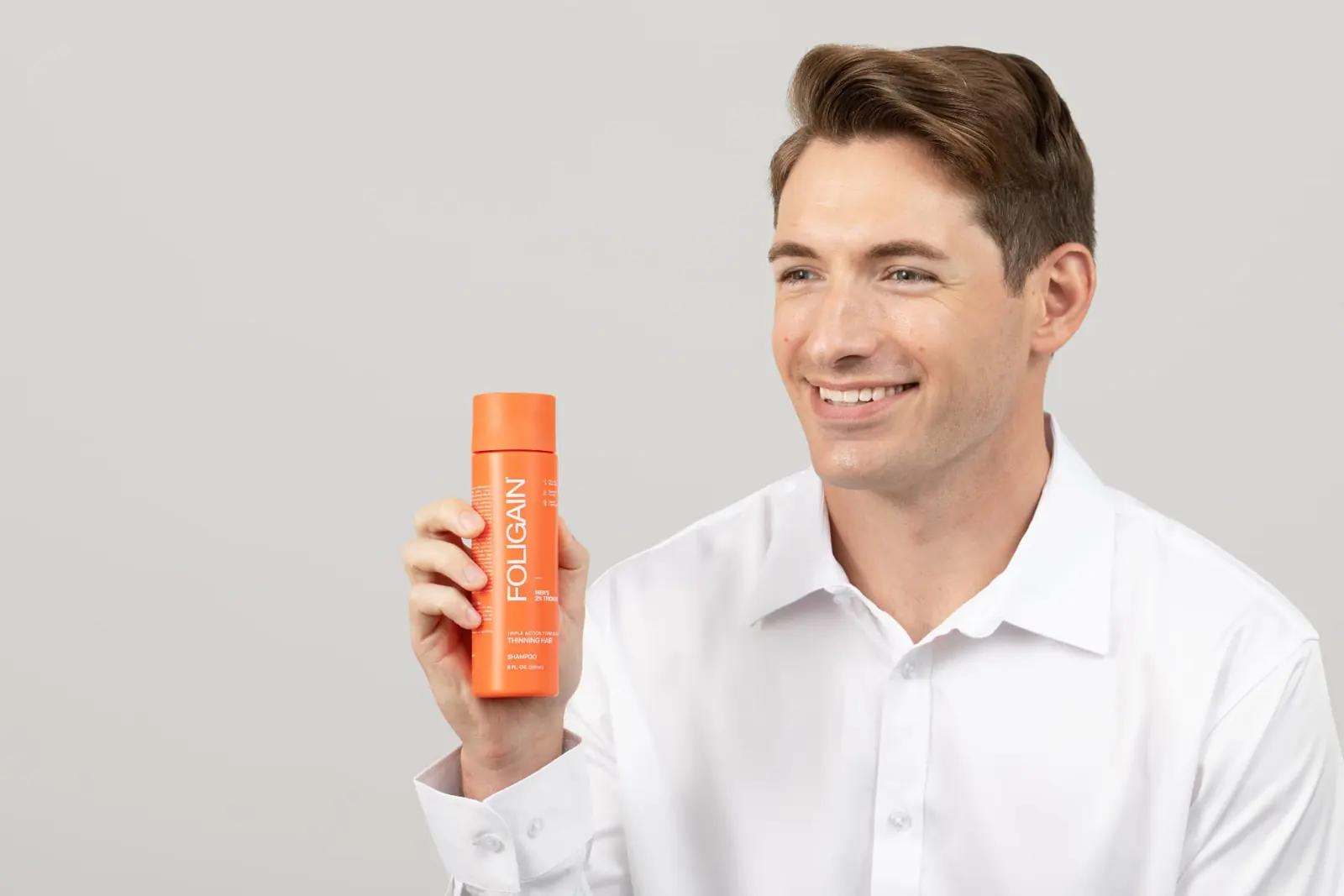
Images are matched to the topic for education; always confirm directions and claims on the exact product label.
Frequently asked questions
Does dandruff cause hair loss?
Dandruff itself is not a major direct cause of hair loss, but the scratching and inflammation that come with a bad flare can worsen shedding and breakage. Getting it under control keeps the scalp comfortable and reduces that secondary effect.
Should I oil a flaky scalp?
Only if you've confirmed it's dry scalp rather than dandruff. Oils can feed Malassezia yeast and make true dandruff noticeably worse, even though they feel soothing in the moment.
How often should I use anti-dandruff shampoo?
Follow the label instructions; many are designed to be used two to three times a week, alternated with a gentle everyday shampoo rather than used at every wash.
Can I use FOLIGAIN® products if I have dandruff?
FOLIGAIN® cosmetic shampoos and conditioners can be used as your everyday, in-between shampoo, but they are not formulated to treat dandruff or seborrheic dermatitis — pair them with a dedicated medicated shampoo used on its own schedule.
Why do I suddenly have flakes when I never used to?
Weather changes, new hair products, stress, hormonal shifts and even a new pillowcase or laundry detergent can all tip a previously calm scalp into flaking. Going back to a simple routine for a couple of weeks often helps identify the trigger.
Is it normal for dandruff to come back after it clears?
Yes. Dandruff and seborrheic dermatitis are chronic tendencies rather than one-time problems, so periodic flare-ups even after successful treatment are common and expected.
This content is for educational purposes only and is not medical advice. It is not intended to diagnose, treat, cure or prevent any disease. Speak with a qualified healthcare professional about your individual situation.
Individual results vary. Hair-growth products are used consistently over months, and outcomes depend on the cause and stage of hair loss.
FOLIGAIN® products related to this guide
If this guide matches your situation, our product education pages explain which FOLIGAIN® formats suit which routines.
Explore FOLIGAIN® products