Alopecia Areata Treatments: Steroids, JAK Inhibitors and More
Medical options for patchy autoimmune hair loss, including FDA-approved JAK inhibitors, with pros and cons.
FOLIGAIN® Editorial Team · 15 min read · Updated 2026-09-28
Medical facts and treatment details have not been independently medically reviewed.
What it is
Alopecia areata is a condition in which the immune system mistakenly attacks hair follicles, typically causing round or oval patches of hair loss, though it can range from a single small patch to widespread loss of scalp hair (alopecia totalis) or all body hair (alopecia universalis). It's fundamentally different from pattern hair loss, since it isn't driven by hormones like DHT but by the immune system, which is why it needs a different diagnostic and treatment approach entirely.
It can affect children and adults, tends to come and go unpredictably, and its course is genuinely hard to forecast for any individual: some patches regrow on their own without treatment, others respond well to therapy, and some cases are more stubborn or extensive. Because of that unpredictability and the emotional impact patchy or extensive hair loss can have, a dermatologist experienced in treating alopecia areata is an important part of navigating both the medical and psychological sides of the condition.
How it works
Treatments for alopecia areata generally take one of two approaches: calming the immune system's attack on the follicle, or supporting regrowth in follicles that are already recovering. Corticosteroids, whether injected directly into patches, applied topically, or in more severe cases taken orally for a limited course, work by suppressing the local or systemic immune response that's damaging the follicles.
Newer oral medicines called JAK inhibitors — Janus kinase inhibitors — work by blocking specific signaling pathways that immune cells use to communicate the attack on the follicle. Several, including baricitinib, ritlecitinib and deuruxolitinib, have received FDA approval specifically for alopecia areata in eligible patients, generally those with more severe or extensive disease, marking a significant shift in what's available for people who haven't responded to older treatments. Other approaches, like contact immunotherapy (deliberately inducing a mild allergic reaction on the scalp to redirect immune activity) or topical Minoxidil used as an adjunct to support regrowth once the immune attack has calmed, are also part of the broader toolkit a dermatologist might discuss.
Key facts at a glance
| Topic | Summary |
|---|---|
| Intralesional steroids | Often first-line for limited, localized patches |
| Topical steroids | Sometimes used, especially in children or milder cases |
| JAK inhibitors | Oral Rx for more severe alopecia areata; require lab monitoring and carry boxed warnings |
| Contact immunotherapy | A specialist option available at some centers for more extensive disease |
| Course | Unpredictable; regrowth, relapse and periods of stability can all occur |
Pros
- Effective options now exist even for more severe and extensive cases, which wasn't true a decade ago
- Many patches do regrow, particularly with earlier, appropriate treatment
- A growing evidence base and newer drug classes are actively expanding what's possible
Cons and risks
- Relapse is common, and no current treatment guarantees the condition won't return
- JAK inhibitors carry boxed warnings and require regular lab monitoring given their systemic immune effects
- Treatment, especially JAK inhibitors, can be costly and isn't always straightforward to get covered by insurance
- Response is genuinely unpredictable from person to person, which can be an emotionally difficult part of the process
Who it may suit
Anyone noticing sudden, patchy or unusually shaped hair loss, especially if it's happening quickly or in a distinct round pattern rather than a gradual, diffuse thinning, should see a dermatologist for an accurate diagnosis rather than assuming it's ordinary pattern hair loss.
People with more extensive or long-standing alopecia areata that hasn't responded to first-line treatments are the group for whom newer options like JAK inhibitors are most often considered, always with the monitoring and follow-up those medicines require.
Living with an unpredictable condition
Because alopecia areata can wax and wane over months or years, many people find it helpful to work with a dermatologist who can adjust the plan over time rather than expecting one treatment to be a permanent, one-time fix. It's also common for people to use wigs, hairpieces, scalp micropigmentation or other cosmetic strategies during periods of active loss, which is a legitimate and often important part of coping with the condition rather than a sign that medical treatment has failed.
Support communities and organizations focused on alopecia areata can also be a valuable resource, both for practical tips and for connecting with others who understand the unpredictable emotional weight of the condition in a way that's hard to convey to people who haven't experienced it.
Medical note
This guide is educational and published by FOLIGAIN®, the maker of OTC Minoxidil and cosmetic hair-care products. Prescription treatments and procedures require assessment by a licensed clinician, who can weigh your history, other medicines and goals. Never start, stop or combine prescription medicines without medical advice.
From the FOLIGAIN® library
Related FOLIGAIN® products and routines


Images are matched to the topic for education; always confirm directions and claims on the exact product label.
Frequently asked questions
Will Minoxidil fix alopecia areata?
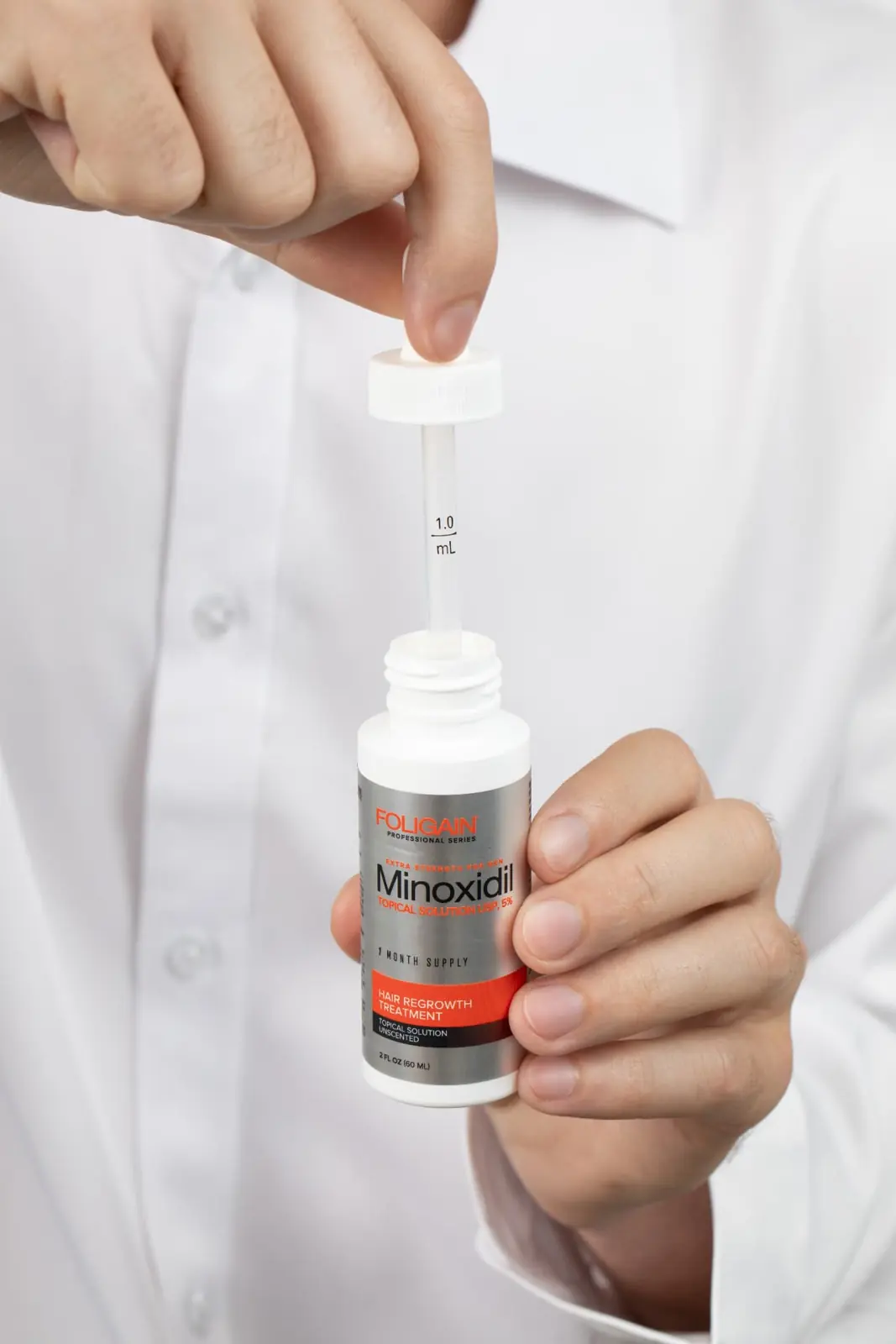
Minoxidil is sometimes used as an adjunct to support regrowth once immune activity has calmed, but alopecia areata fundamentally needs medical assessment and immune-targeted treatment; it's not something Minoxidil alone is designed to address.
Is alopecia areata the same as pattern baldness?
No. Pattern hair loss is driven by hormones and genetics and tends to be gradual, while alopecia areata is an autoimmune condition that can appear suddenly and in distinct patches. They need different treatment approaches.
Are JAK inhibitors safe?
They're FDA-approved for more severe alopecia areata and can be genuinely helpful, but they carry boxed warnings and require regular lab monitoring because of their broader immune effects, so they're prescribed and followed closely by a specialist.
Can alopecia areata go away on its own?
Yes, especially with smaller, more limited patches; spontaneous regrowth happens in many cases, though the condition can also relapse or become more extensive unpredictably, which is why ongoing dermatologist involvement is valuable.
Does stress cause alopecia areata?
Stress is sometimes discussed as a potential trigger or contributing factor in some cases, but alopecia areata is fundamentally an autoimmune condition, and its exact causes are still being researched rather than fully understood.
This content is for educational purposes only and is not medical advice. It is not intended to diagnose, treat, cure or prevent any disease. Speak with a qualified healthcare professional about your individual situation.
Individual results vary. Hair-growth products are used consistently over months, and outcomes depend on the cause and stage of hair loss.
FOLIGAIN® products related to this guide
If this guide matches your situation, our product education pages explain which FOLIGAIN® formats suit which routines.
Explore FOLIGAIN® products