Low-Alcohol Minoxidil and Sensitive Scalps
Why some people react to classic Minoxidil solutions and how foams, low-alcohol and propylene-glycol-free formulas compare.
FOLIGAIN® Editorial Team · 18 min read · Updated 2026-09-28
Medical facts and treatment details have not been independently medically reviewed.
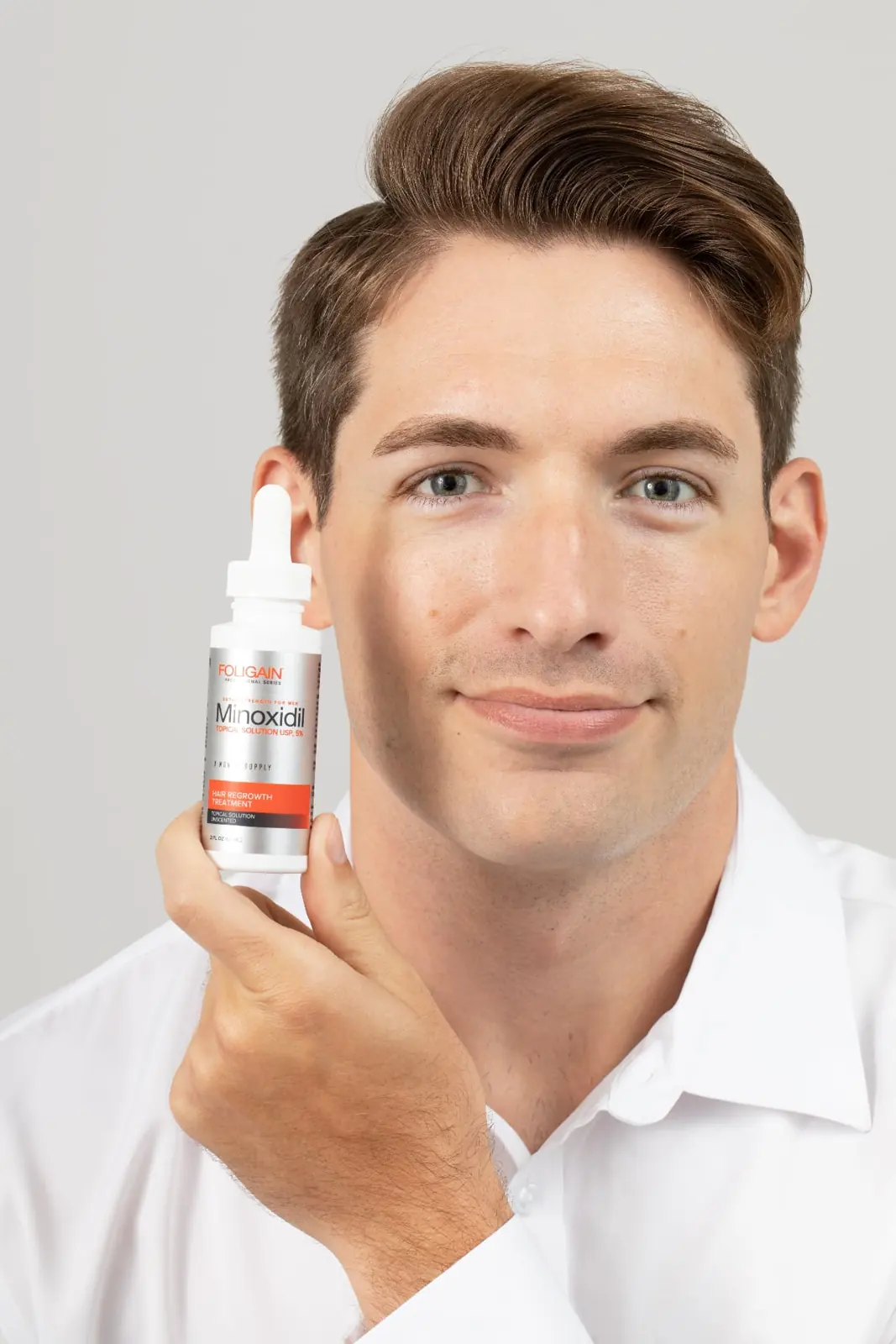
What's in the vehicle and why
Minoxidil doesn't dissolve easily in water. Classic solutions use ethanol to dissolve it and propylene glycol (PG) to help penetration and keep it on the scalp. Both can dry or irritate skin, especially with twice-daily use.
It helps to separate two different things: reactions to the active ingredient itself (uncommon) and reactions to the vehicle that carries it (much more common). Most complaints about itching, redness, flaking or a tight, dry feeling trace back to alcohol or propylene glycol rather than to Minoxidil.
It's also worth remembering that a scalp reaction doesn't automatically mean the product isn't working, and it doesn't automatically mean you should quit Minoxidil altogether. In most cases it means the specific formula you're using isn't a good match for your skin, and a change in vehicle — not necessarily strength or brand — resolves the problem.
Common causes of scalp irritation on Minoxidil
Understanding why a scalp reacts can help you choose the right fix rather than guessing.
- Irritant contact dermatitis from alcohol or propylene glycol drying the skin
- Pre-existing conditions such as seborrheic dermatitis or psoriasis flaring with any new topical
- Over-application — more product than labeled increases contact time and irritation risk
- Applying to already broken, sunburned or freshly colored/chemically treated skin
- True allergic contact dermatitis to Minoxidil itself, which is uncommon but possible
Comparing formats
Check the ingredients list of your specific product; formulas differ between brands.
Beyond alcohol and propylene glycol, some formulas include additional ingredients such as fragrance, preservatives or conditioning agents that can occasionally contribute to sensitivity in their own right. If you have a known sensitivity to a specific ingredient, checking the full ingredients list — not just the headline alcohol or propylene-glycol content — is worth the extra minute.
| Format | Alcohol | Propylene glycol | Feel |
|---|---|---|---|
| Classic solution | High | Usually yes | Wet, slower to dry |
| Foam | Present | Usually no | Light, fast-drying |
| Low-alcohol solution | Lower | Varies | Gentler, can feel heavier |
Treatment options if you have a sensitive scalp
You generally don't need to give up on Minoxidil altogether just because one formula didn't agree with your skin. There are several practical paths, roughly in order of what's easiest to try first.
| Option | What it involves | When to consider it |
|---|---|---|
| Switch to foam | Same active ingredient, usually no propylene glycol | First step for most people with irritation on a classic solution |
| Try a low-alcohol solution | Reformulated vehicle, less drying alcohol | If foam texture isn't preferred but PG isn't the culprit |
| Reduce frequency temporarily under label guidance | Short break, then rebuild | Mild irritation that needs a reset, discussed with a pharmacist |
| See a clinician for patch testing | Identifies true allergy vs irritation | Reactions that persist despite format changes |
| Pair with gentle cosmetic scalp care (e.g., TRIOXIDIL® products) | Supports scalp comfort as part of routine | Ongoing maintenance once a tolerated Minoxidil format is found |
A realistic timeline for resolving irritation
Most irritation from the vehicle improves within one to two weeks of switching formats or easing off frequency, as the skin barrier recovers. If redness, swelling or blistering doesn't improve after a short break, or it worsens with re-exposure, that points toward a true allergy rather than simple dryness, and a clinician can help sort this out with a patch test.
Importantly, resolving irritation doesn't reset the regrowth clock in a bad way — you can typically switch formats without losing progress, since the active ingredient and dose are the same across solution and foam at a given strength.
It also helps to keep a simple log: the date you started or switched a formula, how your scalp felt each week, and any other new products you introduced around the same time (new shampoo, hair dye, weather changes). This kind of record makes it much easier for a pharmacist or dermatologist to sort out what's actually causing a reaction if it doesn't resolve on its own.
Scalp-friendly habits
- Use a gentle, sulfate-light shampoo
- Avoid hot water and harsh exfoliants
- Don't apply to irritated skin
- Give the scalp a short break and ask a clinician if redness persists
FOLIGAIN® and alternatives for sensitive scalps
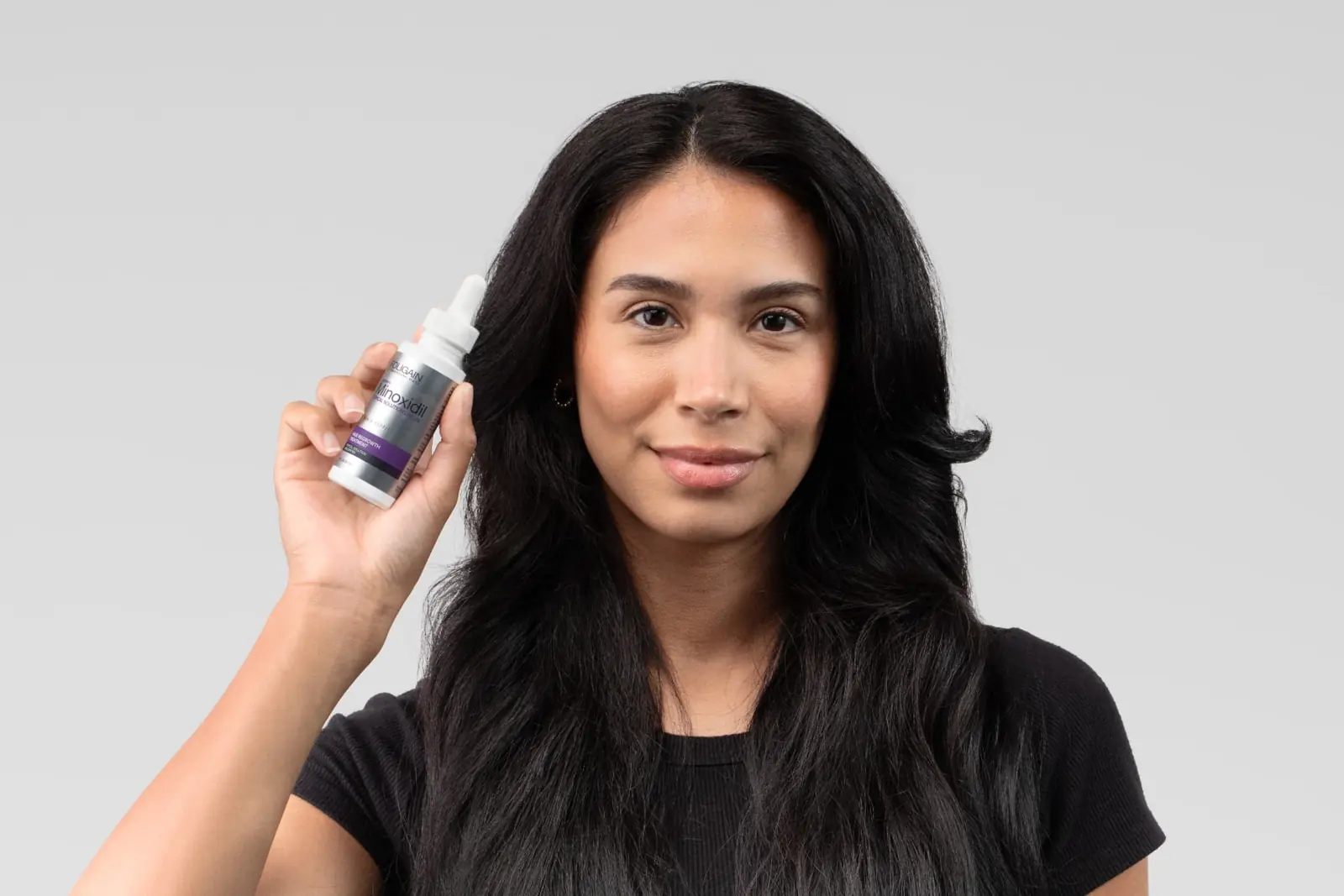
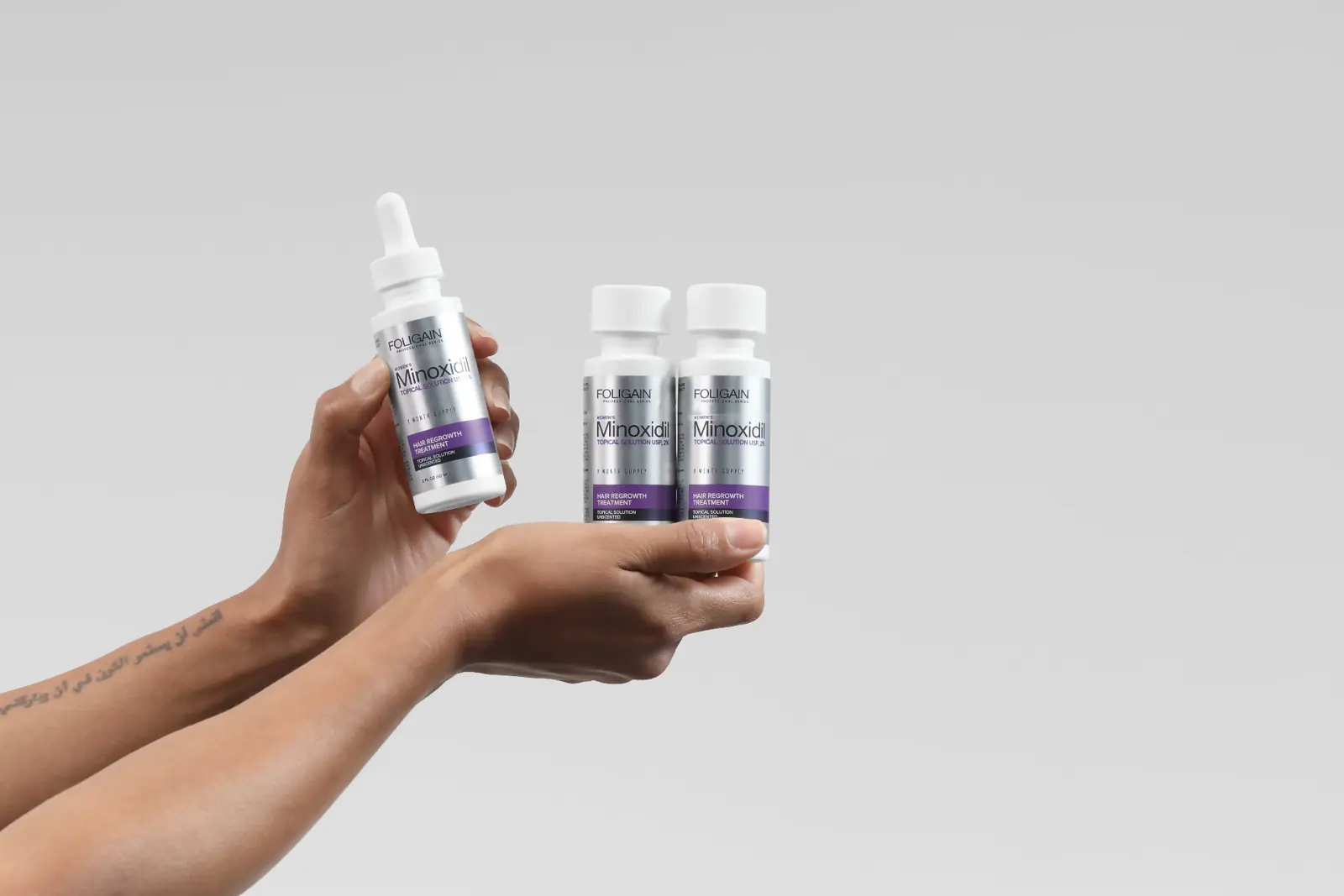
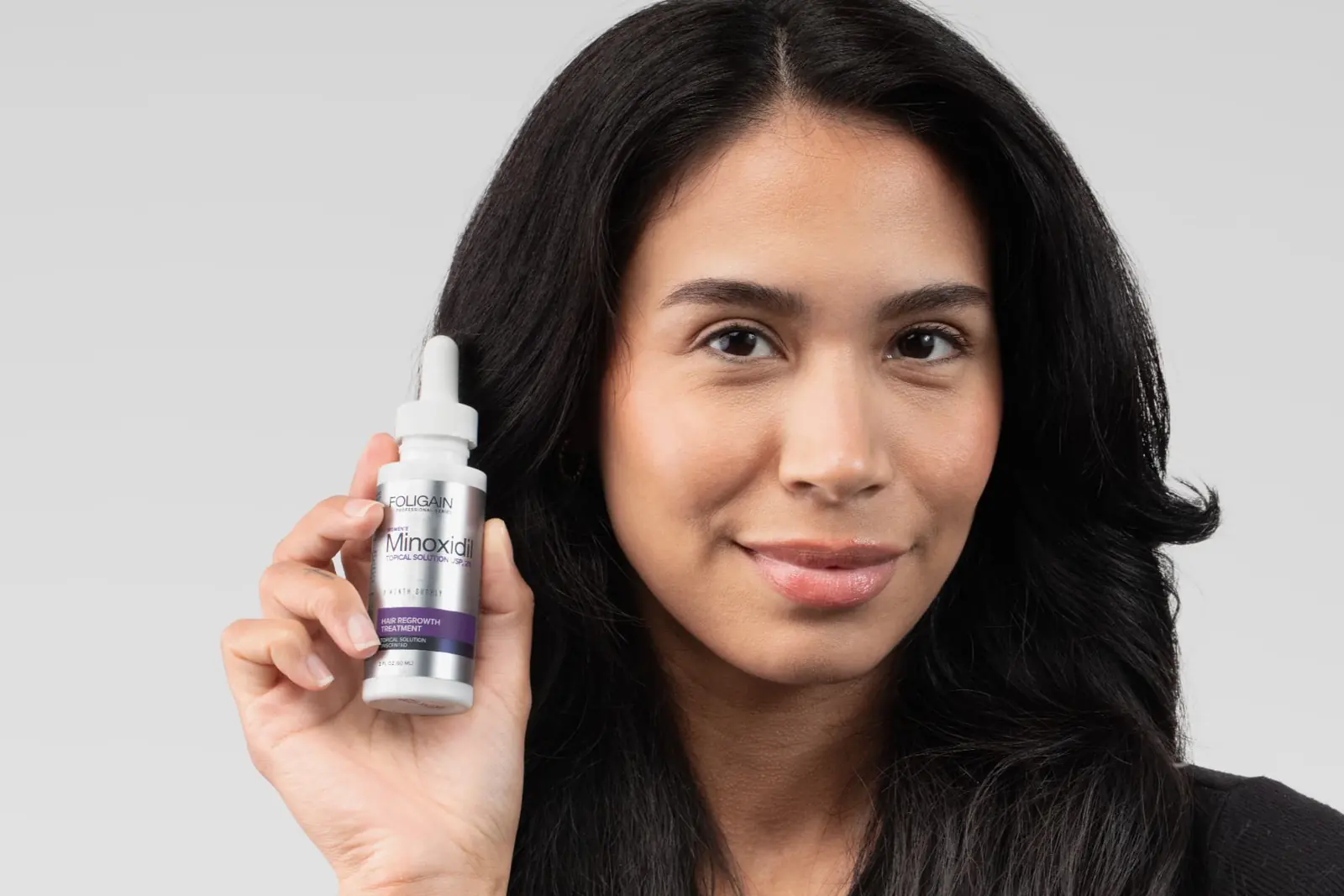
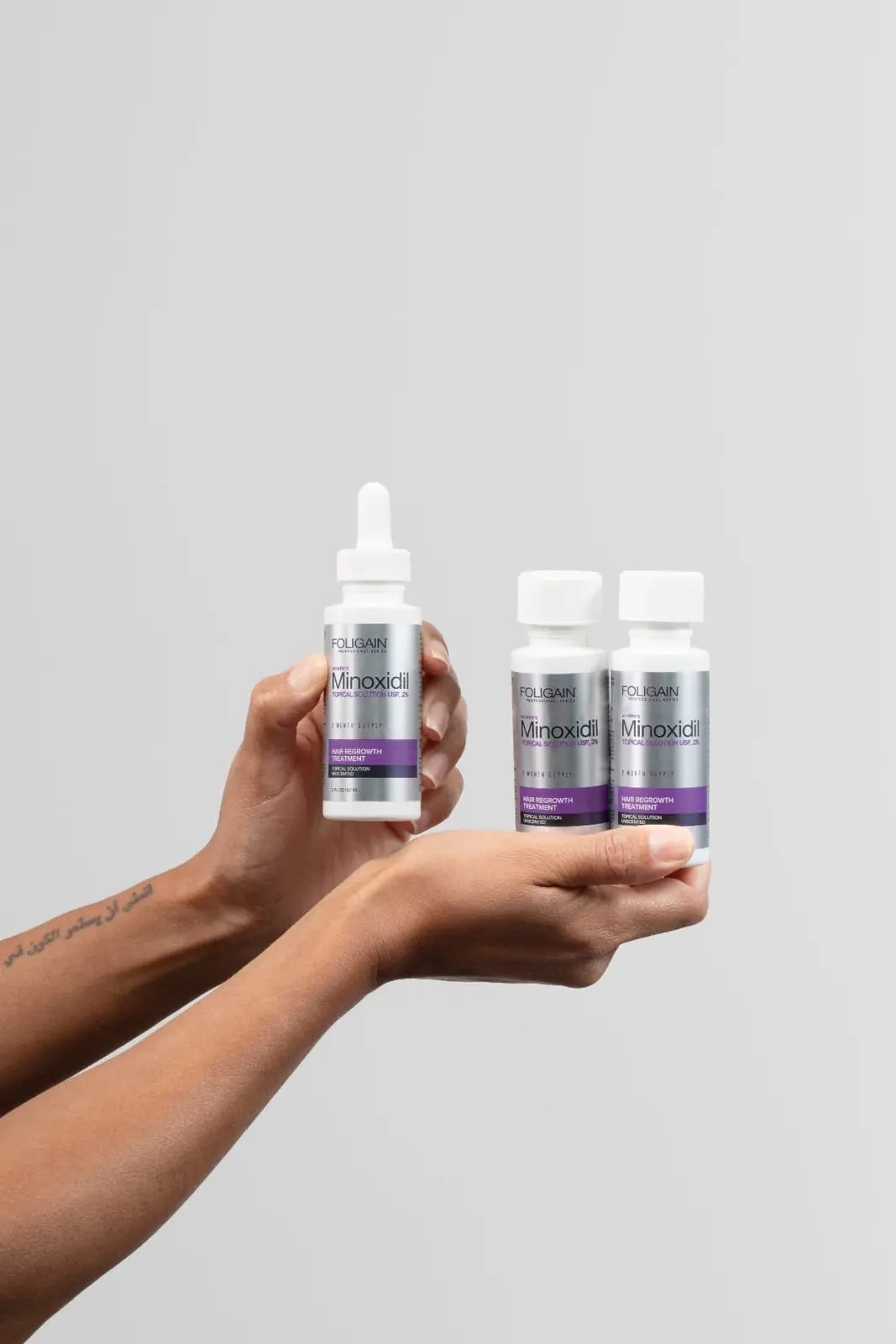
FOLIGAIN® sells OTC Minoxidil in multiple formats, and many people with sensitive scalps find a foam or low-alcohol option more comfortable than a classic high-alcohol solution. FOLIGAIN® also makes TRIOXIDIL® cosmetic complexes, which are cosmetic ingredient blends for scalp and hair care — not drug treatments — that some people use alongside Minoxidil to support a comfortable routine.
Other brands offer comparable formats at the same labeled strengths. If irritation persists across multiple formats and brands, the more useful next step is usually a dermatologist visit rather than continuing to try new products, since a true allergy or an unrelated scalp condition may be at play.
One more practical point: if you've had ongoing sensitivity, resist the temptation to layer several new scalp products at once while troubleshooting. Changing multiple variables together — a new Minoxidil format, a new shampoo, a new conditioner — makes it much harder to identify which change actually solved (or caused) the problem.
Why some scalps react more than others
Skin sensitivity varies a lot between people, and the scalp is no exception. People with a personal or family history of eczema, contact dermatitis or generally 'sensitive skin' elsewhere on the body often find their scalp reacts more readily to alcohol- or propylene-glycol-heavy formulas too, since the same tendency toward a compromised skin barrier applies across the body. This doesn't mean Minoxidil is off the table — it usually means starting with a gentler vehicle from day one is a sensible precaution rather than something to figure out only after a bad reaction.
Frequency and duration of contact matter as well. Twice-daily solution use means the scalp is exposed to alcohol and propylene glycol far more often than, say, an occasional styling product, which is one reason irritation can build gradually over weeks rather than appearing immediately. Climate plays a role too: dry indoor heating in winter or low humidity can leave skin already somewhat dehydrated before a drying vehicle is added on top.
It's also worth separating a genuinely reactive scalp from a scalp that's irritated for an unrelated reason — a new shampoo, hard water, over-washing or excessive heat styling can all mimic Minoxidil-related irritation. Reviewing everything that touches your scalp regularly, not just the Minoxidil product, gives a fuller picture when troubleshooting.
A simple way to patch-test a new formula
If you're switching to a new format because of past irritation, easing in gradually can help you tell quickly whether the new formula agrees with your skin. Many labels don't require a formal patch test, but applying a small amount to a limited area of the scalp for a few days before moving to full application across the thinning area is a reasonable, low-risk way to check tolerance, especially if you have a history of reacting to topical products generally.
Watch for redness, swelling, persistent itching or small bumps at the test site over those first few days. Mild, brief tingling on application is common and not necessarily a problem, but anything that worsens, spreads or doesn't settle within a day or two is worth stopping and discussing with a pharmacist or dermatologist before continuing.
If the small-area test goes well, moving to the full labeled application is reasonable. Keep in mind that a patch test checks short-term tolerance, not long-term response — it's still possible, though less common, for a delayed reaction to appear after weeks of regular full use.
Environmental and seasonal factors worth considering
Scalp comfort on Minoxidil isn't static throughout the year for everyone. Cold, dry winter air combined with indoor heating can leave skin more prone to dryness and flaking, which can make an alcohol-based solution feel harsher than it did in a more humid season. Conversely, hot, humid weather can increase sweating, which for some people increases scalp irritation or discomfort with any leave-on product, Minoxidil included.
Frequent swimming, chlorine exposure and sun exposure on the scalp (especially for those with thinning hair and more exposed skin) can also compound irritation from a topical routine. None of these factors mean you need to stop Minoxidil seasonally, but adjusting complementary habits — a gentler shampoo in winter, a hat for sun protection in summer, rinsing after swimming — can make a sensitive scalp more comfortable across the year without changing your Minoxidil routine itself.
When to manage it yourself and when to see a dermatologist
Mild, short-lived dryness or occasional itching that responds to a gentler formula, a milder shampoo or a brief pause is reasonable to manage on your own, especially if you've dealt with sensitive skin elsewhere and recognize the pattern. Keeping notes on what you tried and how your scalp responded is useful even for self-managed irritation, since it saves time if you do eventually need a clinician's input.
A dermatologist visit is worth prioritizing if irritation is severe, spreading, associated with swelling, oozing or blistering, or hasn't improved despite switching formats and easing frequency. It's also worth seeing a clinician if you can't tell whether a reaction is from Minoxidil at all versus an unrelated scalp condition, since treating the wrong cause wastes time and can allow an unrelated condition to worsen.
Building a gentler long-term routine around a sensitive scalp
Once you've found a format your scalp tolerates, small habits around it can help keep things comfortable over the months and years you'll likely be using it. Rotating to a fragrance-free, sulfate-light shampoo, avoiding back-to-back use of other active scalp treatments on the same day, and giving your scalp a gentle pat rather than a vigorous towel-dry after washing can all reduce cumulative irritation without touching your Minoxidil routine itself.
It also helps to revisit your tolerance periodically rather than assuming it's fixed forever. Skin sensitivity can shift with age, seasons, hormonal changes or unrelated skin conditions, so a formula that suited you well for a year might occasionally need reassessing if irritation reappears out of nowhere.
How long a fair trial of a gentler formula takes
Switching to a lower-alcohol or propylene-glycol-free formula doesn't require starting the whole results timeline over, but it's still worth giving the new formula its own short settling-in period before judging comfort. Most people notice whether a gentler vehicle agrees with their skin within one to two weeks, since irritation from a harsh vehicle tends to build with repeated contact rather than appearing only after months.
If comfort improves within that window and stays improved, you can generally continue counting toward your overall four-to-six-month checkpoint for regrowth using your original start date, since the active ingredient and dose haven't changed — only the vehicle around it. If irritation doesn't improve even after switching formats, that's a signal to loop in a clinician rather than trying a third or fourth product on your own.
FOLIGAIN® formats compared for sensitive scalps
FOLIGAIN® sells topical Minoxidil in solution and foam formats, and, like other brands, its solutions typically contain alcohol and propylene glycol while its foams are formulated to leave out propylene glycol. For someone with a known sensitivity, starting with a foam rather than a classic solution is a reasonable way to reduce the odds of an uncomfortable first few weeks, though individual skin response still varies and isn't guaranteed by format alone.
Rogaine®/Regaine® and various store brands offer comparable format choices at the same labeled strengths, so the same general logic — try foam or a lower-alcohol solution first if you have sensitive skin — applies regardless of which brand you choose. FOLIGAIN®'s TRIOXIDIL® cosmetic complexes are a separate, non-drug layer some people add for scalp comfort and hair-care support once they've found a Minoxidil format their skin tolerates well.
It's worth noting that no brand's foam or low-alcohol solution is guaranteed to be comfortable for every sensitive scalp; individual skin chemistry, existing skin conditions and even water hardness in your area can all influence how a given formula feels. Trying one reasonable substitute at a time, rather than buying several formats at once, keeps the process simple and lets you clearly identify what actually works for you.
A short checklist before assuming Minoxidil is the cause
Working through a short checklist like this before assuming the worst can save time and help you have a more productive conversation if you do end up seeing a dermatologist.
- Has anything else in your routine changed recently (shampoo, conditioner, dye, weather)?
- Is the irritation located exactly where you apply the product, or has it spread elsewhere?
- Does it ease up on days you skip a dose (without using this as a long-term strategy)?
- Have you already tried a foam or low-alcohol option, or only ever used one formula?
- Is there a personal or family history of eczema, psoriasis or other sensitive-skin conditions?
Safety reminder
Always follow the Drug Facts label of the exact product you use. This guide is educational and does not replace advice from a pharmacist or clinician.
From the FOLIGAIN® library
Related FOLIGAIN® products and routines
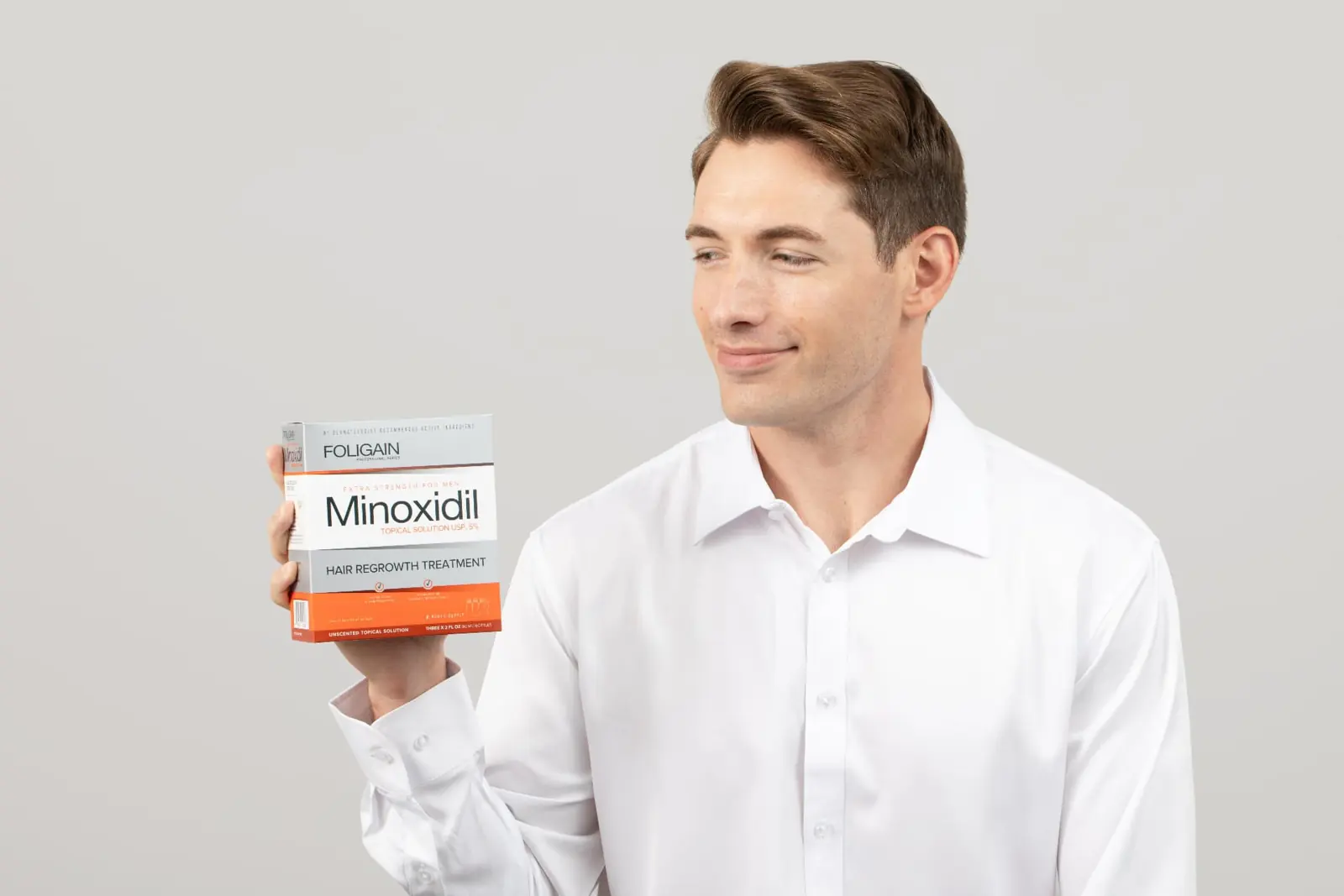
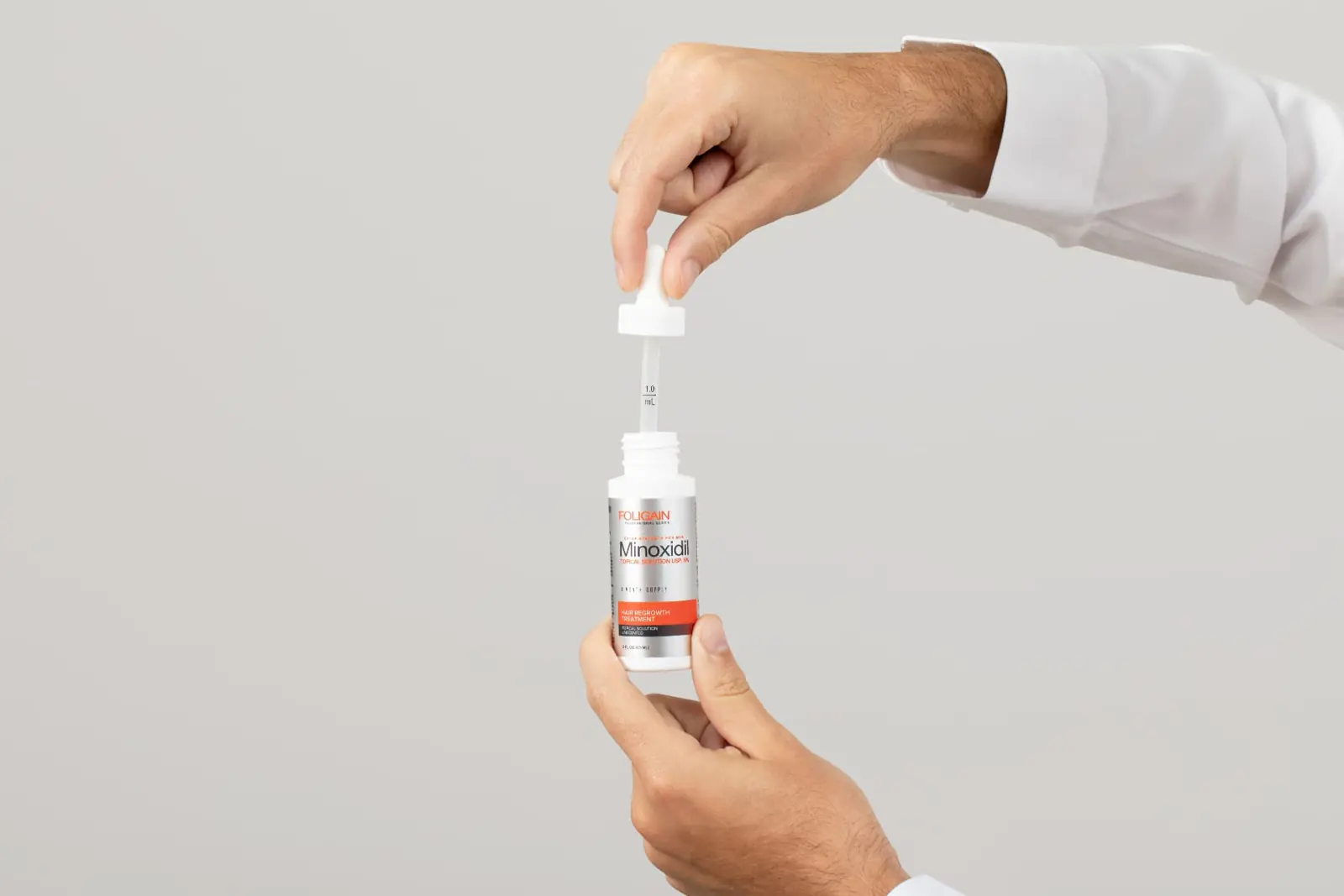
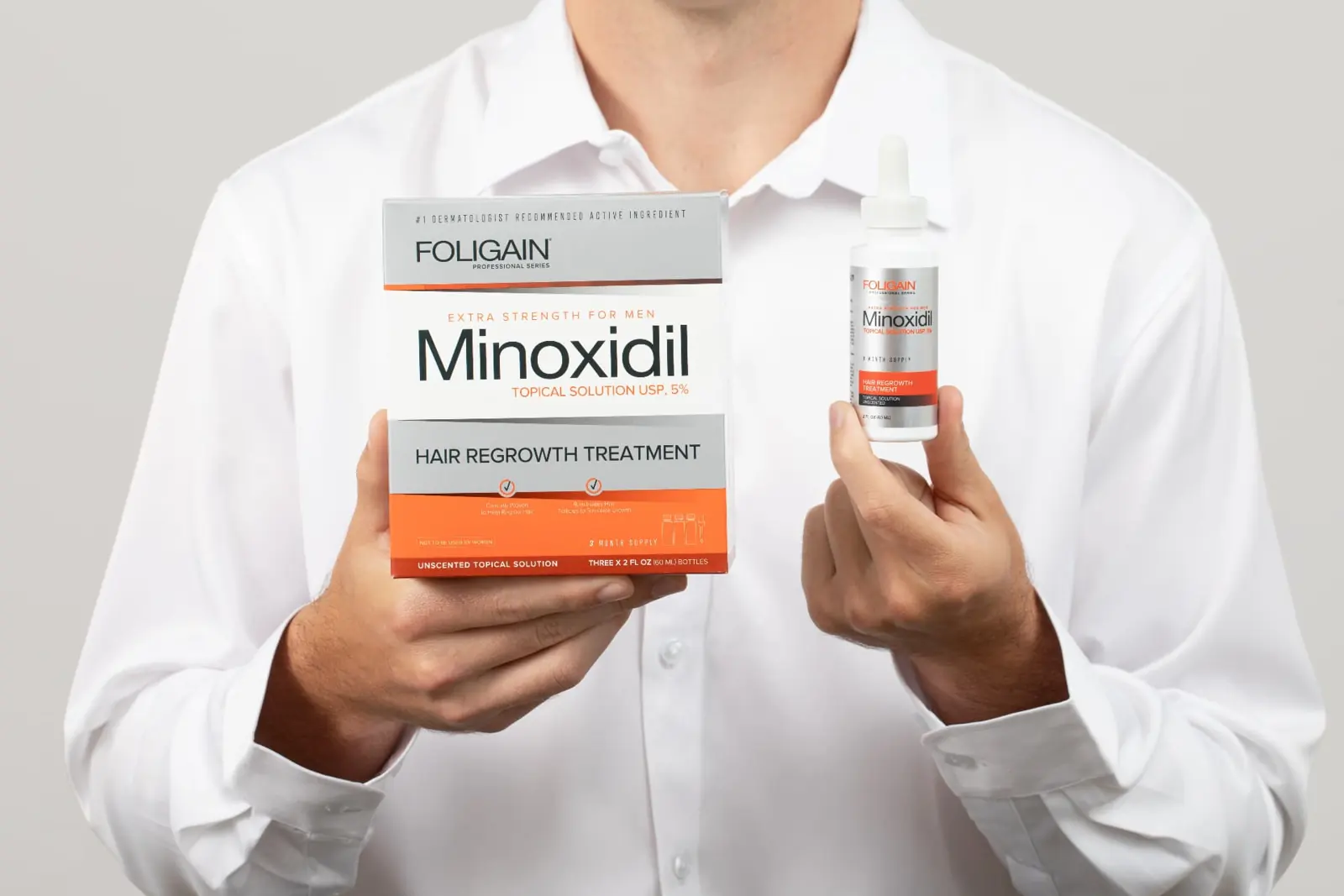
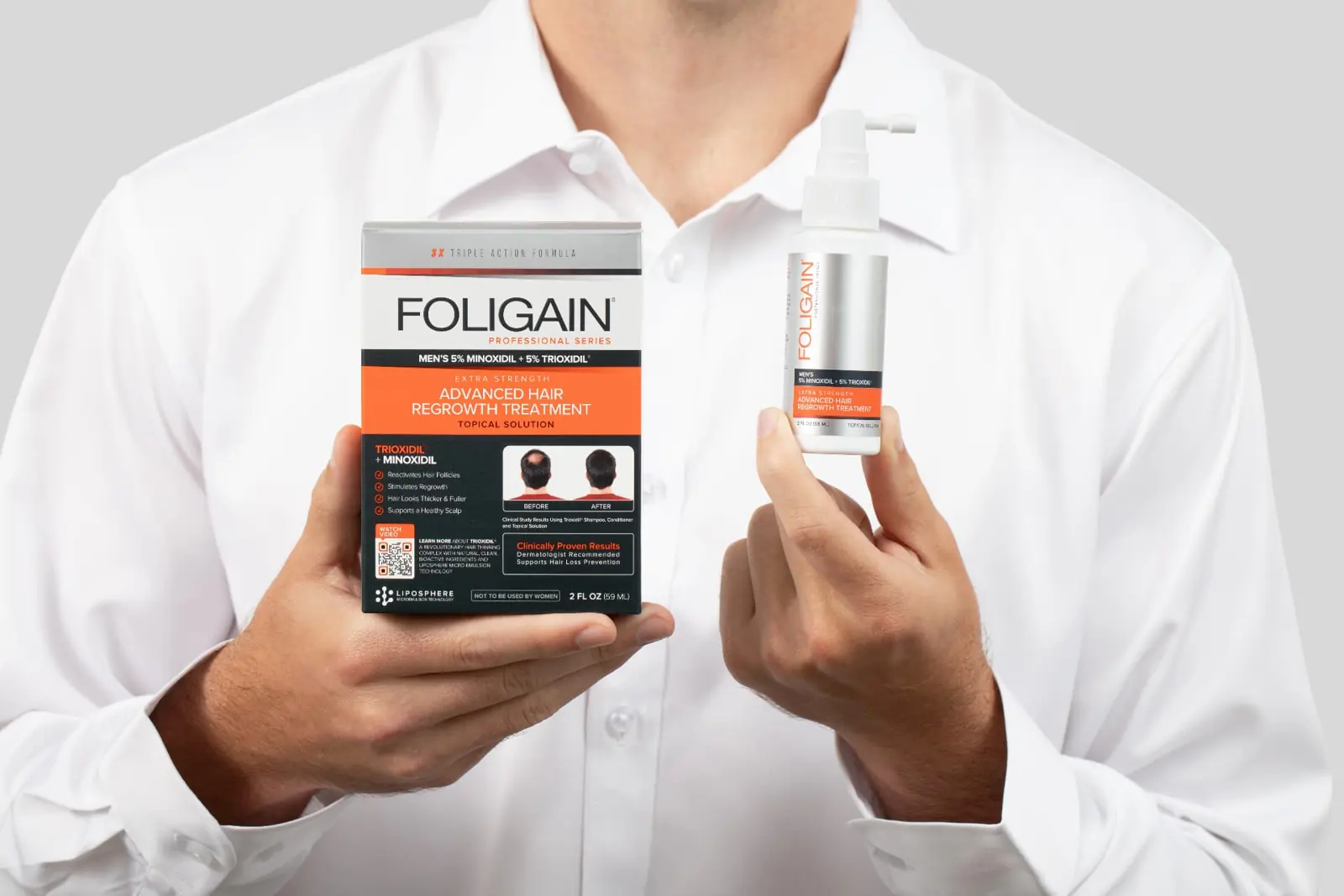
Images are matched to the topic for education; always confirm directions and claims on the exact product label.
Frequently asked questions
Is foam as effective as solution?
At the same strength both deliver Minoxidil effectively; the choice is mostly about feel and tolerability.
Can dandruff shampoo help?
If flaking is dandruff rather than dryness, a medicated shampoo can help. A clinician can tell the difference.
How do I know if it's an allergy rather than dryness?
Allergic reactions tend to involve more redness, swelling or spreading rash and don't improve quickly with gentler products. A clinician can patch-test to confirm.
Can I use a moisturizer on my scalp while using Minoxidil?
A gentle, fragrance-free scalp product used at a different time of day is usually fine, but check with a pharmacist about timing so it doesn't wash off your dose.
Does switching from solution to foam restart the results timeline?
No. The active ingredient and dose are equivalent at the same strength, so switching formats shouldn't set back your progress.
Does a family history of eczema mean I'll react to Minoxidil?
Not necessarily, but it can make you more prone to irritation from the vehicle, so starting with a gentler, lower-alcohol or propylene-glycol-free format may be a sensible first choice.
Should I change my whole routine at once if my scalp is irritated?
It's better to change one variable at a time — such as just the Minoxidil format — so you and a clinician can tell what actually helped or caused the reaction.
Does switching to a gentler formula reset my four-to-six-month timeline?
Generally no, since the active ingredient and dose are unchanged — only the vehicle is different. You can typically keep counting from your original start date once comfort improves.
Is FOLIGAIN® foam formulated differently from its solution for sensitive scalps?
Like most brands, FOLIGAIN®'s foam is typically formulated without propylene glycol, which some people with sensitive skin tolerate better than a classic solution, though individual response still varies.
Could hard water be making my scalp feel worse?
It's possible. Hard water can leave a residue that dries the scalp and hair, which can compound irritation from a Minoxidil vehicle. A clarifying, gentle shampoo occasionally may help distinguish the two.
Do I need to see a dermatologist before trying a low-alcohol formula?
Not necessarily. Many people can reasonably try a foam or low-alcohol solution on their own first, and reserve a dermatologist visit for reactions that don't improve after switching.
This content is for educational purposes only and is not medical advice. It is not intended to diagnose, treat, cure or prevent any disease. Speak with a qualified healthcare professional about your individual situation.
Individual results vary. Hair-growth products are used consistently over months, and outcomes depend on the cause and stage of hair loss.
FOLIGAIN® products related to this guide
If this guide matches your situation, our product education pages explain which FOLIGAIN® formats suit which routines.
Explore FOLIGAIN® products