Finasteride Side Effects: What to Know Before Starting
Understand finasteride’s possible sexual, mood and other side effects, what is known about lasting symptoms, and when to get help.
Zespół redakcyjny FOLIGAIN® · 6 min. czytania · Zaktualizowano 2026-10-12
Fakty medyczne i szczegóły leczenia nie zostały niezależnie zweryfikowane medycznie.
What finasteride does—and why side effects are possible
If you are weighing hair preservation against possible side effects, it is reasonable to want clear answers. Finasteride is a prescription medicine sold as Propecia and as a generic for male pattern hair loss. It lowers dihydrotestosterone, or DHT, a hormone involved in the gradual shrinking of susceptible hair follicles. It can help slow hair loss and support regrowth in some men, but individual results vary.
Because finasteride changes hormone activity, its effects are not limited to the scalp. That does not mean everyone develops side effects. The decision is about whether its potential benefit fits your priorities and health history—not whether you should ignore risks or assume the worst.
In the United States, oral finasteride for hair loss is approved for men, not women or children. A different-strength product is used for an enlarged prostate. Side-effect information from those different populations should not be treated as interchangeable.
Sexual side effects: what you might notice
The best-known side effects are reduced sexual desire, difficulty getting or maintaining an erection, and ejaculation changes, including less semen. Sexual side effects occurred more often with finasteride than placebo in hair-loss trials, although most participants did not report them.
These changes can be upsetting, and you do not need to dismiss them as the price of keeping your hair. Tell your prescriber if you notice a change after starting. Stress, sleep, other medicines and underlying health conditions can also affect sexual function, so a careful review is more useful than assuming a single cause.
Your prescriber can help you decide whether to continue, pause or stop treatment. Do not improvise a lower dose or an every-other-day schedule based on online advice: those changes are not a guarantee against side effects.
Mood changes and other symptoms that need attention
Depression and suicidal thoughts or behavior have been reported with finasteride. Reports alone cannot establish how often this happens or prove the cause in every case, but these symptoms must be taken seriously. Discuss any history of depression or suicidal thoughts before starting.
For new depression or significant mood changes while taking finasteride for hair loss, stop taking it and promptly contact your prescriber. If you have suicidal thoughts, get immediate support; in the United States, call or text 988. Call 911 if you may act on those thoughts or cannot stay safe.
Other reported problems include breast tenderness or enlargement, testicular pain, and allergic reactions. Not every symptom is an emergency, but some need quick evaluation.
- Get emergency help for trouble breathing or swelling of the lips, tongue, face or throat.
- Have a breast lump, nipple discharge or persistent breast changes checked promptly.
- Seek urgent care for sudden or severe testicular pain rather than assuming it is a medication effect.
Can side effects last after stopping?
Persistent sexual symptoms after stopping finasteride have been reported and are acknowledged in prescribing information. Some people also describe ongoing mood or other symptoms. The term “post-finasteride syndrome” is often used for this collection of concerns.
There is still uncertainty about how often persistent symptoms occur, why they happen and which people may be more susceptible. Available evidence has limitations, including reports without comparison groups and studies vulnerable to selection bias. It would be misleading to say lasting symptoms are impossible—or to suggest they are inevitable.
If symptoms continue after stopping, seek follow-up rather than trying unproven “recovery” supplements or hormone treatments. A healthcare professional can assess other possible contributors and help address sexual health, mood and sleep concerns.
Pregnancy precautions, fertility and PSA testing
Finasteride can harm development of a male fetus. Anyone who is pregnant or could become pregnant should not take it or handle crushed or broken tablets. Intact coated tablets prevent contact with the active ingredient during normal handling. If contact with a broken tablet occurs, wash the area with soap and water and seek advice.
If you are planning a pregnancy with a partner, discuss any fertility concerns with your prescriber. Finasteride is not a contraceptive, and fertility problems are not inevitable.
Tell anyone interpreting a prostate-specific antigen, or PSA, blood test that you take finasteride. It can lower PSA levels, which affects how results are understood. Also disclose it when donating blood; donation services have restrictions during treatment and after stopping.
Topical finasteride and alternatives
Topical finasteride is sometimes presented as a risk-free workaround. It is not. Some medication can enter the bloodstream, and systemic side effects remain possible. Compounded formulations vary, and transfer to another person through treated skin or contaminated surfaces is an additional concern, especially during pregnancy. Follow the prescriber's and pharmacy's handling instructions.
Topical minoxidil is a different drug option that does not work by lowering DHT. Under US labeling, men use 5% liquid or foam twice daily; women use 2% liquid twice daily or 5% foam once daily. Always follow the Drug Facts label on your exact product. Minoxidil has its own risks, including scalp irritation, and does not guarantee results.
Prescription alternatives require a separate discussion. Dutasteride for hair loss is off-label in the United States and shares important hormonal risks; it is not an automatic safer substitute. Spironolactone is sometimes prescribed off-label for female pattern hair loss. Cosmetic thickening products can improve appearance, but they are not proven regrowth drugs.
Zanim zaczniesz
Confirm the cause of your hair loss first. See a dermatologist for sudden, patchy, painful or inflamed hair loss rather than assuming it is pattern thinning. Bring a list of medicines and supplements, mention mood or sexual-health concerns, and agree on a follow-up plan with your prescriber.
Read finasteride’s prescription patient information and follow your prescriber's directions. You should feel comfortable asking about benefits, risks and stopping treatment if needed.
Always follow the Drug Facts label on your exact product. This guide is general education, not medical advice. Ask a pharmacist, doctor or nurse practitioner about your own situation.
Z biblioteki FOLIGAIN®
Powiązane produkty i procedury FOLIGAIN®
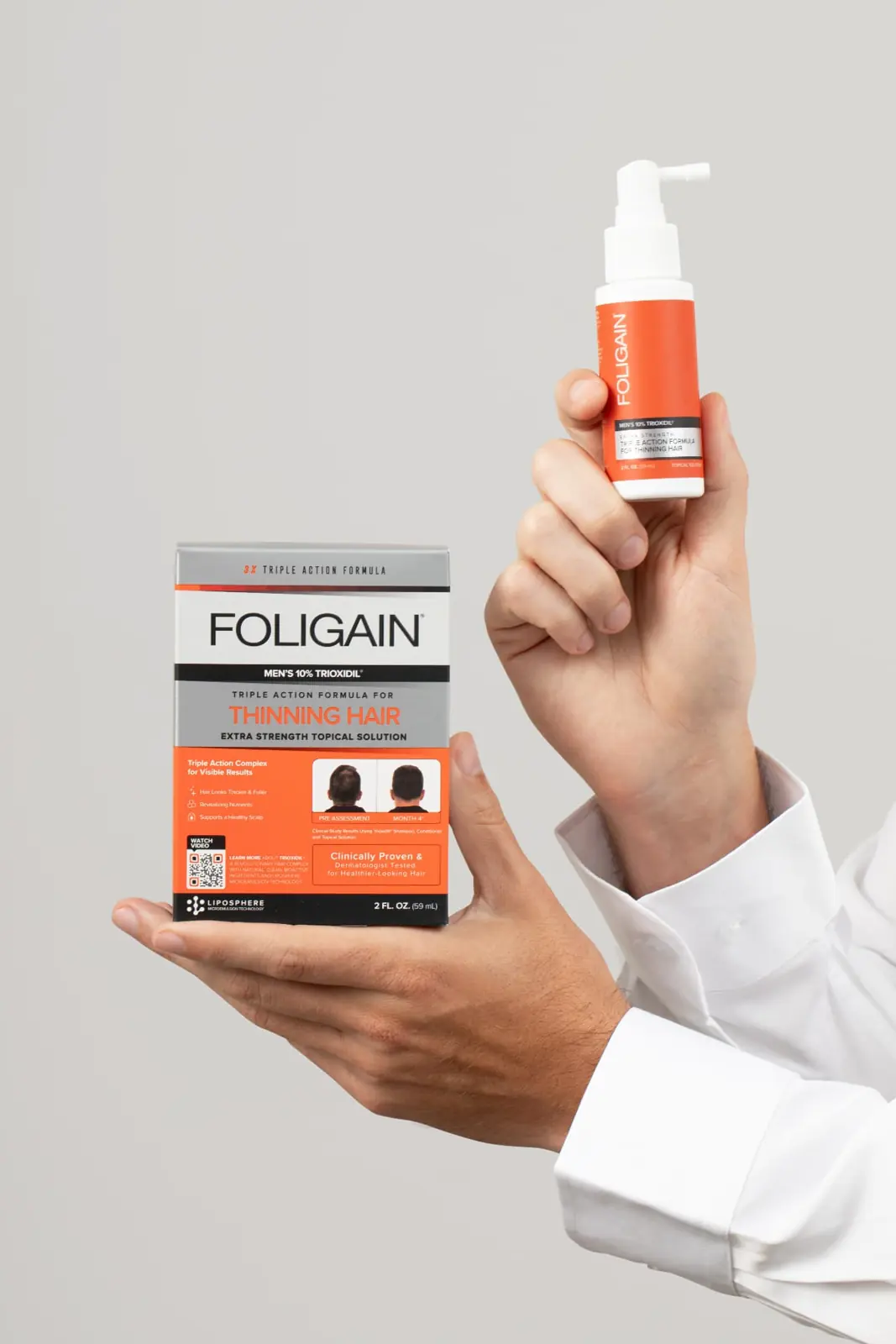
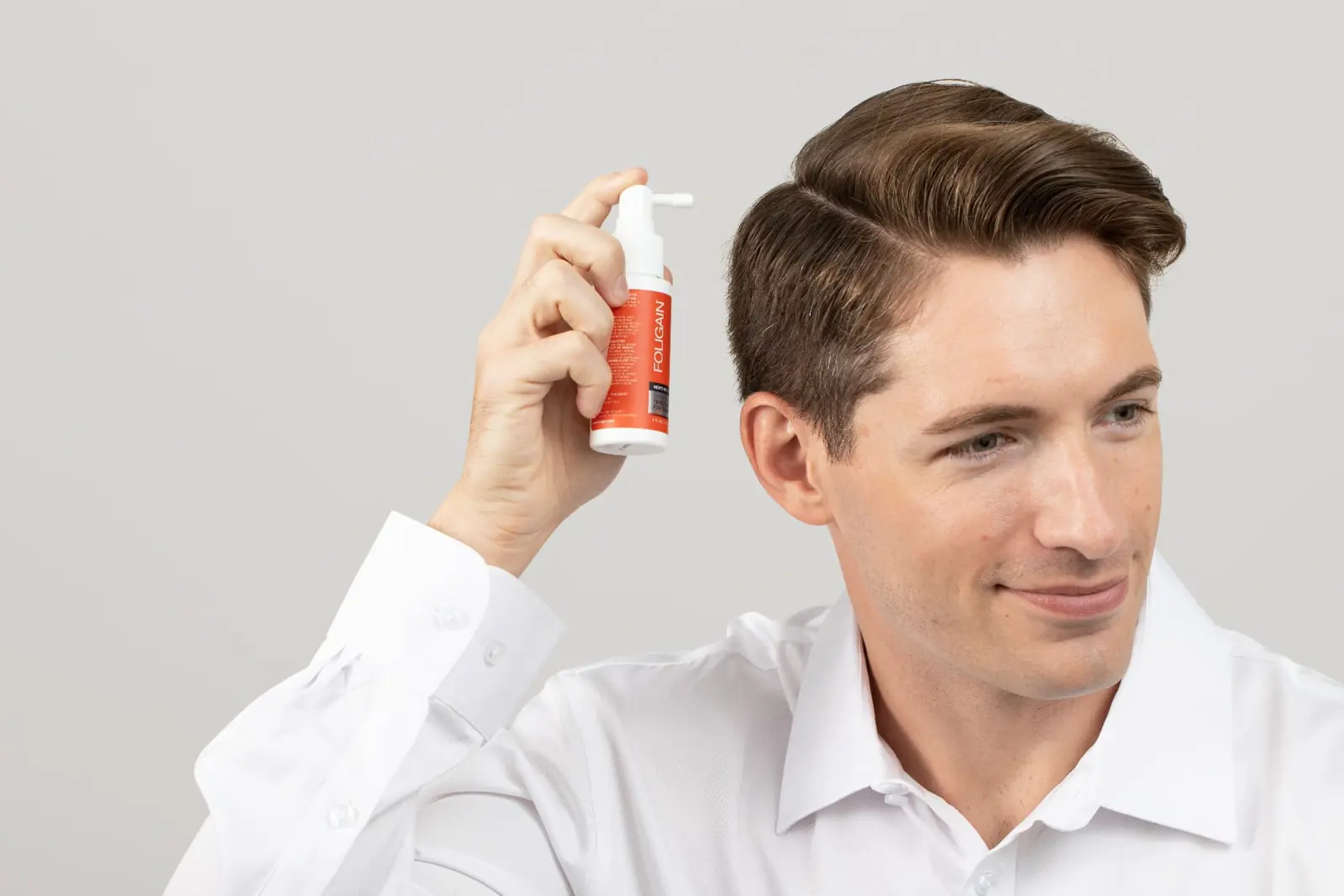
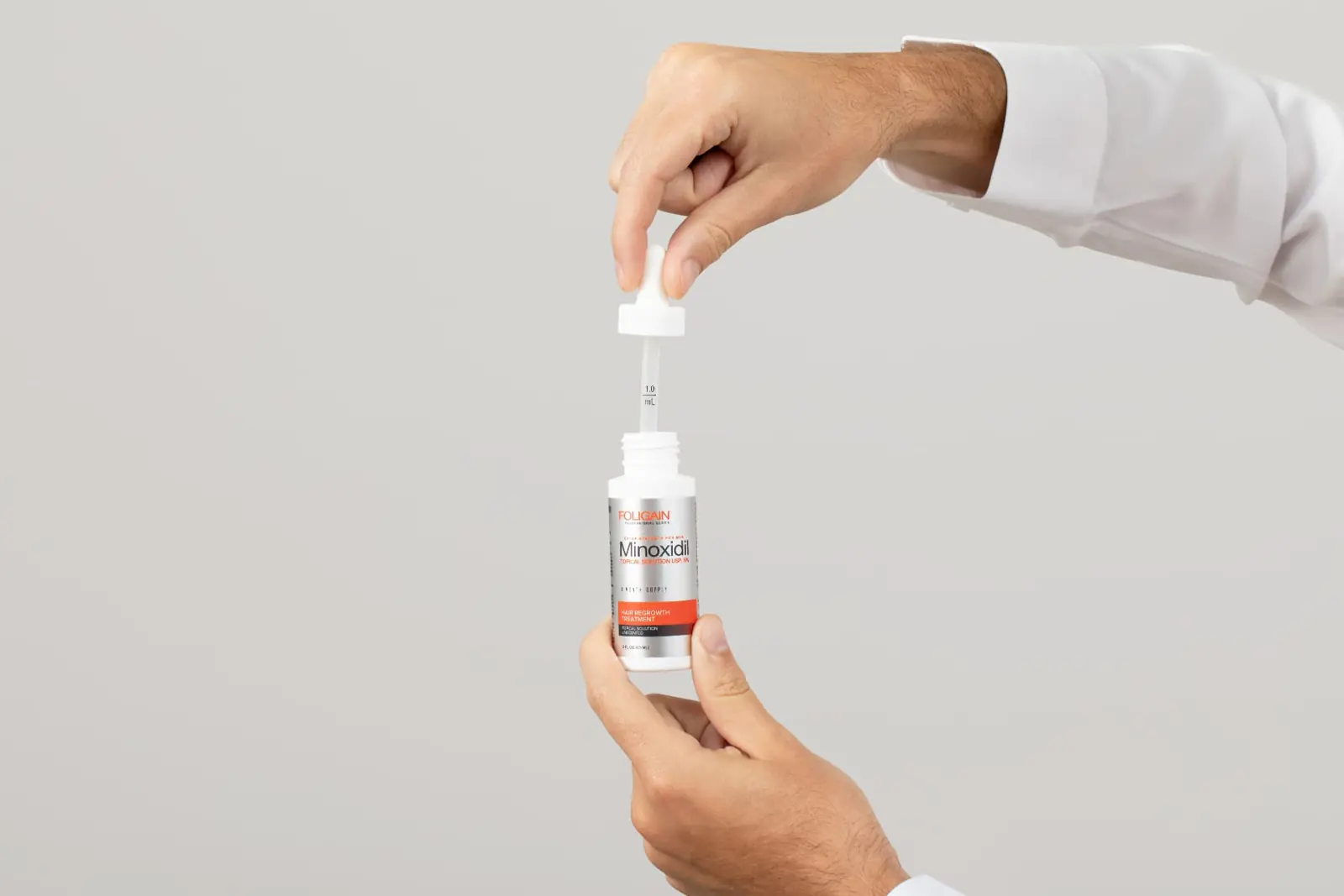
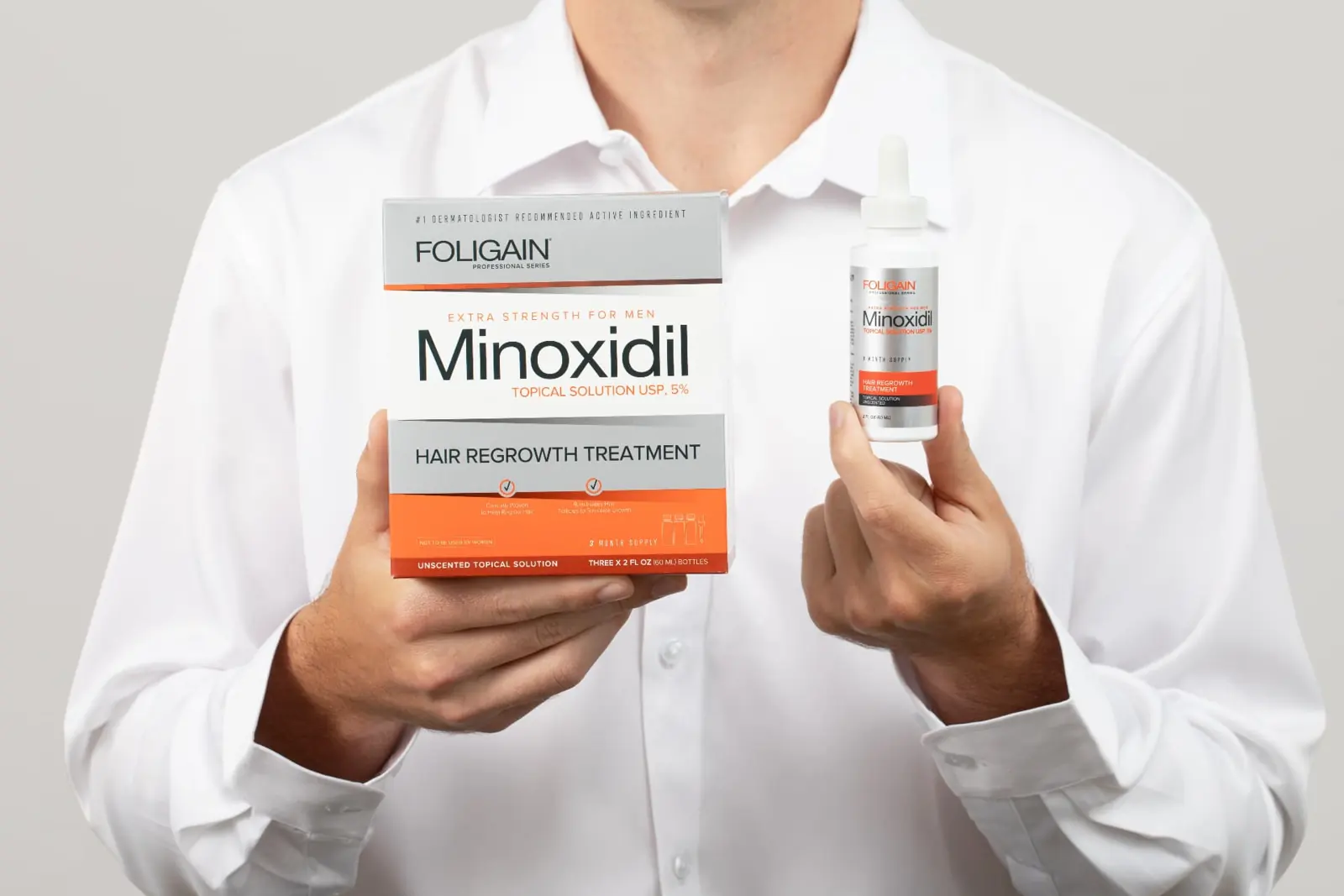
Obrazy są dopasowane do tematu w celach edukacyjnych; zawsze potwierdź instrukcje i twierdzenia na etykiecie produktu.
Najczęściej zadawane pytania
Does everyone get sexual side effects from finasteride?
No. Most men in clinical trials did not report sexual side effects, but reduced desire, erection difficulties and ejaculation changes are recognized risks. Individual experiences vary.
Will finasteride side effects go away if I stop?
Side effects may improve after stopping, and some resolve during continued treatment. Persistent symptoms have also been reported, so no one can guarantee when or whether a particular symptom will resolve.
Can finasteride affect fertility?
Poor semen quality and male infertility have been reported, with improvement after stopping in some cases. Tell your prescriber if you are trying to conceive or already have fertility concerns.
Is topical finasteride FDA-approved?
There is no FDA-approved topical finasteride product in the United States. Compounded versions are available by prescription, but they are not FDA-reviewed for safety, effectiveness or quality before marketing.
Treść ma wyłącznie charakter edukacyjny i nie stanowi porady medycznej. Nie jest przeznaczona do diagnozowania, leczenia, wyleczenia ani zapobiegania jakiejkolwiek chorobie. Skonsultuj się z wykwalifikowanym pracownikiem służby zdrowia w swojej indywidualnej sytuacji.
Indywidualne wyniki różnią się. Produkty na porost włosów stosuje się konsekwentnie przez miesiące, a rezultaty zależą od przyczyny i etapu wypadania włosów.
Produkty FOLIGAIN® związane z tym przewodnikiem
Jeśli ten przewodnik pasuje do Twojej sytuacji, nasze strony edukacyjne dotyczące produktów wyjaśniają, które formaty FOLIGAIN® pasują do jakich procedur.
Poznaj produkty FOLIGAIN®