How to Hide Thinning Hair: Simple, Natural-Looking Tips
Explore gentle styling, root powders, hair fibers and toppers that make thinning hair less noticeable, plus signs it’s time to seek help.
FOLIGAIN® Editorial Team · 6 min de leitura · Atualizado 2026-11-09
Os factos médicos e detalhes de tratamento não foram revistos de forma independente por médicos.
1. Start with the area you want to cover
You do not need a full makeover to make thinning hair less noticeable. Often, a small change to your part or a little temporary coverage is enough. The best approach depends on where your scalp shows, your hair’s texture and how much daily upkeep feels manageable.
Check your hair when it is dry, in ordinary daylight rather than only under bright bathroom lighting. Try one change at a time so you can see what helps. Hiding thinning is a personal choice, not something you have to do.
- Widening part: Try a slightly shifted or soft zigzag part, then add root powder if needed.
- Visible crown: Combine gentle root lift with fibers where enough hair remains for them to cling.
- Thinning temples or hairline: Try a loose side sweep or a light application of scalp concealer.
- More widespread thinning: Consider a fuller-looking cut, a topper or a wig.
2. Choose a cut and style that preserve fullness
A blunt or lightly layered cut can make fine, thinning hair look fuller by keeping the ends substantial. Too much layering or thinning-shear work may expose more scalp. Shorter styles can reduce the contrast between sparse and fuller areas, but there is no single best haircut for everyone.
Ask a stylist to assess your hair dry and in its usual texture. For curls and coils, shape and placement matter: gently arrange curls over sparse areas without repeatedly pulling them apart. A loose fringe or side-swept front can soften a thinning hairline without putting tension on it.
Avoid pulling surrounding hair tightly across a thin spot. A softer arrangement usually blends better and puts less stress on fragile strands. If you color your hair, reducing the contrast between your hair and scalp may help, but aggressive bleaching can cause breakage.
3. Add lift without adding damage
A lightweight volumizing mousse or root-lifting product can temporarily make hair look fuller. Start with a small amount and avoid coating the roots with heavy oils, waxes or thick styling creams if they make your strands separate and expose the scalp.
For blow-drying, use gentle heat, keep the dryer moving and lift the roots with your fingers or a soft brush. A diffuser may help preserve curls. Avoid repeated high-heat passes and hard tugging. Dry shampoo can add texture between washes, but it does not treat hair loss or replace regular cleansing.
- Apply conditioner mainly where your hair needs it, often through the lengths and ends.
- Use a loose, soft scrunchie rather than a tight elastic when tying hair back.
- Stop using a styling product if it causes itching, burning or redness.
4. Use fibers and scalp concealers for temporary coverage
Hair-building fibers cling to existing strands and can make a thinning area look denser. They work best where some hair remains; they generally cannot create convincing coverage on a completely bare patch. Root powders, tinted sprays and scalp concealers reduce the visible contrast between hair and scalp.
Choose a shade close to your roots and start lightly. On dry, styled hair, add a little product, blend as directed and check the result from several angles. Follow the product’s instructions, keep powders and sprays away from your eyes, and avoid inhaling them.
Wear and transfer resistance vary. Rain, sweat, swimming, hats or pillows may disturb coverage, so test the product before an important event. Wash it out as directed and avoid applying it to irritated or broken skin. These products offer a cosmetic effect only: they do not stop hair loss or regrow hair.
5. Consider toppers, wigs and comfortable accessories
A topper covers a specific area, usually the part or crown, while blending with your own hair. A wig provides broader coverage. Both can be useful when fibers or styling take too much effort, or when there is not enough hair for concealers to work well.
Look for a comfortable fit, a believable match in texture and density, and an attachment method that does not tug. Clips can stress fragile hair if they repeatedly grip the same spot. Adhesives may irritate skin, so follow their instructions and remove them gently.
Scarves, headbands and hats are valid options too. Choose comfortable, non-pulling styles. Heavy extensions and tight braids can worsen tension-related hair loss; they are not a good camouflage choice for already fragile areas.
6. Separate camouflage from hair-loss treatment
Camouflage changes appearance immediately, but it does not address the reason hair is thinning. Gradual thinning can have several causes, including hereditary hair loss, while shedding may follow illness, childbirth or other changes. A dermatologist can help identify the cause and discuss treatment, including prescription options when appropriate.
Minoxidil is a drug for certain types of hair loss, not a styling aid. Under US labeling, men use 5% liquid or foam twice daily; women use 2% liquid twice daily or 5% foam once daily. Always follow the Drug Facts label on your exact product. Results take time, individual results vary, and continued use is generally needed to maintain benefits.
If you use topical minoxidil with a concealer, apply minoxidil to the scalp as directed and let it dry fully before styling products. Ask a pharmacist about compatibility. Cosmetic thickening products should not be presented as proven regrowth treatments.
Antes de começares
See a dermatologist for sudden, patchy, painful or inflamed hair loss rather than simply covering it. Persistent itching, scaling or worsening shedding also deserves attention. Choose gentle coverage while you investigate the cause, and avoid any style or attachment that hurts.
Always follow the Drug Facts label on your exact product. This guide is general education, not medical advice. Ask a pharmacist, doctor or nurse practitioner about your own situation.
Da biblioteca FOLIGAIN®
Produtos e rotinas FOLIGAIN® relacionados
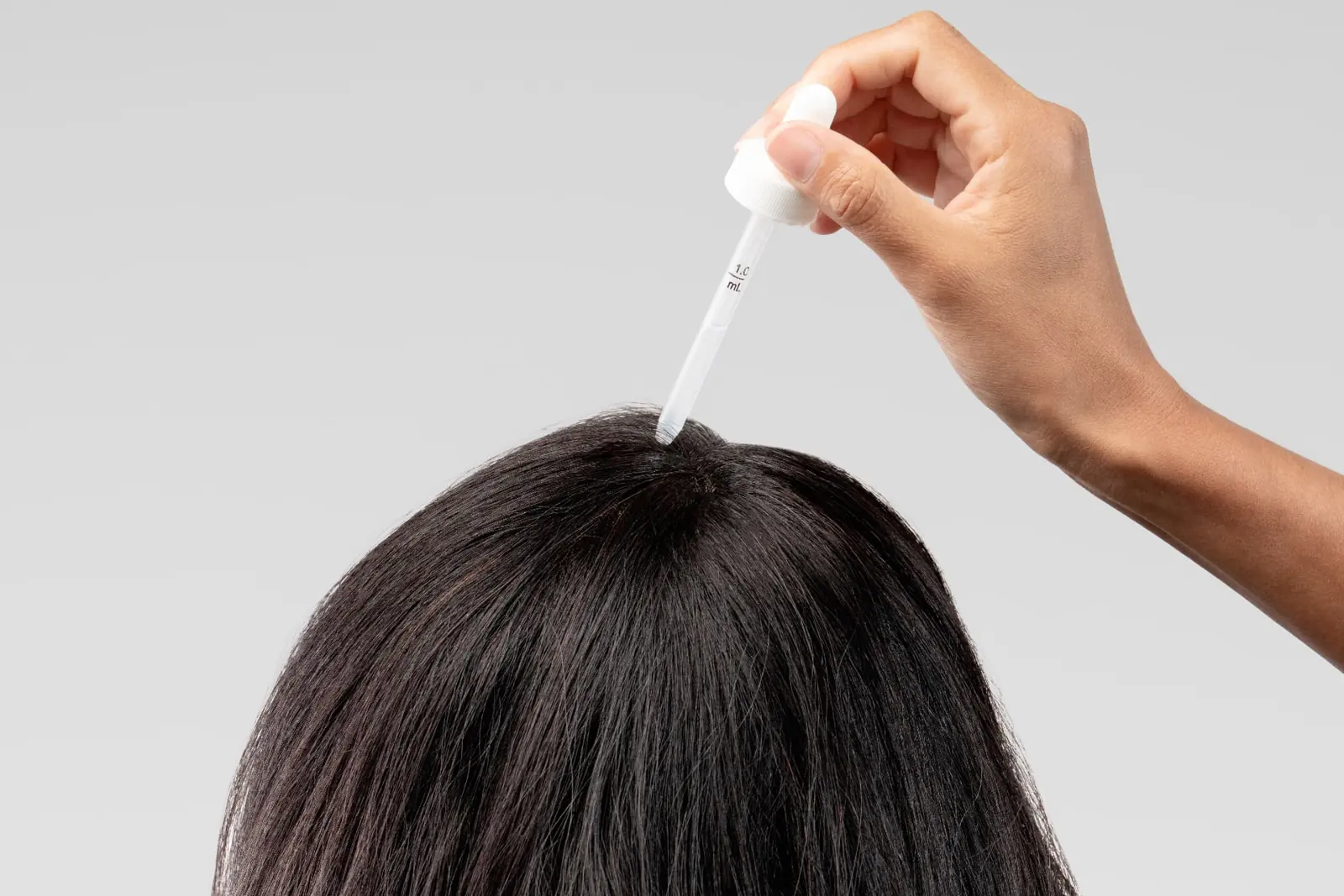

As imagens são correspondidas ao tópico para educação; confirma sempre as direções e reivindicações no rótulo exato do produto.
Perguntas Frequentes
What is the quickest way to hide a widening part?
Try shifting your part slightly, then lightly blending a root powder close to your root color along the exposed scalp. Check it in daylight to avoid an overly dark stripe.
Can hair fibers hide a bald spot?
Fibers need existing hair to cling to, so they are usually better for thinning than completely bare skin. A topper or wig may provide more reliable coverage for a bare area.
Does cutting hair short make it grow back thicker?
No. A shorter cut can make the ends look fuller or reduce scalp contrast, but it does not change the follicles or treat hair loss.
Will wearing a hat make thinning worse?
An ordinary, comfortable hat generally does not cause hair loss. Avoid headwear that pulls on your hair or repeatedly rubs and irritates the same area.
Este conteúdo é apenas para fins educacionais e não constitui aconselhamento médico. Não se destina a diagnosticar, tratar, curar ou prevenir qualquer doença. Fala com um profissional de saúde qualificado sobre a tua situação individual.
Os resultados individuais variam. Os produtos para o crescimento do cabelo são usados de forma consistente ao longo de meses, e os resultados dependem da causa e do estágio da queda de cabelo.
Produtos FOLIGAIN® relacionados com este guia
Se este guia corresponder à tua situação, as nossas páginas de educação de produtos explicam quais os formatos FOLIGAIN® que se adequam a cada rotina.
Explora os produtos FOLIGAIN®