Microneedling and Laser Therapy for Hair: Pros and Cons
Dermarollers, in-office microneedling and low-level light caps and combs: how they work and what to expect.
FOLIGAIN® Editorial Team · 15 min read · Updated 2026-09-28
Medical facts and treatment details have not been independently medically reviewed.
What it is
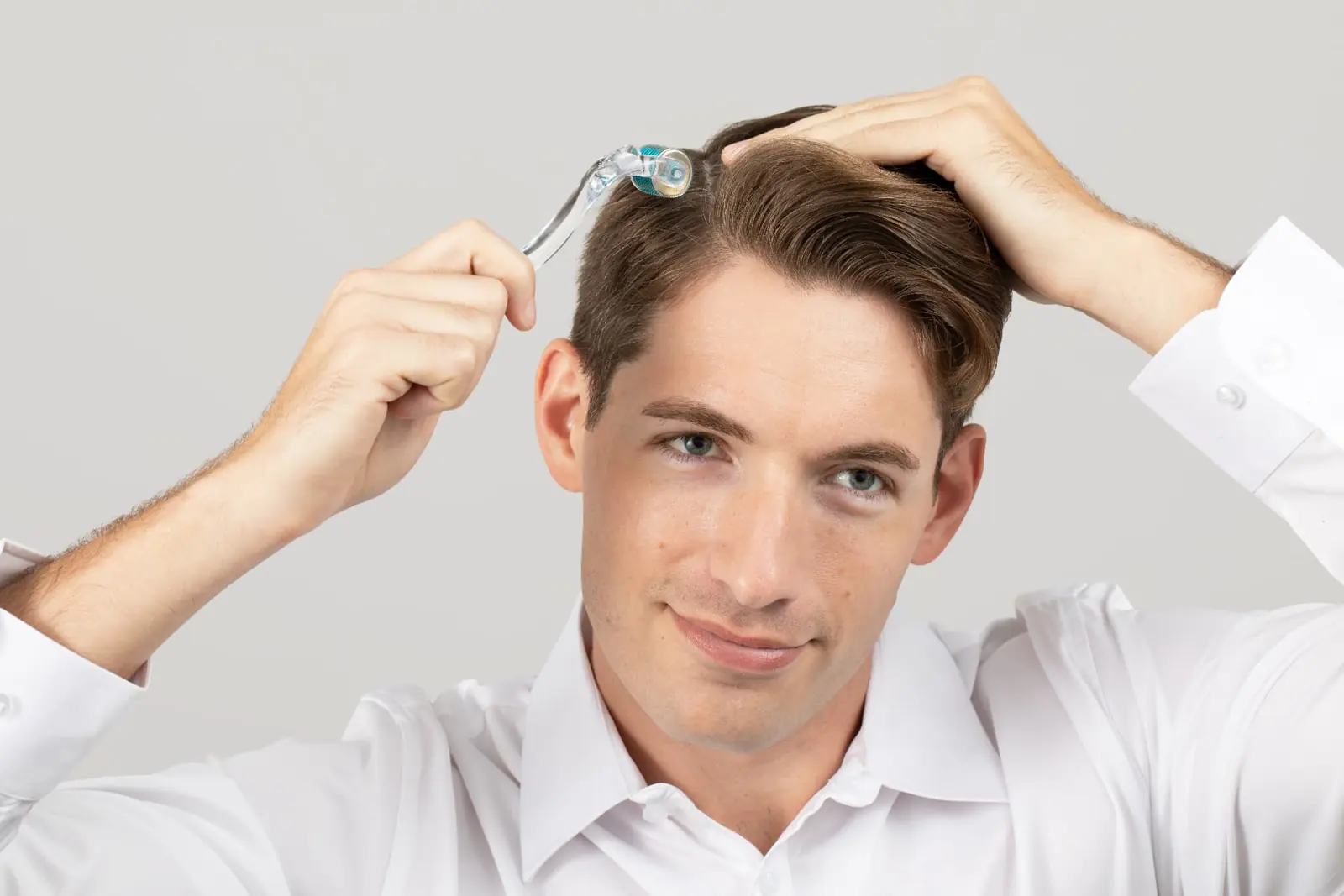
Microneedling for hair uses fine needles, delivered through a handheld roller, a pen-style device, or a stamp, to create tiny, controlled punctures in the scalp. It's used both at home with shorter needle lengths and in professional settings with longer needles under more controlled conditions.
Low-level laser or light therapy, often shortened to LLLT, uses red light delivered through wearable devices such as caps, helmets, headbands or handheld combs. Several of these devices have received FDA clearance specifically as devices intended to promote hair growth, which is a different regulatory pathway from drug approval but still means the manufacturer had to demonstrate safety and a reasonable expectation of benefit for that clearance.
How it works
The theory behind microneedling is that the tiny, controlled injuries trigger a wound-healing response, releasing growth factors and potentially waking up dormant signaling pathways in and around hair follicles. Much of the research on microneedling for hair loss studies it in combination with topical Minoxidil rather than on its own, based on the idea that the micro-channels created may also improve how well topical treatments penetrate the scalp.
LLLT is thought to work through a process sometimes called photobiomodulation, where red light at certain wavelengths may support mitochondrial activity within follicle cells, potentially helping to energize cells in the hair growth cycle. The devices are generally used for a set number of minutes, several times a week, over a period of many months, since — like other hair treatments — meaningful visual change takes time to appear given how hair growth cycles work.
Key facts at a glance
| Topic | Summary |
|---|---|
| Microneedling needle depth | Typically 0.5–1.5 mm in most published studies |
| Frequency | Often weekly or less, guided by a clinician to avoid over-treating |
| LLLT use | Commonly several times per week, for 6 months or more, per device instructions |
| Regulatory status | LLLT devices are FDA-cleared as devices; microneedling is a procedure/tool rather than a drug |
Pros
- Drug-free options that some people prefer to add to a routine
- LLLT is generally painless and can be done at home on your own schedule
- Microneedling may enhance results when combined with topical Minoxidil, based on available research
Cons and risks
- Improper or overly aggressive microneedling carries infection and irritation risk
- Quality devices, especially for LLLT, can be a meaningful cost
- Evidence for both is moderate rather than definitive, and results vary from person to person
- Neither is a quick fix; both require months of disciplined, consistent use
Who it may suit
These approaches suit adults who are looking for additional, drug-free options to add to an existing plan, ideally after discussing microneedling technique, depth and frequency with a dermatologist to avoid overdoing it and irritating the scalp.
They can also appeal to people who want to avoid or supplement medication for personal reasons, understanding that the evidence, while reasonable, is generally considered less robust than for Minoxidil or finasteride.
Using microneedling and topicals together safely
Because microneedling temporarily increases how much a topical product can penetrate the scalp, applying something immediately afterward — including topical Minoxidil or cosmetic serums — can increase both absorption and irritation. Many clinicians suggest waiting roughly 24 hours after microneedling before applying other products, and keeping needle depth conservative for home use, reserving deeper, more aggressive treatments for in-office settings where a professional is monitoring for infection risk and proper technique.
Device hygiene matters too: rollers and pens should be cleaned thoroughly between uses and replaced periodically, since a device that punctures skin is also a way for bacteria to be introduced if it isn't kept clean.
Medical note
This guide is educational and published by FOLIGAIN®, the maker of OTC Minoxidil and cosmetic hair-care products. Prescription treatments and procedures require assessment by a licensed clinician, who can weigh your history, other medicines and goals. Never start, stop or combine prescription medicines without medical advice.
From the FOLIGAIN® library
Related FOLIGAIN® products and routines
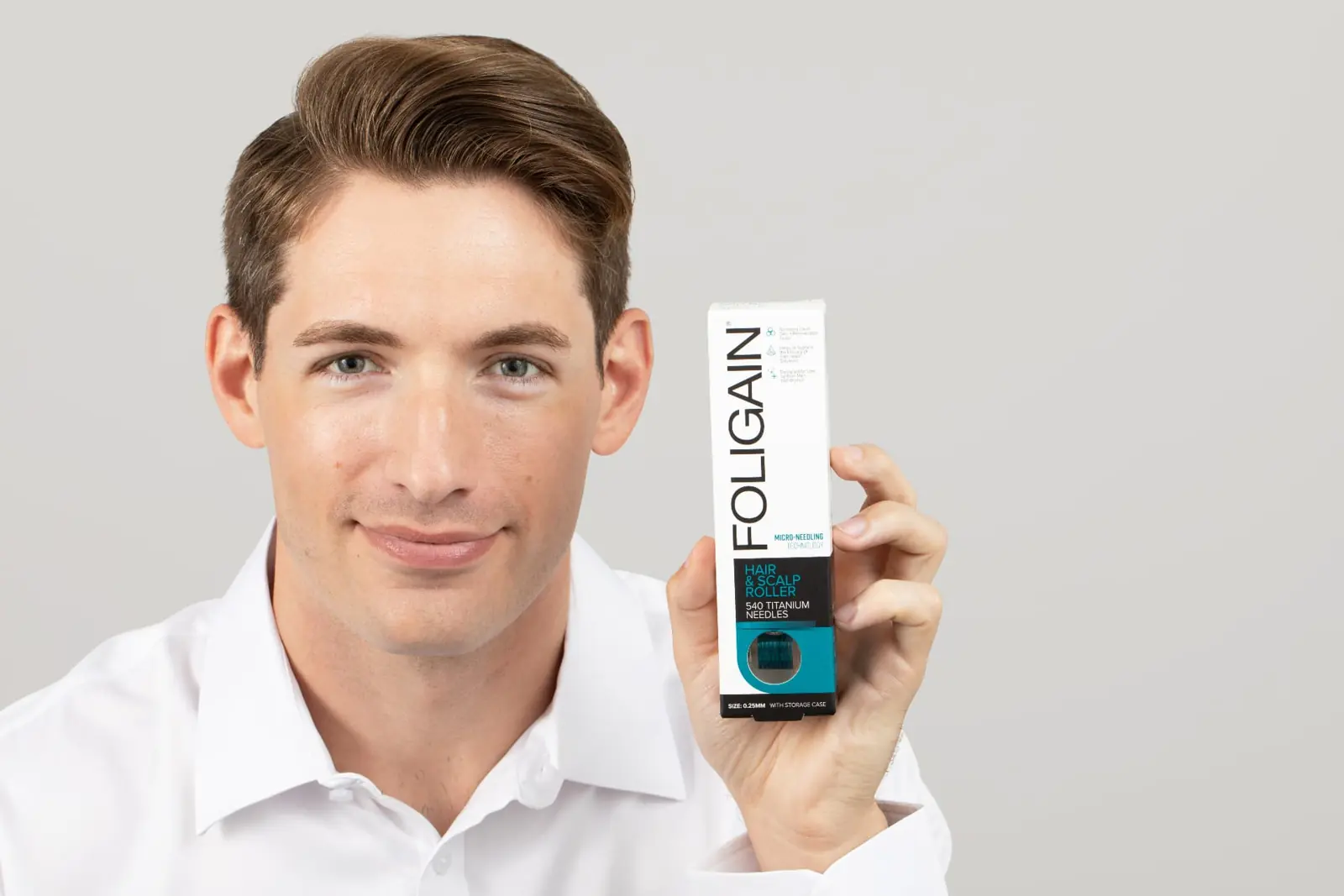
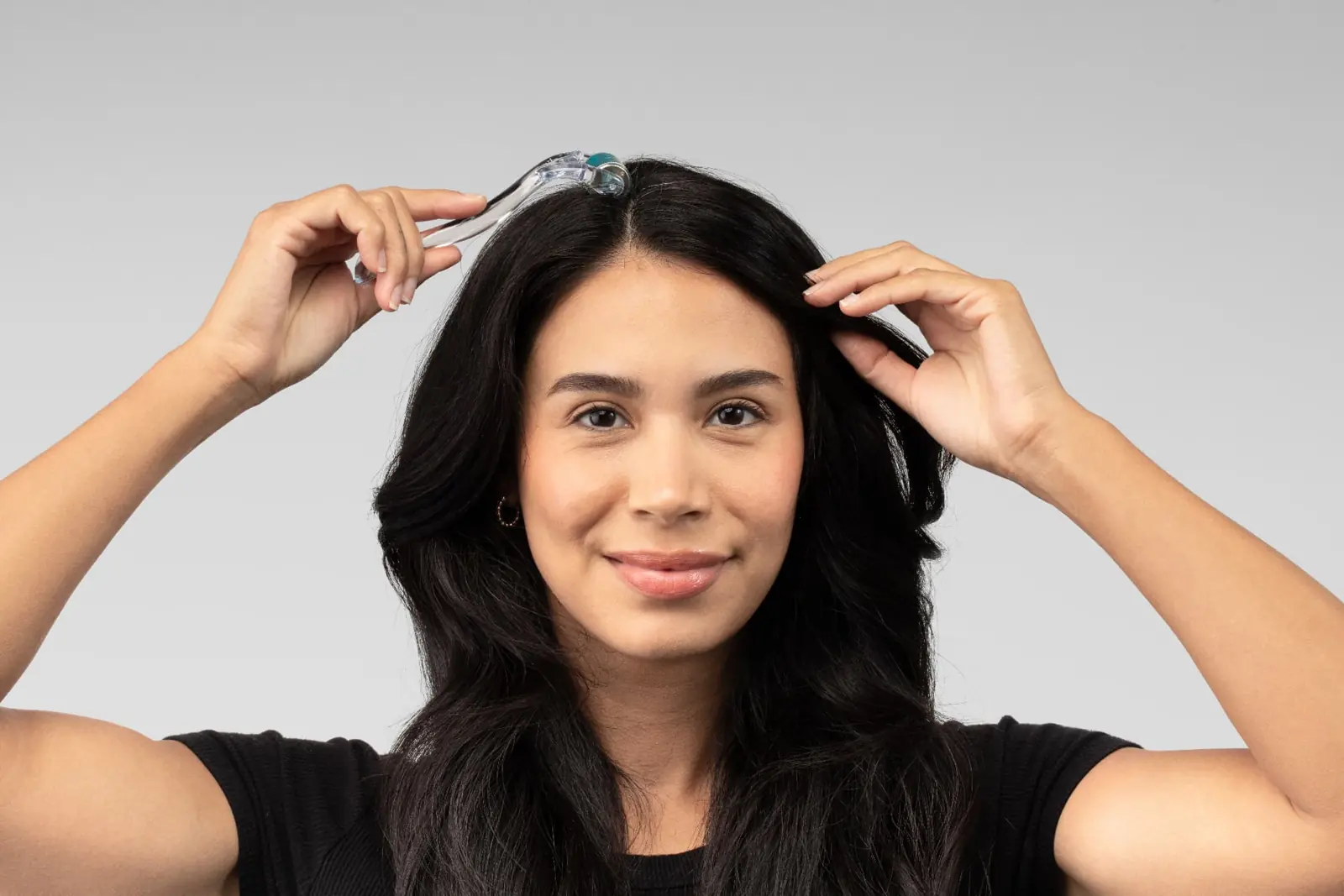
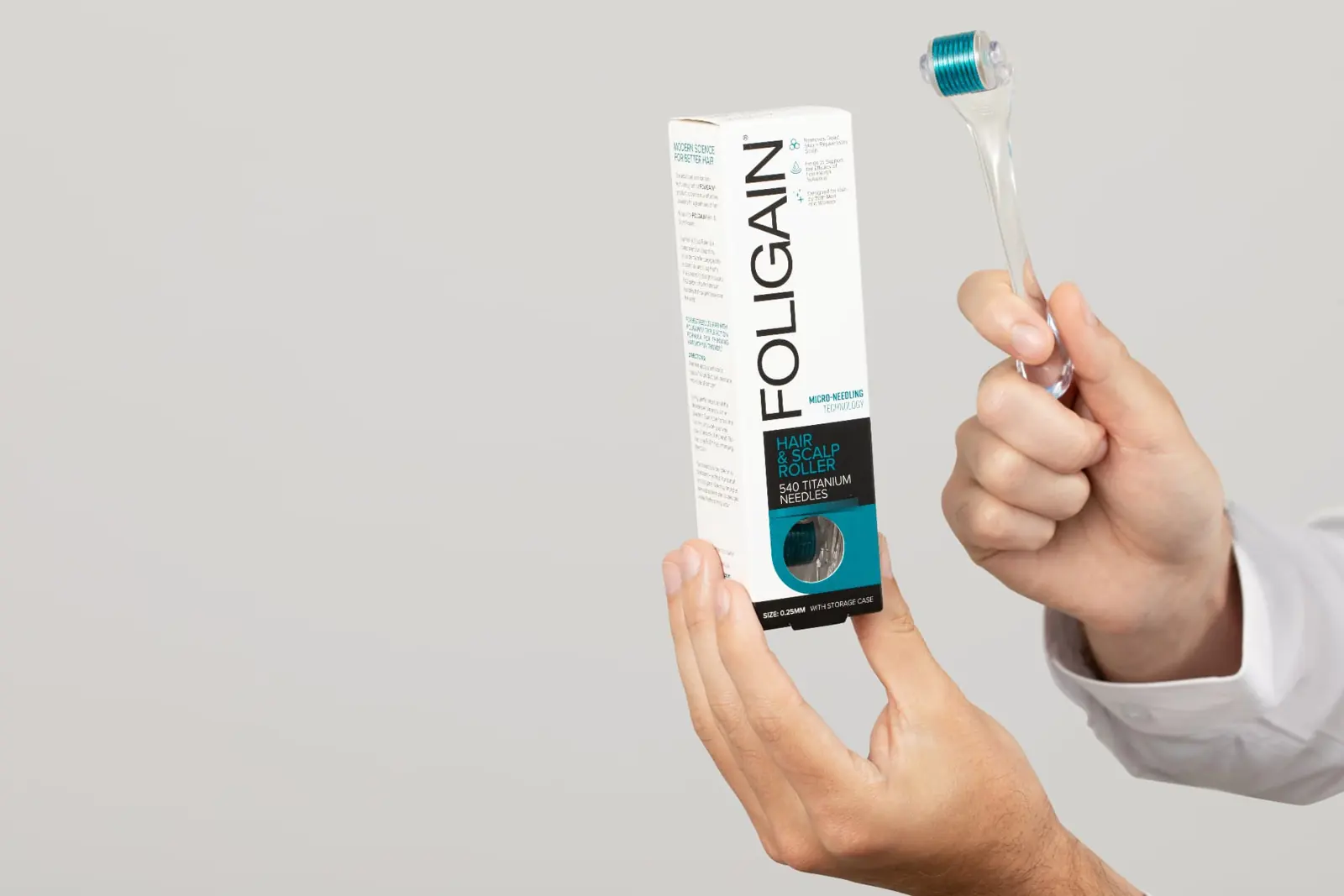
Images are matched to the topic for education; always confirm directions and claims on the exact product label.
Frequently asked questions
Should I apply Minoxidil right after microneedling?
Absorption and irritation can both increase right after microneedling. Many clinicians advise waiting about 24 hours before applying topical treatments. Ask your dermatologist for guidance specific to your routine.
How long before LLLT shows results?
Most guidance suggests using an LLLT device consistently, several times a week, for at least 6 months before evaluating whether it's made a visible difference.
Is at-home microneedling as effective as in-office treatment?
In-office treatments generally use longer needles under more controlled, sterile conditions, while at-home devices use shorter needles for a gentler, lower-risk approach. Effectiveness likely differs between the two, and a dermatologist can help you decide which fits your situation.
Can microneedling make hair loss worse?
Done improperly, aggressive microneedling can cause irritation, infection or scarring, which could worsen the situation rather than help it, which is why device choice, depth and technique matter.
This content is for educational purposes only and is not medical advice. It is not intended to diagnose, treat, cure or prevent any disease. Speak with a qualified healthcare professional about your individual situation.
Individual results vary. Hair-growth products are used consistently over months, and outcomes depend on the cause and stage of hair loss.
FOLIGAIN® products related to this guide
If this guide matches your situation, our product education pages explain which FOLIGAIN® formats suit which routines.
Explore FOLIGAIN® products