TRIOXIDIL® vs Minoxidil: Differences, Uses and Combining Them
A side-by-side look at a cosmetic complex and an OTC drug ingredient — regulation, claims, formats, and when people use one, the other or both.
FOLIGAIN® Editorial Team · 17 min read · Updated 2026-09-28
Medical facts and treatment details have not been independently medically reviewed.
Side by side
The table below summarizes the practical differences between the two.
| Minoxidil | TRIOXIDIL® | |
|---|---|---|
| What it is | OTC drug ingredient | Proprietary FOLIGAIN® cosmetic complex |
| US regulation | FDA OTC monograph; Drug Facts label | Cosmetic |
| Approved claim | Regrows hair on the top of the scalp (hereditary hair loss) | No medical claim; supports the look and feel of hair and scalp |
| Typical strengths | 2%, 5% | 2% (rinse-off), 5–10% (leave-on) |
| Formats | Solution, foam | Shampoo, conditioner, leave-on formula |
| Available from | Many brands and store brands | FOLIGAIN® only |
| Pregnancy | Do not use | Ask a clinician if unsure; follow label |
What TRIOXIDIL® is, in plain terms
Before comparing the two, it helps to restate plainly what TRIOXIDIL® is: a cosmetic ingredient complex that FOLIGAIN® formulates into its shampoos, conditioners and leave-on products. It is not a drug, it has no Drug Facts panel of its own, and it is not evaluated against a medical claim like regrowing hair. Its role in a product is cosmetic — supporting how hair and scalp look and feel.
That is a genuinely different kind of ingredient than Minoxidil, which is why this comparison isn't really “which one works better.” It's closer to comparing a moisturizer to a prescription cream — both may live in the same medicine cabinet, but they're built, regulated, and evidenced for different purposes.
How cosmetics differ from drugs, and why it matters here
Minoxidil earned its place on store shelves through the FDA's OTC drug monograph process, which requires evidence supporting a specific claim — in this case, regrowing hair on the top of the scalp for hereditary hair loss — along with a Drug Facts label spelling out the active ingredient, directions, and warnings (avoid during pregnancy, discontinue and see a doctor for chest pain or rapid heartbeat, and so on).
TRIOXIDIL®, like other cosmetic ingredients, is not required to go through that process, and correspondingly is not permitted to make that kind of claim. Cosmetics are regulated for safety in their intended cosmetic use, not for efficacy against a disease. That's not a criticism of cosmetics — it's simply a different lane, with different rules and different purposes.
Where this matters practically: if hereditary hair loss is your concern and your goal is measurable regrowth, the ingredient with an approved claim and a body of evidence behind it is Minoxidil (or a prescription option like finasteride, discussed with a clinician). If your goal is a good cosmetic routine — clean scalp, fuller-feeling hair, an enjoyable wash-day experience — a cosmetic like TRIOXIDIL® is built for that.
When people choose Minoxidil
Minoxidil is the choice when the goal is a regulated regrowth ingredient for hereditary thinning. It takes around four months to show results, needs ongoing daily use, and can cause an early shedding phase. Because it's a drug, its label spells out contraindications and side effects you should read closely — including not using it during pregnancy or breastfeeding, and stopping and talking to a doctor if you experience chest pain, rapid heartbeat, or unwanted facial hair growth. Our Minoxidil reference center covers it in depth.
Minoxidil is also the ingredient with the most substantial track record for hereditary pattern hair loss among OTC options, which is why many people start there when they want a treatment rather than a cosmetic.
When people choose TRIOXIDIL® products
TRIOXIDIL® products suit people who want a cosmetic routine aimed at thinning-looking hair: shampoo and conditioner for wash days, or a leave-on formula, without a drug ingredient. Some prefer to start here — for instance, if they're not ready to commit to a daily drug regimen, or their hair concerns are more about appearance and scalp comfort than a diagnosed medical condition. Others are not candidates for Minoxidil (for example, due to pregnancy or a relevant health condition) and want a cosmetic option instead, with the clear understanding that it is not a substitute treatment.
It's worth being direct here: choosing TRIOXIDIL® products over Minoxidil is not a decision to pursue “a gentler version of the same result.” It's a decision to prioritize a cosmetic routine instead of, or alongside, a medical treatment. Both are legitimate choices, but they aren't equivalent in what they can be expected to do.
Side effects and safety profile, compared
Because Minoxidil is a drug, its label includes a defined set of warnings and possible side effects: scalp irritation, itching or flaking at the application site, unwanted hair growth on the face or hands from accidental contact, and rarer but more serious effects such as chest pain, rapid heartbeat, dizziness or swelling that should prompt you to stop and see a doctor. Many people also experience a temporary increase in shedding a few weeks after starting, which is a recognized part of the hair cycle response and typically resolves as new growth phases begin — though it can be unsettling if you don't expect it.
TRIOXIDIL® products, as cosmetics, don't carry that kind of defined warning list because they aren't evaluated against a medical outcome. The safety considerations are the ones you'd apply to any cosmetic haircare or skincare product: check the ingredient list if you have known sensitivities or allergies, patch test a new leave-on product before applying it broadly, and discontinue use if you notice persistent redness, itching, or irritation. These are common-sense cosmetic precautions rather than drug warnings.
One practical implication: if you experience scalp irritation while using a combined routine, it's worth identifying which product is the likely cause before assuming it's either ingredient by default. Introducing new products one at a time, rather than all at once, makes it much easier to trace an irritation back to its source.
Using both — how they fit together
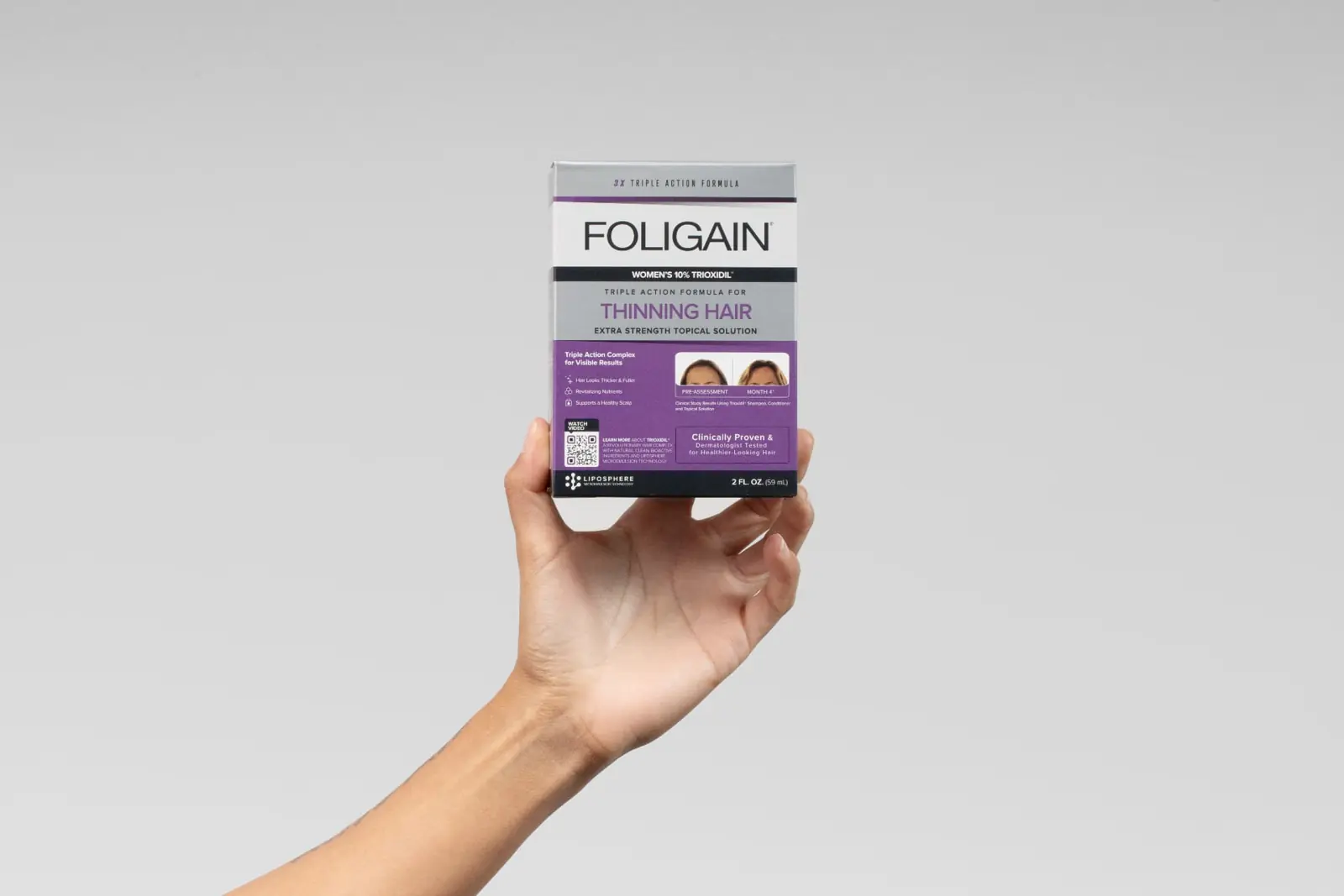
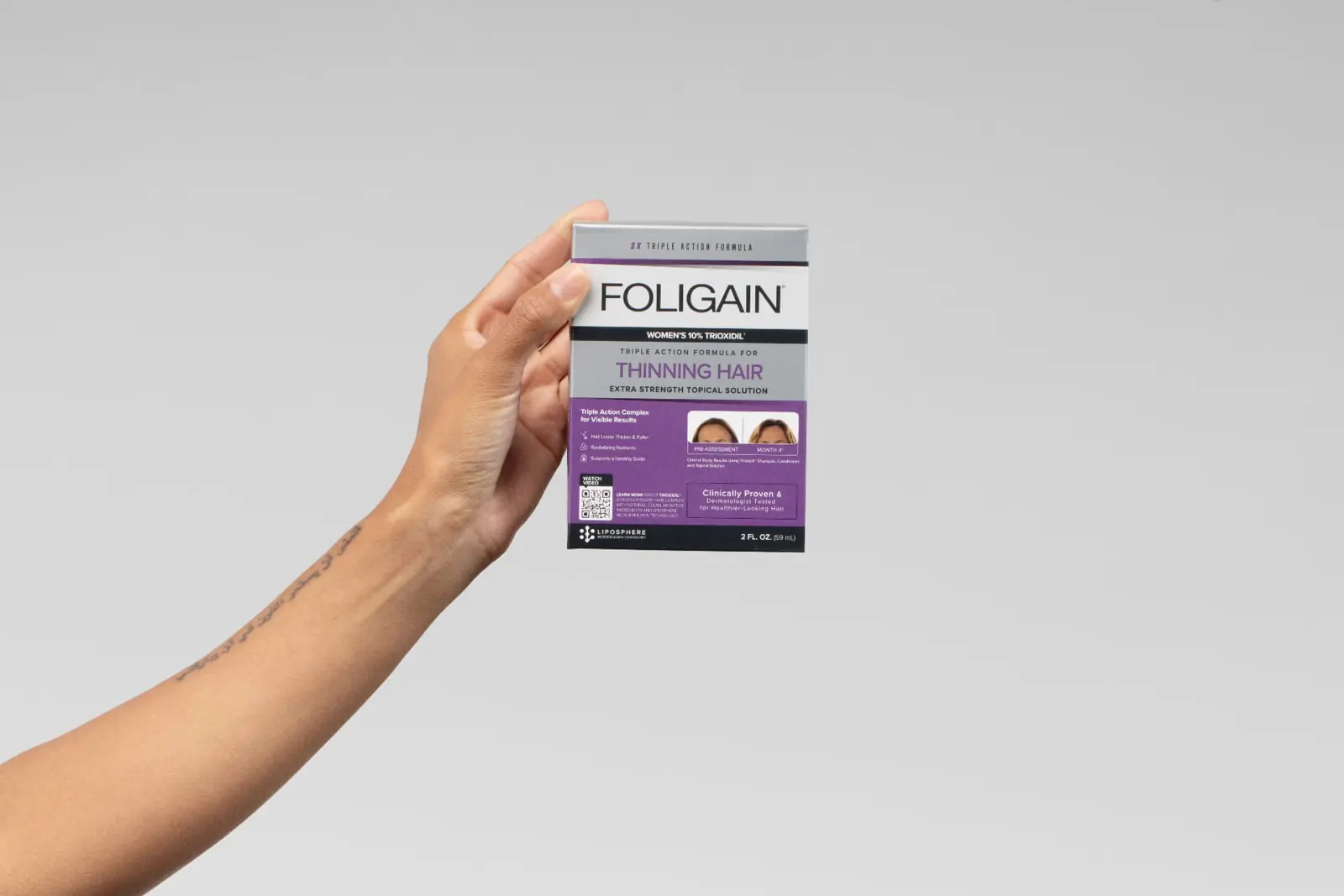
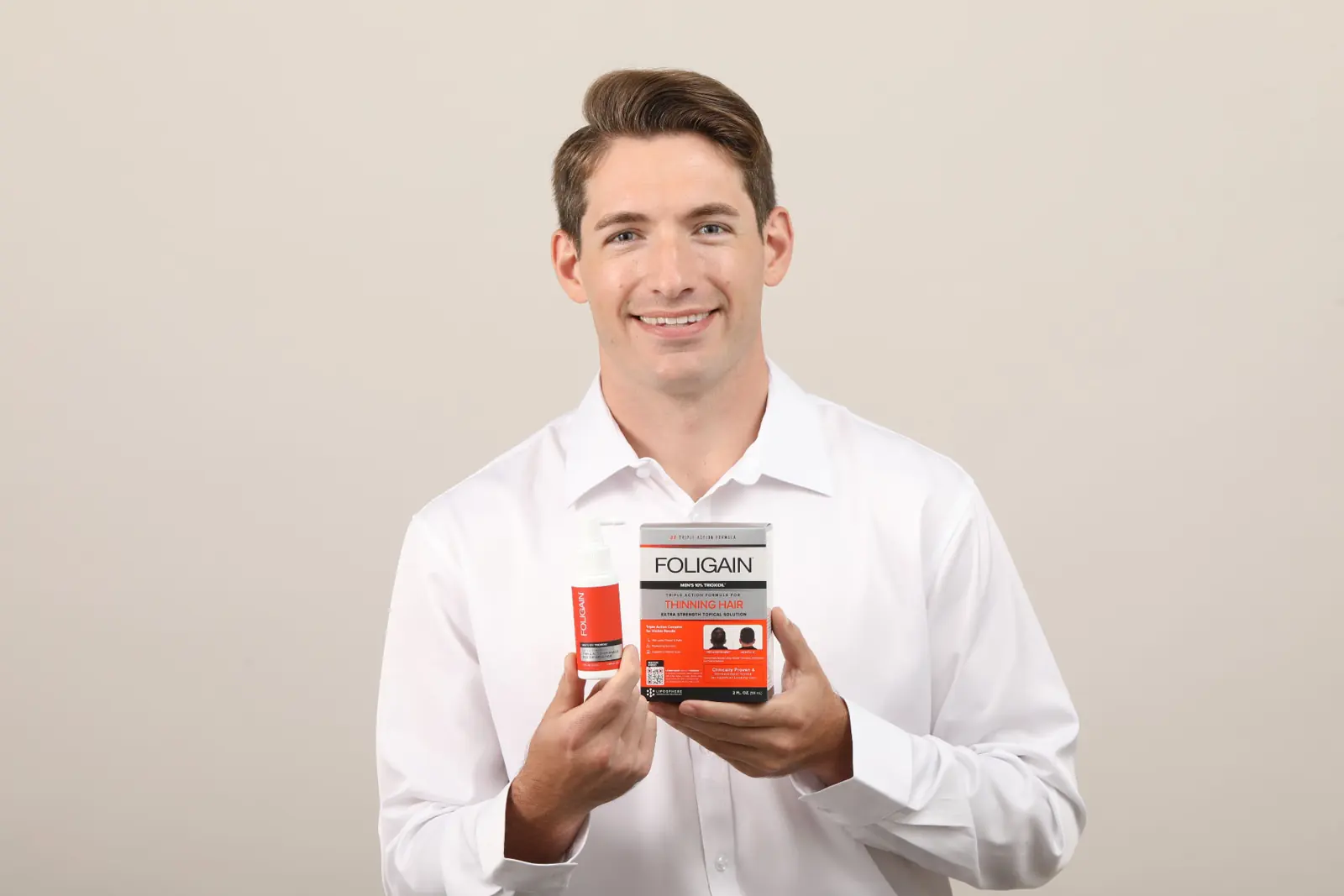
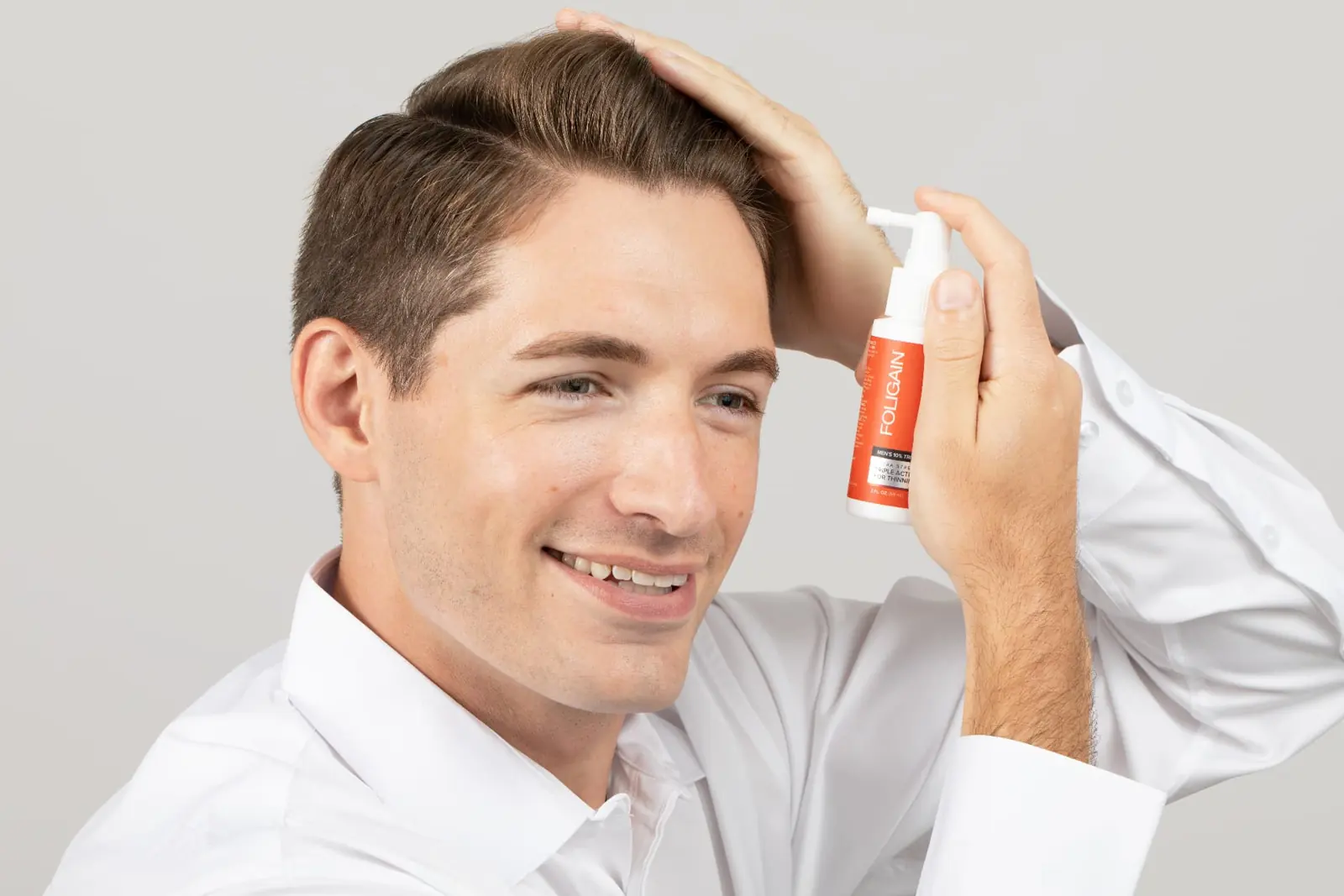
The most common FOLIGAIN® routine combines both: TRIOXIDIL® shampoo and conditioner to cleanse, then Minoxidil applied to a fully dry scalp. Kits such as the Men's Hair Regrowth Kit and Women's Hair Regrowth Kit package this routine together, precisely because the two ingredients play complementary, non-overlapping roles — one cosmetic, one drug.
Combining them does not mean the cosmetic product is contributing to regrowth or enhancing Minoxidil's action; there's no claim to that effect. It simply means you're running two separate routines side by side: a cleansing and cosmetic-care routine, and a treatment routine, timed so they don't interfere with each other (cleanse first, dry completely, then apply Minoxidil).
Some people wonder whether washing with a TRIOXIDIL® shampoo could reduce how well Minoxidil works, or whether leftover residue from a leave-on cosmetic could interfere with absorption. The straightforward answer is to keep the sequence simple: cleanse and dry fully before applying Minoxidil, and give the Minoxidil the drying time its label recommends before styling or adding other leave-on products on top. That sequencing, rather than any interaction between the ingredients themselves, is what protects the Minoxidil step.
- Wash with TRIOXIDIL® shampoo, condition, rinse.
- Dry hair and scalp completely.
- Apply Minoxidil exactly as its label directs.
- Leave it on; avoid washing for the time stated on the label.
Realistic expectations and timeline for each
Minoxidil's own labeling points to roughly four months of consistent, twice-daily (or once-daily for the 5% foam in women) use before you can fairly judge whether it's working for you, and continued use is required to maintain any results — stopping typically leads results to fade over months.
TRIOXIDIL® cosmetic products don't come with an equivalent regrowth timeline, because they aren't evaluated against that outcome. What you can reasonably expect from consistent use of a well-formulated cosmetic haircare product is a difference in how your hair and scalp look and feel day to day — cleanliness, texture, fullness of feel — which some people notice within weeks and others may notice more subtly or not at all, similar to switching any shampoo or conditioner line.
If you're using both together, it can help to track them separately: give the Minoxidil routine its own four-month benchmark for regrowth-related judgments, and think of the TRIOXIDIL® products as an ongoing cosmetic-care choice you keep or adjust based on how your hair feels and looks, independent of that regrowth timeline.
FOLIGAIN® vs alternatives
If you're deciding between FOLIGAIN®'s combined approach and other options on the market, it's worth comparing fairly across categories. Other Minoxidil brands (like Rogaine, Kirkland Signature, and various store brands) offer the same active drug ingredient at the same regulated concentrations; the meaningful differences between them tend to be format (solution vs foam), price, and any accompanying cosmetic products bundled in — not the core regrowth claim, which is tied to the Minoxidil itself, not the brand.
Other cosmetic haircare brands aimed at thinning hair use their own proprietary complexes, often built around ingredients like caffeine, biotin, peptides, or botanical extracts, positioned similarly to TRIOXIDIL®: supportive of appearance and feel, without a medical claim. Choosing between them is reasonably a matter of formulation preference, feel, and price, rather than one being a validated “treatment” and the others not — none of these cosmetic complexes, including TRIOXIDIL®, are approved to treat hair loss.
FOLIGAIN®'s particular advantage, if you're weighing routine convenience, is that it sells both categories — Minoxidil treatments and TRIOXIDIL® cosmetics — under one roof, packaged into kits that make it simple to run both routines together without hunting for compatible products elsewhere. That's a genuine convenience, not a claim that the combination outperforms Minoxidil used alone; there's no evidence basis for such a claim, and we don't make it.
Application technique: why it differs
Minoxidil's label specifies an exact application method — a measured amount (1 mL for the men's 5% liquid, applied twice daily) spread across the areas of thinning on a dry scalp, avoiding excess runoff onto the forehead or elsewhere. That precision exists because the product is a regulated drug being dosed onto the skin, and the label reflects the method studied and approved for that specific claim.
TRIOXIDIL® products don't carry that kind of dosing precision because they aren't regulated or evidenced as a drug delivery system. Shampoo and conditioner are used the way you'd use any shampoo and conditioner — enough to cleanse and condition comfortably — and the leave-on formula is applied per its own label, generally without a strict measured dose. This difference in instruction style is itself a useful clue to which category a product belongs to: a precise, measured dosing instruction usually signals a drug; a general usage instruction usually signals a cosmetic.
How to decide which one is right for you
If you're not sure where to start, it can help to answer a few plain questions honestly. First: is your main goal measurable regrowth for hereditary thinning, or is it mostly about how your hair and scalp look and feel day to day? If it's the former, Minoxidil (or a prescription option discussed with a doctor) is the category built and evidenced for that job. If it's the latter, a cosmetic routine built around TRIOXIDIL® is a reasonable fit on its own.
Second: are you comfortable with a daily drug routine, including reading and following a Drug Facts label, watching for side effects, and staying consistent for months to fairly judge it? Some people are ready for that commitment right away; others prefer to start with a cosmetic routine while they think it over, or because a health condition or pregnancy means Minoxidil isn't appropriate for them right now.
Third: do you already have a diagnosis? People with classic, early hereditary thinning often feel comfortable starting an OTC option themselves, while sudden, patchy, or symptomatic hair loss deserves a dermatologist's opinion before choosing any product, cosmetic or drug. None of these questions have a universally “right” answer — they're simply worth sitting with before you spend money on either category.
Cost, availability and shopping tips
Minoxidil is widely available at pharmacies, supermarkets and online, under many brand names and store-brand versions, all containing the same regulated active ingredient at 2% or 5%. Because the drug ingredient itself is standardized, price differences between brands mostly reflect format (solution vs foam), bottle size, and packaging rather than differences in the ingredient's effect. Buying a store-brand version of 5% Minoxidil is generally a matter of preference and budget, not a compromise on the active ingredient.
TRIOXIDIL® products are only sold by FOLIGAIN®, typically through its own website and select retailers, so there isn't a store-brand equivalent to shop around for. Pricing reflects a proprietary cosmetic formulation rather than a commodity drug ingredient, similar to how other branded cosmetic complexes in the haircare aisle are priced against their own formulations rather than against a generic version.
A practical shopping tip: decide your budget for each category separately. It's reasonable to spend more on a Minoxidil format you'll actually stick with consistently (foam over solution, for example, if that's what fits your routine), and to treat a TRIOXIDIL® shampoo or leave-on purchase as a cosmetic-care decision, weighed against other shampoos and conditioners you might otherwise buy.
Subscription or multi-month bundles are common for both categories and can lower the per-bottle cost if you already know you'll be using the product consistently for months. Because Minoxidil's results depend on months of steady use, and a cosmetic routine is generally more pleasant when it's simply part of your normal shopping list, buying in a size and frequency that removes the temptation to run out and skip a few days is often worth more than chasing the lowest possible unit price.
Important note
TRIOXIDIL® products are cosmetics. They are designed to improve the look and feel of hair and scalp and are not intended to diagnose, treat, cure or prevent any disease, including hair loss. Always read the ingredient list and directions on the exact product you use.
From the FOLIGAIN® library
Related FOLIGAIN® products and routines
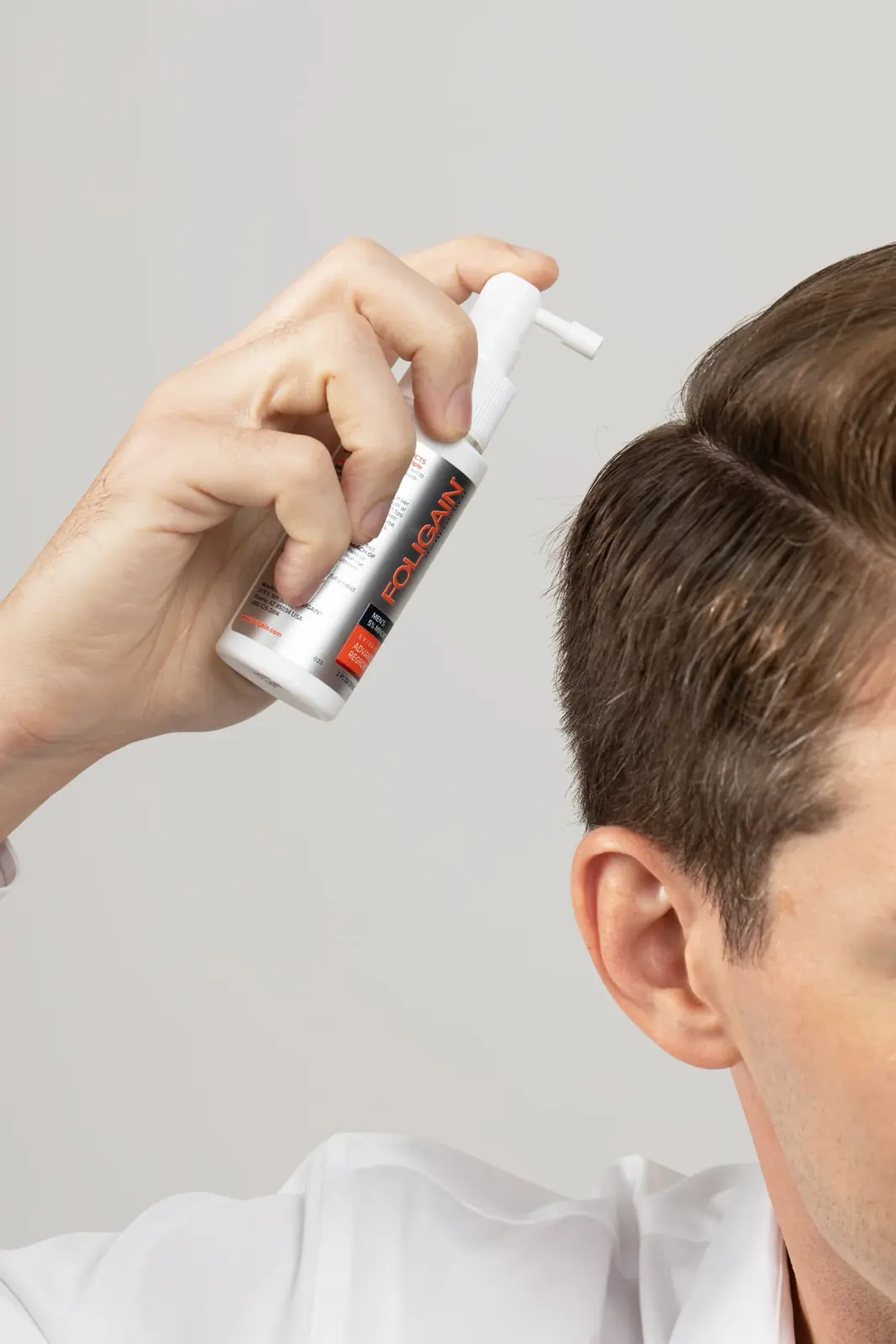
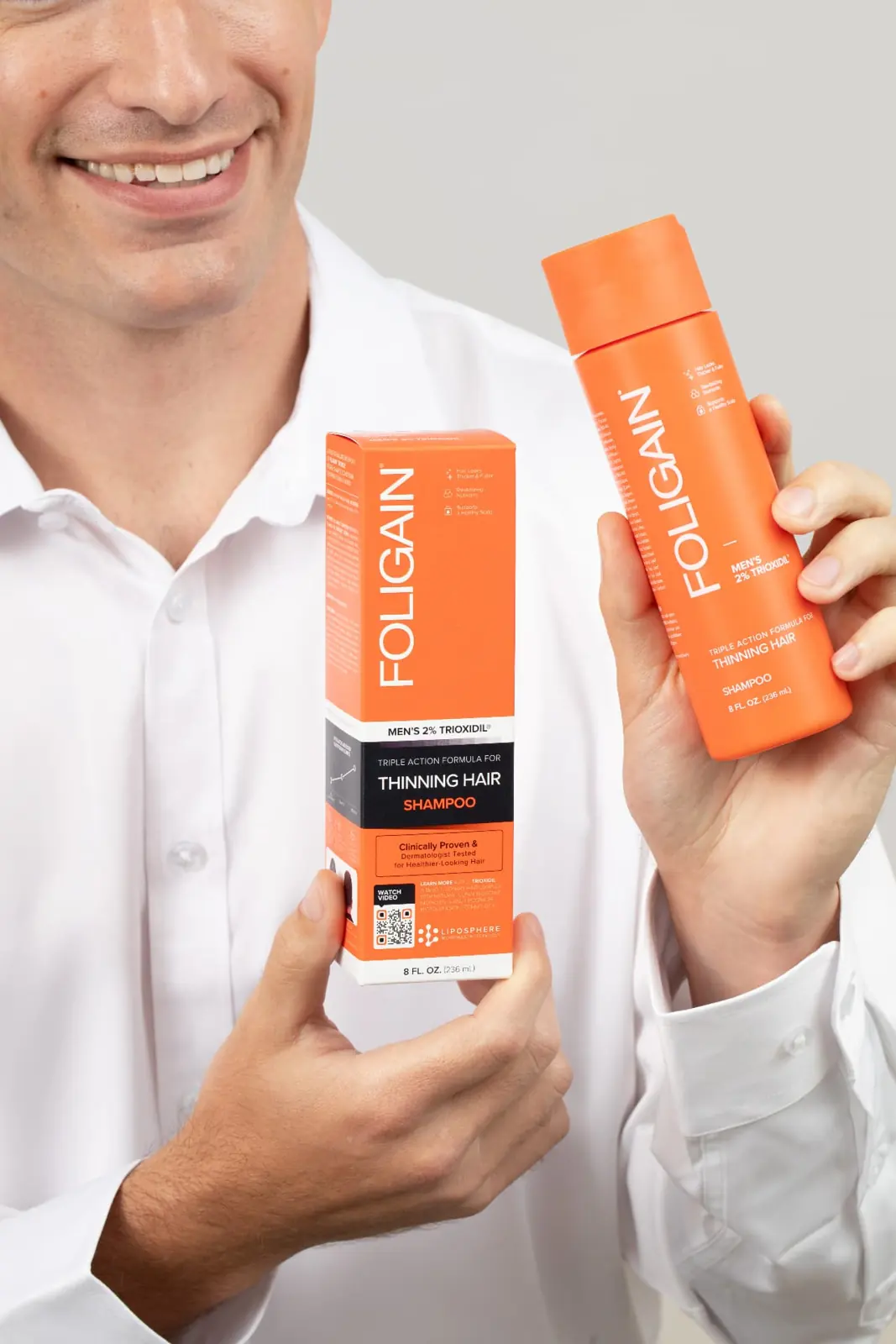
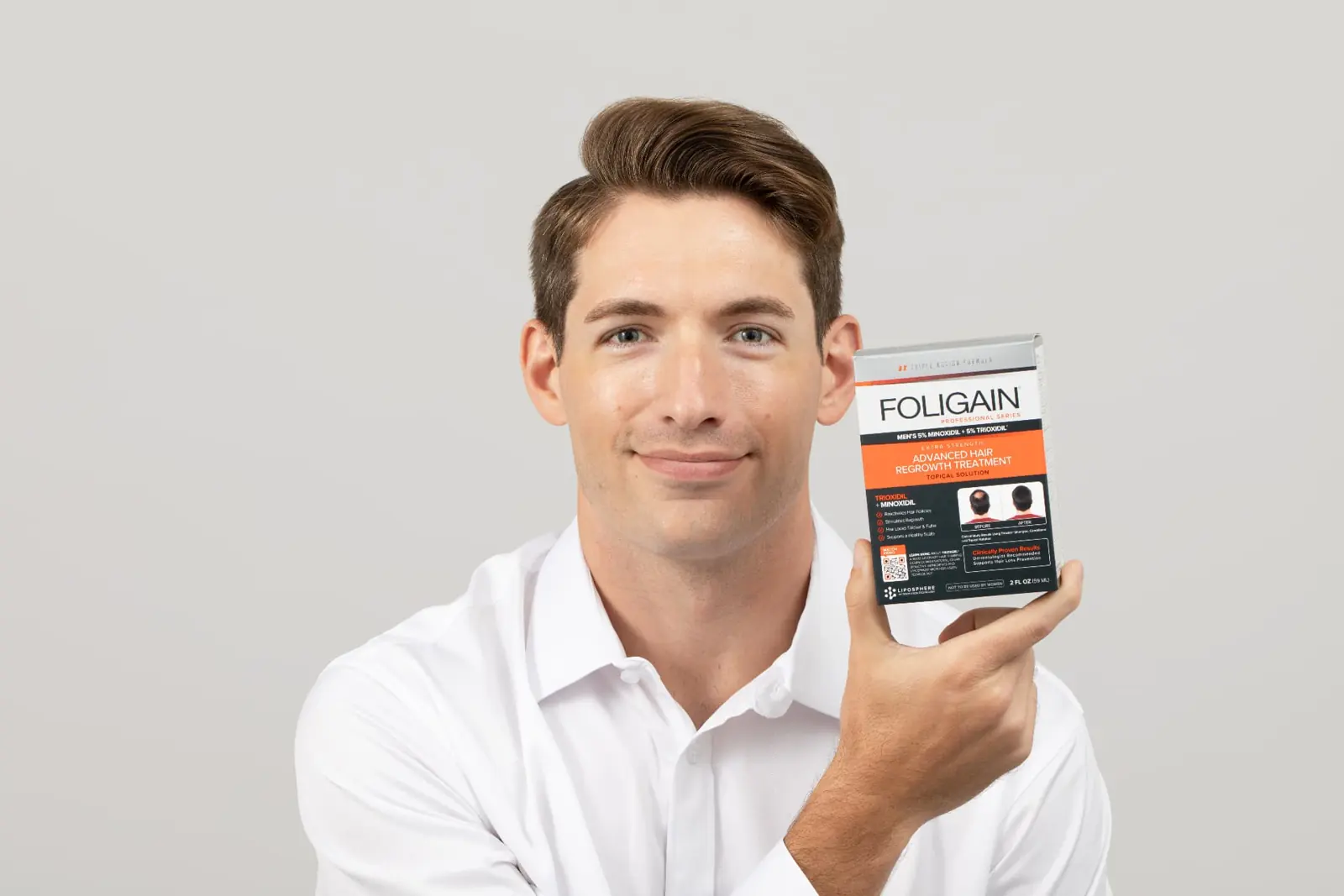
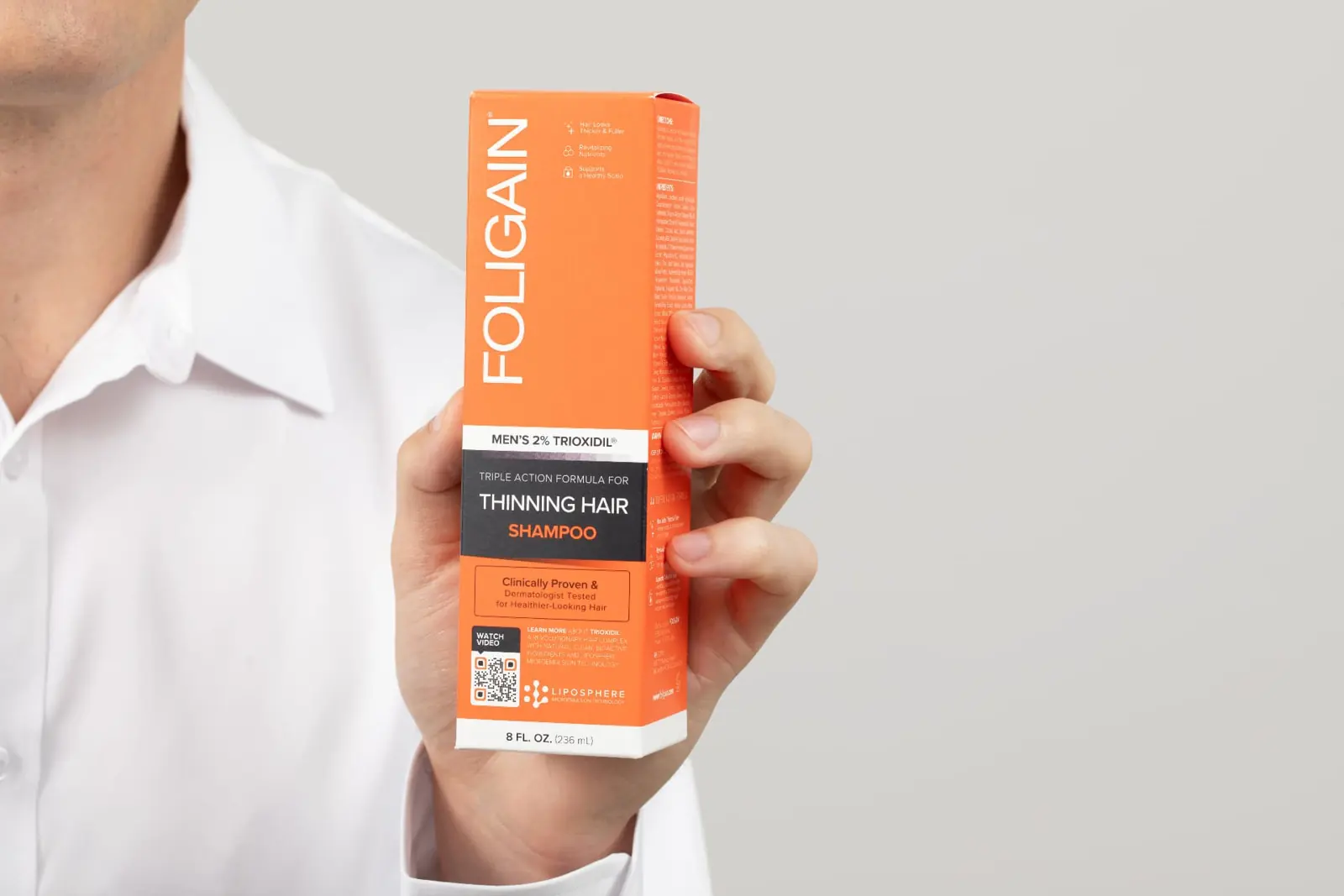
Images are matched to the topic for education; always confirm directions and claims on the exact product label.
Frequently asked questions
Is 10% TRIOXIDIL® stronger than 5% Minoxidil?
They cannot be compared. They are different substances with different purposes and regulation.
Will TRIOXIDIL® cause Minoxidil shedding?
The early shedding phase is associated with Minoxidil. TRIOXIDIL® is a cosmetic complex and is not known for that effect.
Do I need both?
No. Some people use only one. Combining them is a routine choice, not a requirement.
Which one should I try first?
It depends on your goal. If you want a regulated regrowth ingredient, start with Minoxidil and read its full label. If you want a cosmetic wash-day routine, TRIOXIDIL® products are built for that.
Does TRIOXIDIL® have a Drug Facts label?
No. Only the Minoxidil-containing FOLIGAIN® products carry a Drug Facts panel; TRIOXIDIL® is listed among cosmetic ingredients.
Can pregnant women use TRIOXIDIL® products?
Minoxidil should not be used during pregnancy per its label. For any cosmetic product, including those containing TRIOXIDIL®, ask a clinician if you're unsure, and always follow the product's own label.
Is a store-brand Minoxidil as good as a name brand?
Store-brand Minoxidil products contain the same regulated active ingredient at the same approved strength, so the core ingredient is equivalent. Differences usually come down to format, inactive ingredients, and price.
Why is TRIOXIDIL® not sold by other retailers?
TRIOXIDIL® is a FOLIGAIN® trademark and proprietary cosmetic complex, so it only appears in FOLIGAIN®'s own product line rather than being licensed out to other brands.
Does a higher-percentage TRIOXIDIL® product mean I should apply less?
No specific dosing rule applies the way it does with Minoxidil. Follow the directions printed on your particular TRIOXIDIL® product, since formulas and intended use can vary by product type.
If I switch from Minoxidil to a TRIOXIDIL® routine alone, will my existing results hold?
Minoxidil’s regrowth results are generally understood to depend on continued use, and stopping tends to lead results to fade over months. A cosmetic TRIOXIDIL® routine isn’t a substitute for that ongoing drug step, so if maintaining regrowth matters to you, that’s a question worth discussing with a doctor before stopping Minoxidil.
Are there age restrictions for either product?
Minoxidil’s label specifies its approved age range, so check the Drug Facts panel on your specific product. TRIOXIDIL® products, as cosmetics, don’t carry an equivalent drug-style age restriction, but general cosmetic caution still applies for younger users.
Do Minoxidil and TRIOXIDIL® expire at the same rate?
Check the printed expiration date on each product individually; as different formulation types (drug vs cosmetic), their shelf lives are not necessarily the same, and using an expired product of either kind isn’t recommended.
This content is for educational purposes only and is not medical advice. It is not intended to diagnose, treat, cure or prevent any disease. Speak with a qualified healthcare professional about your individual situation.
Individual results vary. Hair-growth products are used consistently over months, and outcomes depend on the cause and stage of hair loss.
FOLIGAIN® products related to this guide
If this guide matches your situation, our product education pages explain which FOLIGAIN® formats suit which routines.
Explore FOLIGAIN® products