What Is TRIOXIDIL®? FOLIGAIN®'s Cosmetic Complex Explained
What TRIOXIDIL® is, where FOLIGAIN® uses it, what the percentages on the label mean, and how it differs from Minoxidil.
FOLIGAIN® Editorial Team · 17 min read · Updated 2026-09-28
Medical facts and treatment details have not been independently medically reviewed.
The short answer
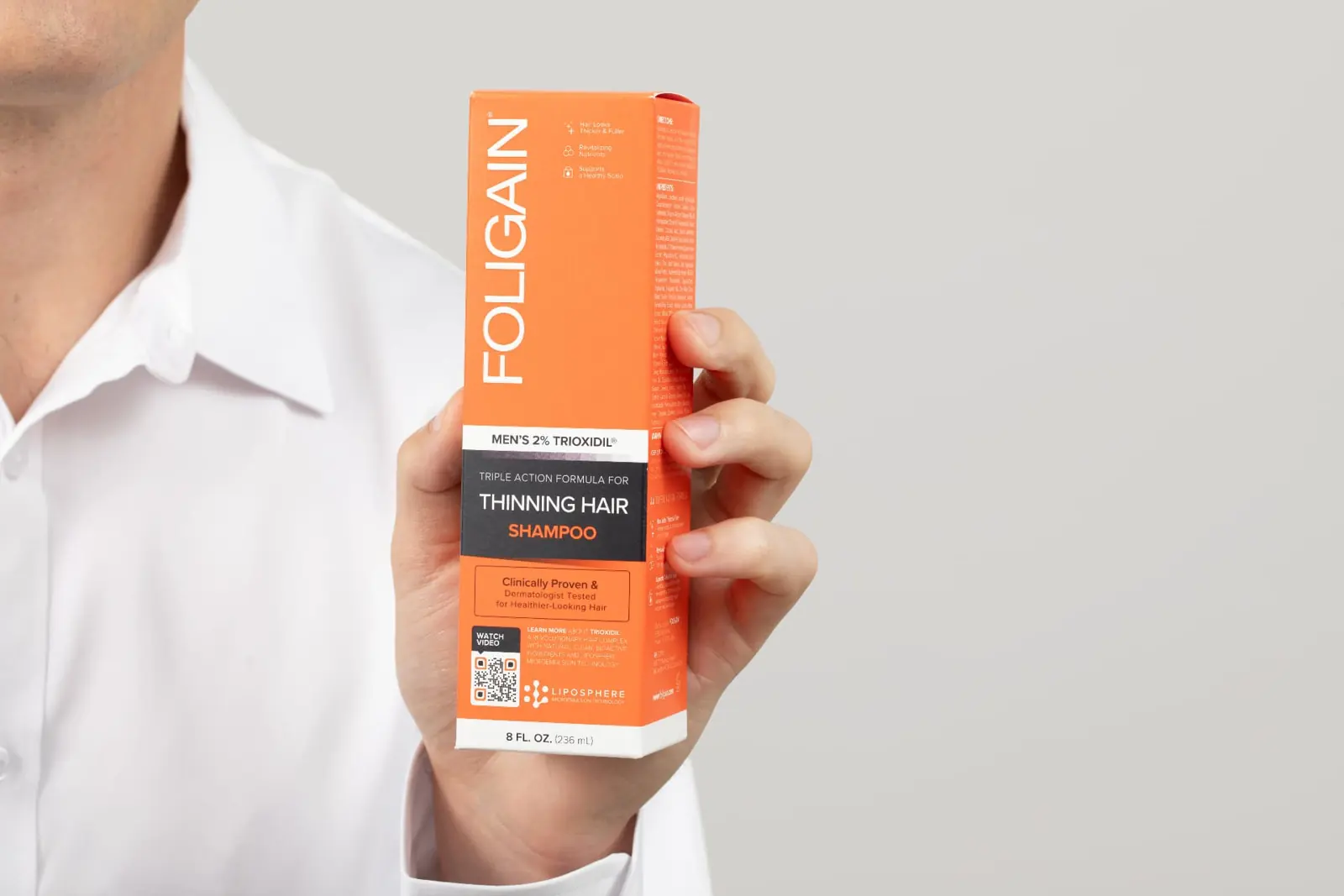
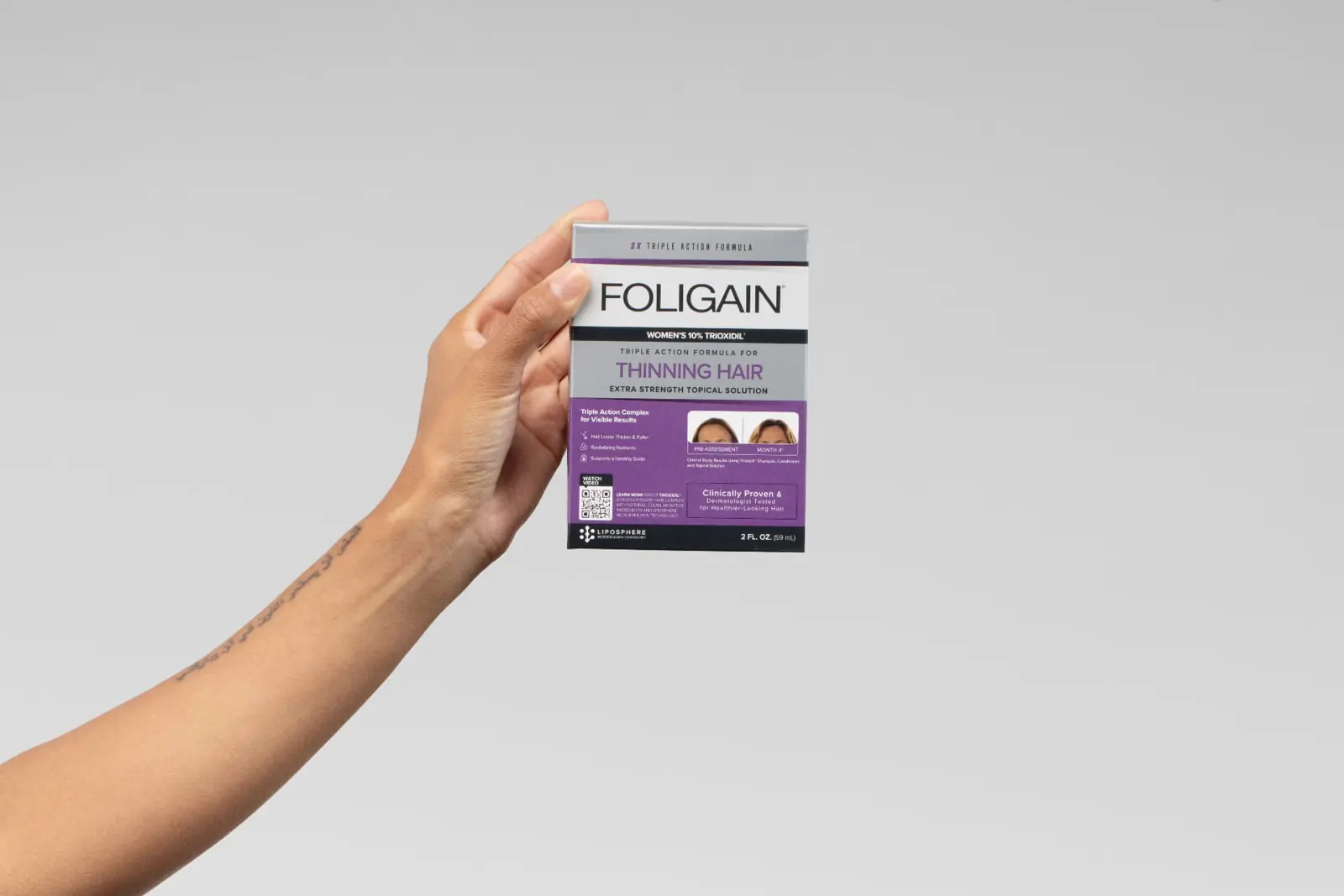
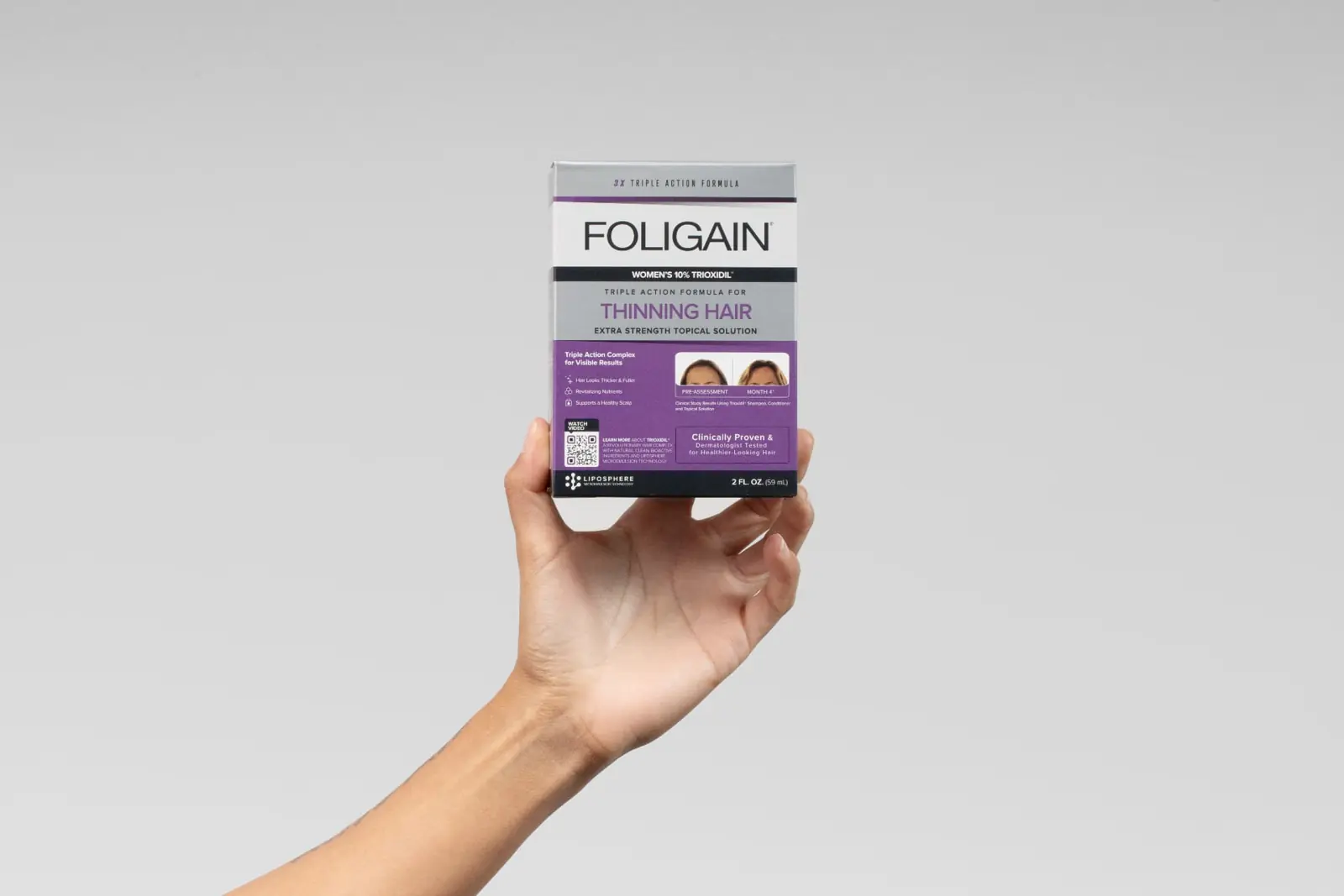
TRIOXIDIL® is the name FOLIGAIN® gives to its own proprietary cosmetic complex. You will see it on the front of many FOLIGAIN® products, usually with a percentage, for example “Triple Action Shampoo with 2% TRIOXIDIL®” or “Triple Action Complete Formula with 10% TRIOXIDIL®”.
The complex is used to support the appearance of fuller, thicker-looking hair and a comfortable, clean-feeling scalp as part of a normal hair-care routine. Because it is a cosmetic ingredient, FOLIGAIN® does not describe it as a treatment for hair loss, and neither do we on this site. We will not tell you it regrows hair, reverses thinning, or works the way a drug ingredient works — because that is not what a cosmetic is designed or regulated to do.
FOLIGAIN® publishes this knowledge center as an educational resource. We aim to explain TRIOXIDIL® as plainly and honestly as we would explain any other ingredient, including being clear about what it is not, so you can make an informed choice about your own routine.
If you take away one thing from this page, let it be this: TRIOXIDIL® is a cosmetic ingredient complex. It is not Minoxidil, it is not a prescription medication, and it is not marketed with medical claims. Everything else in this guide builds on that simple fact.
What TRIOXIDIL® actually is
TRIOXIDIL® is a branded blend of cosmetic ingredients that FOLIGAIN® formulates into shampoos, conditioners and leave-on products. Like many proprietary cosmetic complexes across the personal-care industry, the exact combination is developed and owned by the brand, and the full ingredient list for any given product is printed on its packaging and label.
Because it is a complex rather than a single molecule, the term “TRIOXIDIL®” functions more like a formula name than a chemical name. This is common in cosmetics — many well-known haircare and skincare ingredient blends are marketed under a brand-owned name rather than by listing out every constituent on the front of the bottle. What matters for you as a consumer is understanding the category it sits in: cosmetic, not drug.
TRIOXIDIL® is only found in FOLIGAIN® products. It is not licensed to other brands, and you won't find it as a generic or store-brand ingredient the way you might find Minoxidil sold under many different labels. If a product does not carry the FOLIGAIN® name, it does not contain TRIOXIDIL®.
It's worth repeating that TRIOXIDIL® is not a form, derivative, or relative of Minoxidil. The names sound similar and both show up in hair-care conversations, but they come from entirely different categories of ingredient, are regulated differently, and are not comparable on a percentage-for-percentage basis. We cover that distinction in detail below.
It's also useful to know that proprietary cosmetic complexes like TRIOXIDIL® typically combine several individual cosmetic ingredients — conditioning agents, botanical extracts, and other formulation components — into one branded blend, rather than being a single active molecule. This is standard practice across the cosmetics industry and is one reason cosmetic brands market these blends under a distinctive name rather than spelling out the full formula on the front label; the complete list still appears in the ingredients panel required on the packaging.
Where you will find TRIOXIDIL®
TRIOXIDIL® appears across several FOLIGAIN® product families. The concentration on the label varies by product type, generally because leave-on products are formulated differently than rinse-off products like shampoo and conditioner.
| Product family | Stated TRIOXIDIL® level | Contains Minoxidil? | Audience |
|---|---|---|---|
| Triple Action Shampoo | 2% | No | Men / Women versions |
| Triple Action Conditioner | 2% | No | Men / Women versions |
| Triple Action Complete Formula (leave-on) | 10% | No | Men / Women versions |
| Advanced Hair Regrowth Shampoo | 2% | Yes — 2% Minoxidil | Unisex |
| Advanced Hair Regrowth for Men | 5% | Yes — 5% Minoxidil | Men |
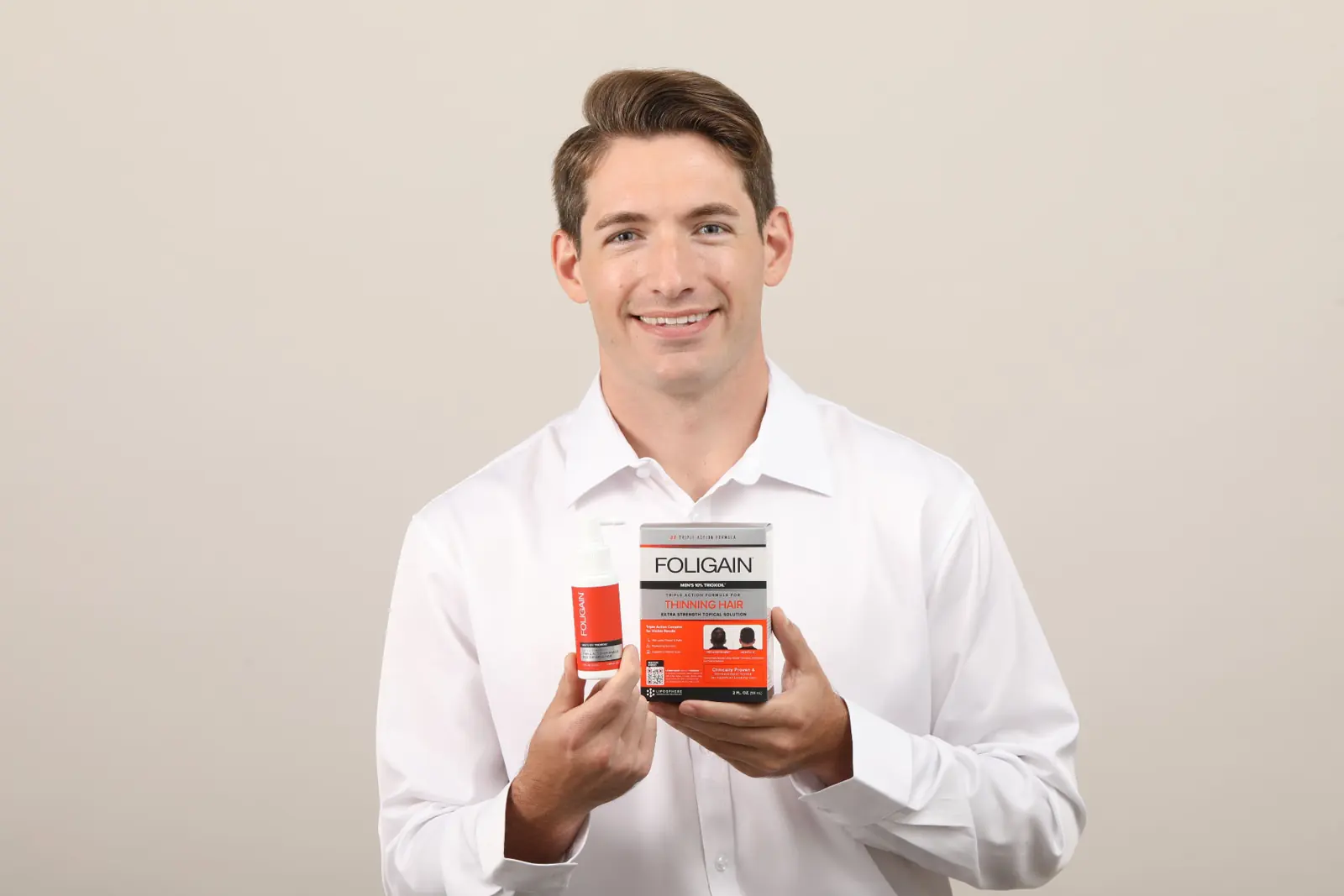
| Men's / Women's Hair Regrowth Kits | Varies by item | Yes — kit includes a Minoxidil treatment | Men / Women |
How cosmetics differ from drugs
It helps to understand the regulatory backdrop, because it explains why FOLIGAIN® talks about TRIOXIDIL® the way it does. In the United States, personal-care products fall broadly into two buckets: cosmetics and drugs (there is also a hybrid category, “cosmetic drugs,” for products like OTC Minoxidil that combine a drug ingredient with a cosmetic-style delivery, such as a foam or solution).
A drug ingredient like Minoxidil goes through a specific regulatory pathway — in Minoxidil's case, the FDA's OTC drug monograph — before it can carry a claim like “regrows hair.” That pathway requires evidence meeting FDA standards, a Drug Facts label listing the active ingredient, dosage directions, warnings, and contraindications (for example, Minoxidil's label warns against use during pregnancy or with certain heart conditions).
A cosmetic ingredient, by contrast, is regulated to be safe for its intended cosmetic use — cleansing, conditioning, moisturizing, or otherwise affecting the appearance and feel of hair and scalp. Cosmetics are not permitted to claim that they treat, cure, or prevent a disease, and hair loss (androgenetic alopecia, in particular) is classified as a medical condition. That is precisely why TRIOXIDIL® is marketed and described only as a cosmetic ingredient complex, never as a treatment or a regrowth product.
This isn't a technicality or a loophole — it's a meaningful difference in what a product is allowed to promise and what evidence stands behind that promise. When you pick up a bottle with a Drug Facts panel, you know the active ingredient inside has gone through an approval pathway tied to a specific medical claim. When you pick up a cosmetic, you should expect it to support how your hair looks and feels, not to function as medicine.
Understanding this distinction protects you as a shopper. It lets you ask the right question about any hair product you're considering: is this being sold to me as a cosmetic, or as a drug? The answer tells you what kind of evidence and what kind of outcome you should reasonably expect.
TRIOXIDIL® is not Minoxidil
The names sound alike, which causes confusion. Minoxidil is an FDA-regulated over-the-counter drug ingredient with a Drug Facts label, approved for hereditary hair loss at 2% (men and women) and 5% (men; 5% foam also for women once daily).
TRIOXIDIL® is a cosmetic complex. It is not a Minoxidil derivative, is not a drug ingredient, and carries no approved medical claim. When a FOLIGAIN® product contains both, the Drug Facts panel lists Minoxidil as the active ingredient and TRIOXIDIL® appears among the other (cosmetic) ingredients.
This distinction is worth internalizing because marketing language across the hair-loss category can sometimes blur it, intentionally or not. On this site and across FOLIGAIN®'s own materials, we try to keep the line bright: if a claim about regrowing hair is being made, it should be attached to an ingredient with the regulatory backing to support that claim — and that is Minoxidil, not TRIOXIDIL®.
- Want a regulated regrowth ingredient? Look for Minoxidil on the Drug Facts label.
- Want a cosmetic routine for the look and feel of thinning hair? TRIOXIDIL® products are designed for that.
- Want both? FOLIGAIN®'s kits and Advanced formulas combine them — read each label.
What the percentage means
The percentage on a TRIOXIDIL® product states how much of the complex is in the formula. Higher concentrations are used in leave-on formulas, which stay on the scalp, while lower concentrations are used in rinse-off shampoos and conditioners, which spend far less contact time on the scalp before being rinsed away.
A higher percentage does not turn a cosmetic into a drug, and percentages of TRIOXIDIL® are not comparable to percentages of Minoxidil — they are different substances, regulated differently, measured for different purposes, and used in different product types. Seeing “10%” on a leave-on TRIOXIDIL® formula and “5%” on a Minoxidil product does not mean the former is “stronger.” The numbers simply aren't on the same scale, and it isn't meaningful to rank them against each other.
If you're comparing products, the more useful question is not “which percentage is higher” but “which category of ingredient am I looking at, and what is it realistically designed to do.”
How TRIOXIDIL® fits into a routine alongside proven treatments
Most people meet TRIOXIDIL® through the Triple Action shampoo and conditioner, used like any other wash-day products. Leave-on Complete Formula is applied to a clean, dry scalp per its label directions.
People already using Minoxidil — the ingredient with an actual FDA-recognized regrowth claim for hereditary thinning — often add TRIOXIDIL® shampoo and conditioner as the cleansing step of their routine, simply because it's convenient to have matched products from one brand. In that context, TRIOXIDIL® is playing a supporting, cosmetic role: cleansing hair and scalp and contributing to how hair looks and feels day to day. It is not doing the regrowth work; Minoxidil, applied and used correctly on its own schedule, is the ingredient carrying that responsibility.
A sensible way to think about a combined routine is to picture two separate jobs. Job one is medical: if you have hereditary hair loss and want a regulated treatment, that's Minoxidil's (or, for some people, a prescription option's) job, and its own label tells you exactly how to use it, how long to wait for results, and what warnings apply. Job two is cosmetic: caring for the hair you have, keeping the scalp clean and comfortable, and supporting the everyday appearance of your hair. That's the role TRIOXIDIL® products are designed to fill.
Keeping these two jobs mentally separate helps you set the right expectations for each product and avoids the common mistake of expecting a shampoo to perform like a drug, or vice versa.
Realistic expectations and timeline
Because TRIOXIDIL® is a cosmetic ingredient, it is not paired with the kind of clinical timeline that a drug like Minoxidil has (where labeling suggests roughly four months of consistent daily use before assessing results). Cosmetics generally aren't studied or marketed against a fixed “results by month X” timeline, because their intended effects are about appearance and feel — cleaner scalp, smoother-feeling hair, a fuller look to the hair shaft — rather than a measurable medical endpoint like new hair growth.
That means the honest expectation for a TRIOXIDIL® shampoo, conditioner or leave-on product is similar to what you'd expect from any well-formulated cosmetic haircare product: incremental, subjective improvements in how hair looks and feels with regular use, not a guaranteed or clinically-timed regrowth outcome. Some people notice their hair feels different, cleaner, or fuller-looking within weeks of switching products; others may not notice a dramatic difference at all, because cosmetics vary in how much impact they have person to person, much like switching any shampoo or conditioner.
If your actual goal is measurable hair regrowth for hereditary thinning, the realistic path is a recognized drug ingredient like Minoxidil (or a prescription option discussed with a clinician), used consistently over months, with expectations set by that product's own label and evidence. TRIOXIDIL® products can be a reasonable part of a broader hair-care routine, but they should not be the product you're relying on if regrowth is the specific outcome you want.
We'd rather set this expectation clearly upfront than let a vague or excited claim set you up for disappointment. A cosmetic doing a cosmetic's job, well, is still a legitimate and useful product — it just isn't a substitute for a regulated treatment.
FOLIGAIN® vs alternatives
TRIOXIDIL® is exclusive to FOLIGAIN®, so there is no direct apples-to-apples competitor product carrying the same name. But it's fair to ask how FOLIGAIN®'s cosmetic products compare to the broader landscape of hair-care cosmetics and to OTC/prescription treatments from other companies.
Compared to other cosmetic haircare brands: many shampoo and conditioner lines marketed toward thinning hair use their own proprietary blends, often built around ingredients like biotin, caffeine, botanical extracts, peptides or keratin-supporting compounds. None of these — including TRIOXIDIL® — are permitted to claim they treat hair loss, because they are cosmetics. The honest way to compare them is by ingredient list, formulation quality, how the product feels to use, and price, not by assuming one brand's proprietary name is inherently superior to another's.
Compared to OTC or prescription treatments: brands like Rogaine (Minoxidil) offer a regulated drug ingredient with an approved regrowth claim and a body of evidence behind it; prescription options like finasteride work through a different, hormonally-targeted mechanism and require a doctor's involvement. These are simply a different category of product than TRIOXIDIL®, aimed at a different, medically-defined outcome. It would not be fair to either side to compare a cosmetic shampoo against a regulated drug and declare a winner — they aren't trying to do the same job.
Our view, and FOLIGAIN®'s own position, is that people are best served by understanding these categories clearly and choosing products that match their actual goal: a regulated treatment for measurable regrowth, a well-made cosmetic routine for everyday hair and scalp care, or, for many people, a combination of both used for what each is actually designed to do.
Safety and good practice
TRIOXIDIL® products are cosmetics. They are designed to improve the look and feel of hair and scalp and are not intended to diagnose, treat, cure or prevent any disease, including hair loss. Always read the ingredient list and directions on the exact product you use.
- Patch test any new leave-on product if you have sensitive skin.
- Stop use if you notice persistent redness, itching or irritation.
- Sudden, patchy or rapid hair loss deserves a medical check before any cosmetic routine.
- Keep expectations tied to what a cosmetic can reasonably do: support the look and feel of hair, not regrow it.
From the FOLIGAIN® library
Related FOLIGAIN® products and routines
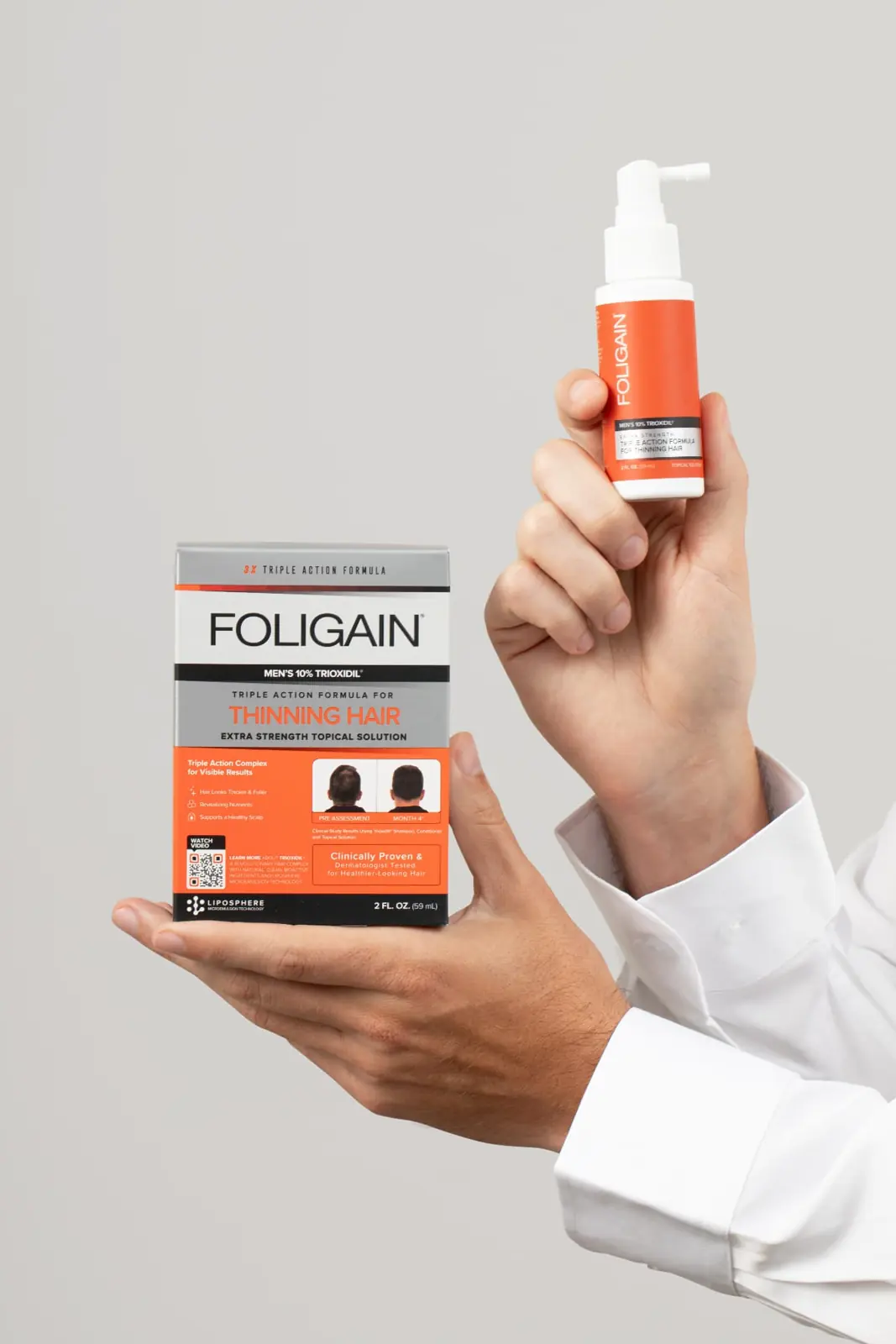
Images are matched to the topic for education; always confirm directions and claims on the exact product label.
Frequently asked questions
Is TRIOXIDIL® a drug?
No. It is a proprietary cosmetic complex and is not approved to treat hair loss.
Is TRIOXIDIL® the same as Minoxidil?
No. The names are similar, but Minoxidil is an OTC drug ingredient and TRIOXIDIL® is a cosmetic complex.
Can I use TRIOXIDIL® with Minoxidil?
Yes. FOLIGAIN® sells kits that combine them. Follow the directions on each product.
Who makes TRIOXIDIL®?
TRIOXIDIL® is a FOLIGAIN® trademark and is only found in FOLIGAIN® products.
Will TRIOXIDIL® regrow my hair?
No. As a cosmetic ingredient, TRIOXIDIL® is not marketed or evidenced as a regrowth treatment. It's designed to support the look and feel of hair and scalp.
How is the percentage of TRIOXIDIL® decided?
FOLIGAIN® formulates different concentrations for different product types — lower for rinse-off shampoo and conditioner, higher for leave-on formulas. It isn't comparable to Minoxidil percentages.
This content is for educational purposes only and is not medical advice. It is not intended to diagnose, treat, cure or prevent any disease. Speak with a qualified healthcare professional about your individual situation.
Individual results vary. Hair-growth products are used consistently over months, and outcomes depend on the cause and stage of hair loss.
FOLIGAIN® products related to this guide
If this guide matches your situation, our product education pages explain which FOLIGAIN® formats suit which routines.
Explore FOLIGAIN® products