Widening Part: Causes, Ludwig Scale and What Helps
A widening part is the classic sign of female pattern hair loss. How to measure it, what else it could be, and your options.
FOLIGAIN® Editorial Team · 17 min read · Updated 2026-09-28
Medical facts and treatment details have not been independently medically reviewed.
Why the part is often the first thing to change
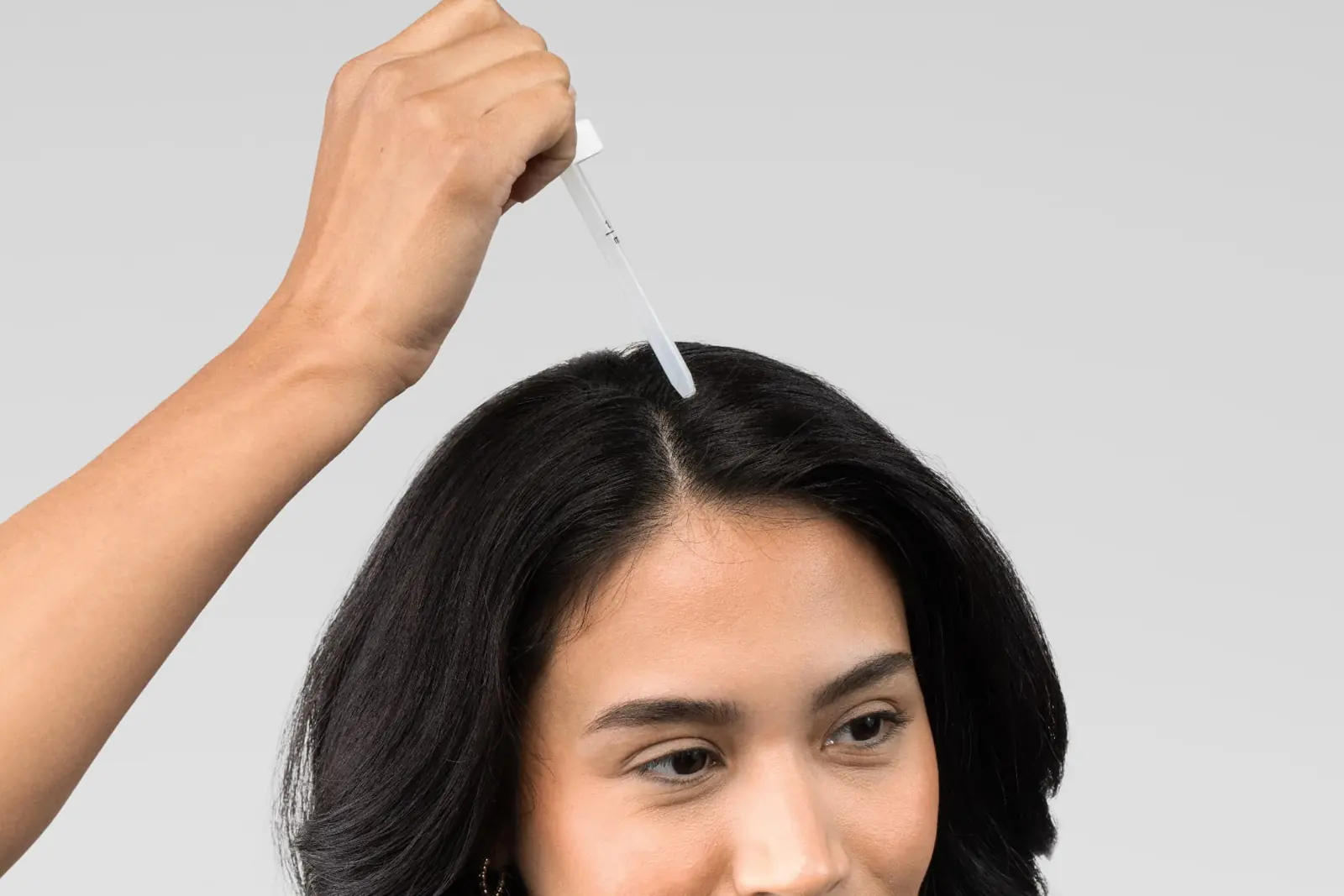
For a lot of women, the part line is the very first place hair loss becomes visible, well before overall volume feels obviously different. That's because the top-center of the scalp, right along the part, is usually one of the areas most sensitive to the hormonal and follicular changes behind female pattern hair loss, so it tends to thin before hair on the sides or back does. A part that used to look like a thin, clean line and now looks like a noticeably wider strip of visible scalp is a meaningful signal worth paying attention to, even if the rest of your hair still looks reasonably full.
It's worth saying clearly that a widening part is common and not something to be embarrassed about. Female pattern hair loss affects a very large share of women at some point, with the likelihood increasing through the thirties, forties and beyond, particularly around perimenopause and menopause. It is also frequently under-discussed compared with male pattern baldness, which can make women feel like they're dealing with something rare or shameful when in fact it's a well-studied, common condition with a name, a staging system and legitimate treatment options.
The good news is that unlike some other forms of hair loss, a widening part from pattern hair loss is usually gradual, which gives you time to notice it, understand it, and make a considered decision about whether and how to treat it, rather than facing an emergency.
How to actually measure it
Because change happens slowly, month-to-month comparisons by memory alone are unreliable — most people either underestimate or convince themselves nothing has changed when something has, or the opposite. A simple, low-effort tracking method works far better: part your hair in the exact same spot each time, then take a photo from directly above in the same lighting, ideally under an overhead light or daylight through a window rather than mixed or dim lighting that can hide or exaggerate scalp visibility.
Compare the width of the part at three points — near the front hairline, at the mid-scalp, and toward the crown — since female pattern loss often doesn't widen evenly along its whole length. A part that's noticeably wider near the front and gradually narrows toward the back, sometimes described as a "Christmas tree" pattern because of the triangular shape of visible scalp it creates, is a very characteristic sign of female pattern hair loss specifically, as opposed to more general, all-over shedding.
It's also worth doing this comparison over months rather than days or weeks. Day-to-day, the part can look different depending on how recently you washed your hair, humidity, styling products, and even how you slept, so a single bad-hair-day photo isn't meaningful on its own. A photo taken on the same day each month, under the same conditions, filters out most of that noise and gives you an honest read on the actual trend.
The Ludwig scale
Dermatologists commonly describe the severity of female pattern hair loss using the Ludwig scale, which focuses on diffuse thinning over the crown and top of the scalp while the frontal hairline itself typically stays largely intact — a key difference from male pattern loss, where the hairline itself often recedes. Knowing roughly where you fall on this scale can help you set realistic expectations for treatment and have a more specific conversation with a dermatologist if you decide to see one.
| Stage | Description |
|---|---|
| I (mild) | Noticeable thinning on top and a part that's slightly wider than it used to be, often only apparent to the person experiencing it or under close inspection |
| II (moderate) | A clearly wider part and visibly reduced volume across the crown, apparent to others in normal lighting |
| III (extensive) | Diffuse, see-through thinning across a larger area of the top of the scalp, with the scalp visible even without parting the hair a particular way |
Other causes to rule out first
A widening part strongly suggests female pattern hair loss, but it isn't automatically diagnostic on its own, and several other conditions can produce a similar visual effect, sometimes at the same time as pattern loss. Working through these possibilities — ideally with a doctor if the change has been sudden, rapid, or accompanied by other symptoms — is worth doing before assuming it's purely pattern-related.
- Telogen effluvium — a temporary, diffuse shedding triggered by illness, childbirth, high fever, crash dieting, major surgery or significant emotional stress, usually appearing two to four months after the triggering event and often resolving on its own within months.
- Iron deficiency — even without full-blown anemia, low ferritin (iron stores) is associated with increased shedding in some women, and it's a simple, correctable blood test to ask for.
- Thyroid disorders — both an underactive and an overactive thyroid can cause diffuse thinning, and thyroid problems are common enough in women that it's a reasonable first-line test alongside iron.
- Polycystic ovary syndrome (PCOS) and other causes of androgen excess — these can cause a pattern-loss-like thinning along with irregular periods, acne or excess facial/body hair, and are worth mentioning to a doctor if those symptoms overlap.
- Traction from tight hairstyles — ponytails, braids, buns and extensions pulled consistently along the same part line can cause localized thinning right at the part or hairline, sometimes called traction alopecia, which is at least partly preventable by varying styles and reducing tension.
- Medication changes — starting or stopping hormonal birth control, certain antidepressants, blood pressure medications, retinoids and a number of other drugs can trigger a temporary shedding phase; a recent medication change is worth flagging to whoever prescribed it.
Options, weighed honestly
There is no single "best" option that fits everyone, since the right approach depends on how much the change bothers you, whether you're pregnant or breastfeeding, your comfort with a daily routine, and whether you'd consider a prescription option. Here's a fair rundown of what's actually available, including where FOLIGAIN® fits and where it doesn't.
| Option | Type | Notes |
|---|---|---|
| Minoxidil 2% solution (twice daily) or 5% foam (once daily) | OTC drug | The only topical ingredient FDA-approved specifically for female pattern hair loss; not for use during pregnancy or breastfeeding; works by extending the hair growth phase, not by changing hormones. |
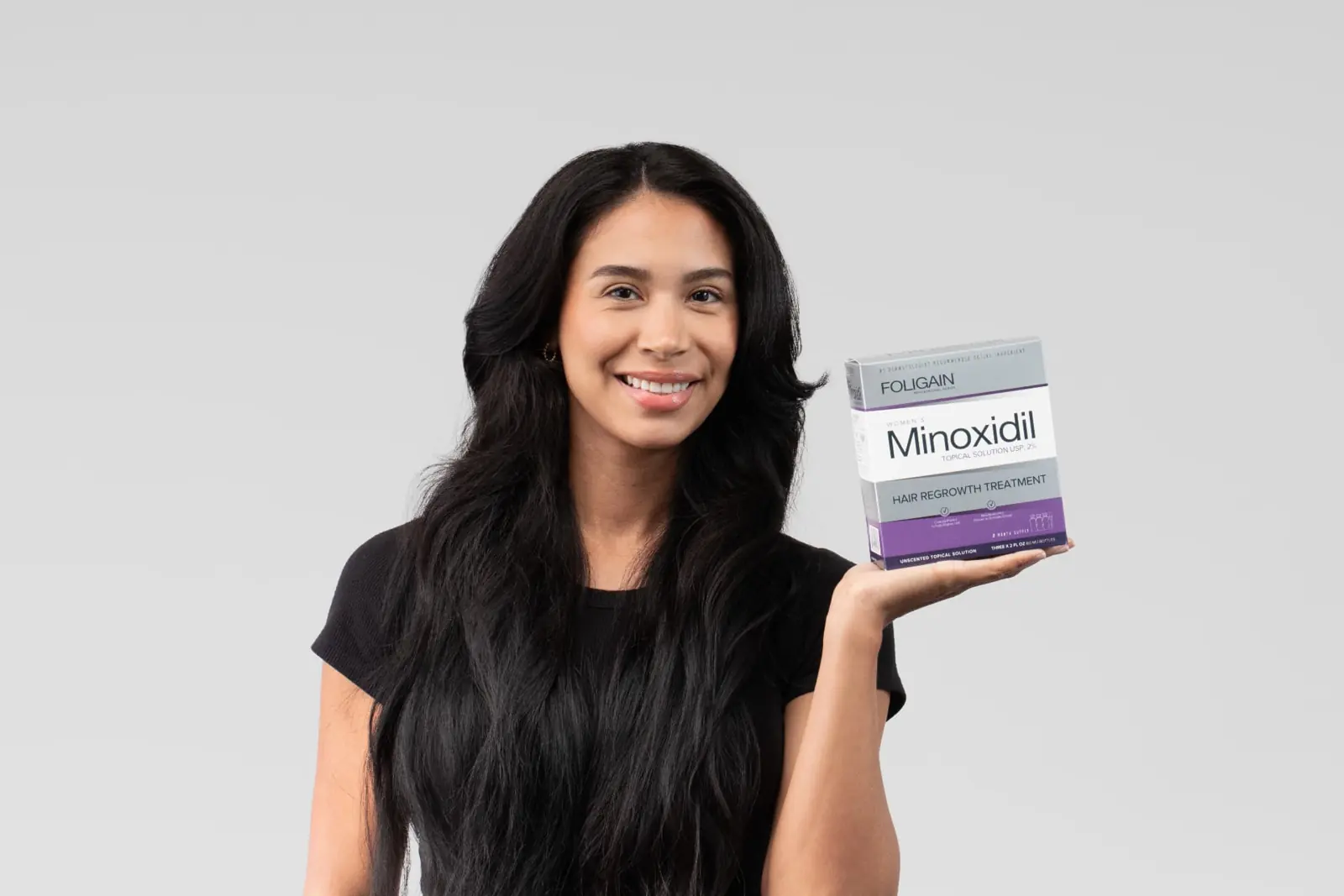
| FOLIGAIN® Minoxidil for Women 2% | OTC drug | Follows the same FDA Drug Facts label as any 2% Minoxidil product for women — same directions, same timeline, same precautions; some FOLIGAIN® formulations pair it with the cosmetic TRIOXIDIL® complex as an added scalp-support ingredient, not as a separate treatment. |
| FOLIGAIN® TRIOXIDIL® cosmetic complex | Cosmetic ingredient complex | A cosmetic ingredient complex, not a drug — positioned as something some women layer alongside Minoxidil or use in general scalp-care routines, never as a stand-alone treatment for diagnosed hair loss. |
| Spironolactone | Prescription, off-label | An anti-androgen sometimes prescribed off-label for female pattern hair loss; not used in pregnancy and requires blood pressure and electrolyte monitoring. |
| Low-dose oral Minoxidil | Prescription, off-label | Increasingly used off-label by dermatologists; requires medical supervision, particularly around blood pressure and unwanted hair growth elsewhere on the body. |
| Low-level laser caps or combs | FDA-cleared device | Requires consistent long-term use to show any benefit; generally considered a possible add-on rather than a primary strategy on its own. |
| Volumizing shampoos, root-lifting products, hair fibers, toppers | Cosmetic | Don't affect the underlying hair loss process at all, but can meaningfully improve how the part looks day to day while any medical treatment has time to work. |
A realistic timeline
Because hair grows in cycles that take months to complete, no topical or oral treatment for pattern hair loss shows results quickly, and it helps to know what to expect at each stage so you don't give up right when things might be turning a corner, or conversely keep using something indefinitely that genuinely isn't helping.
| Timeframe | What's typically happening |
|---|---|
| Weeks 1–2 | Settling into the twice-daily (or once-daily foam) routine; no visible change expected yet. |
| Weeks 2–8 | A temporary increase in shedding is common for some women as the treatment resets the hair cycle — this is a recognized part of the process, not a sign it's failing. |
| Months 3–4 | The earliest point some women start to notice any difference, though for many it's still too early to judge. |
| Months 4–6 | A reasonable first checkpoint to compare photos against your starting baseline. |
| Months 6–12 | The window the Minoxidil label itself frames as needed for a full, fair trial before concluding it isn't working for you. |
| Ongoing | Benefits are generally maintained only with continued use; stopping typically leads to a gradual return toward the pre-treatment pattern over several months. |
Styling strategies while you wait
Because medical treatments take months to show any effect, it's completely reasonable to also lean on styling in the meantime, purely for how your hair looks day to day rather than as a treatment. Switching which side you part your hair on gives existing strands a chance to fall over a less-thinned area, and a zigzag part (rather than a straight line) breaks up the visual line of scalp and makes thinning noticeably less obvious in the mirror and in photos.
Root-lifting mousses and powders, strategic layering from a stylist familiar with thinning hair, and colored root-touch-up powders or fibers that match your hair color at the part line can all reduce the visual contrast between hair and scalp without doing anything to the biology underneath. None of these fix the underlying cause, but there's nothing wrong with using them for confidence while you decide on, and wait out the timeline of, a medical option.
When to see a dermatologist
It's worth booking a dermatology visit if the widening happened quickly rather than gradually over many months, if you're also noticing irregular periods, new acne or excess facial hair, if you suspect thyroid symptoms like fatigue, weight changes or temperature sensitivity, or if you've tried a topical treatment consistently for six months to a year without any improvement at all. A dermatologist can examine the scalp closely, sometimes with a dermatoscope to check hair diameter variation, order bloodwork for iron and thyroid function, and discuss prescription options like spironolactone or low-dose oral Minoxidil if OTC treatment alone isn't enough.
Diet, supplements and everyday habits
While nothing you eat will reverse a genuinely hormonal or genetic pattern of thinning, general nutrition still matters as a baseline. Adequate protein, iron and overall calorie intake support the hair growth cycle, and women who have been on very restrictive diets, who menstruate heavily, or who follow a vegetarian or vegan diet without attention to iron intake are more likely to have low ferritin contributing to shedding on top of any pattern-related thinning. A basic panel checking ferritin, thyroid function and, depending on symptoms, androgen levels is a reasonable ask of a doctor before assuming the widening part is purely pattern hair loss.
Biotin and multivitamin 'hair, skin and nails' supplements are widely marketed at exactly this situation, but the honest picture is that they mainly help the subset of women who are actually deficient in a specific nutrient; taking extra biotin when you aren't deficient is unlikely to meaningfully change a widening part caused by pattern hair loss or hormonal shifts. Gentle handling — brushing less aggressively, minimizing high-heat styling, and avoiding very tight ponytails or buns positioned right along the part — won't reverse pattern loss, but it does reduce additional breakage that can make an already-thinning part look sparser than it needs to.
Note
This guide is educational and does not replace medical advice. See a clinician for sudden, patchy or rapid hair loss, or before starting prescription treatment.
From the FOLIGAIN® library
Related FOLIGAIN® products and routines
Images are matched to the topic for education; always confirm directions and claims on the exact product label.
Frequently asked questions
Can a widening part go back to normal?
A full return to your original density is uncommon, but treatment often stabilizes the progression and can add back some visible density, especially when started at an earlier stage rather than after years of untreated thinning.
Should I change where I part my hair?
Switching sides or trying a zigzag part is a quick, harmless way to make thinning look less obvious while any medical treatment has time to work — it doesn't affect the underlying process either way.
Is 2% or 5% Minoxidil better for women?
Both are FDA-approved for women; the 5% foam (once daily) is often chosen for convenience, while the 2% solution (twice daily) has the longer track record specifically in women. Either is a reasonable starting point, and switching between them is generally fine.
How do I know if it's pattern hair loss and not something else?
A gradual, months-long widening with a preserved hairline points toward pattern hair loss, especially with a Christmas-tree shape near the front. Sudden onset, patchy bald spots, scalp pain or symptoms like irregular periods or fatigue point toward other causes worth discussing with a doctor.
Will stopping birth control affect my part width?
Starting or stopping hormonal contraception can trigger a temporary shedding phase in some women, which can make a part look wider for a few months; it usually settles as hormones stabilize, but persistent widening is still worth mentioning to a doctor.
Is FOLIGAIN®'s TRIOXIDIL® complex enough on its own?
No — TRIOXIDIL® is a cosmetic ingredient complex, not an FDA-approved treatment for hair loss. Women looking for an evidence-based OTC option should look to Minoxidil itself, with TRIOXIDIL®-containing products layered in as an optional scalp-care addition if desired.
This content is for educational purposes only and is not medical advice. It is not intended to diagnose, treat, cure or prevent any disease. Speak with a qualified healthcare professional about your individual situation.
Individual results vary. Hair-growth products are used consistently over months, and outcomes depend on the cause and stage of hair loss.
FOLIGAIN® products related to this guide
If this guide matches your situation, our product education pages explain which FOLIGAIN® formats suit which routines.
Explore FOLIGAIN® products