Hair Breakage vs Hair Loss: Causes, Signs and How to Stop It
Short broken pieces aren't the same as shed hairs. How to tell them apart and reduce damage from heat, color, tension and friction.
FOLIGAIN® Editorial Team · 17 min read · Updated 2026-09-28
Medical facts and treatment details have not been independently medically reviewed.
Breakage or shedding?
Before treating a thinning-looking head of hair, it helps enormously to know whether you're actually losing hairs from the follicle (shedding or hair loss) or simply breaking the hair shaft partway along its length (breakage). The two look similar in the sink or on a pillow but have completely different causes and completely different fixes.
Look closely at the hairs you find, ideally a handful rather than just one or two, since a single hair can be misleading.
| Shed hair | Broken hair | |
|---|---|---|
| Length | Full length, from root to tip | Short, uneven pieces, often much shorter than your natural hair length |
| Root end | Small white or translucent bulb | Blunt cut end or a frayed, split appearance |
| Where it comes from | The hair cycle — resting-phase hairs release naturally, or an underlying hair loss condition | Mechanical or chemical damage partway along the strand |
| What helps | Depends entirely on the cause of the underlying hair loss | Gentler handling, less heat and chemical stress, and time to grow out |
Main causes of breakage
Breakage happens when the hair shaft's protective outer layer, the cuticle, is worn down or damaged to the point where the shaft becomes brittle and snaps rather than bending. A combination of the following factors is usually at play, rather than just one.
- Heat: flat irons, curling tools and high-heat blow-drying, especially when used at high temperatures on wet or damp hair, or used daily without a break.
- Chemical processing: bleach, chemical relaxers, perms and frequent or overlapping color services, all of which alter the internal protein structure of the hair.
- Tension: tight ponytails, braids, extensions, weaves and tight buns, which stress the hair shaft (and, over time, the follicle) at the point of pull.
- Friction: rough towel drying, cotton pillowcases, and brushing wet hair aggressively, since wet hair is at its most fragile and stretches more easily before snapping.
- Dryness and under-conditioning: hard water, infrequent conditioning, and very low-humidity environments all leave hair less flexible and more prone to snapping under normal handling.
- Nutritional factors: very restrictive diets or significant deficiencies (for example in protein or certain vitamins) can weaken hair structure as it grows, making new hair more brittle from the start.
A breakage-repair routine
A consistent, gentler routine addresses breakage far more reliably than any single product. The following sequence covers the main points where damage typically accumulates.
| Step | What to do |
|---|---|
| Wash | Gentle shampoo focused on the scalp; let suds rinse through the lengths rather than scrubbing them directly |
| Condition | Every wash, applied from mid-lengths to ends, left on for the time recommended on the product |
| Detangle | Wide-tooth comb, starting at the ends and working upward in sections, never starting at the roots |
| Dry | Blot gently with a microfiber towel or soft T-shirt rather than rubbing with a regular towel |
| Style | Apply a heat protectant before any hot tool use, and keep tools at the lowest effective temperature |
| Night | Sleep on a satin or silk pillowcase, or use a silk/satin bonnet, to reduce overnight friction |
| Trims | Every 8–12 weeks to remove split ends before they travel further up the hair shaft |
Chemical processing and breakage
Bleach and lightening services are among the most damaging chemical processes for hair strength, since they break down the hair's internal pigment and protein structure to lift color. Relaxers and perms work by chemically restructuring the hair's bonds, which is effective for changing texture but leaves hair more vulnerable to breakage, especially where new chemical treatments overlap previously treated hair.
If you color, lighten or chemically texture your hair regularly, spacing services out as much as your desired look allows, using bond-building or protein treatments recommended by your colorist, and being especially gentle with chemically treated sections during washing and styling all help limit cumulative damage. None of this reverses damage that's already happened in the existing hair shaft — the improvement shows up in the healthier hair that grows in afterward.
Traction alopecia
Traction alopecia deserves its own mention because, unlike ordinary breakage, it involves the follicle itself and can become permanent if not addressed. Repeated pulling from consistently tight hairstyles — tight ponytails, braids, cornrows, weaves and extensions — gradually damages follicles, typically starting at the hairline and temples, where tension is often greatest.
Caught early, while the affected follicles are still viable, loosening styles and giving the scalp a break usually allows meaningful recovery over the following months. If tension continues for years, however, some follicles can become permanently scarred and unable to produce hair again, which is why early recognition matters. Warning signs include pain, tenderness, small bumps, or a receding, thinning band specifically along the hairline where styles pull tightest.
Alternating styles regularly, avoiding tension that causes pain or visible bumps at the time of styling, and giving the hairline periodic breaks from any tight style are the main practical ways to protect against traction alopecia while still enjoying styles that involve some pulling.
FOLIGAIN® vs other approaches for breakage
It's worth being precise about what any product, including FOLIGAIN®'s conditioning shampoos, conditioners and leave-in treatments, can actually do for breakage. These formulas work on the hair shaft that already exists — smoothing the cuticle, reducing friction during detangling, and improving how hair feels and behaves day to day. That is a genuinely useful, cosmetic-level benefit for hair that's prone to breaking.
What they cannot do is regrow hair from a follicle or repair internal damage that chemical processing or heat has already done to the protein structure of existing hair — no topical product, from any brand, can truly 'repair' hair at that level; what looks and feels like repair is really smoothing and coating the surface. If breakage is severe or widespread, the most effective long-term strategy is usually a combination of gentler daily handling, a trim to remove already-damaged ends, and time for new, less-damaged hair to grow in, supported by a good conditioning routine along the way.
Realistic timeline
Because breakage happens along the existing hair shaft, changes to your routine won't reverse damage that's already there — but they will stop new damage from accumulating, and the effects of that are visible sooner than people expect. Hair typically feels noticeably softer and less prone to snapping within two to three weeks of switching to gentler washing, detangling and heat habits. Split ends and already-weakened sections still need to be trimmed away, since no product fuses split ends back together. Full-length recovery, where the majority of your hair is healthier, less damaged growth, generally takes about the time it takes hair to grow past its previous length — commonly three to six months for the difference to be clearly visible, longer if hair is worn very long.
When to see a professional
This guide is educational. Persistent pain, bleeding, spreading redness, pus, scarring or patchy hair loss should be assessed by a dermatologist.
From the FOLIGAIN® library
Related FOLIGAIN® products and routines
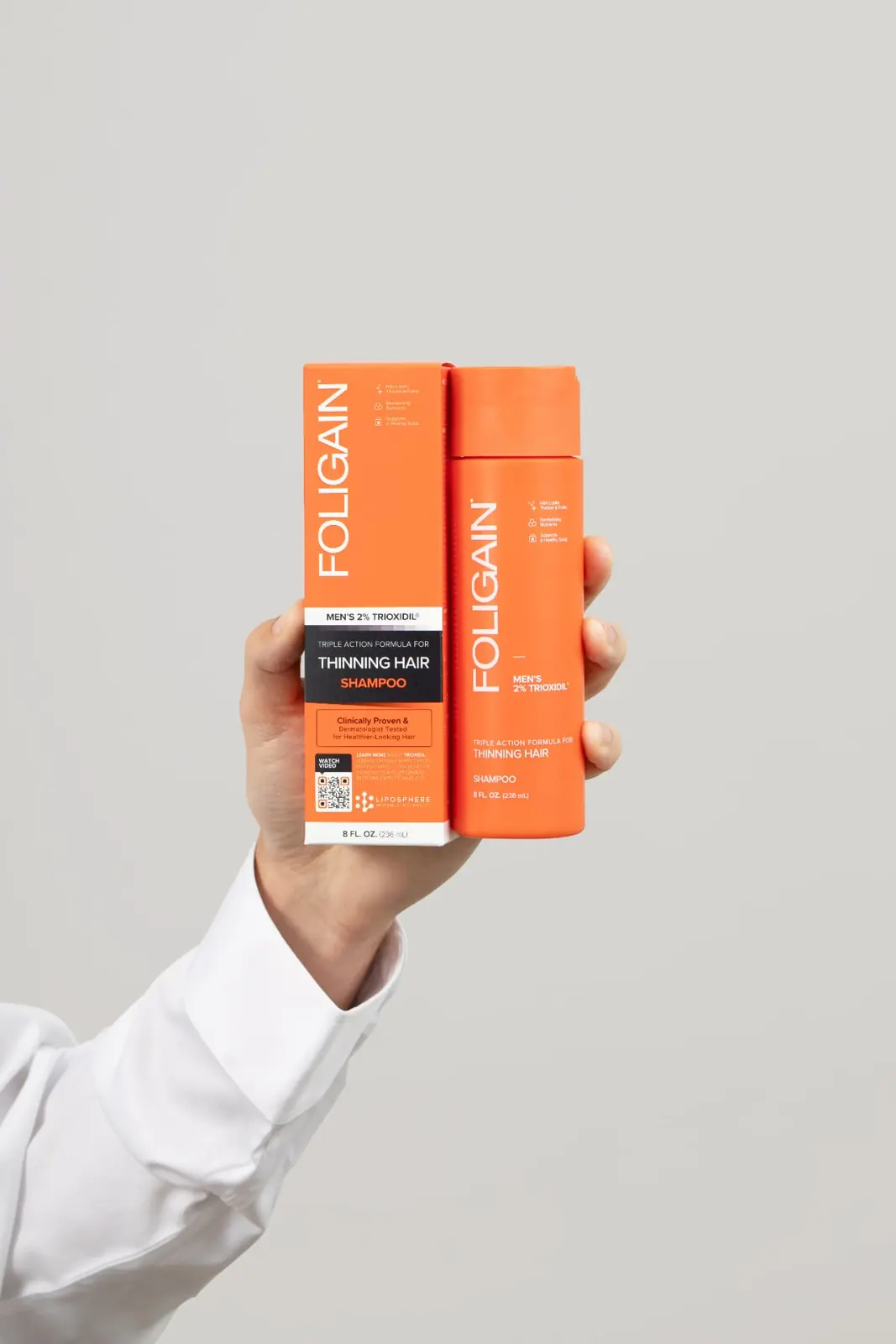
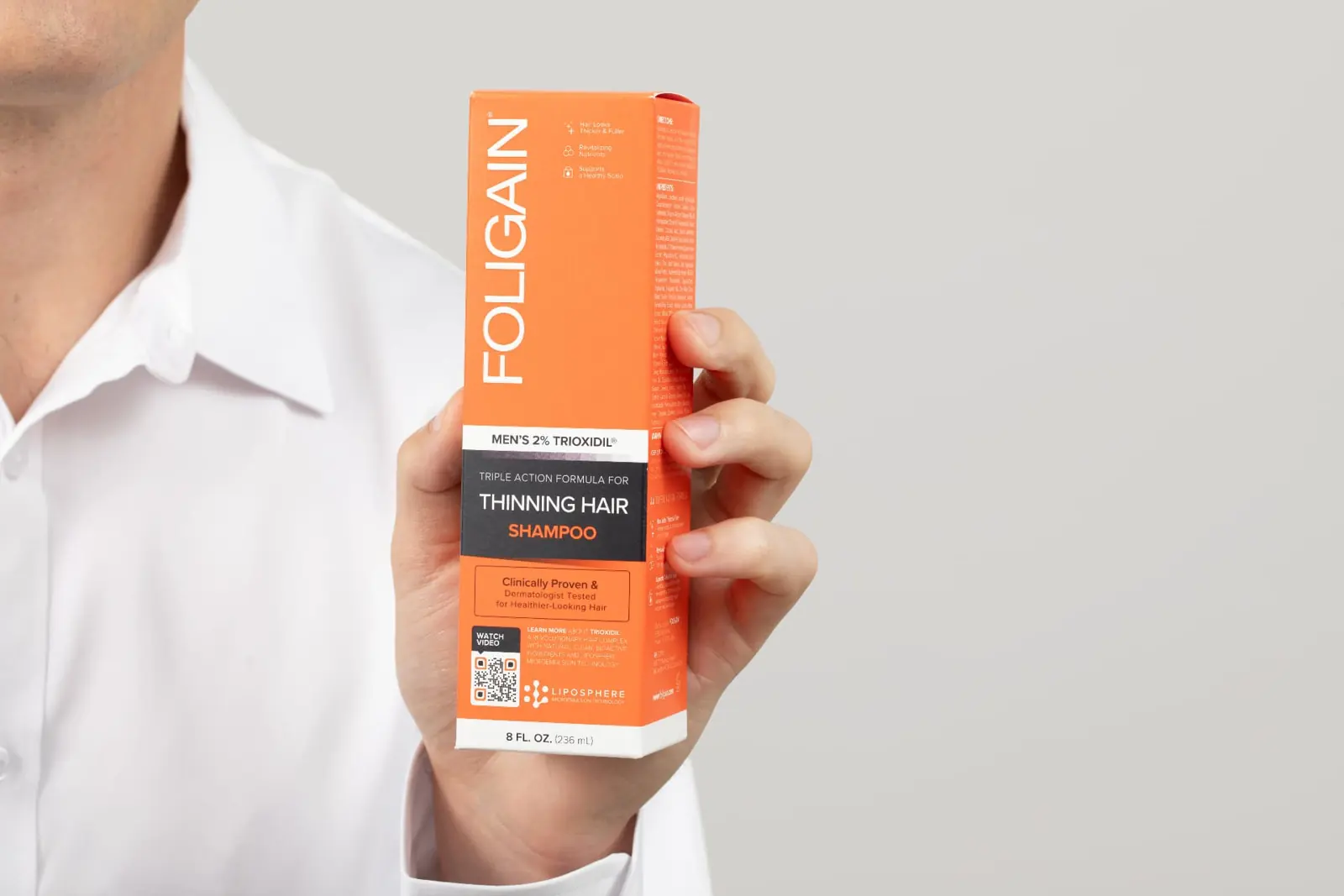
Images are matched to the topic for education; always confirm directions and claims on the exact product label.
Frequently asked questions
Can breakage look like thinning?
Yes. A lot of breakage can make hair look considerably thinner, flatter and shorter at the ends, even when the follicles underneath are perfectly healthy and producing hair normally.
Do bond-building treatments work?
They can meaningfully improve the feel, manageability and appearance of chemically damaged hair by temporarily reinforcing broken internal bonds, but they don't affect hair growth from the follicle in any way.
How can I tell if my hairline thinning is breakage or traction alopecia?
Traction alopecia usually follows the exact pattern of pull from your typical hairstyle and may come with tenderness or small bumps at the hairline, whereas general breakage tends to be more evenly distributed and isn't tied to a specific tension pattern.
Is it okay to use heat tools if I use a heat protectant?
A heat protectant meaningfully reduces damage but doesn't eliminate it, so keeping temperatures as low as effective and limiting frequency still matters even with a protectant in use.
Will trimming split ends make my hair grow faster?
No — trimming doesn't affect the growth rate at the follicle, but it does remove already-damaged ends before splits travel further up the shaft, which keeps hair looking healthier overall.
This content is for educational purposes only and is not medical advice. It is not intended to diagnose, treat, cure or prevent any disease. Speak with a qualified healthcare professional about your individual situation.
Individual results vary. Hair-growth products are used consistently over months, and outcomes depend on the cause and stage of hair loss.
FOLIGAIN® products related to this guide
If this guide matches your situation, our product education pages explain which FOLIGAIN® formats suit which routines.
Explore FOLIGAIN® products