How to Choose a Shampoo for Thinning Hair
What shampoo can and can't do for thinning hair, the ingredients worth knowing, and how to read a label.
FOLIGAIN® Editorial Team · 16 min read · Updated 2026-09-28
Medical facts and treatment details have not been independently medically reviewed.
What shampoo can realistically do
Most shampoos, including expensive ones marketed heavily for thinning hair, are rinsed off the scalp within a minute or two of application. That short contact time fundamentally limits how much any ingredient in a shampoo can do below the surface of the skin, since meaningful drug absorption generally requires longer, sustained contact — which is why treatments intended to affect hair growth, like Minoxidil, are designed as leave-on products rather than shampoos.
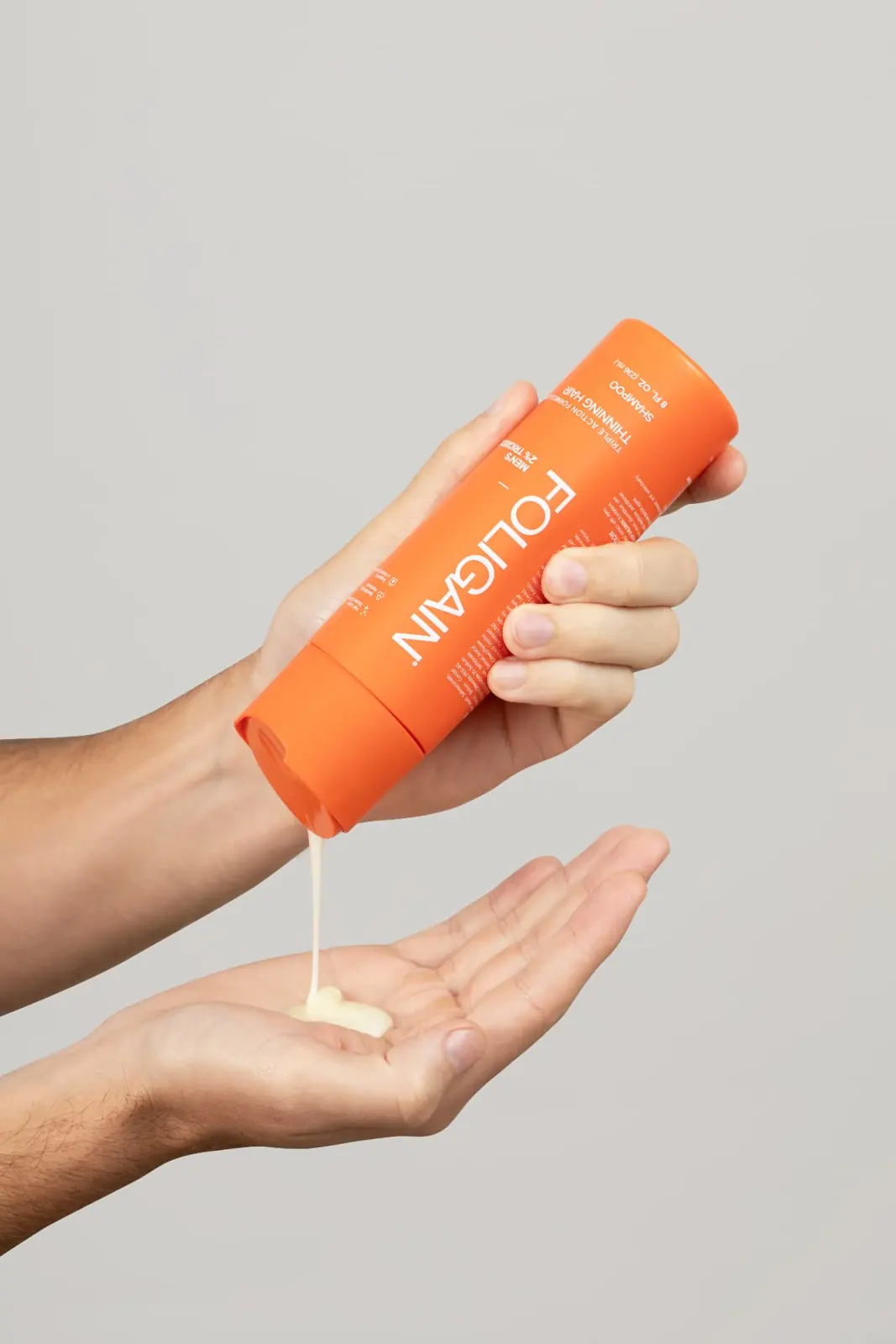
What a good shampoo does well within that short window is genuinely valuable, though: it removes excess oil and product build-up, keeps the scalp environment comfortable and less prone to flaking or irritation, and leaves hair looking lifted, cleaner and fuller through gentle coating and clarifying action. None of that changes how many hairs your follicles are producing, but all of it affects how your existing hair looks and feels on a daily basis, which matters a great deal for people navigating visible thinning.
It's worth setting expectations accordingly: no shampoo, however it's marketed, should be expected to meaningfully regrow hair on its own. Products that genuinely affect hair growth are regulated as drugs and are almost always leave-on formulations, not rinse-off shampoos.
Ingredients you'll see
Thinning-hair shampoos draw on a mix of regulated drug actives, well-studied cosmetic ingredients, and popular marketing ingredients with more limited evidence. Knowing which category an ingredient falls into helps set realistic expectations.
| Ingredient | Category | What it's used for |
|---|---|---|
| Ketoconazole | Antifungal (OTC 1%) | Treats dandruff; studied in a limited way as an adjunct for pattern hair loss |
| Caffeine | Cosmetic | Popular in thinning-hair shampoos; evidence for meaningful effect from a rinse-off product is limited |
| Biotin | Cosmetic | A common marketing ingredient; topical biotin has little demonstrated effect on hair growth, and true deficiency (the scenario where biotin helps) is uncommon |
| Saw palmetto | Botanical | Marketed as a natural anti-DHT ingredient; evidence, especially topically, remains limited |
| TRIOXIDIL® | FOLIGAIN® cosmetic complex | Formulated to support the look and feel of thinning hair and scalp as part of a cosmetic routine |
| Minoxidil | OTC drug (only when properly labeled) | The only ingredient on this list regulated specifically for hair regrowth; must appear on a Drug Facts panel if present |
| Proteins / polymers | Cosmetic | Coat the hair shaft to add body, smoothness and a fuller-looking appearance |
How to read the label
If a shampoo claims to regrow hair or treat hair loss, it should carry a Drug Facts panel listing a specific active ingredient, most commonly Minoxidil at a stated percentage, along with directions for use and warnings — this is a legal requirement for over-the-counter drug products in the United States, and its presence (or absence) is the clearest signal of what category a product actually falls into.
Cosmetic shampoos, by contrast, use softer marketing language like 'thicker-looking,' 'fuller,' 'volumizing' or 'for thinning hair' without a Drug Facts panel, because they're not making a regulated drug claim — they're describing a cosmetic effect on the appearance and feel of the hair you already have. Neither category is inherently better than the other; they simply do different jobs, and it's worth knowing which one you're buying so your expectations match what the product is actually designed and regulated to do.
Reading the ingredient list itself is also useful: sulfates (like sodium lauryl sulfate) create a rich lather and clean thoroughly but can be drying for some scalps; silicones can add slip and shine but may build up over time without a clarifying wash; fragrance is a common source of irritation for sensitive scalps and is worth avoiding if you're troubleshooting itch or irritation.
FOLIGAIN® vs other shampoo options
For thinning hair specifically, it helps to think in three separate lanes rather than looking for one product to do everything. The first lane is medicated dandruff or scalp-condition treatment, using drug actives like ketoconazole when there's an actual flaking or inflammatory scalp issue to address. The second lane is a regulated Minoxidil product, used as a leave-on rather than a shampoo, if pattern hair loss is being actively treated — a shampoo containing Minoxidil, where available, still needs adequate contact time per its label to have any chance of working as intended.
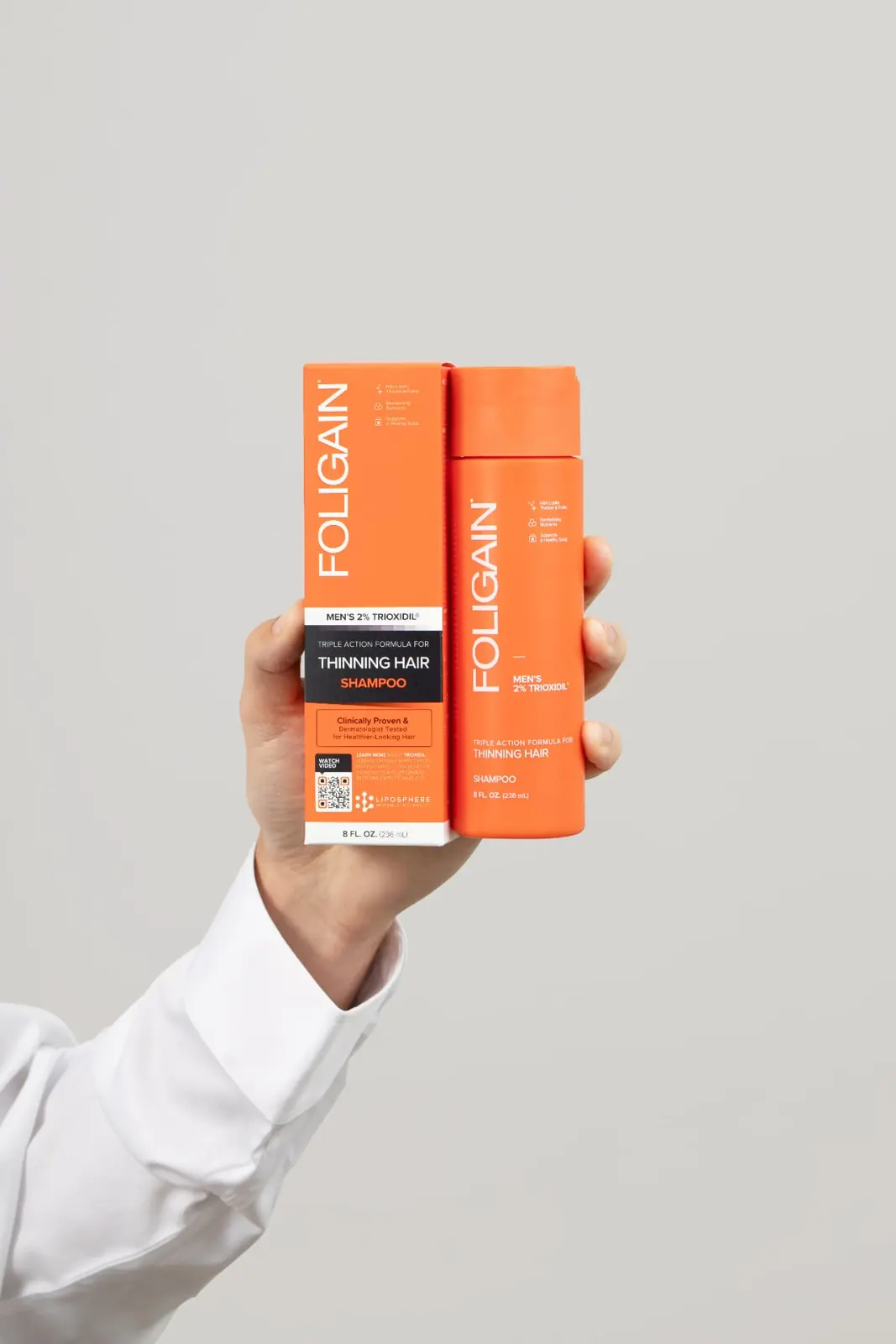
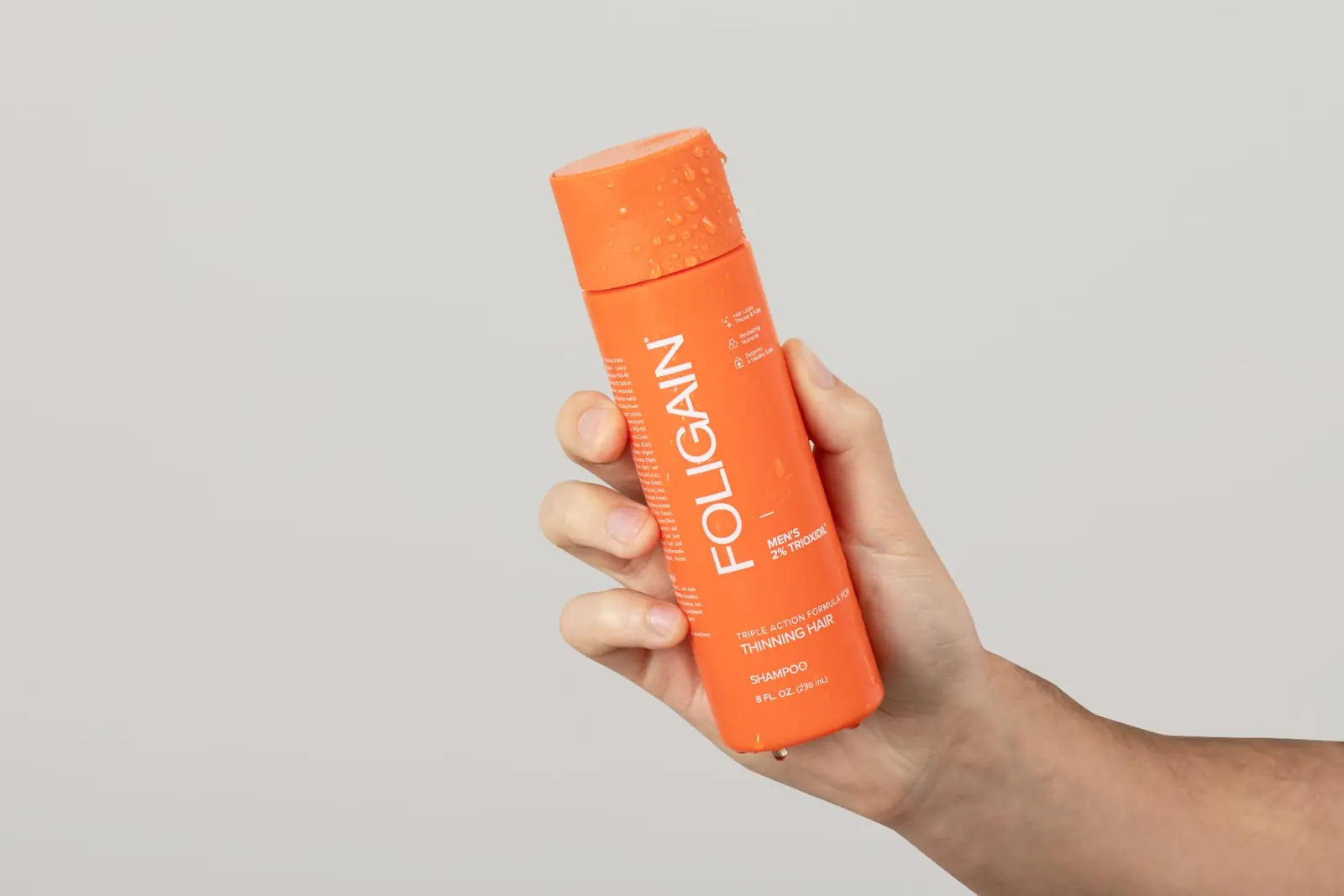
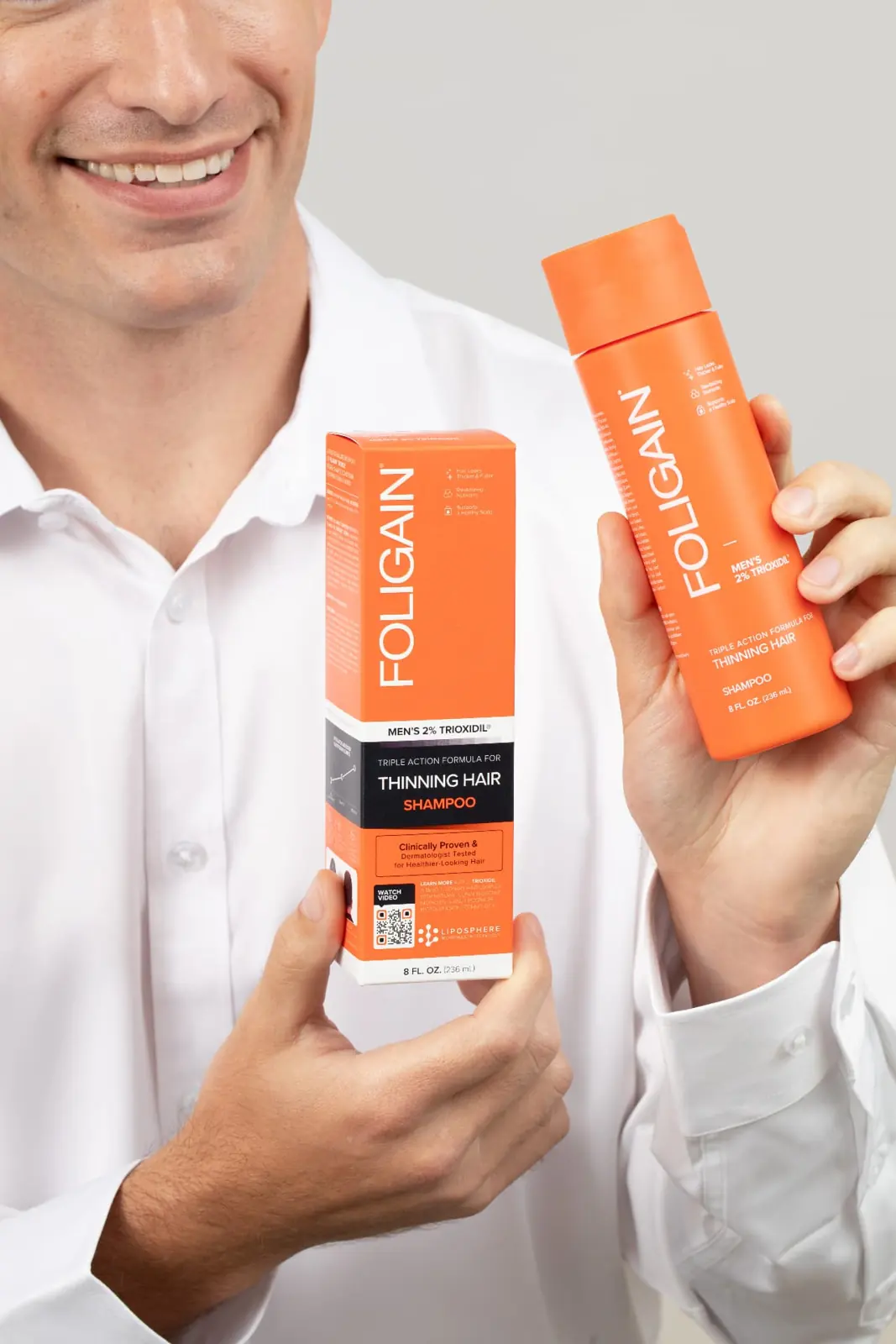
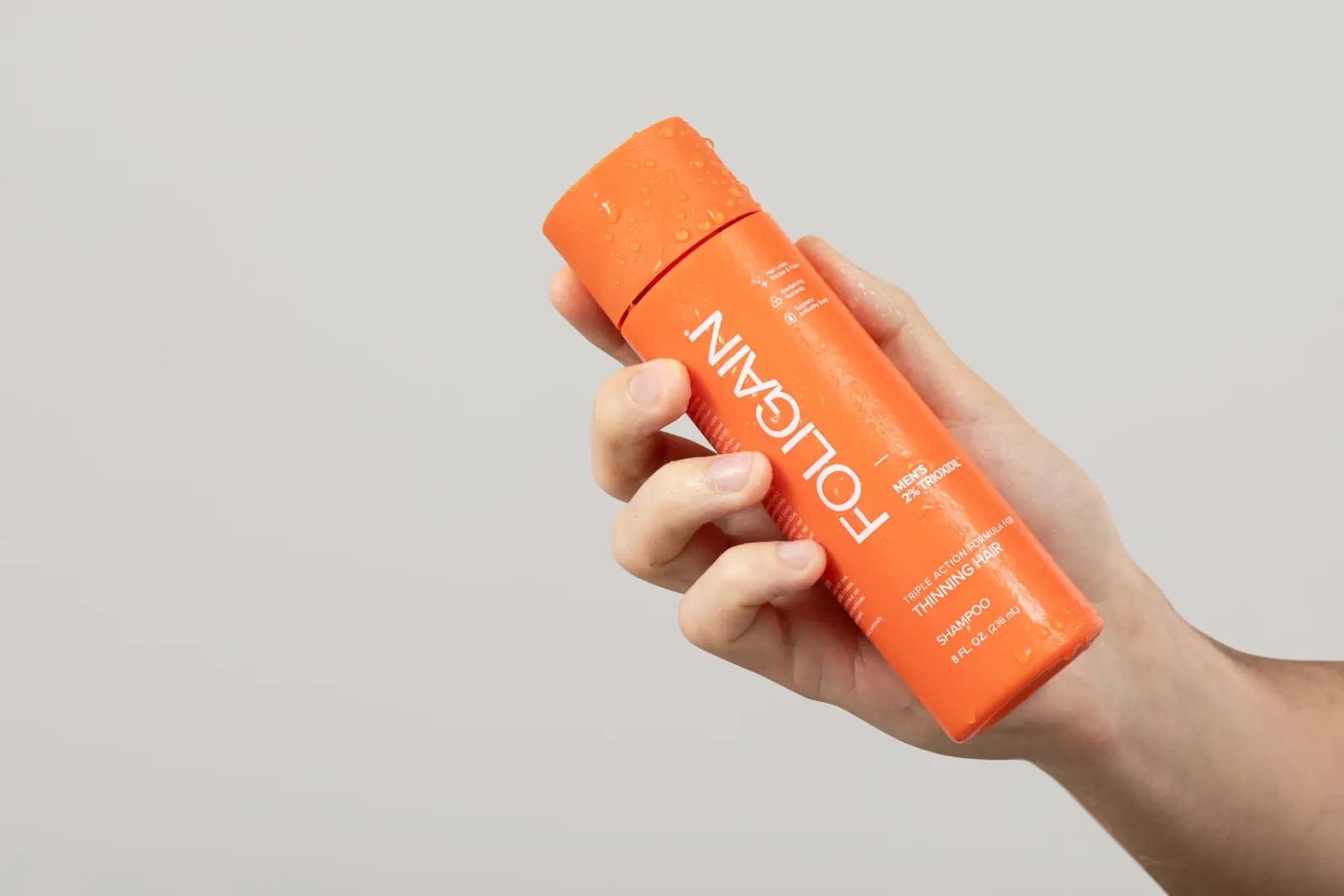
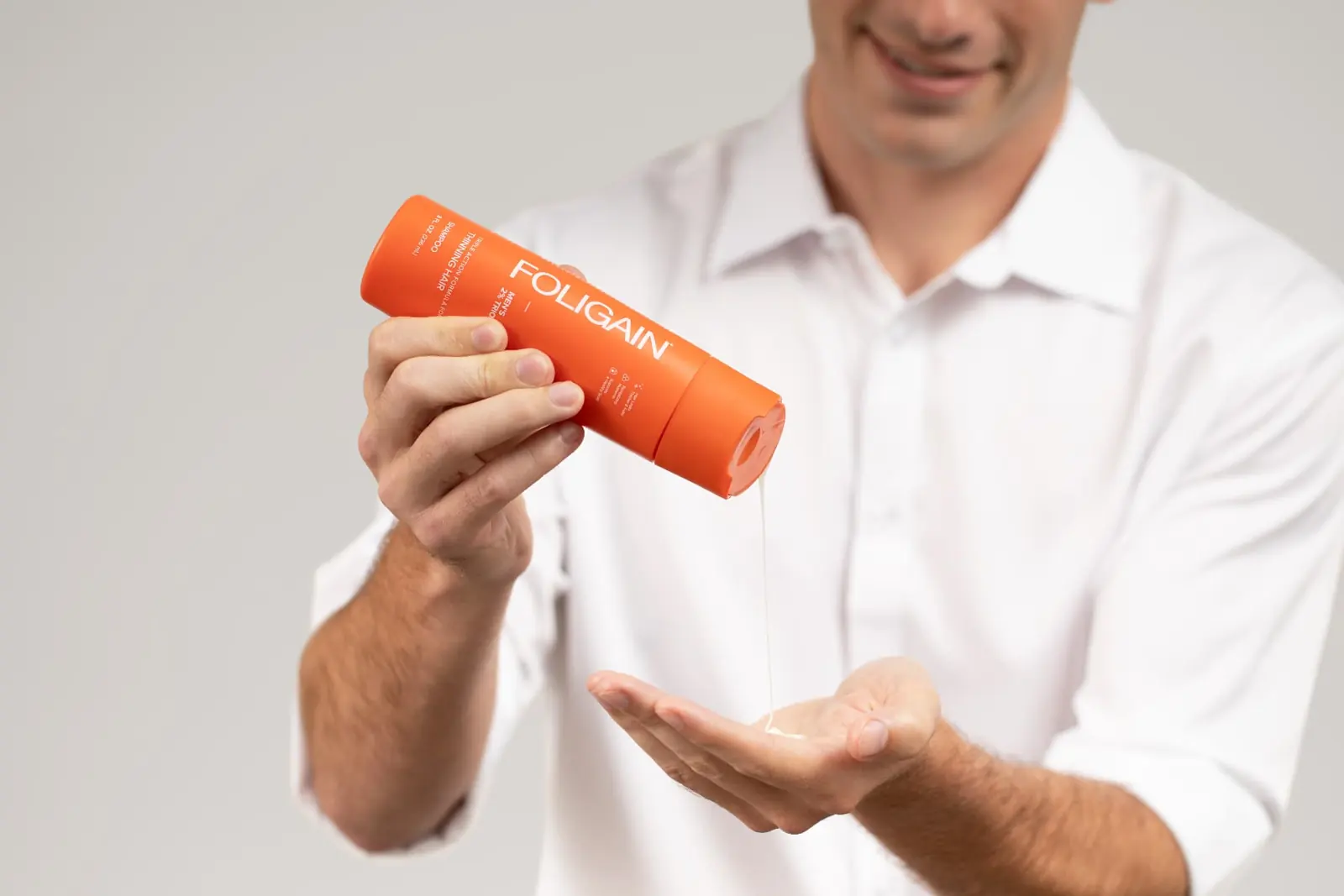
The third lane is everyday cosmetic care — cleansing, conditioning and supporting the appearance of thinning hair — which is where FOLIGAIN® shampoos and conditioners fit, including formulas built around the TRIOXIDIL® complex. These are designed to keep the scalp clean and comfortable and to help hair look its best day to day, and they can be used alongside a Minoxidil regimen or a dandruff treatment without conflict, since they're serving a different purpose. What they should not be expected to do is replace a regulated drug treatment if active hair loss is the primary concern — for that, an over-the-counter or prescription drug product with a proven active ingredient, used as a leave-on and discussed with a doctor or pharmacist if needed, is the appropriate category to look at.
Choosing for your scalp
- Oily scalp: choose a clarifying or oil-balancing shampoo and wash as often as your scalp needs, which may be daily.
- Flaky scalp: use a shampoo with an anti-dandruff active two or three times a week, alternated with a gentle everyday shampoo.
- Sensitive scalp: look for fragrance-free formulas with gentle surfactants, and introduce new products one at a time.
- Fine, flat hair: a lightweight volumizing formula applied at the roots, with conditioner reserved for the ends only, helps avoid weighing hair down.
- Chemically treated or damaged hair: a moisturizing, sulfate-free shampoo paired with regular conditioning reduces further breakage while thinning hair is a concern.
- Actively treating hair loss with Minoxidil: choose a gentle daily shampoo that won't interfere with or over-strip a scalp that's also receiving a leave-on treatment.
Realistic timeline
Cosmetic effects of a well-chosen shampoo — a cleaner scalp, less flaking, hair that looks fuller and feels better — are usually noticeable within the first one to two weeks of consistent use, since these are surface-level and cleansing-related effects rather than biological changes at the follicle. If you're using a ketoconazole shampoo specifically for dandruff, expect flaking improvement within two to four weeks. If you're using a shampoo as part of a broader hair-loss treatment plan that also includes a leave-on Minoxidil product, remember that any regrowth timeline (typically several months at minimum) is being driven by the leave-on drug product, not the shampoo — the shampoo's role there is supportive scalp and hair care rather than the active treatment itself.
Note
This guide is educational. Persistent pain, bleeding, spreading redness, pus, scarring or patchy hair loss should be assessed by a dermatologist.
From the FOLIGAIN® library
Related FOLIGAIN® products and routines
Images are matched to the topic for education; always confirm directions and claims on the exact product label.
Frequently asked questions
Can a shampoo regrow hair?
Cosmetic shampoos cannot legally or honestly claim that. Any product making a regrowth claim needs a regulated active ingredient and must say so on a Drug Facts label.
Are sulfate-free shampoos better for thinning hair?
They're generally gentler and better tolerated for dry or sensitive scalps, but they aren't strictly required for thinning hair — oily scalps often do perfectly well with sulfate-containing formulas.
Should I switch shampoos if I start using Minoxidil?
Not necessarily, but choosing a gentle, fragrance-conscious shampoo can help if the scalp becomes more sensitive during the adjustment period, and washing before applying Minoxidil generally gives the cleanest application.
Does an expensive shampoo work better than a drugstore one?
Price doesn't reliably indicate effectiveness for cosmetic goals — what matters more is matching the formula (clarifying, moisturizing, volumizing, medicated) to your specific scalp and hair needs.
Is TRIOXIDIL® a drug ingredient?
No. TRIOXIDIL® is FOLIGAIN®'s proprietary cosmetic ingredient complex, formulated to support the look and feel of thinning hair and scalp; it is not a regulated drug ingredient like Minoxidil.
This content is for educational purposes only and is not medical advice. It is not intended to diagnose, treat, cure or prevent any disease. Speak with a qualified healthcare professional about your individual situation.
Individual results vary. Hair-growth products are used consistently over months, and outcomes depend on the cause and stage of hair loss.
FOLIGAIN® products related to this guide
If this guide matches your situation, our product education pages explain which FOLIGAIN® formats suit which routines.
Explore FOLIGAIN® products