The Complete Guide to the Types of Hair Loss
Pattern hair loss, telogen effluvium, alopecia areata, traction and scarring hair loss: how each one looks, why it happens and what usually helps.
FOLIGAIN Editorial Team · 14 min read · Updated 2026-09-28

Why identifying the type matters
Most people start looking into hair loss because they notice something: a wider part, more scalp showing under bathroom lights, a receding temple, or more hair than usual in the shower drain. The natural next step is to search for a product. But the right product depends almost entirely on what kind of hair loss you actually have.
Hair loss falls broadly into two groups. Non-scarring hair loss is by far the most common. The follicle is still alive and can, in principle, produce hair again. Scarring (cicatricial) hair loss is much rarer: inflammation destroys the follicle and replaces it with scar tissue, so hair in that area cannot regrow. Recognizing which group you are in, and which type within it, saves months of using the wrong approach.
This guide walks through the types you are most likely to encounter, how to tell them apart and when a professional opinion is essential. It is educational, not diagnostic. Only a clinician who examines your scalp can confirm what is going on.
Androgenetic alopecia (pattern hair loss)
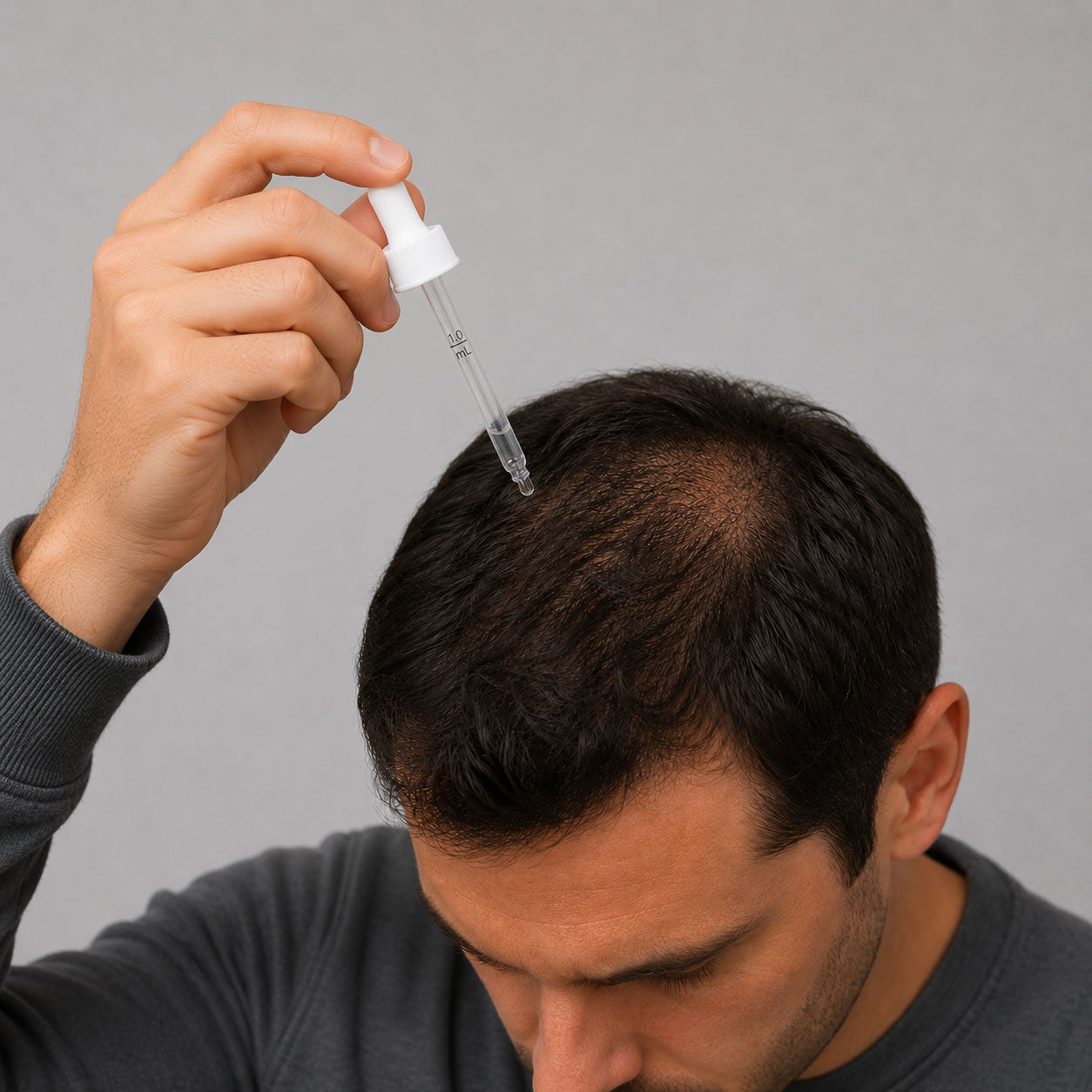
Androgenetic alopecia, often called male or female pattern hair loss, is the most common cause of hair thinning worldwide. It is estimated to affect a majority of men by later life and a large share of women, especially after menopause. It is driven by a combination of genetics and the way hair follicles in certain areas of the scalp respond to androgens (hormones such as dihydrotestosterone, or DHT).
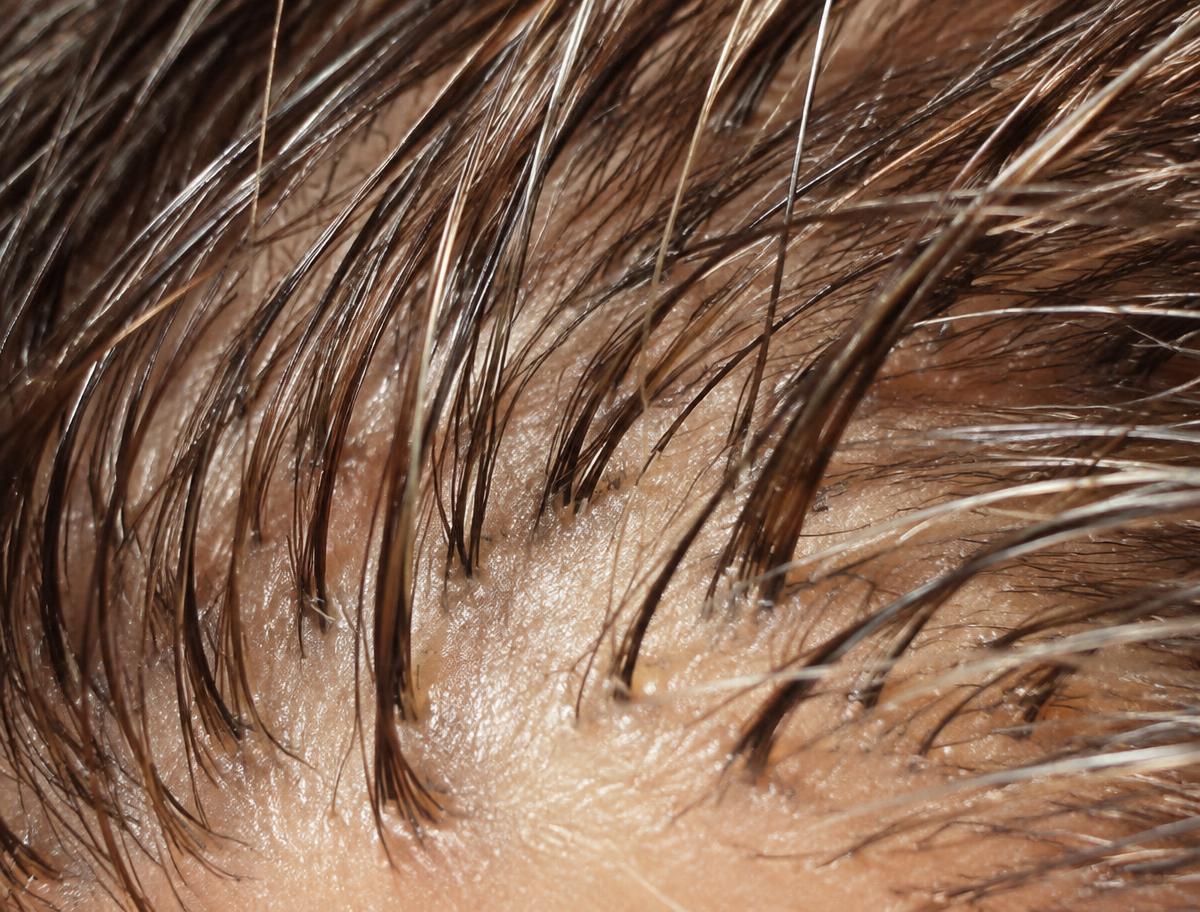
In genetically susceptible follicles, each growth cycle becomes a little shorter and the follicle itself gradually shrinks, a process called miniaturization. Over years, thick pigmented terminal hairs are replaced by finer, shorter, lighter hairs, until some follicles produce hair that is barely visible.
In men, the pattern usually begins at the temples and/or the crown and is described with the Norwood (Hamilton-Norwood) scale. In women, the frontal hairline is usually preserved and thinning appears as a widening central part and reduced density over the top of the scalp, described with the Ludwig or Sinclair scales.
Pattern hair loss is gradual and progressive. It does not cause bald patches overnight, and it does not normally cause itching or pain. It is the type for which topical Minoxidil is most widely studied and approved in the United States.
- Typical onset: from the late teens onward in men; often in the 40s-50s in women, although earlier onset occurs
- Pattern: temples and crown (men); central part and crown with preserved hairline (women)
- Hair quality: gradual thinning and shortening of individual hairs
- Common approaches: topical Minoxidil, clinician-prescribed options, supportive scalp care
Alopecia areata (patchy, autoimmune hair loss)
Alopecia areata is an autoimmune condition in which the immune system targets hair follicles. It classically causes smooth, round or oval bald patches that can appear quickly, sometimes within days. It can affect the scalp, beard, eyebrows or body, and in rarer forms can lead to total scalp or body hair loss.
The skin in the patch usually looks normal: no scarring, no scale. Short broken hairs that narrow toward the base (so-called exclamation-mark hairs) are sometimes visible at the edges. Alopecia areata can resolve on its own, recur or progress, and it can affect people of any age.
Alopecia areata is a medical condition managed by dermatologists. Over-the-counter hair-growth products are not a substitute for that assessment. If you notice a sudden round patch, see a clinician rather than waiting to see whether a topical helps.
Traction alopecia
Traction alopecia is caused by repeated tension on the hair follicle. Tight ponytails, buns, braids, cornrows, extensions, weaves and some headwear pull on the same areas day after day. The hairline at the temples and around the edges is typically affected first.
Early traction alopecia is often reversible if the tension is removed. Over years of continued pulling, however, follicles can scar and the loss can become permanent. The single most useful step is changing the hairstyle: looser styles, rotating the position of the tension, shorter wear times for extensions and giving the hairline regular breaks.
Scarring (cicatricial) alopecias
Scarring alopecias are a group of uncommon inflammatory conditions, including lichen planopilaris, frontal fibrosing alopecia, central centrifugal cicatricial alopecia and discoid lupus. In each, inflammation damages the follicle stem cells and the follicle is replaced by scar tissue.
Warning signs include scalp itching, burning or tenderness; redness or scaling around hair follicles; shiny, smooth skin where follicular openings are no longer visible; and a slowly receding hairline that includes the eyebrows in some cases. Early diagnosis matters because treatment aims to stop progression. Hair that has already been lost to scarring does not regrow.
Other causes worth knowing
Several other situations can cause or contribute to hair loss. Some are easy to correct, which is one reason a proper assessment is worthwhile.
- Thyroid disorders: both under- and over-active thyroid can cause diffuse thinning
- Iron deficiency and other nutritional gaps: low ferritin is frequently checked in women with shedding
- Medications: some blood thinners, retinoids, certain antidepressants, hormonal changes and chemotherapy can affect hair
- Postpartum shedding: a form of telogen effluvium common a few months after childbirth
- Scalp conditions: significant seborrheic dermatitis, psoriasis or fungal infection (tinea capitis) can affect the hair
- Hair shaft damage: heat, bleaching and chemical straightening can cause breakage that looks like thinning
- Trichotillomania: a hair-pulling condition that benefits from supportive professional care
Side-by-side comparison
The table below summarises the most common types. It is a starting point for a conversation with a clinician, not a self-diagnosis tool.
| Type | Onset | What you see | Reversible? |
|---|---|---|---|
| Androgenetic alopecia | Gradual, over years | Patterned thinning; finer, shorter hairs | Progressive; can be slowed and partly improved with ongoing care |
| Telogen effluvium | Sudden, 2-4 months after a trigger | Diffuse shedding; hairline intact | Usually, once the trigger resolves |
| Alopecia areata | Sudden, days to weeks | Smooth round patches | Often, but can recur; needs a dermatologist |
| Traction alopecia | Gradual | Thinning at the hairline and edges | Early on, if tension stops |
| Scarring alopecia | Gradual | Redness, scaling, shiny skin, symptoms | Lost hair does not regrow; treatment aims to stop progression |
How pattern hair loss and shedding can overlap
It is common to have more than one thing going on. A person with early pattern hair loss who then goes through a stressful period or illness may experience telogen effluvium on top. The shedding makes the underlying thinning suddenly much more noticeable, and it can be difficult to separate the two.
This overlap is one reason clinicians look at the history as well as the scalp: when did it start, is it patterned, has there been a trigger, is there a family history? It is also why expectations for any product need to be set carefully. Topical Minoxidil addresses the follicle's growth cycle; it cannot remove the trigger behind a telogen effluvium.
What to track before choosing a product
Before starting anything, spend a couple of weeks gathering information. It will make any conversation with a clinician far more productive and give you a reliable baseline.
- Photographs of the hairline, part and crown under consistent lighting
- When you first noticed the change and whether it was gradual or sudden
- Any illness, surgery, childbirth, diet change, new medication or major stress in the previous six months
- Family history of thinning on either side
- Scalp symptoms: itching, pain, burning, flaking, redness
- Hair-care habits: tight styles, heat, bleach, chemical treatments
Where FOLIGAIN fits
FOLIGAIN® products are designed around the most common scenario: gradual, patterned thinning in adults. FOLIGAIN Minoxidil products contain the same regulated active ingredient available across the US over-the-counter market. FOLIGAIN cosmetic products, such as shampoos and conditioners featuring the TRIOXIDIL® complex, are designed to support the look and feel of thinning hair and a comfortable scalp. They are cosmetic products and are not intended to treat hair loss.
If your hair loss looks like one of the other types described here, especially patchy loss, scalp symptoms or signs of scarring, see a dermatologist first. Choosing the right approach for the right type is what gives any routine a fair chance.
Frequently asked questions
What is the most common type of hair loss?
Androgenetic alopecia, or pattern hair loss, is the most common type in both men and women. It is gradual, patterned and influenced by genetics and androgens.
Can stress cause hair loss?
Significant physical or emotional stress can trigger telogen effluvium, a temporary diffuse shedding that typically appears two to four months after the stressful event.
Is hair loss from telogen effluvium permanent?
Acute telogen effluvium usually resolves once the trigger is removed, with gradual recovery over months. Ongoing shedding beyond six months should be assessed by a clinician.
Does Minoxidil work for every type of hair loss?
Topical Minoxidil is approved and studied primarily for pattern hair loss. Other types, such as alopecia areata or scarring alopecia, need a dermatologist's assessment.
When should I see a doctor about hair loss?
See a clinician for sudden or patchy loss, scalp pain, itching, redness or scaling, loss of eyebrows or body hair, or hair loss alongside other symptoms such as fatigue or weight change.
This content is for educational purposes only and is not medical advice. It is not intended to diagnose, treat, cure or prevent any disease. Speak with a qualified healthcare professional about your individual situation.
Individual results vary. Hair-growth products are used consistently over months, and outcomes depend on the cause and stage of hair loss.
FOLIGAIN products related to this guide
If this guide matches your situation, our product education pages explain which FOLIGAIN formats suit which routines.
Explore FOLIGAIN products