Hair Transplant Recovery Timeline: Healing and Growth
Learn what to expect after a hair transplant, from early swelling and scabs to shedding, new growth, and signs you should call your surgeon.
FOLIGAIN® redakcija · 6 min lasīšanas laiks · Atjaunināts 2026-10-19
Medicīniskie fakti un ārstēšanas detaļas nav neatkarīgi medicīniski pārskatītas.
The short answer: healing takes weeks, growth takes months
Hair transplant recovery has two timelines: your scalp healing and your new hair growing. Many people look more socially comfortable after about one to two weeks, once swelling and crusting settle. Noticeable growth takes longer, often beginning around three to four months, with fuller results developing over roughly nine to twelve months. Some areas, especially the crown, may continue maturing beyond a year.
These are typical checkpoints, not deadlines or promises. Your procedure, skin, hair characteristics, and aftercare all affect recovery. Individual results vary. Your surgeon’s written instructions should take priority over a general timeline.
With follicular unit extraction (FUE), follicles are removed through many small donor-area openings. With follicular unit transplantation (FUT), a strip of scalp is removed, leaving a line-shaped incision usually closed with stitches or staples. Both involve healing in the receiving area; FUT also needs incision care and may involve longer activity restrictions.
Days 0–3: protect the grafts and keep care gentle
Early tenderness, tightness, redness, small crusts, and mild oozing can happen. Swelling may develop across the forehead and sometimes around the eyes during the first few days. It should gradually improve rather than become increasingly painful or widespread.
Protect the treated area from rubbing, scratching, and accidental bumps. Your clinic may recommend sleeping with your head elevated and provide a specific cleaning or spray routine. Follow that plan rather than copying someone else’s recovery routine online.
Take prescribed medicines exactly as directed. Do not add pain relievers, supplements, or scalp treatments without checking with your team, since some can affect bleeding or irritate healing skin. Avoid placing ice directly on grafts; ask whether cooling nearby areas is appropriate.
Days 4–14: washing, crusts, and returning to routines
During the first two weeks, crusts usually loosen and redness begins settling, although pinkness can last longer for some people. Itching may occur as the skin heals. Picking or scratching can injure the area, so ask your clinic how to manage uncomfortable itching.
Washing instructions vary. Some clinics begin gentle washing early, then gradually allow more normal handling. Use the recommended technique and products; avoid forceful water pressure or scrubbing until cleared. FUT stitches or staples may need removal at a scheduled follow-up.
| Checkpoint | What may happen | Ko darīt |
|---|---|---|
| First several days | Swelling, tenderness, and visible crusts | Protect grafts and follow the cleaning plan. |
| Around one week | More comfort, with some crusting still present | Continue gentle care; do not pick crusts. |
| Around two weeks | Many people look more healed | Ask before resuming restricted activities. |
Weeks 2–8: shedding can be part of the process
Transplanted hair shafts often shed during the first several weeks. This can feel discouraging, but a shed shaft does not necessarily mean the follicle underneath has been lost. Follicles may enter a resting phase before producing new hair.
Nearby existing hairs can also shed temporarily after surgery, sometimes called shock loss. Recovery varies, and already weakened hairs may not all return. A transplant also does not stop the underlying process that caused your original thinning.
During this quieter stage, your hair may look thinner before it looks fuller. Monthly photos in consistent lighting are more useful than daily mirror checks. Avoid judging the outcome this early, and keep planned follow-up appointments.
Months 3–12 and beyond: growth arrives gradually
Early new growth often appears around months three to four, although timing varies. New hairs may initially look fine, short, or uneven. Different follicles follow different growth cycles, so a patchy start does not automatically signal a problem.
Between roughly six and nine months, changes may become easier to notice as more hairs grow and lengthen. Around nine to twelve months, many people can better judge coverage and styling options. Texture and thickness can continue changing afterward, sometimes into the twelve-to-eighteen-month range.
A transplant redistributes available donor hair; it does not create an unlimited supply or guarantee your former density. If growth seems delayed, ask your surgeon to assess it rather than starting extra treatments yourself.
Exercise, hair products, and warning signs
Resume exercise according to your surgeon’s clearance. Heavy lifting, straining, contact sports, swimming, and activities involving tight headgear may need longer restrictions than walking. Protect the scalp from sun exposure as directed, and ask before using sunscreen, hair dye, styling products, or concealing fibers on treated skin.
Minoxidil is a drug, not a wound-healing treatment. Ask when or whether to restart it, and do not apply it to a red, inflamed, infected, irritated, or painful scalp. Under US labeling, men use 5% liquid or foam twice daily; women use 2% liquid twice daily or 5% foam once daily. Always follow the Drug Facts label. Prescription finasteride may also be discussed for appropriate men to help manage ongoing pattern hair loss.
Contact your surgical team promptly for worsening pain, spreading redness or warmth, pus, fever, persistent bleeding, or swelling that worsens instead of easing. Seek emergency care for trouble breathing or other severe symptoms. Sudden, patchy, painful, or inflamed hair loss also deserves evaluation by a dermatologist rather than being assumed to be routine shedding.
Pirms sāc
Before booking surgery, confirm the cause of your hair loss, discuss realistic coverage and scarring, and get written aftercare instructions. Ask whom to contact after hours, when follow-ups happen, and how ongoing thinning will be managed.
Always follow the Drug Facts label on your exact product. This guide is general education, not medical advice. Ask a pharmacist, doctor or nurse practitioner about your own situation.
No FOLIGAIN® bibliotēkas
Saistītie FOLIGAIN® produkti un rutīnas
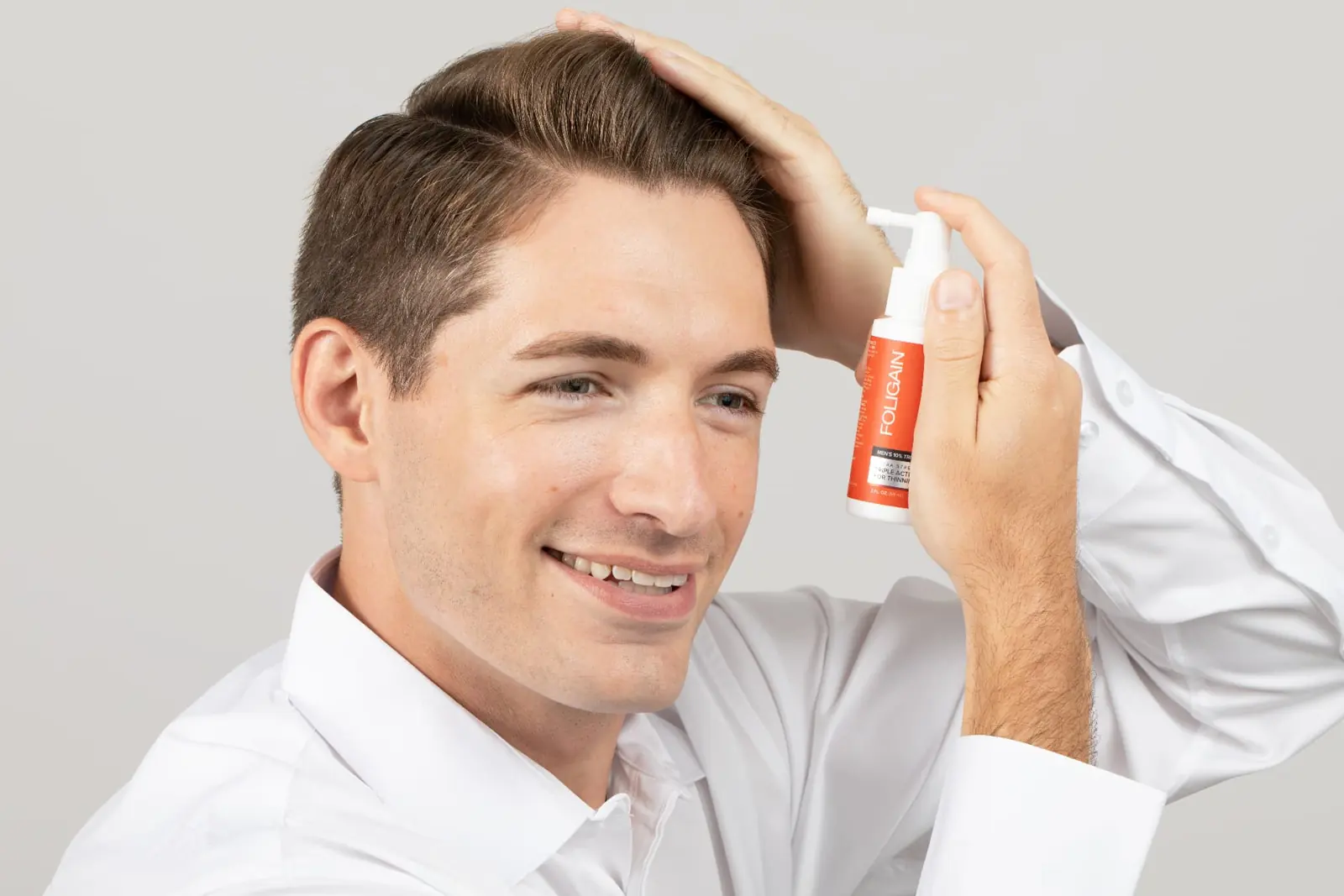

Attēli ir saskaņoti ar tēmu izglītības nolūkos; vienmēr pārbaudi norādījumus un apgalvojumus uz precīzas produkta etiķetes.
Bieži uzdotie jautājumi
When can I return to work after a hair transplant?
Some people return to desk work within several days, while others take one to two weeks because of swelling, crusting, or appearance concerns. Physical work, dusty conditions, and required helmets may need a longer break; ask your surgical team.
When can I wear a hat?
Ask your surgeon before wearing one. A clean, loose hat may be allowed early, but tight hats and helmets can rub or press on healing areas.
Does shedding mean the transplant failed?
Not necessarily: transplanted hair shafts commonly shed before new growth starts. Shedding alone does not tell you whether a graft survived; contact your clinic if it follows an injury or comes with bleeding, increasing pain, or drainage.
Are hair transplant results permanent?
Transplanted follicles can provide long-lasting growth, but results are not guaranteed, and individual results vary. Your existing, nontransplanted hair may continue thinning, so longer-term planning matters.
Šis saturs ir paredzēts tikai izglītojošiem mērķiem un nav medicīniska konsultācija. Tas nav paredzēts, lai diagnosticētu, ārstētu, izārstētu vai novērstu jebkādas slimības. Konsultējies ar kvalificētu veselības aprūpes speciālistu par savu individuālo situāciju.
Individuālie rezultāti atšķiras. Matu augšanas līdzekļi tiek lietoti konsekventi vairākus mēnešus, un rezultāti ir atkarīgi no matu izkrišanas cēloņa un stadijas.
FOLIGAIN® produkti, kas saistīti ar šo ceļvedi
Ja šis ceļvedis atbilst tavai situācijai, mūsu produktu izglītības lapas paskaidro, kuri FOLIGAIN® formāti ir piemēroti kurām rutīnām.
Izpētīt FOLIGAIN® produktus