How Fast Does Hair Grow? Rates, Factors and Myths
Average growth per month, why it varies, what really speeds or slows it, and the myths that won't go away.
FOLIGAIN® Editorial Team · 17 min read · Updated 2026-09-28
Medical facts and treatment details have not been independently medically reviewed.

The average rate, and why it feels slower than that
Scalp hair grows roughly 0.3 to 0.4 millimeters a day, which works out to about 1 centimeter a month, or somewhere around 15 centimeters (6 inches) over a full year. That is an average across a lot of individual variation: some people genuinely grow hair a bit faster, some a bit slower, and the hair on the crown, sides and hairline of the same head can even grow at slightly different speeds.
It rarely feels like progress is happening at all, because a centimeter a month is easy to lose to a trim, to breakage at the ends, or simply to the fact that hair looks the same length for weeks at a time before a noticeable change shows up in photos. That is one reason so many people reach for “hair growth” products expecting a dramatic speed-up in the rate itself, when the more realistic goal — for hair that is already thinning — is protecting the follicles you have rather than making healthy hair grow unusually fast.
It also helps to separate two very different questions that get lumped together: “how fast does hair grow” and “how long can my hair get.” The first is fairly consistent from person to person. The second varies enormously, and it is the second question that actually explains why your friend can grow hair past their waist while yours seems to stall at shoulder length no matter how patient you are.
| Time | Approximate growth |
|---|---|
| 1 month | ~1 cm / 0.4 in |
| 6 months | ~6 cm / 2.4 in |
| 1 year | ~12–15 cm / 5–6 in |
Why some people can't grow long hair
The length any single hair can reach is set almost entirely by how long its anagen (active growth) phase lasts, which can range from about two to seven years depending mostly on genetics. A hair with a four-year anagen phase, growing at the average rate, could theoretically reach around 40 to 50 centimeters before it sheds. A hair with a two-year anagen phase tops out at roughly half that, no matter how well it's cared for.
This is why some people seem to hit an invisible length ceiling: each hair reaches the end of its growth phase, rests briefly (catagen), then sheds (telogen), and a new hair starts the cycle from scratch. If your anagen phase is naturally shorter, your hair will feel like it “won't grow past” a certain point, because it keeps shedding at that length and starting over rather than continuing to lengthen.
None of this is something oils, brushing routines or trims can change, because the anagen duration is set at the follicle level. What can genuinely change it is largely limited to genetics, aging, and a small number of medical situations — plus, in cases of pattern hair loss, treatments that are shown to extend the growth phase of miniaturizing follicles.
What affects growth
Growth rate and hair quality respond to a wider range of everyday factors than most people expect, and it's worth knowing which ones are within your control and which are simply part of your biology.
| Factor | Effect |
|---|---|
| Age | Growth rate and hair diameter tend to decline gradually with age |
| Genetics | Determines anagen length, hair diameter, and sensitivity to DHT |
| Nutrition | Iron, protein, vitamin D and calorie deficits can slow growth or trigger shedding |
| Hormones | Thyroid disorders, pregnancy and menopause change the growth cycle |
| Illness / stress | Fever, surgery or major stress can trigger telogen effluvium |
| Medications | Some drugs cause shedding as a side effect; others, like Minoxidil, are designed to extend anagen |
How hair loss confuses the growth-rate picture
A lot of people who feel their hair “isn't growing” are actually dealing with hair loss rather than a slow growth rate. The two can look identical day to day, but the underlying issue — and the fix — is completely different. If your part is widening, your hairline is receding, or you're finding noticeably more hair in the shower or on the pillow, the honest read is usually shedding or miniaturization rather than a growth-speed problem.
In pattern hair loss, follicles don't necessarily grow slower in a simple sense — they gradually produce finer, shorter-lived hairs with each cycle, a process called miniaturization. That's a different mechanism from someone with perfectly healthy follicles whose hair simply grows at an average pace. Telling these apart matters, because a slow but healthy grower doesn't need medical treatment, while someone with early miniaturization may benefit most from starting Minoxidil or talking to a dermatologist sooner rather than later.
FOLIGAIN® positions its cosmetic TRIOXIDIL® complex, along with ingredients like caffeine and biotin, as scalp-supporting additions some people layer alongside a Minoxidil routine or use on their own for general hair condition — not as a substitute for a diagnosis if something has actually changed.
Realistic timeline for noticing any change
Whether you're trying to support healthy growth or address early thinning, the timeline is measured in months, not weeks. Because a full hair cycle from shedding to regrowth can take a season or more, and because visible length change is slow at roughly a centimeter a month, most people should expect to wait at least three to four months before judging any product or routine, and six to twelve months for a fair overall verdict.
That patience requirement is one of the most common reasons people give up on things that were actually working, or switch products every few weeks without giving any of them a real trial. Monthly photos, taken in the same light and from the same angle, are a far more reliable way to track change than how your hair feels day to day.
Myths
- Trimming makes hair grow faster — false; growth happens at the follicle beneath the skin, and cutting the ends has no effect on it.
- Shaving makes hair grow back thicker — false; blunt-cut tips simply feel coarser and look more visible at first, which creates the illusion.
- Brushing 100 strokes a day stimulates growth — false, and it can actually cause breakage that makes hair look thinner.
- Biotin speeds growth for everyone — it only helps if you are truly deficient, which is uncommon in people eating a varied diet.
- Cold water rinses or upside-down brushing boost circulation enough to matter — there's no good evidence either meaningfully changes growth rate.
Note
This guide is educational and does not replace medical advice. See a clinician for sudden, patchy or rapid hair loss, or before starting prescription treatment.
From the FOLIGAIN® library
Related FOLIGAIN® products and routines
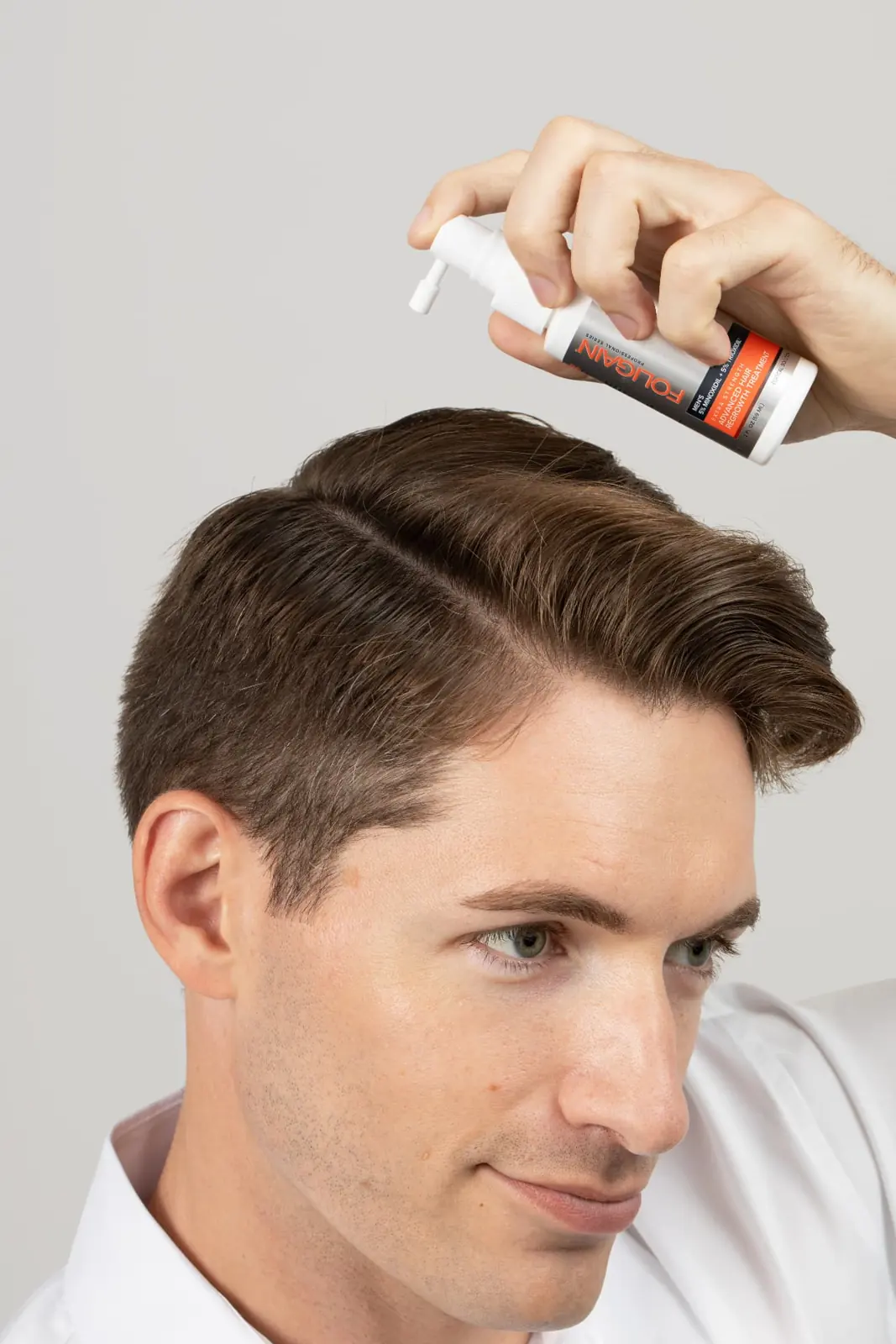

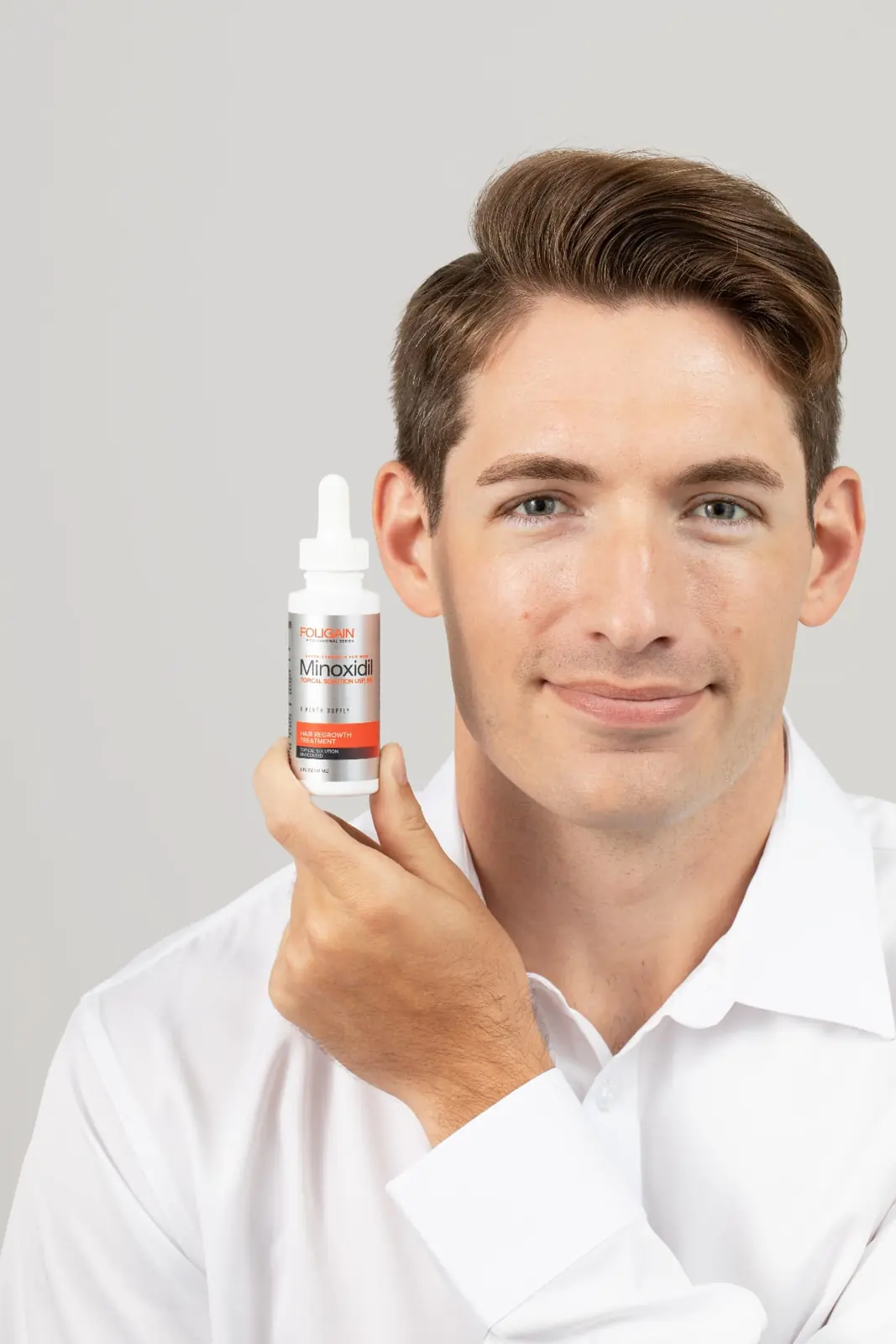
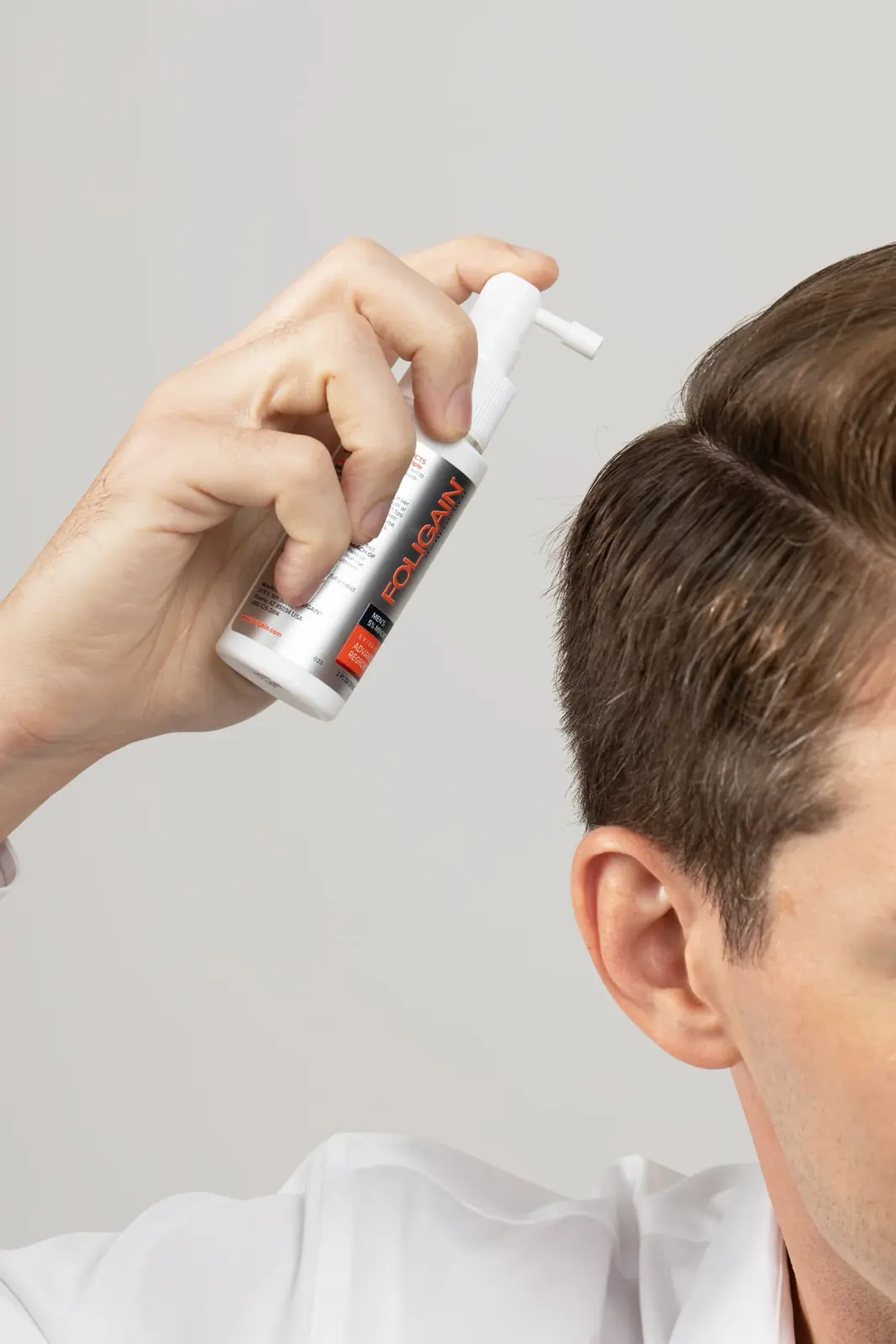
Images are matched to the topic for education; always confirm directions and claims on the exact product label.
Frequently asked questions
Can I make my hair grow faster?
You can't meaningfully speed up the biological rate of normal growth, but correcting any nutrient deficiencies, treating scalp conditions and reducing breakage all help you keep and show off the length you're already growing.
Does hair grow faster in summer?
Some small studies suggest minor seasonal shifts in growth rate, but the difference is not large enough to plan around.
Why does my hair seem to stop growing at a certain length?
That's usually your anagen (growth phase) length showing itself — each hair sheds and restarts once it reaches the end of its individual growth window, which caps how long it can get.
Is slow hair growth the same as hair loss?
No. Slow but even growth across a full head of hair is different from thinning, a widening part or a receding hairline, which point toward pattern hair loss or shedding rather than a growth-rate issue.
Does Minoxidil make hair grow faster?
Minoxidil is understood to extend the anagen (growth) phase of miniaturizing hairs rather than speeding up the rate at which normal hair lengthens; its role is mainly in pattern hair loss, not general growth speed.
This content is for educational purposes only and is not medical advice. It is not intended to diagnose, treat, cure or prevent any disease. Speak with a qualified healthcare professional about your individual situation.
Individual results vary. Hair-growth products are used consistently over months, and outcomes depend on the cause and stage of hair loss.
FOLIGAIN® products related to this guide
If this guide matches your situation, our product education pages explain which FOLIGAIN® formats suit which routines.
Explore FOLIGAIN® products