How to Grow Thicker Hair: What Works and What Doesn't
An honest ranking of approaches to fuller hair — from regulated treatments to styling tricks — and how to combine them.
FOLIGAIN® Editorial Team · 17 min read · Updated 2026-09-28
Medical facts and treatment details have not been independently medically reviewed.
Density vs. diameter: two different problems
When people say their hair feels "thin," they're usually describing one of two distinct things, and it matters which one applies to you because the fixes aren't identical. Density refers to how many individual hairs you have per square inch of scalp — fewer hairs means more visible scalp and a flatter overall look, even if each hair itself is perfectly healthy and average in width. Diameter, or caliber, refers to how wide each individual strand is — a full head of hair made of very fine strands can look and feel thin even though the follicle count hasn't changed at all.
In pattern hair loss (androgenetic alopecia), both problems tend to show up together through a process called miniaturization: over successive growth cycles, sensitive follicles produce progressively finer, shorter-lived hairs, and eventually some stop producing visible hair altogether. That's why pattern hair loss treatments that work by extending the growth phase of miniaturizing follicles — like Minoxidil — can improve both density and average strand diameter at once, rather than addressing just one piece of the puzzle.
Outside of pattern loss, hair can also look or feel finer simply due to aging (strand diameter genuinely decreases somewhat for most people over their lifetime), chemical damage, sun exposure, or a genuinely fine hair type you were simply born with, none of which point to miniaturization or benefit as reliably from treatments aimed at pattern hair loss specifically. Being clear-eyed about which situation you're in is the first step to picking an approach that's actually likely to help.
What actually drives visible thickness
Beyond density and diameter, a handful of other factors change how thick your hair looks day to day without changing the biology of the follicle itself. Hair with more natural texture, wave or curl takes up more visual space per strand than poker-straight hair of the same diameter, which is part of why straight, fine hair often reads as the thinnest-looking hair type even when density is normal. Porosity and how well hair holds moisture also affects how strands sit next to each other — dry, damaged hair tends to lie flatter and clump together, reducing the appearance of volume, while well-conditioned hair with intact cuticles holds more separation and bounce.
Scalp health plays a quieter but real role too. A scalp with active dandruff, seborrheic dermatitis, or heavy product buildup can both irritate follicles in ways that may contribute to shedding and make existing hair look greasy and flat rather than voluminous. None of this is a substitute for addressing an actual thinning process if one is present, but it explains why two people with the same hair density and diameter can still look noticeably different in fullness based on texture, condition, and scalp care.
Approaches ranked by evidence, from strongest to weakest
For hair thinning tied to genetics or hormones — by far the most common cause of gradual thinning in both men and women — the evidence base for different interventions is genuinely uneven, and it's worth being honest about that rather than presenting every option as equally proven. Here's a fair summary, including where FOLIGAIN® products fit relative to each category.
| Approach | Type | Evidence level | Time to judge |
|---|---|---|---|
| Topical Minoxidil 5% (men) / 2–5% (women) | OTC drug | Strong — the best-studied topical option for pattern hair loss in both sexes | 4–6 months for early signs; 6–12 for a full trial |
| FOLIGAIN® Minoxidil formulations | OTC drug | Same as any FDA-compliant Minoxidil product — same active ingredient, dosing and Drug Facts label | Same 4–12 month window |
| Finasteride | Prescription (men) | Strong — well-studied for slowing progression and supporting some regrowth | 6–12 months |
| Oral Minoxidil (low dose) | Prescription, off-label | Growing body of evidence, increasingly prescribed by dermatologists | 6 months or longer |
| Low-level laser devices (caps, combs, helmets) | FDA-cleared device | Moderate — several clinical studies, generally smaller than Minoxidil trials | 6 months of consistent, ongoing use |
| Microneedling (paired with Minoxidil) | Procedure | Moderate — some studies suggest it may improve Minoxidil absorption/response | 3–6 months |
| Platelet-rich plasma (PRP) | In-office procedure | Mixed — study quality and protocols vary widely between clinics | 6 months, often needing repeat sessions |
| Ketoconazole shampoo | OTC antifungal shampoo | Limited, generally viewed as a helpful adjunct rather than a standalone treatment | 6 months |
| FOLIGAIN® TRIOXIDIL® cosmetic complex | Cosmetic ingredient complex | Not a drug and not clinically positioned as a treatment; a cosmetic scalp-support ingredient some people layer alongside proven options | Ongoing use as part of a routine |
| Supplements and botanicals (biotin, saw palmetto, etc.) | Food/cosmetic | Limited and highly variable; strongest when correcting an actual deficiency | 3–6 months |
| Cosmetic thickening products (fibers, root sprays) | Cosmetic | Purely a visual effect — no biological change | Immediate |
Minoxidil and finasteride, weighed fairly against each other
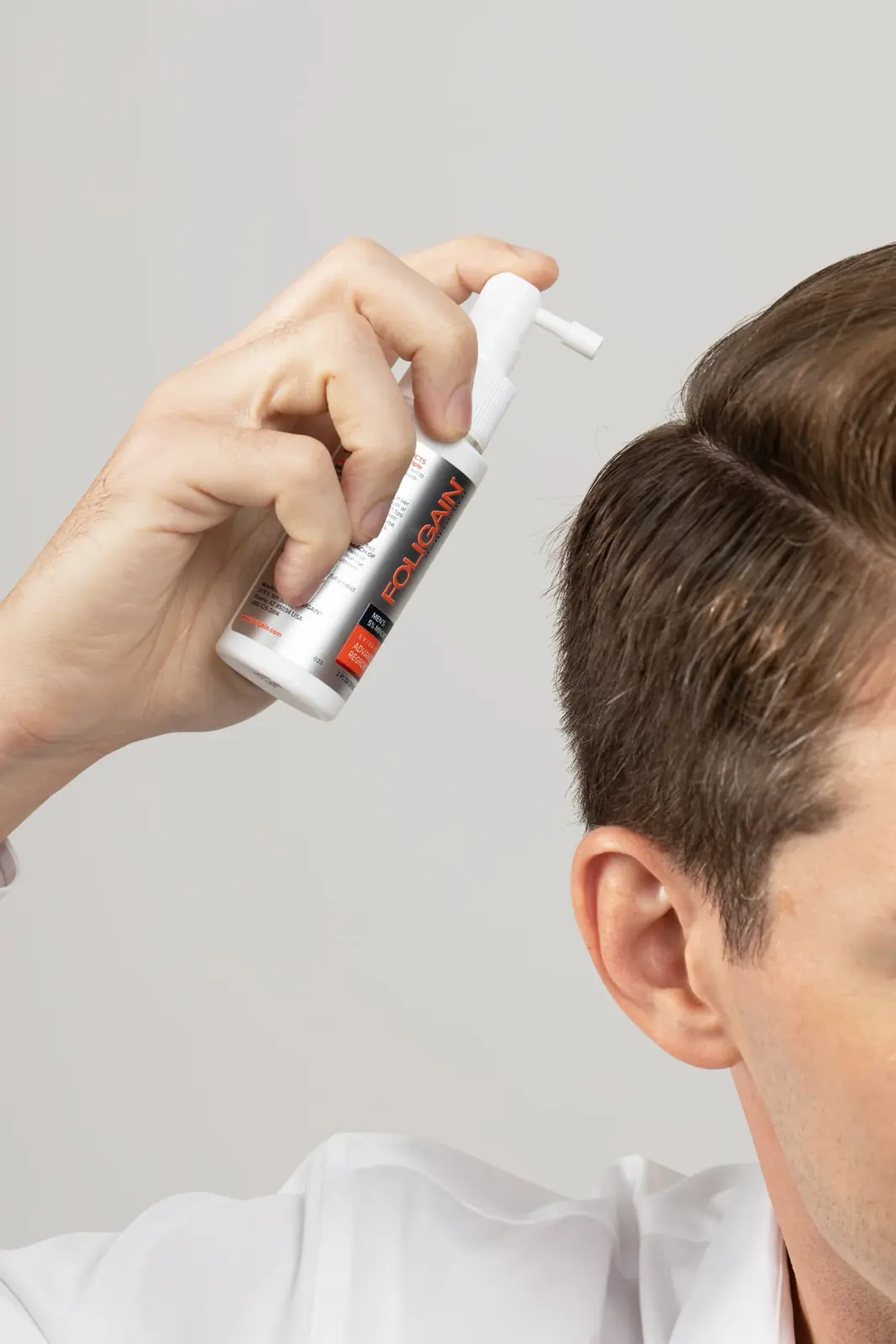
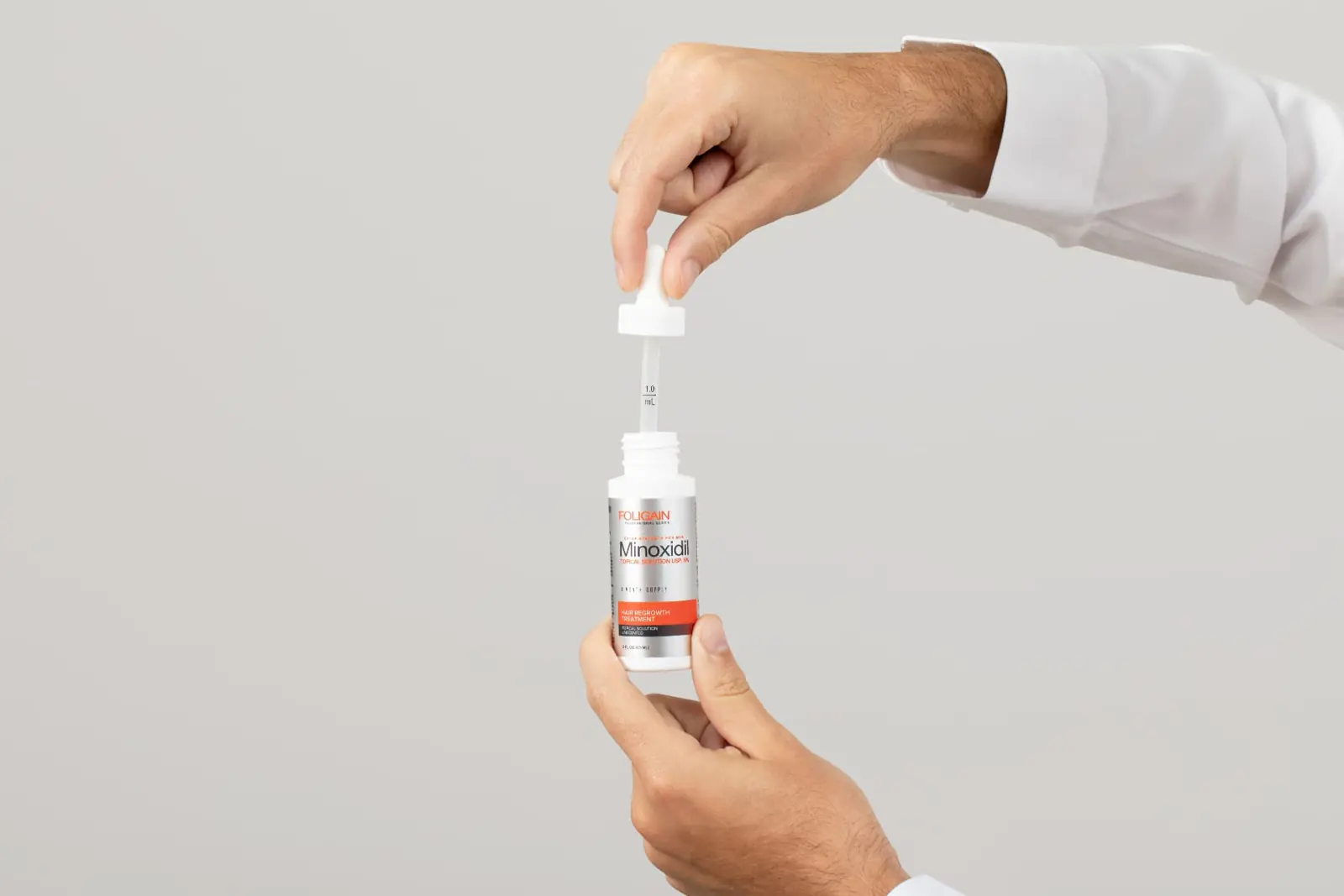
Topical Minoxidil remains the only OTC drug ingredient in the United States approved specifically for regrowing hair in pattern hair loss, available for men at 5% and for women at 2% (twice daily) or 5% foam (once daily). It's understood to work mainly by extending the anagen (growth) phase of miniaturizing follicles and improving blood flow to the scalp, which over months can both slow shedding and support some regrowth of finer hairs. The label sets realistic expectations directly: results, if they occur, typically show up in three to six months, with up to twelve months needed for a full trial, and a temporary increase in shedding in the first two to eight weeks is common and not itself a sign of failure.
Finasteride, available only by prescription and only approved for men, works completely differently — it blocks the conversion of testosterone into dihydrotestosterone (DHT), the hormone byproduct most responsible for shrinking genetically sensitive follicles. Because it addresses a hormonal driver rather than acting directly on the growth cycle, its evidence base for slowing progression over years is strong, and many men use it alongside Minoxidil for a combined effect. It does carry a real, if relatively low, risk of sexual side effects that should be discussed candidly with a prescriber rather than dismissed or overstated by either direction of internet opinion.
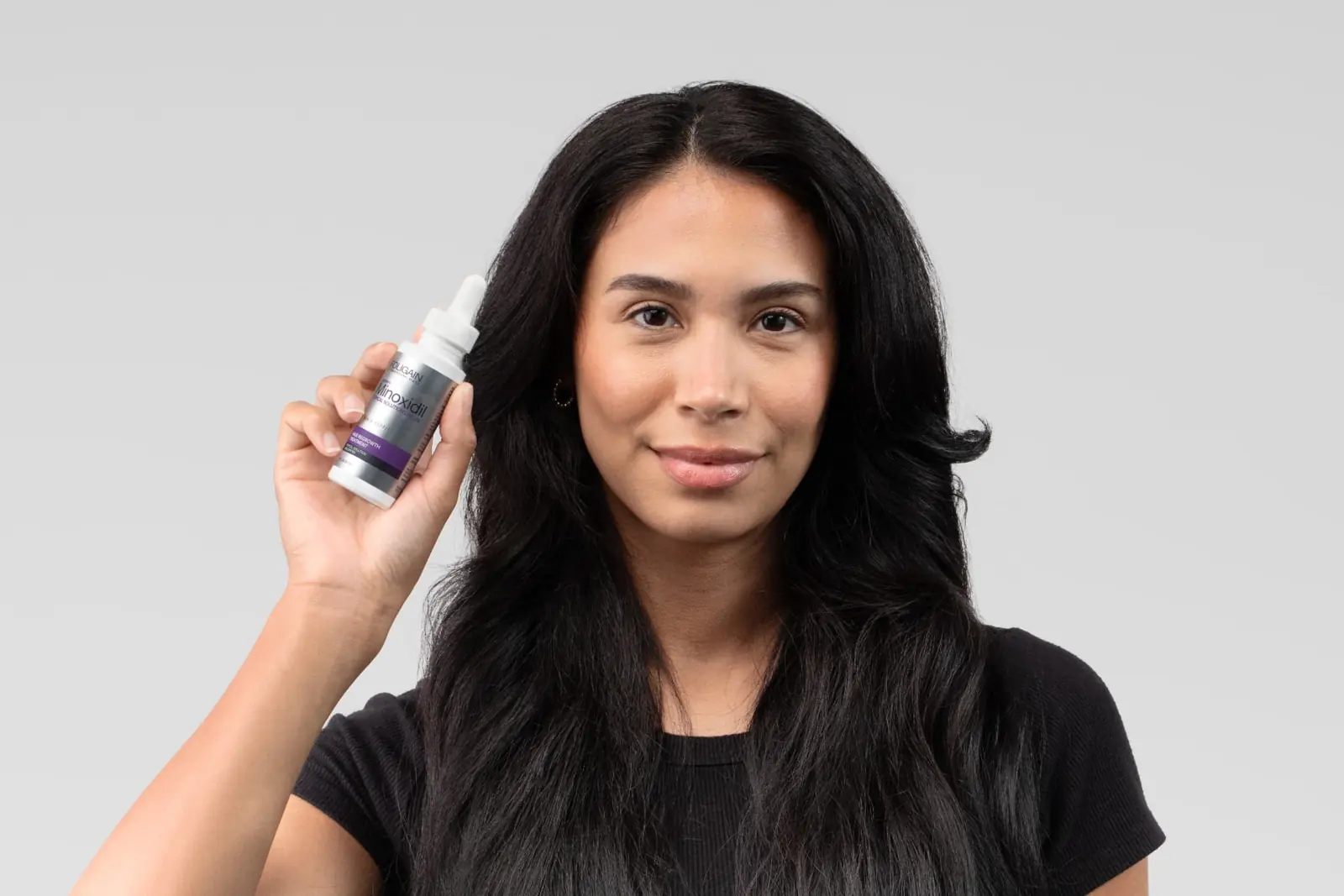
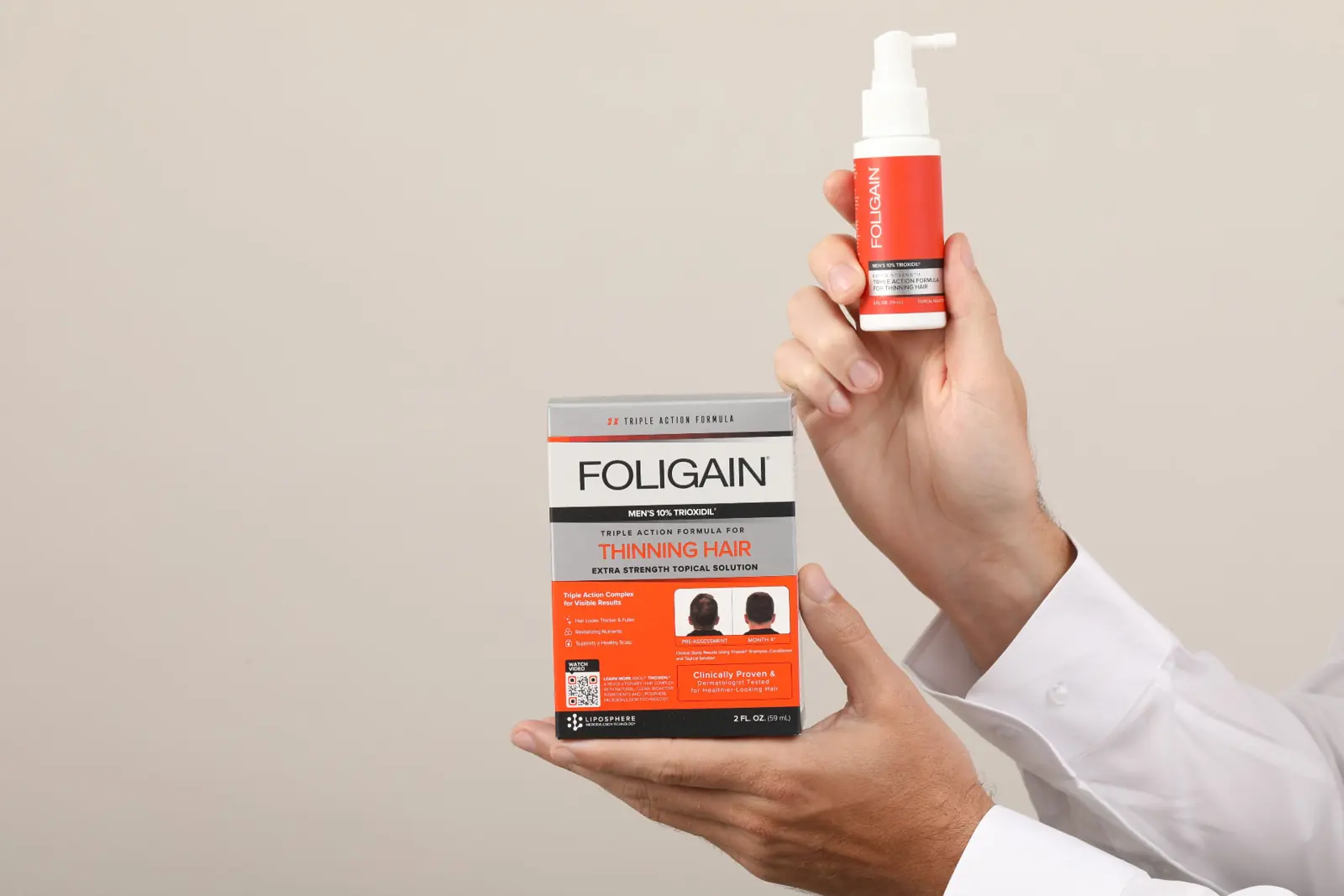
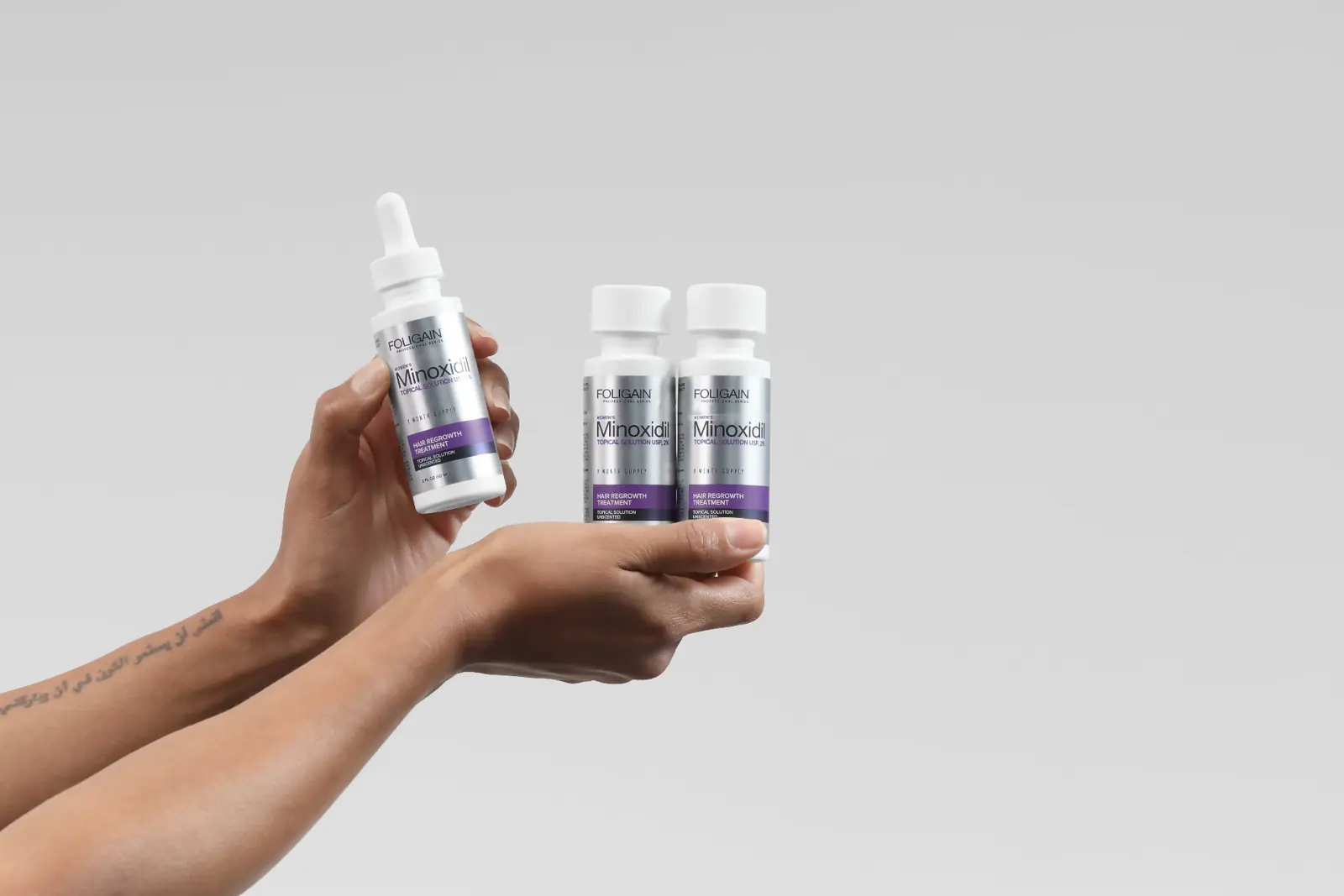
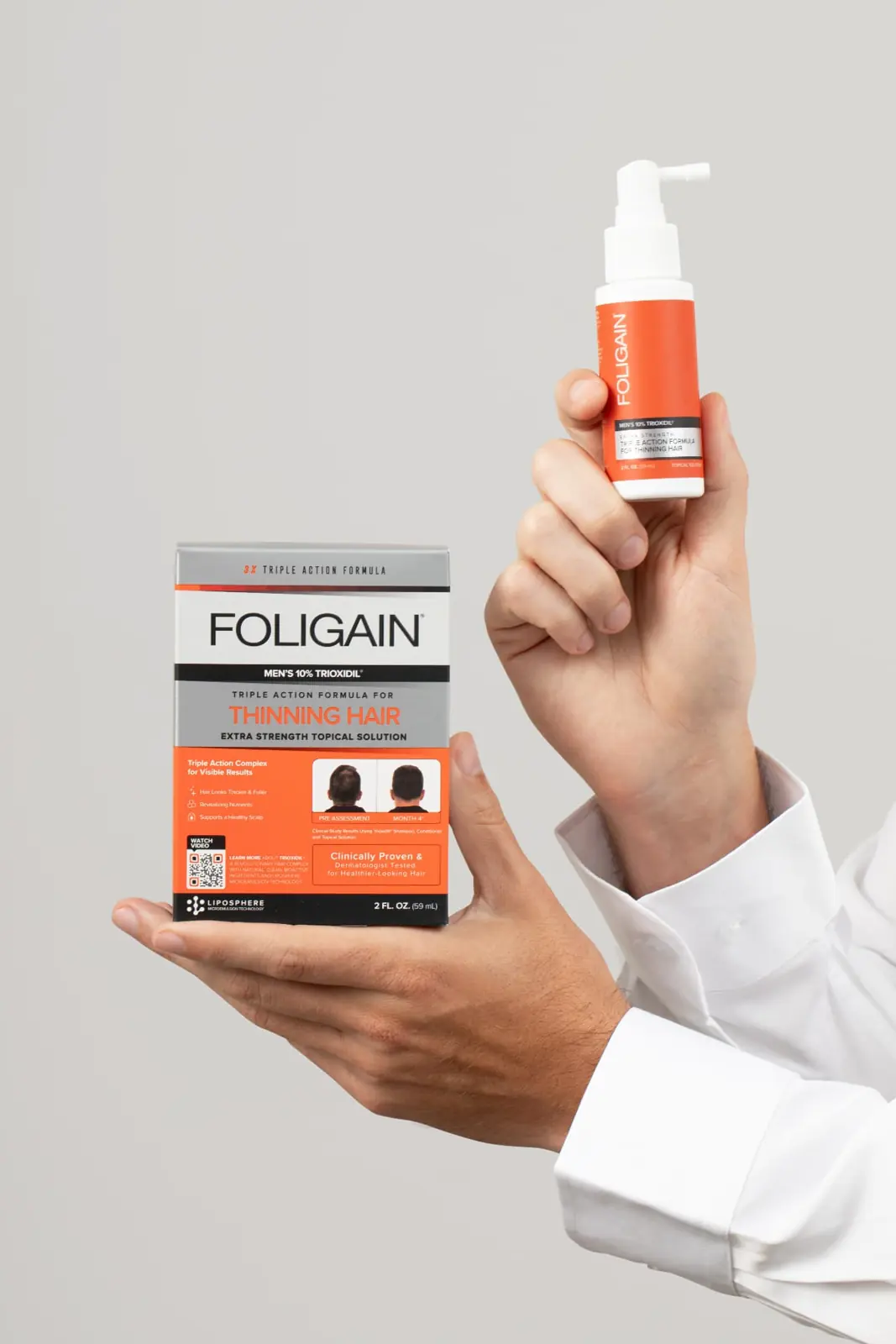
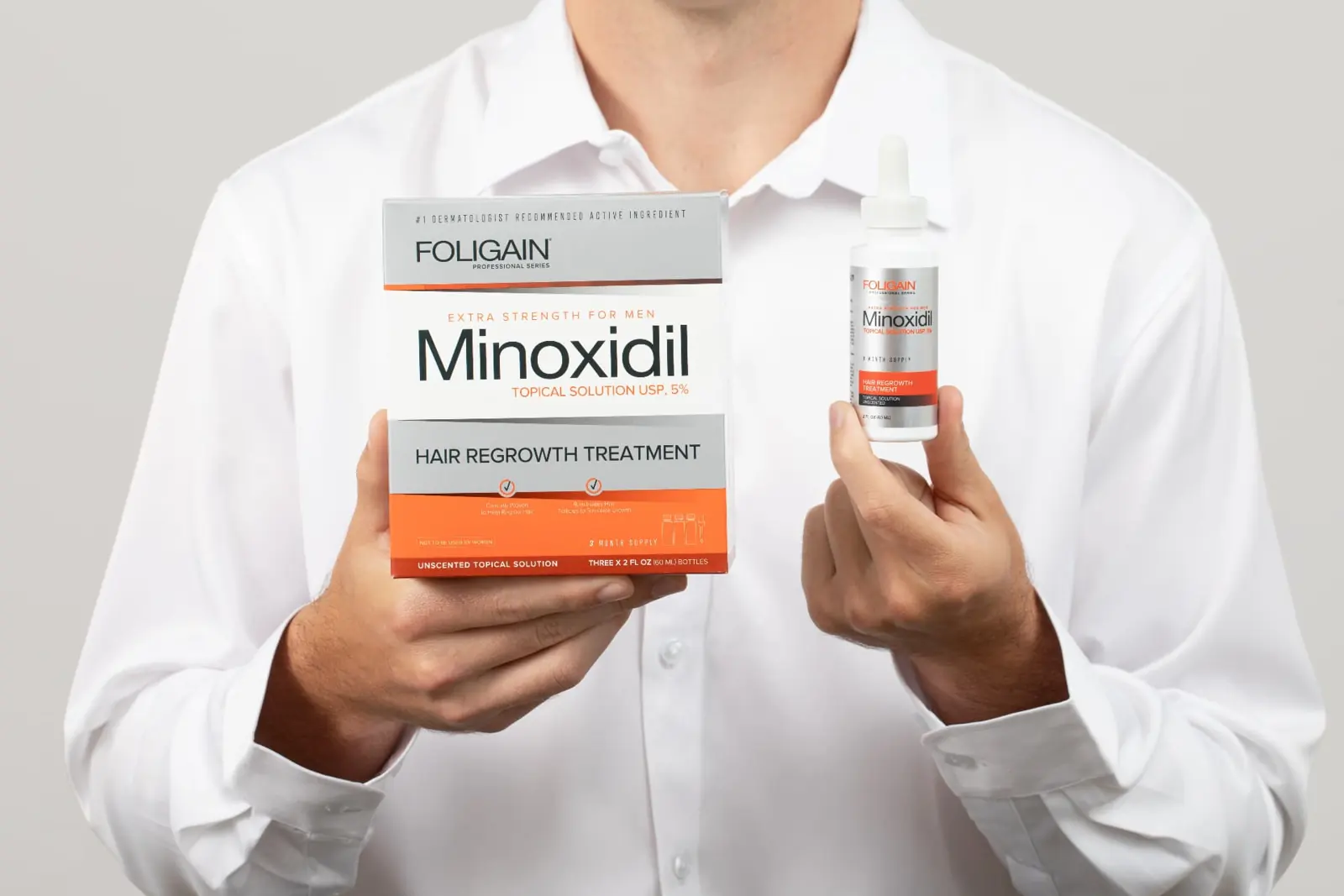
FOLIGAIN®'s Minoxidil products follow the identical FDA Drug Facts label as any other 5% (men) or 2%/5% (women) Minoxidil product — same active ingredient, same directions, same timeline and precautions. Where FOLIGAIN® differs from a plain generic is in offering formulations that pair Minoxidil with its cosmetic TRIOXIDIL® ingredient complex, along with caffeine, biotin and other botanicals in some products; these additions are positioned honestly as scalp-support ingredients layered onto the proven drug, not as separate treatments with their own regrowth claims.
Devices and in-office procedures: real but more modest
Low-level laser therapy (LLLT), delivered through combs, caps or in-office helmets, has a number of FDA clearances for pattern hair loss and a reasonable, if smaller, body of clinical evidence behind it. The practical catch is adherence — most devices require several sessions a week over many months to see any benefit, and results tend to be more modest than what's typically reported with Minoxidil, which makes LLLT a more realistic add-on for people already on a topical or oral treatment than a stand-alone primary strategy.
Microneedling, whether done at home with a dermaroller or in-office with a more controlled device, creates tiny, controlled injuries in the scalp that may improve the penetration and effectiveness of topical treatments like Minoxidil when paired together, based on a handful of supportive studies. It's not typically recommended as a solo treatment for pattern hair loss, and doing it aggressively or with unclean equipment carries a real infection risk, so it's worth learning proper technique or having it done professionally.
Platelet-rich plasma (PRP) involves drawing a small amount of your own blood, concentrating the platelets, and injecting the plasma into the scalp, on the theory that growth factors in the plasma stimulate follicle activity. Study quality varies substantially across the research on PRP — protocols, injection technique and follow-up length differ a great deal between studies and clinics, which makes it harder to give a single confident verdict — and most people who try it need repeated sessions over time to maintain any benefit, at a cost that's rarely covered by insurance.
Look-fuller strategies that work immediately
- A shorter, layered cut removes weight from the ends and adds visible body and movement, especially for fine or thinning hair that looks flatter the longer it grows.
- Volumizing shampoo and a lightweight, non-weighing conditioner applied mainly to the ends rather than the roots help hair sit up rather than lying flat.
- Blow-drying roots upward and away from the scalp with a round brush, then finishing with a cool shot, is one of the fastest ways to add temporary lift and fullness.
- Root-lift sprays, dry shampoo at the roots, and light texturizing sprays add grip and volume without the heaviness of traditional styling creams.
- Hair fibers (keratin-based powders that cling to existing strands) or tinted scalp powders and sprays reduce the visual contrast between hair and scalp, making thinning far less noticeable in photos and in person.
- A strategic part change — switching sides or using a zigzag rather than straight part — redistributes hair over thinner areas without any product at all.
Habits that quietly undermine thickness
Some everyday habits don't cause pattern hair loss but do add avoidable breakage and shedding on top of whatever else is going on, making hair look thinner than the underlying density would suggest. Frequent high-heat styling without heat protection, chemical relaxing or coloring done too often, and very tight hairstyles worn consistently (tight ponytails, braids, buns, extensions) can all cause mechanical damage or traction alopecia, particularly along the hairline and part.
Aggressive brushing or brushing wet hair (when it's most fragile) with the wrong type of brush, over-washing with harsh sulfate shampoos that strip natural oils, and skipping conditioner on already dry or damaged hair all contribute to a rougher cuticle and more breakage. None of these habits will cause genetic pattern loss on their own, but cleaning them up is a low-cost, low-risk way to stop losing length and volume to something entirely within your control while you address any underlying cause separately.
A realistic combined routine and timeline
For most people dealing with genuine thinning rather than simply wanting existing healthy hair to look fuller, the most effective real-world approach tends to combine a proven medical treatment with sensible everyday habits and, if desired, cosmetic styling support in the meantime. A reasonable order of operations: get any nutrient deficiency ruled out or corrected, start an FDA-approved Minoxidil routine consistently (or discuss finasteride with a doctor if you're a man comfortable with prescription treatment), clean up styling habits that cause avoidable breakage, and use cosmetic volumizing techniques for how you look day to day while the medical treatment has time to work.
The timeline that matters most is the medical one: expect no visible change for the first two to three months, a possible temporary increase in shedding around weeks two to eight as Minoxidil resets the hair cycle, early signs starting around months three to four for some people, and a fair overall verdict only at six to twelve months of consistent use. Switching products every few weeks, or judging a routine after a single month, is one of the most common and avoidable reasons people give up on something that may well have been working.
Note
This guide is educational and does not replace medical advice. See a clinician for sudden, patchy or rapid hair loss, or before starting prescription treatment.
From the FOLIGAIN® library
Related FOLIGAIN® products and routines
Images are matched to the topic for education; always confirm directions and claims on the exact product label.
Frequently asked questions
Does rosemary oil work like Minoxidil?
One small study compared rosemary oil to 2% Minoxidil over six months and found broadly similar improvement, but the study was small, short, and far less robust than the large body of evidence behind Minoxidil itself. Rosemary oil is a reasonable low-risk addition for some people, but it isn't a substitute for a proven treatment if you have diagnosable pattern hair loss.
Can thin hair become thick again?
Miniaturized hairs — the finer, shorter hairs typical of early pattern hair loss — can sometimes partially thicken back up with effective treatment, especially when treatment starts before the follicle has gone fully dormant. Hair that's simply been damaged by styling or chemical treatments usually recovers with better care and time, since the follicle itself was never affected.
How long before biotin or other supplements make a difference?
If you're genuinely deficient, most people notice a difference in shedding within three to four months and see visible regrowth by six months; if you aren't deficient, supplementing is unlikely to change hair thickness in any noticeable way regardless of how long you take it.
Is finasteride or Minoxidil better for men who want thicker hair?
They're not really competing options — Minoxidil acts directly on the growth cycle and is available over the counter for anyone, while finasteride addresses the hormonal driver of pattern loss and requires a prescription. Many men use both together on a dermatologist's advice for a stronger combined effect than either alone.
Do scalp massages actually increase hair thickness?
A few small studies suggest regular scalp massage may modestly increase hair thickness over several months, possibly by increasing blood flow or mechanically stretching the follicle, but the evidence is limited and the effect size is small compared to Minoxidil or finasteride. It's a low-risk habit worth doing as an addition, not a primary strategy.
Will cutting my hair short make it grow back thicker?
No — cutting hair only removes existing length and has no effect on the follicle beneath the skin, so it can't change how thick new hair grows in. A shorter cut can make hair look fuller because less weight is pulling down on each strand, which is a styling effect rather than a biological one.
This content is for educational purposes only and is not medical advice. It is not intended to diagnose, treat, cure or prevent any disease. Speak with a qualified healthcare professional about your individual situation.
Individual results vary. Hair-growth products are used consistently over months, and outcomes depend on the cause and stage of hair loss.
FOLIGAIN® products related to this guide
If this guide matches your situation, our product education pages explain which FOLIGAIN® formats suit which routines.
Explore FOLIGAIN® products